

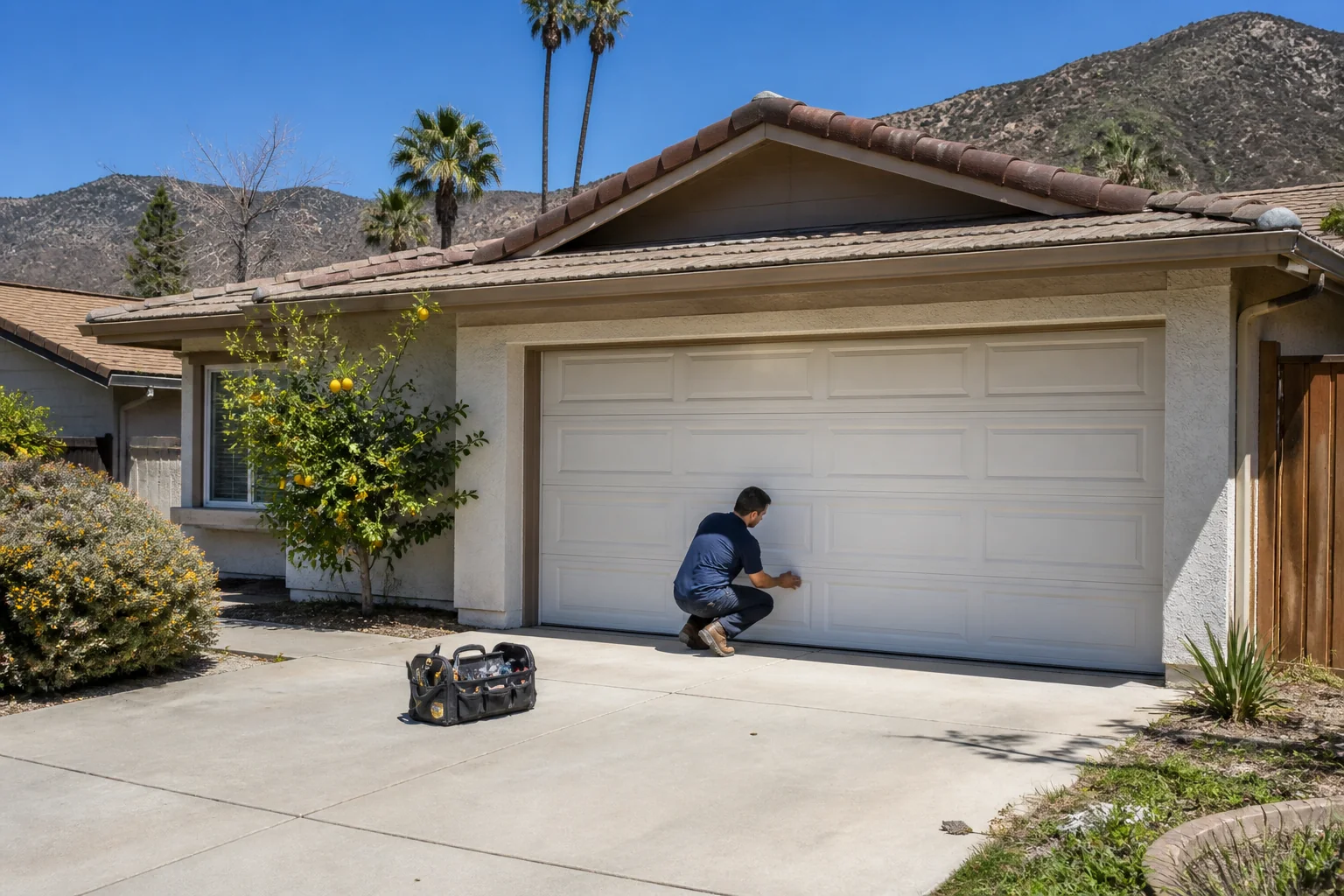
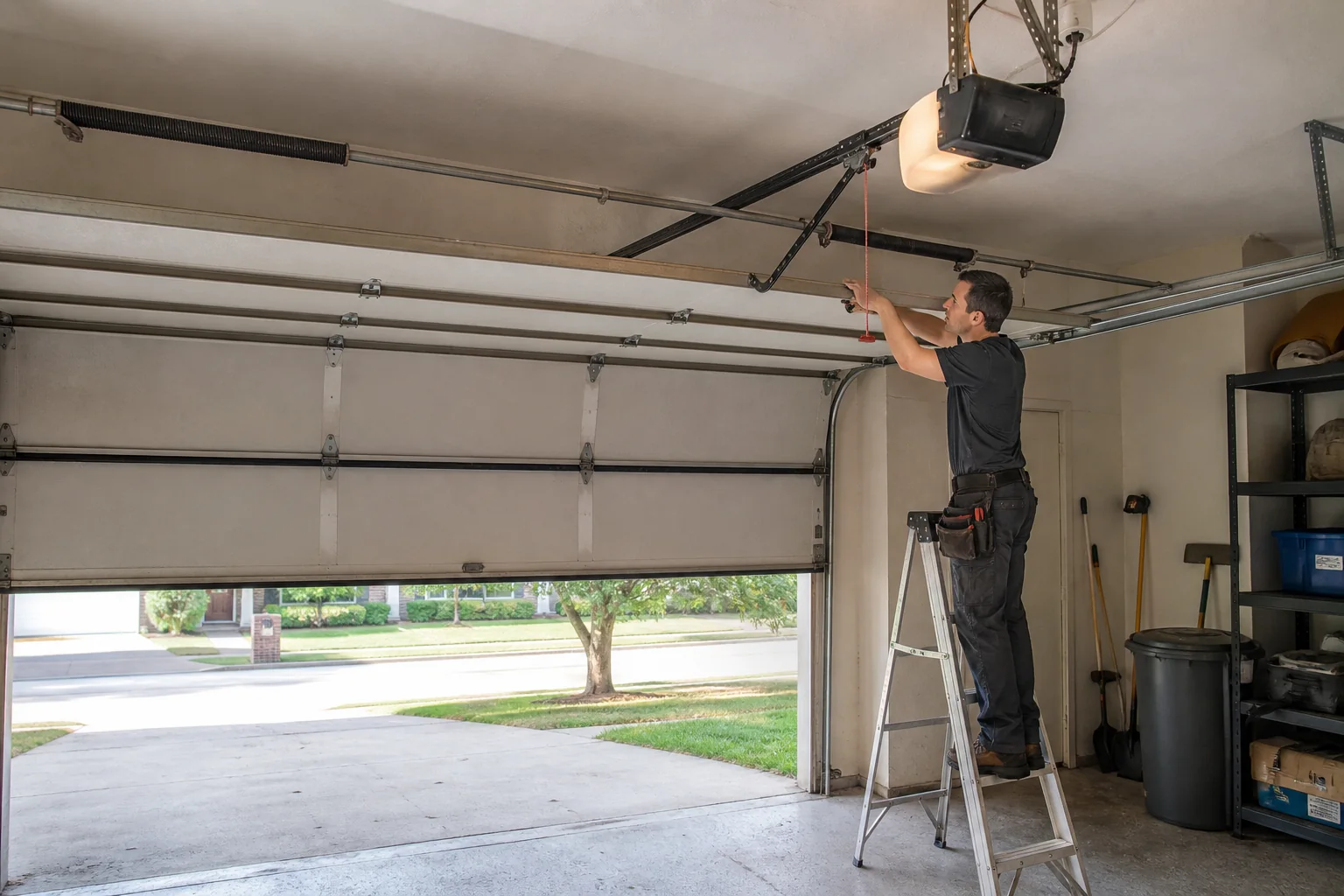
General repair
Garage Door Repair
Tell us what the door is doing and we'll get it in front of someone who can fix it — with the price agreed before the work starts.
See what's includedGarage door repair · Riverside, CA
Grit in the track, sloped drives, and doors that stall in low sun. Tell us what yours is doing and see the fault and the cost before any work.
Wood Streets, Arlington Heights, Canyon Crest, and the streets either side of them.
Springs, cables, openers, sensors, tracks, panels, seals, and full replacements.
You hear what failed and what it costs first. Saying no at that point costs you nothing.
Ask before 5 p.m. on a weekday and you hear back that business day.
Why us for this door
Fine grit blows into the bottom track and stays there, and rollers running through it wear flat on one side. The noise that follows sounds expensive and isn't. Left long enough it does become expensive, because a flat roller drags the door out of square and starts working on the track itself.
The gap between those two repairs is weeks, which is why describing the noise early is worth doing. Say what it sounds like, where the garage sits on the lot, and your cross streets in Wood Streets or La Sierra. The fault gets named and the price agreed before work starts.
Get my door fixedWhere we work
Wood Streets and Arlington Heights often set the garage back; Orangecrest and Mission Grove face the street. Tell us which, and how the drive slopes.
Plenty of the work we take isn't in Riverside proper. These are the towns around it and what tends to be different about a door there.
Don't see your street or your town? These are the places where the housing changes enough to change the job — not the edge of where we go, and not a promise about your exact address either. We take work across Riverside and the wider California area, and the address you send is what actually gets checked.Check my address
Repairs in Riverside
General repair
Tell us what the door is doing and we'll get it in front of someone who can fix it — with the price agreed before the work starts.
See what's included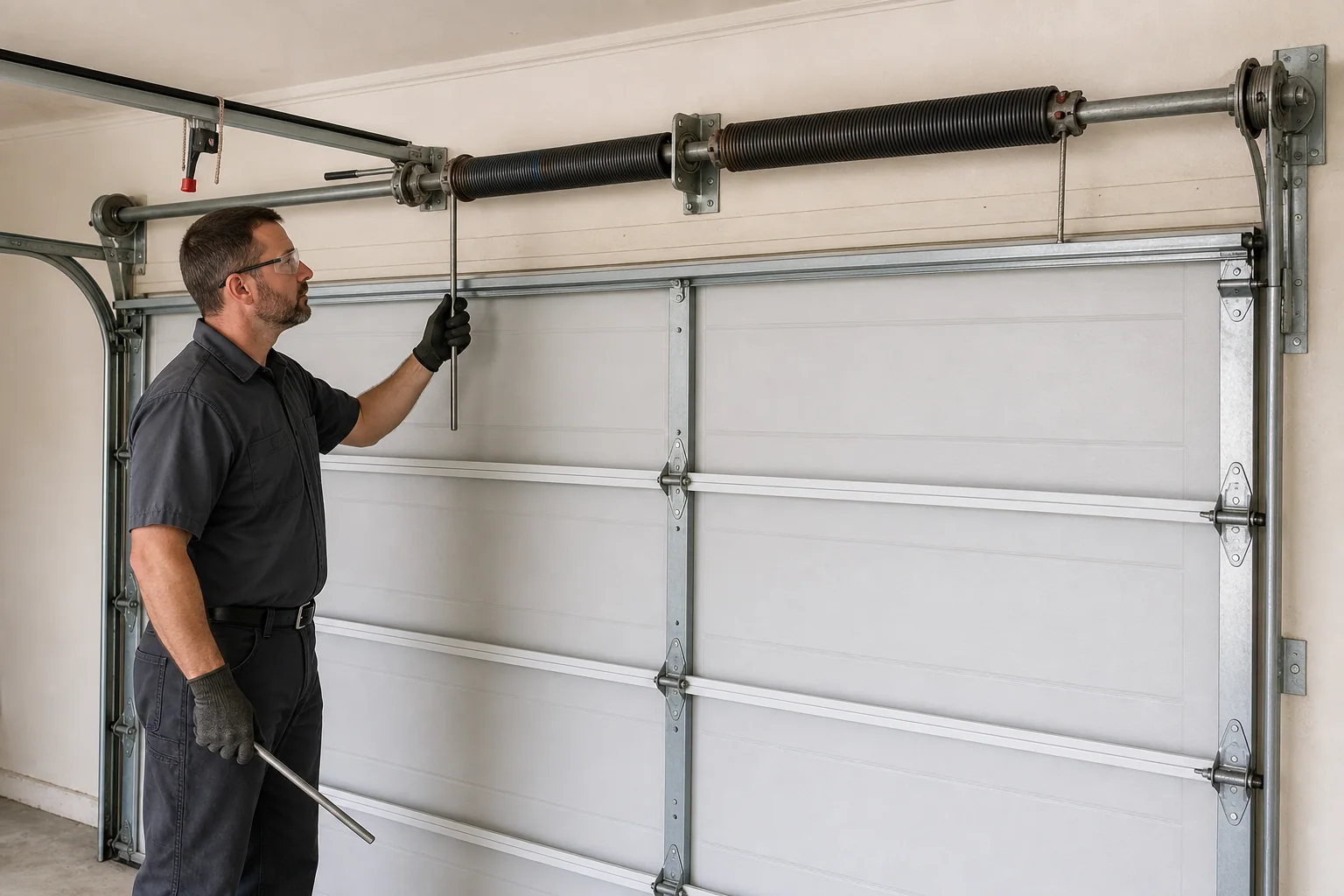
Springs and balance
If your door suddenly weighs a couple hundred pounds, a spring has almost certainly let go. Leave it down, keep everyone clear, and let someone with the right winding bars deal with it.
See what's included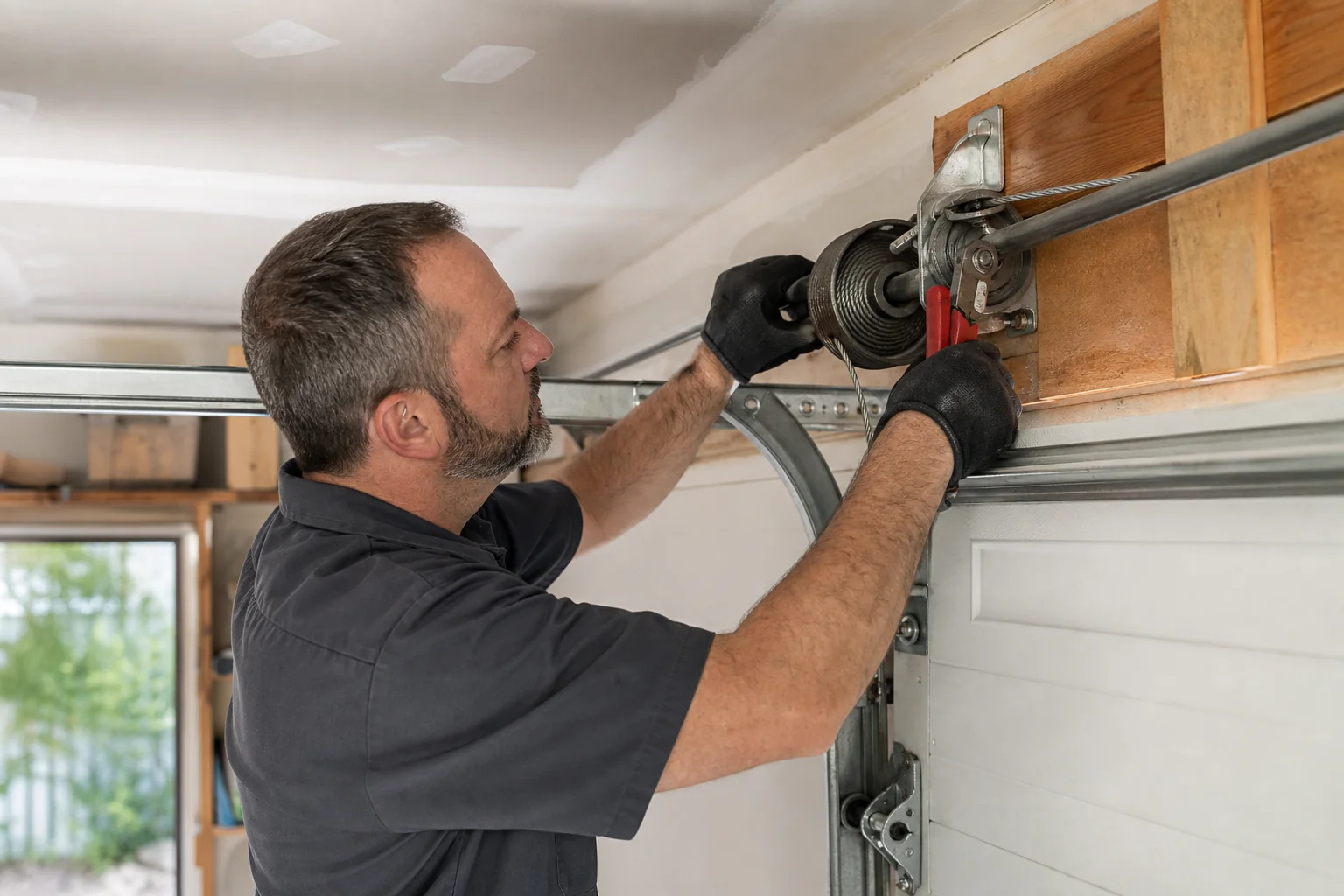
Cables and drums
One corner sitting lower, or a cable hanging off its drum, means the lift system is out of balance. It wants looking at before the next cycle, not after.
See what's included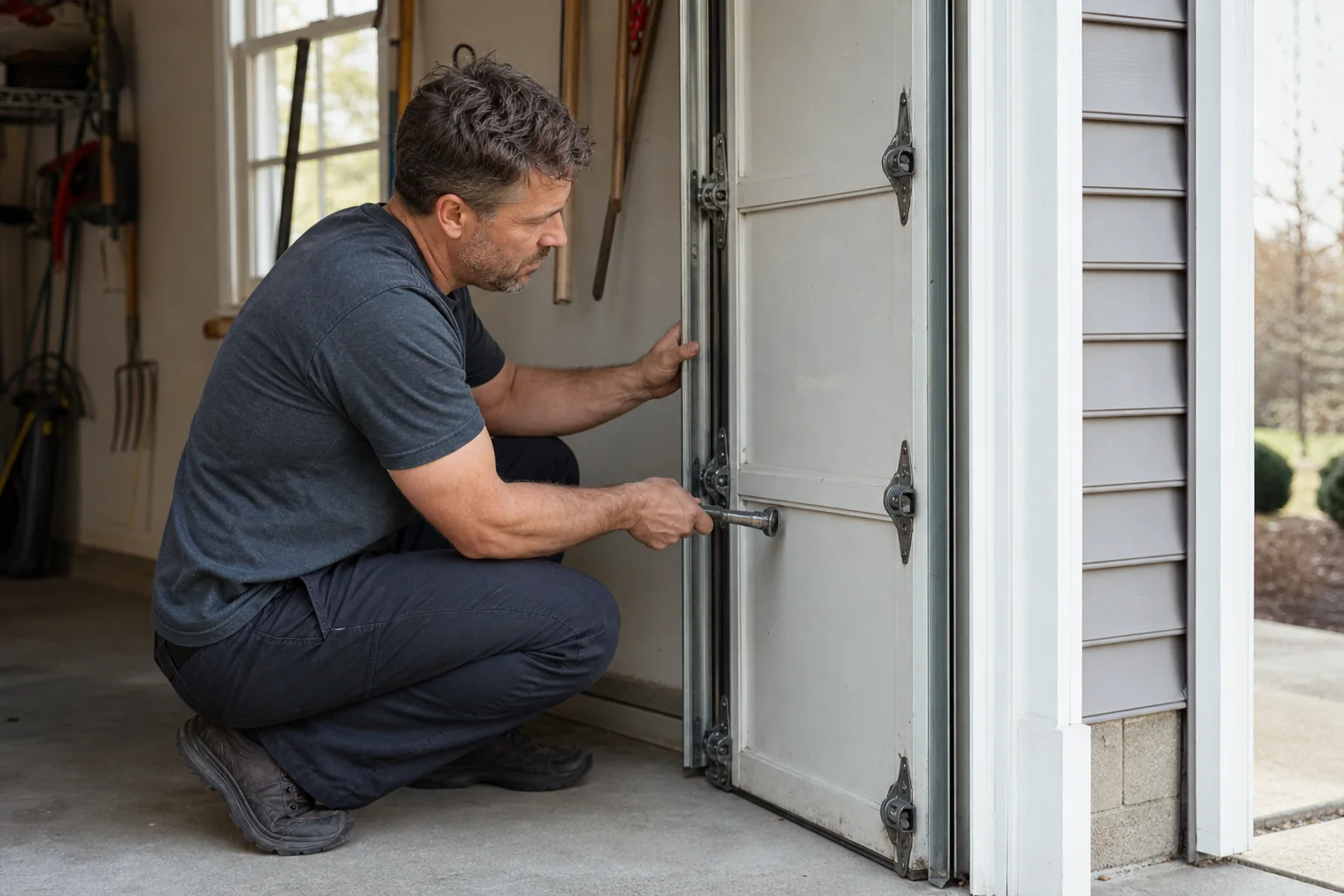
Tracks, rollers, hardware
Grinding in the same spot, a door that shakes the whole wall, a roller creeping out of its track — all cheap to sort now, all expensive once the door comes off.
See what's included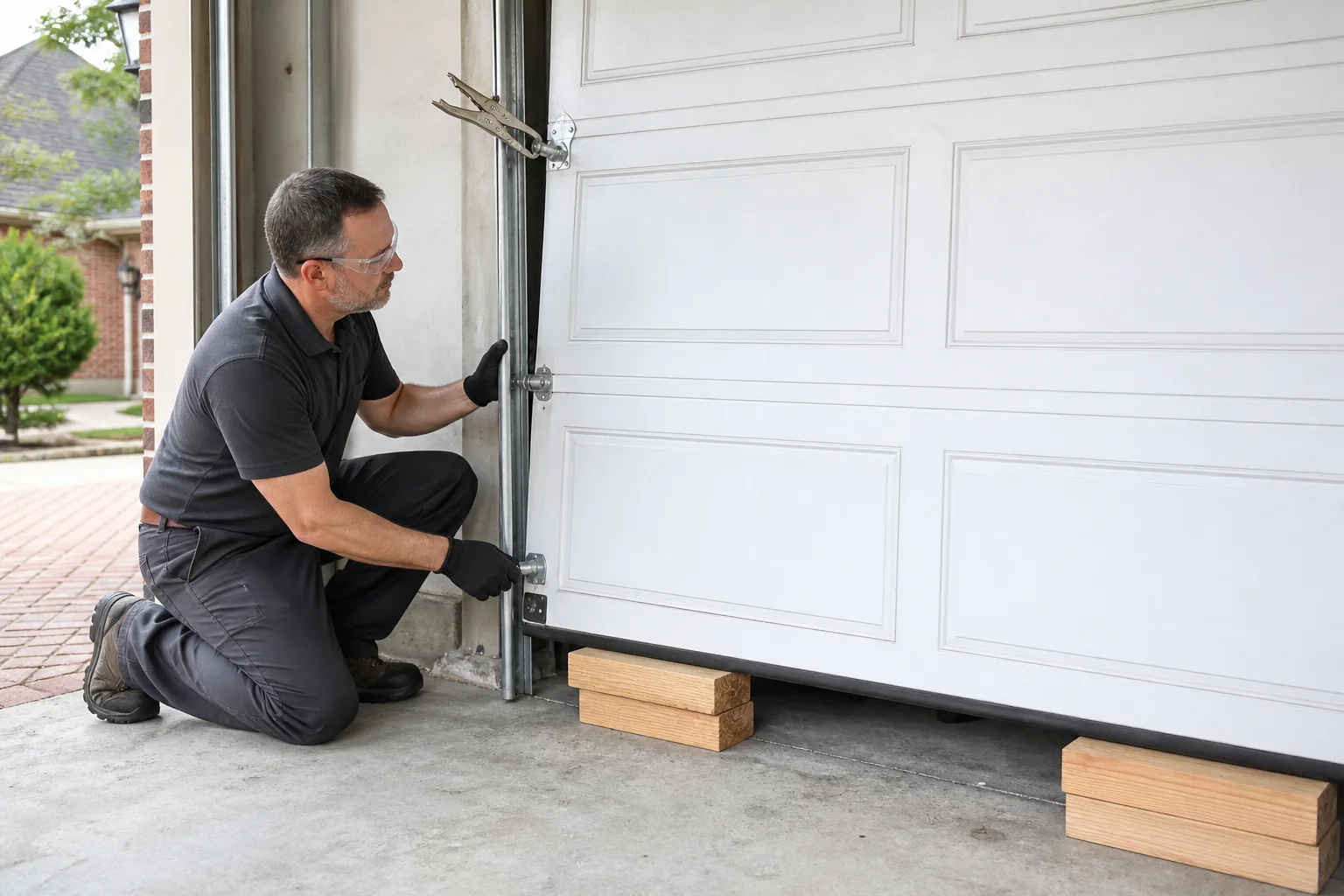
Off-track and stuck
Every extra cycle bends another panel and drags more cable out of line. Leave it where it is, keep the opening clear, and get it stabilized properly.
See what's included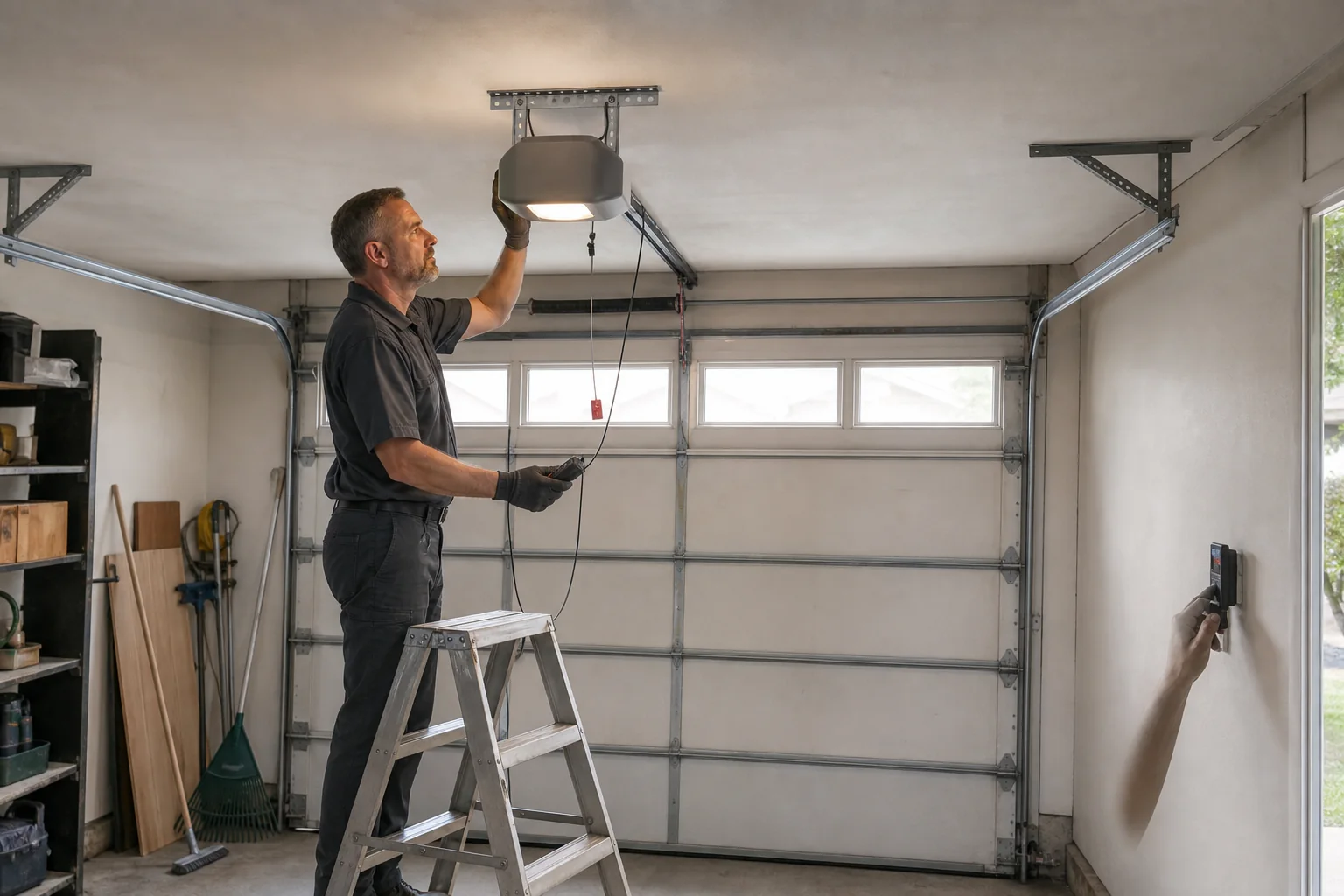
Openers
Motors take the blame for dead springs constantly. Worth knowing which one you've got before you buy an opener you didn't need.
See what's includedRiverside guide
When the wind comes down hard off the passes it carries dust from every stretch of open ground it crosses. In Arlington Heights, with grove rows and worked dirt close to the fence line, a door takes the worst of it. Fine grit packs into the track, rollers stop rolling and start dragging, and the noise shows up long before the failure does.
That matters because a gritty roller and a bent track sound much the same from the kitchen. Tell us whether it's a grind, a bang or a squeal, whether it happens at the same point in the travel every time, and how many weeks it's been building.
The Wood Streets keep most garages at the back, down a long single-lane driveway that occasionally ends at a gate. Hawarden Hills and Canyon Crest run the drive up a slope instead, so a van parks nose-high and nothing near the opening is level.
Orangecrest and Mission Grove give you the plain version: a wide attached double or triple straight off the street, with the family car usually parked against it. Which of those you have changes the time on site and what gets carried in, so it's better said now than found out on the day.
Riverside gets a great many clear afternoons, and a west-facing opening eventually lines the setting sun up with the safety sensor sitting near the floor. The eye is swamped, the opener assumes something is under the door, and it goes back up every time until the sun moves off.
It reads like an electrical fault and it isn't one. Try the door after dark. If it closes happily at nine at night and refuses at five in the afternoon, write that down exactly, and leave the sensors where they're mounted in the meantime.
Send cross streets, the rough size of the door, whether the garage sits behind or in front of the house, and a plain account of what happened. If a car is trapped or the opening won't secure, lead with that. There's no need to work out the failed part yourself.
Take photos from standing height only. Anything that reaches us before 5 p.m. on a weekday gets a real reply the same business day, and the technician confirms the scope and price with you before starting work.
Most common around Riverside
The door stays open, stops, or will not begin closing.
What to do about itA gap appears in the spring above the door or a loud bang precedes a heavy door.
What to do about itSensor lights blink or the door will not close from a remote.
What to do about itThe opener is silent, hums, or runs without moving the door.
What to do about itThe customer wants scope, parts, labor, fees, and alternatives in writing.
What to do about itRiverside questions
The noise was the warning and the stall is the result, so please don't keep trying the button. Grinding that builds over weeks usually means something has been wearing out of alignment, and a door that finally refuses to lift is carrying that fault plus its own weight. Tell us what the noise sounded like and where in the travel it happened.
That's almost always sun in the safety eye rather than a fault in the opener. A low west sun lines up with the sensor near the floor, floods it, and the opener reads that as an obstruction. Shade doesn't fix it permanently, so tell us which way the opening faces and what time it starts, and leave the sensors mounted where they are.
Not with a broken spring. Pulling the release on a door that has lost its counterbalance hands you the full weight of the door, and it will drop fast if it gets away from you. Leave it closed, keep the opening clear of cars and people, and don't touch the springs, cables or the brackets at the bottom corners.
Easily. A film of fine grit on the lens weakens the beam until the opener stops trusting it, and after a windy spell that film builds fast. Wipe both lenses with a dry soft cloth and check the brackets are still square to each other. If it still refuses, tell us the state of the lights. Don't tape or jumper them.
Start with power. Check the outlet the opener is plugged into with something else, and check whether a breaker or a GFCI has tripped. If the outlet is live and the unit is still dead, stop there and tell us. Also mention whether the door will move by hand once released, because that tells the technician a lot before arriving.
You'll get a scope and a price to look at before anything is done, and you're free to decline any part of it. If replacement genuinely comes up, the technician should be able to explain what makes repair a poor bet on your particular door. Ask that question out loud. Using this site is free and no payment goes through it.
Riverside, CA
Describe the sound, say where the garage sits, and add your cross streets. You'll have the scope and the price before anyone starts.