

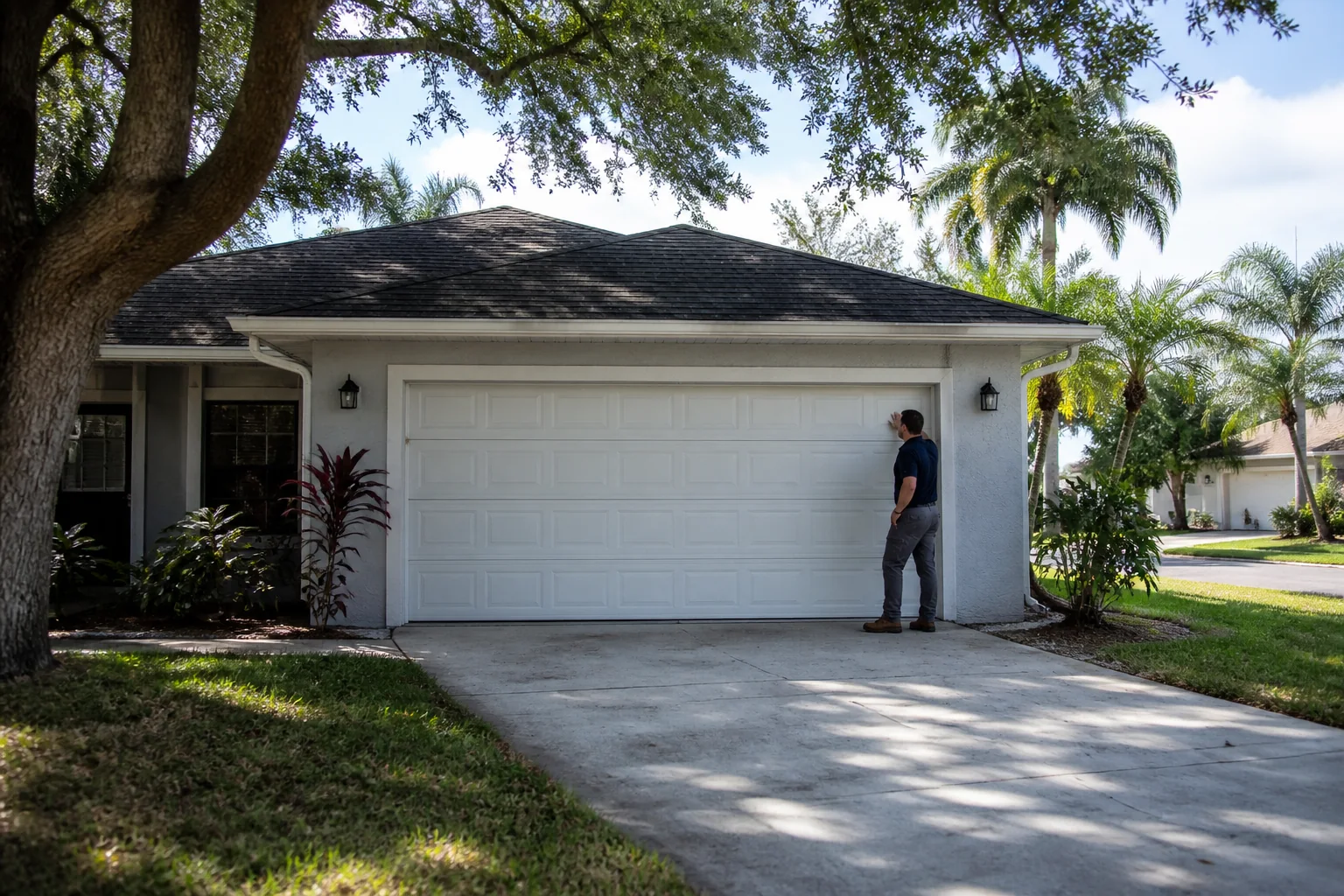
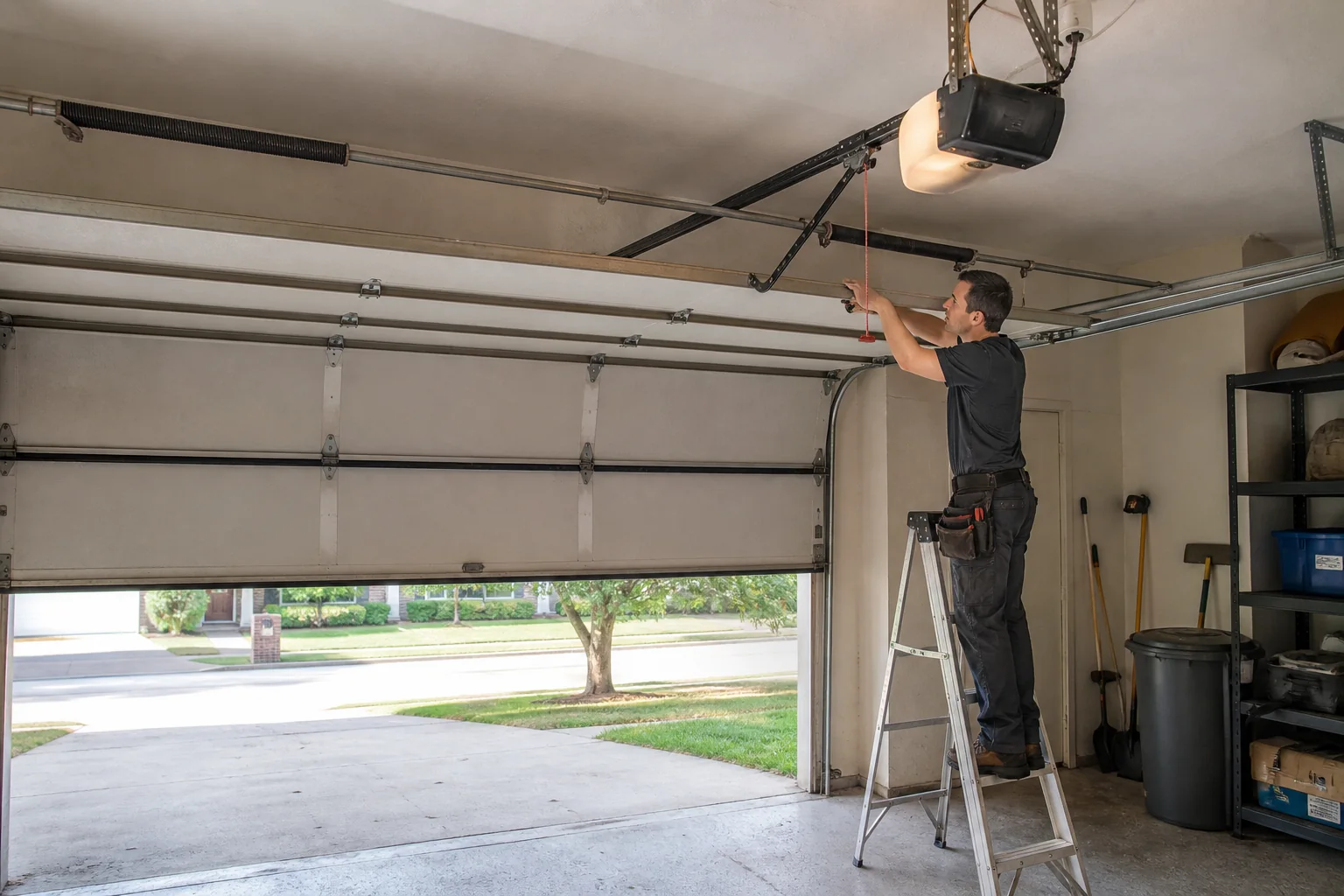
General repair
Garage Door Repair
Tell us what the door is doing and we'll get it in front of someone who can fix it — with the price agreed before the work starts.
See what's includedGarage door repair · Lakeland, FL
Most Lakeland openers die in a storm, not of old age. Tell us what yours is doing and see the fault and the price before any work starts.
South Lake Morton Historic District, Dixieland, Beacon Hill, and the streets either side of them.
Springs, cables, openers, sensors, tracks, panels, seals, and full replacements.
You hear what failed and what it costs first. Saying no at that point costs you nothing.
Ask before 5 p.m. on a weekday and you hear back that business day.
Why us for this door
A surge through the circuit takes out logic boards, and a brownout can leave an opener half alive: lights on, motor silent, remotes dead. If other things in the house stopped at the same moment, that's a supply story, and replacing the opener without checking it means doing it again next season.
So the useful detail is what else stopped when the door did. Add whether the garage is set back off the lake roads around Grasslands or Oakbridge, and how wide the door is. What actually failed and what it costs is put to you before work begins.
Get my door fixedWhere we work
Rear-set garages around South Lake Morton and Dixieland are a tight squeeze; Oakbridge and Grasslands run wide doubles. Say which is yours.
Plenty of the work we take isn't in Lakeland proper. These are the towns around it and what tends to be different about a door there.
Don't see your street or your town? These are the places where the housing changes enough to change the job — not the edge of where we go, and not a promise about your exact address either. We take work across Lakeland and the wider Florida area, and the address you send is what actually gets checked.Check my address
Repairs in Lakeland
General repair
Tell us what the door is doing and we'll get it in front of someone who can fix it — with the price agreed before the work starts.
See what's included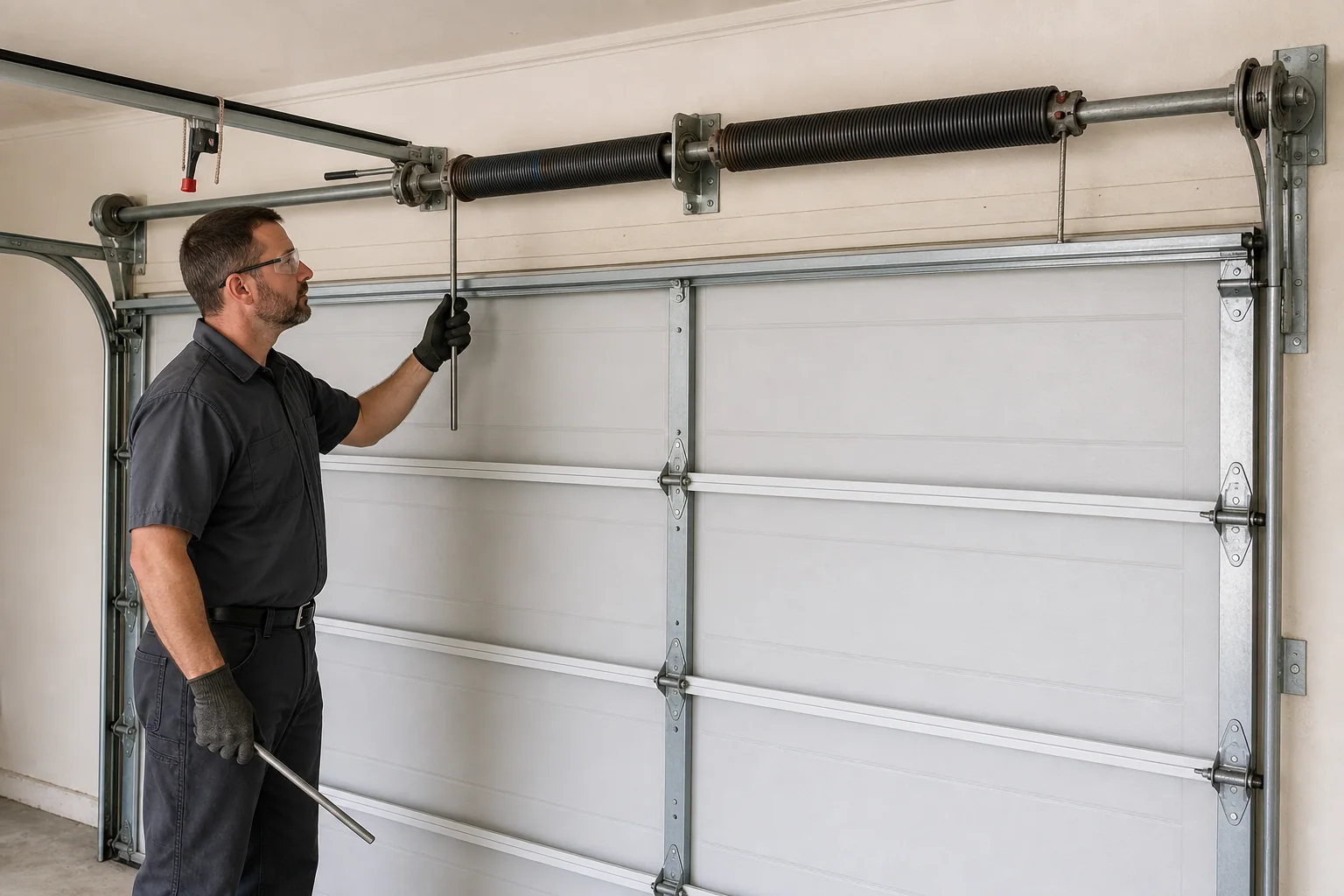
Springs and balance
If your door suddenly weighs a couple hundred pounds, a spring has almost certainly let go. Leave it down, keep everyone clear, and let someone with the right winding bars deal with it.
See what's included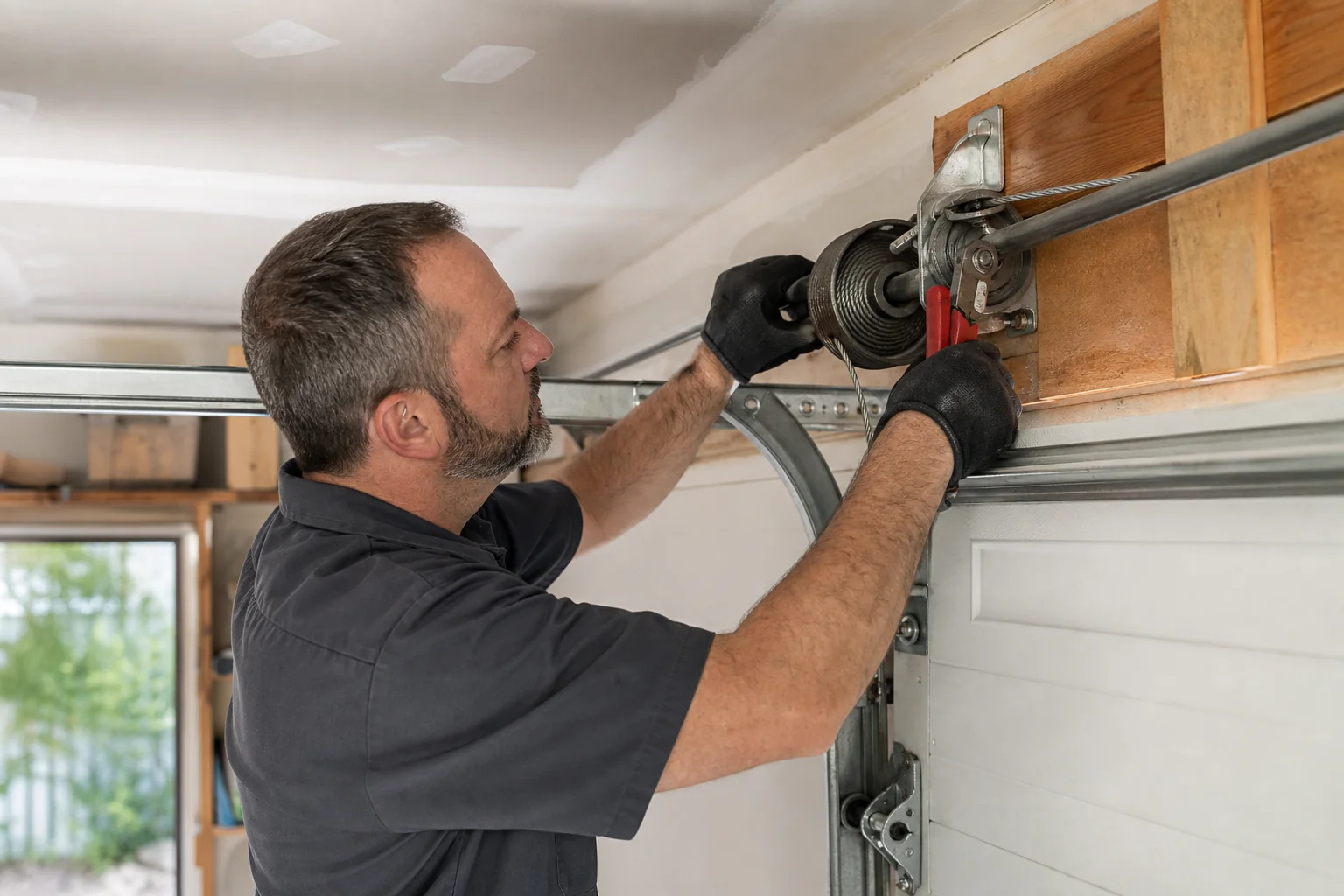
Cables and drums
One corner sitting lower, or a cable hanging off its drum, means the lift system is out of balance. It wants looking at before the next cycle, not after.
See what's included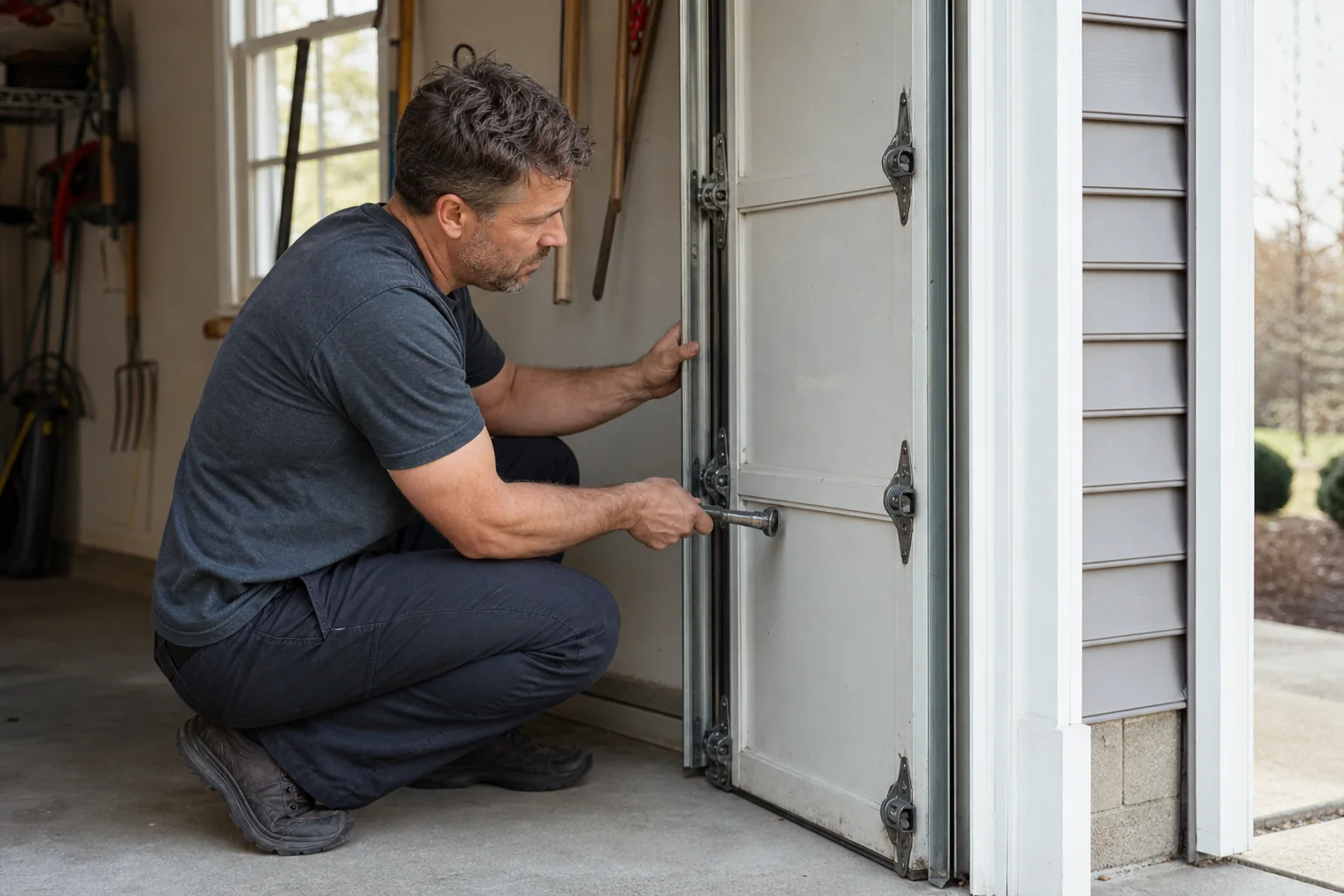
Tracks, rollers, hardware
Grinding in the same spot, a door that shakes the whole wall, a roller creeping out of its track — all cheap to sort now, all expensive once the door comes off.
See what's included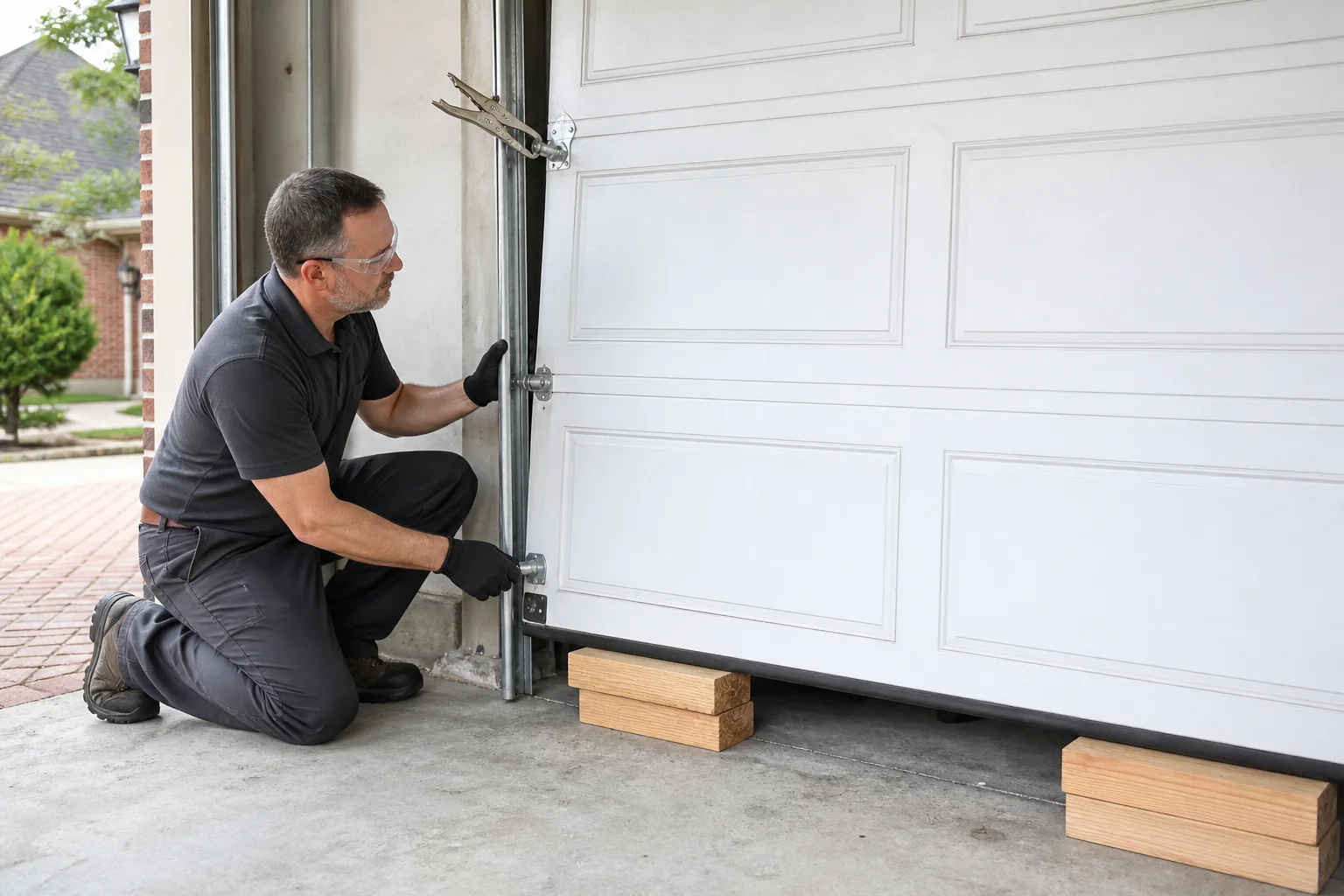
Off-track and stuck
Every extra cycle bends another panel and drags more cable out of line. Leave it where it is, keep the opening clear, and get it stabilized properly.
See what's included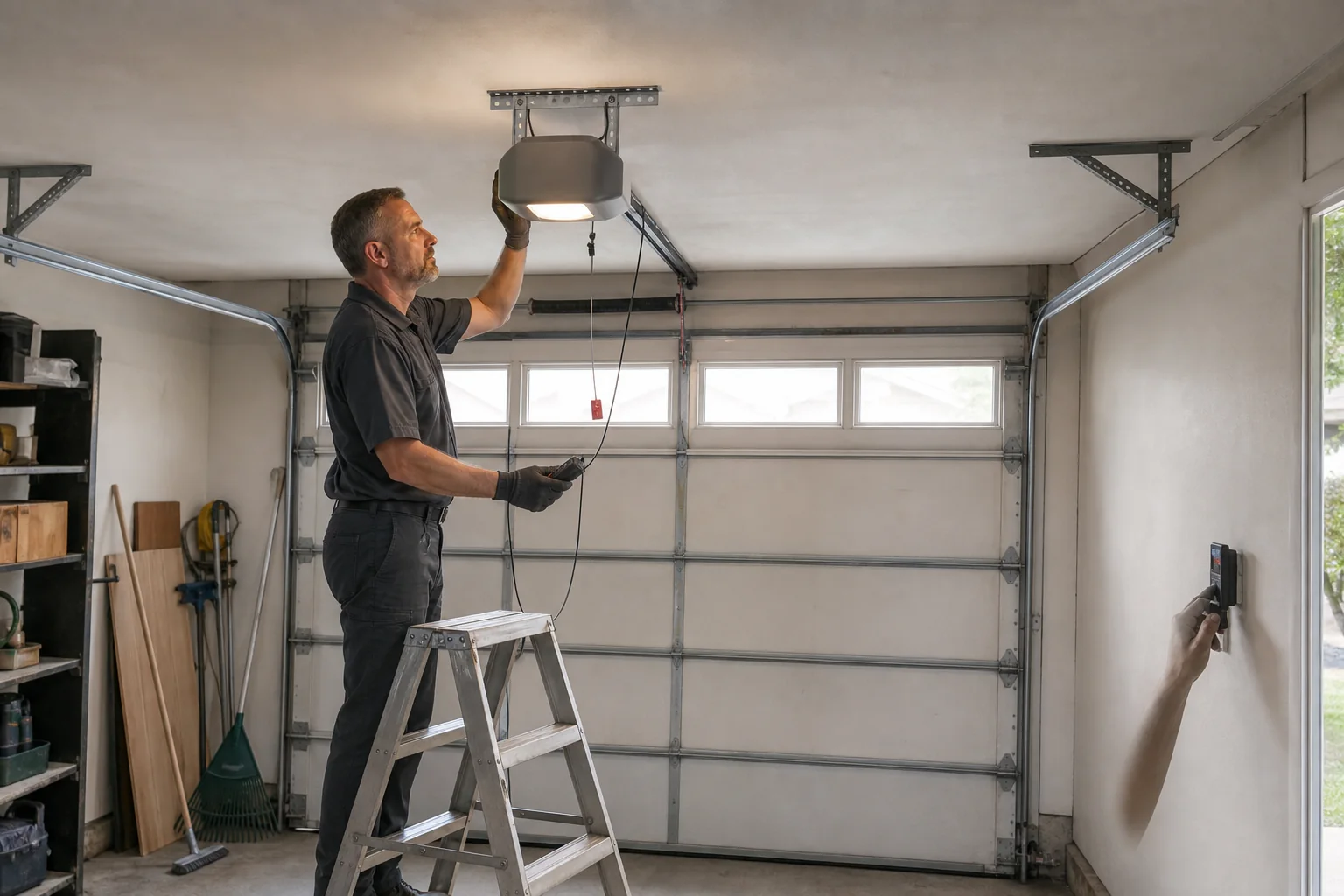
Openers
Motors take the blame for dead springs constantly. Worth knowing which one you've got before you buy an opener you didn't need.
See what's includedLakeland guide
Summer afternoons here bring storms with a lot of lightning in them, and the part that usually fails in a garage isn't the motor. It's the logic board inside the opener, the wall control, or the small receiver listening for the remote. A strike doesn't have to hit the house; a surge down the circuit will do it.
So say whether the door died during or right after a storm, and whether anything else on that circuit went with it: the freezer, the outlet the opener plugs into, the lights on the unit. An opener that hums but won't move the door is a different fault from one gone completely dark.
Around Lake Morton, through Dixieland and over in Beacon Hill, plenty of houses have a small garage behind the house rather than attached to it, reached down a side drive sized for a car nobody builds anymore. A full-size service van isn't getting back there.
That doesn't change the repair. It changes the day. Parts and tools come in on foot, and a spring change in a low single-car garage with a workbench down one wall takes longer than the same job in an open two-car bay. Tell us how the garage is reached and how much clear room is inside.
Newer builds in Grasslands and Oakbridge, and much of the rebuilt stock through Cleveland Heights, run a single sixteen-foot door off one opener. That's the largest moving object in the house, and when it's how everybody comes and goes it can cycle a dozen times a day.
Springs are rated in cycles rather than years, so a busy household wears one out faster than a quiet one. If the door has been getting slower, louder, or heavier when you lift it by hand, that's the spring talking. Tell us roughly how often it runs and whether both springs above the door are intact.
The address, the rough width of the door, whether it's attached or set back behind the house, when it last worked normally, and whether the failure lined up with a storm or a power cut. Say straight away if a vehicle is shut in.
Take two photos from where you stand: the whole door closed, and the opener unit overhead. No ladders. Anything sent before 5 p.m. on a weekday gets a reply from a person the same business day, and a technician agrees the scope and the price before starting.
Most common around Lakeland
The door stays open, stops, or will not begin closing.
What to do about itA gap appears in the spring above the door or a loud bang precedes a heavy door.
What to do about itSensor lights blink or the door will not close from a remote.
What to do about itThe opener is silent, hums, or runs without moving the door.
What to do about itThe customer wants scope, parts, labor, fees, and alternatives in writing.
What to do about itLakeland questions
Check power before you assume the worst. Look at the breaker for the garage circuit and at any GFCI outlet the opener is plugged into, since those trip readily in a surge. If power is present and the unit is still dead, a lightning surge has probably taken the board or the wall control. Tell us whether the opener light comes on at all.
That's the opener telling you the safety sensors are unhappy, and hold-to-close exists so you can shut the door in an emergency, not as a daily habit. Look at the two eyes near the floor for dirt, a knocked bracket, or a loose wire, and tell us whether their lights are steady, blinking or out.
A spring has broken. The counterbalance that made the door feel light is gone, so the opener and the cables are carrying weight they were never meant to carry. Leave the door down, keep the opening clear, and don't touch the springs, cables, or the brackets at the bottom corners.
No. They're meant to sit low, within about six inches of the floor, because their whole purpose is catching something at ground level. Raising them or angling them away to stop nuisance reversals defeats the point. If they keep triggering, the answer is a firmer bracket, a clean lens, or a fresh run of wire.
Two likely causes. The receiver in the opener may just need the remote paired to it again, which takes a minute, or the surge damaged the receiver itself. Try the wall control first. If the wall control still runs the door and only the remote is dead, say that clearly, because it points at a small part rather than a whole unit.
Yes. The technician looks at the door and the opener, explains what failed, and puts the scope and the price to you before replacing anything. You can turn it down. Nothing is billed through this site and there's no charge for the request.
Lakeland, FL
What stopped, what else stopped with it, and your cross streets. Scope and price are settled with you before anything is replaced.