

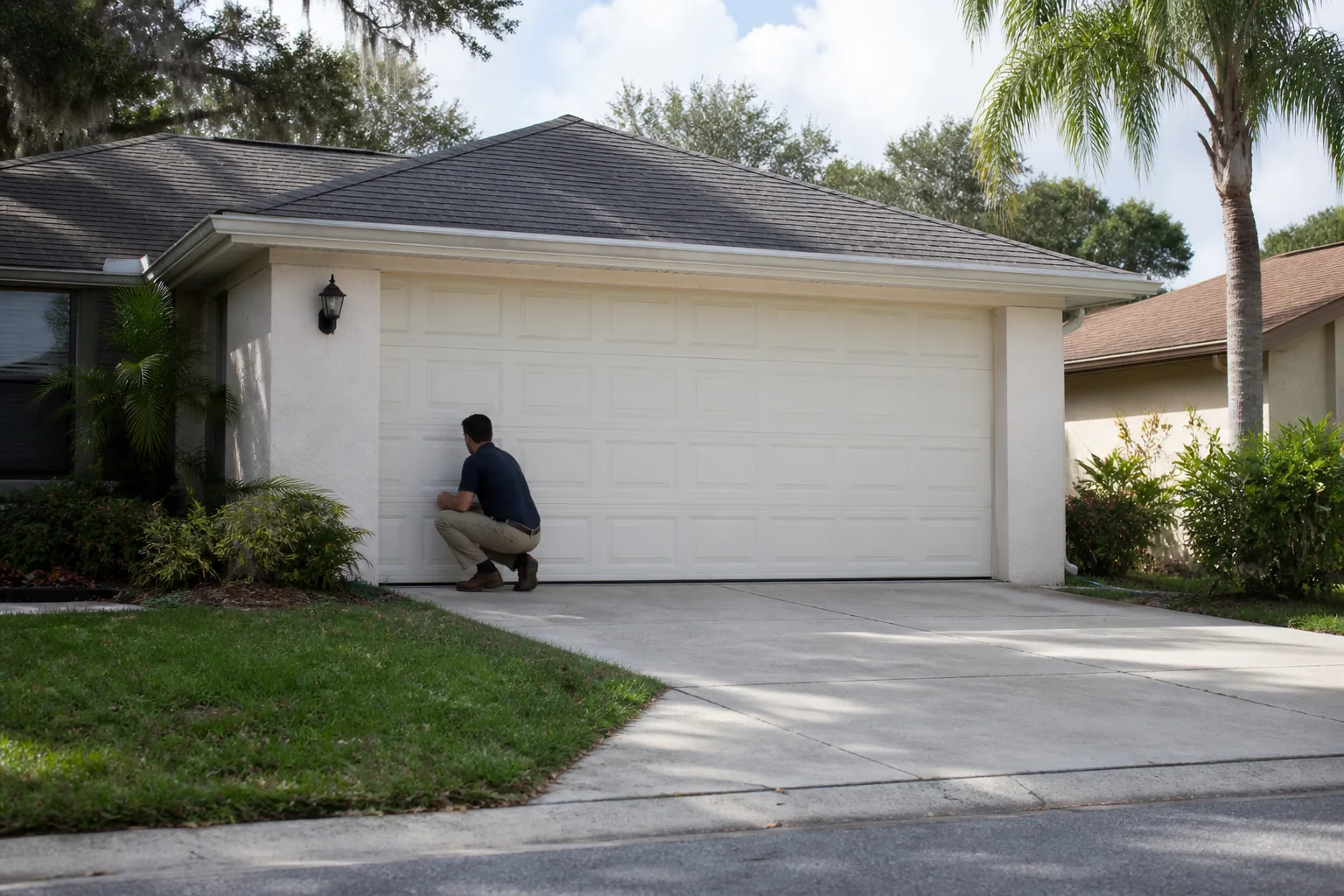
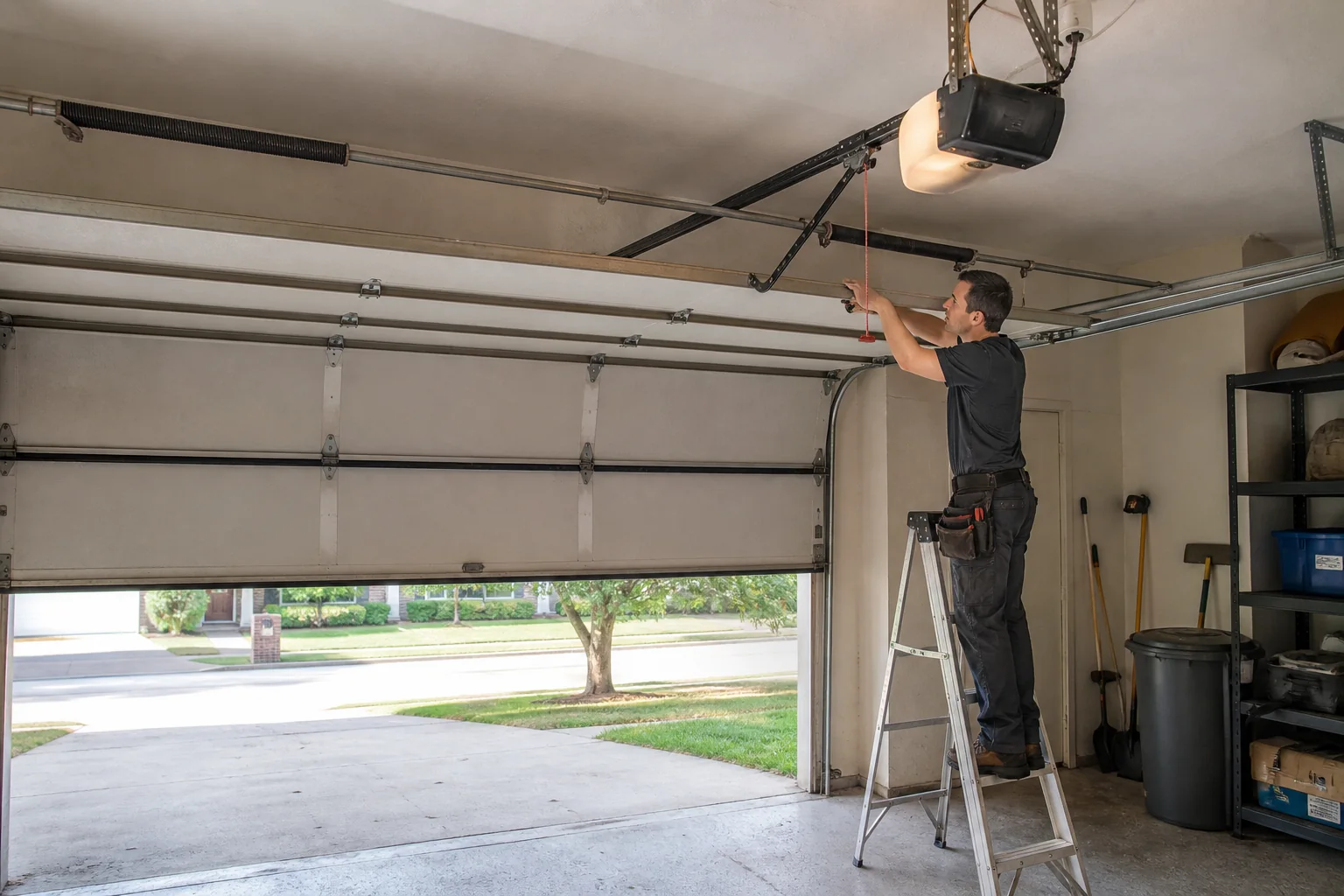
General repair
Garage Door Repair
Tell us what the door is doing and we'll get it in front of someone who can fix it — with the price agreed before the work starts.
See what's includedGarage door repair · Orlando, FL
Before you agree to a new panel, find out what your association allows. Say what the door is doing and see the fault and the price first.
Baldwin Park, Lake Nona, College Park, and the streets either side of them.
Springs, cables, openers, sensors, tracks, panels, seals, and full replacements.
You hear what failed and what it costs first. Saying no at that point costs you nothing.
Ask before 5 p.m. on a weekday and you hear back that business day.
Why us for this door
Baldwin Park, Lake Nona and most of the newer communities specify color, panel style and sometimes glazing, and a door fitted outside those rules comes back off at your expense. Anyone quoting a replacement here should be asking about your association before they ask about your budget.
A good number of these turn out not to need a new door at all: a section repair or a re-square puts it right for a fraction. Say what the damage is and which community you're in. The options and the prices are put to you before anything is ordered.
Get my door fixedWhere we work
Baldwin Park and Lake Nona have architectural standards; College Park and Delaney Park mostly don't. Say which, and what the damage looks like.
Plenty of the work we take isn't in Orlando proper. These are the towns around it and what tends to be different about a door there.
Don't see your street or your town? These are the places where the housing changes enough to change the job — not the edge of where we go, and not a promise about your exact address either. We take work across Orlando and the wider Florida area, and the address you send is what actually gets checked.Check my address
Repairs in Orlando
General repair
Tell us what the door is doing and we'll get it in front of someone who can fix it — with the price agreed before the work starts.
See what's included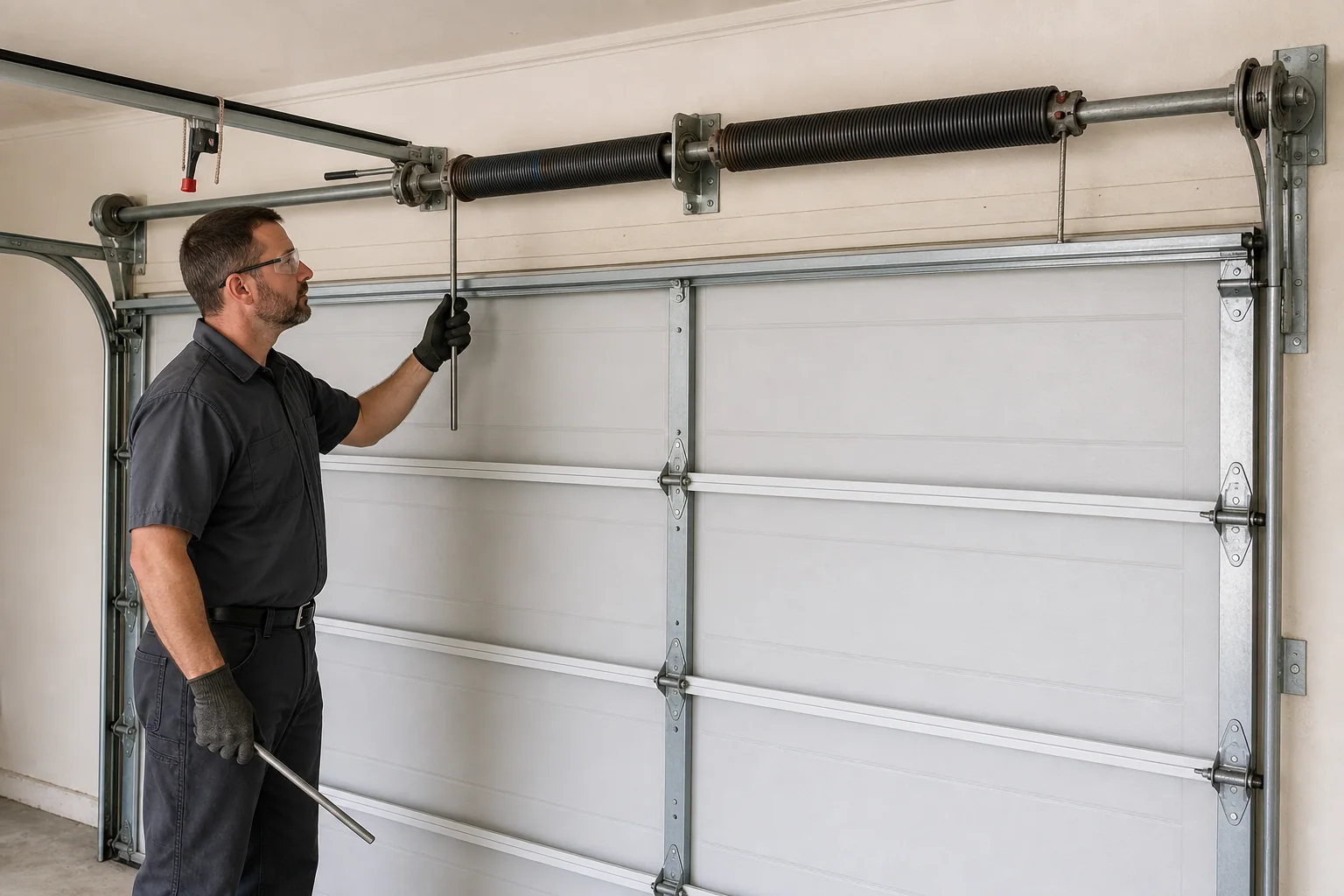
Springs and balance
If your door suddenly weighs a couple hundred pounds, a spring has almost certainly let go. Leave it down, keep everyone clear, and let someone with the right winding bars deal with it.
See what's included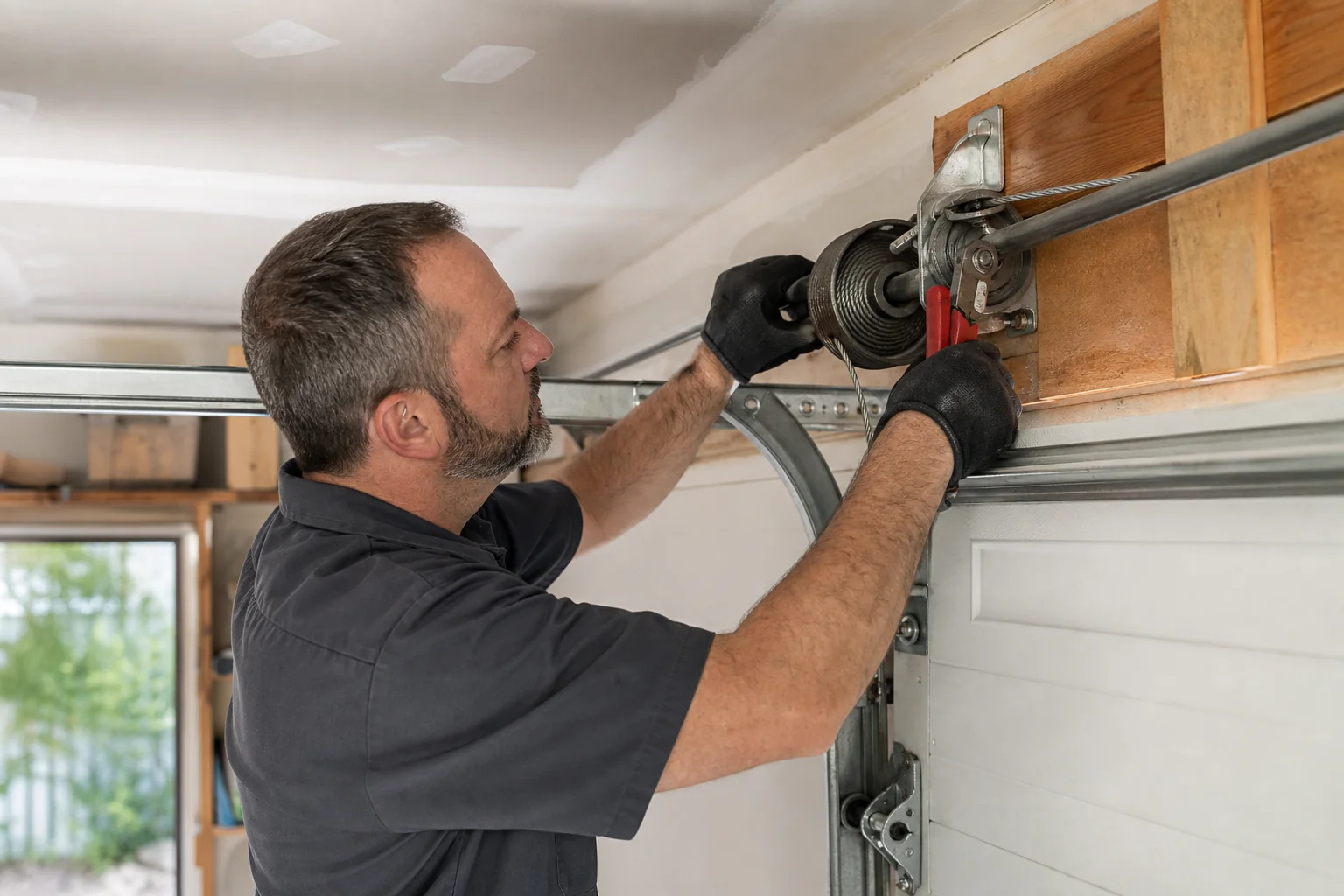
Cables and drums
One corner sitting lower, or a cable hanging off its drum, means the lift system is out of balance. It wants looking at before the next cycle, not after.
See what's included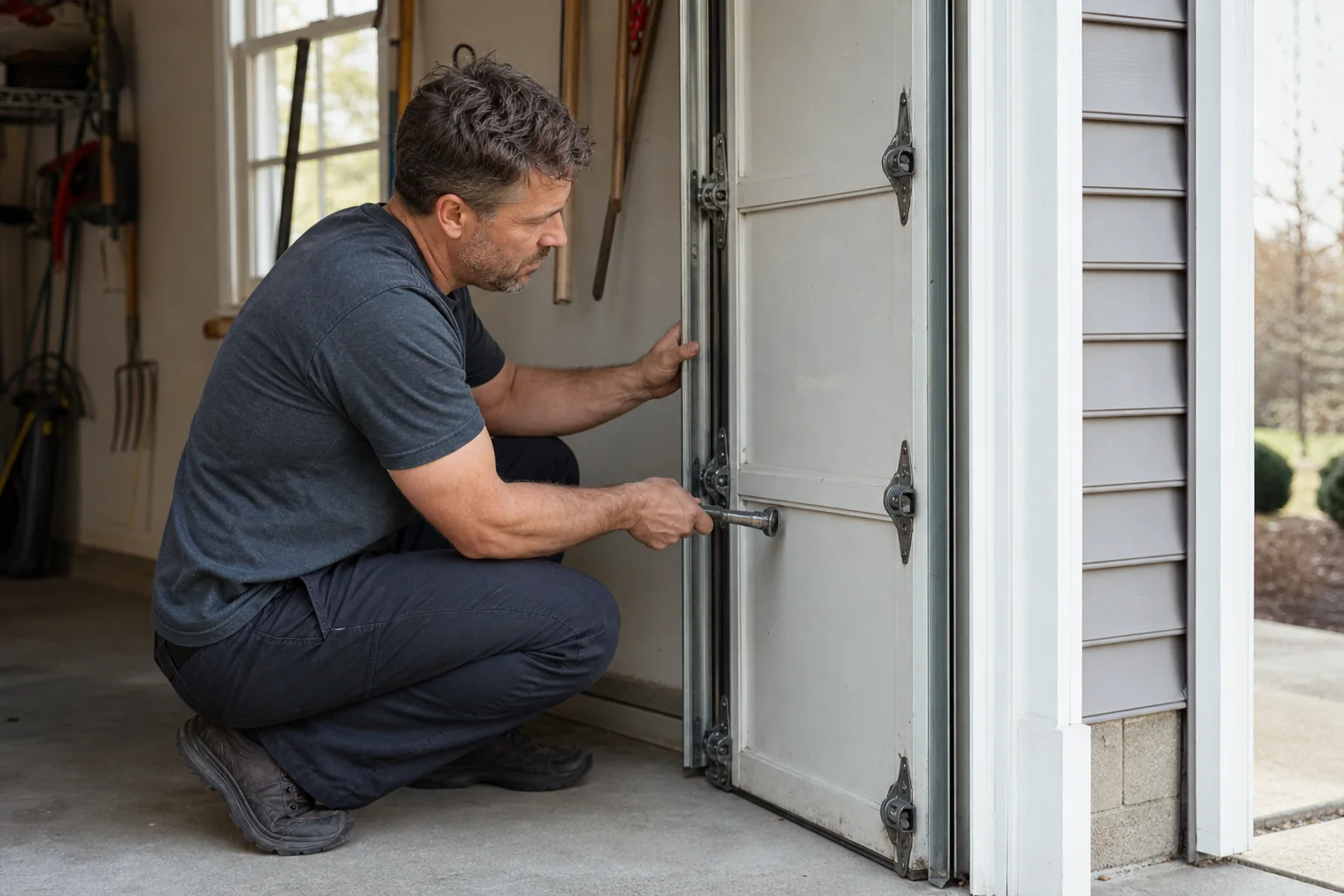
Tracks, rollers, hardware
Grinding in the same spot, a door that shakes the whole wall, a roller creeping out of its track — all cheap to sort now, all expensive once the door comes off.
See what's included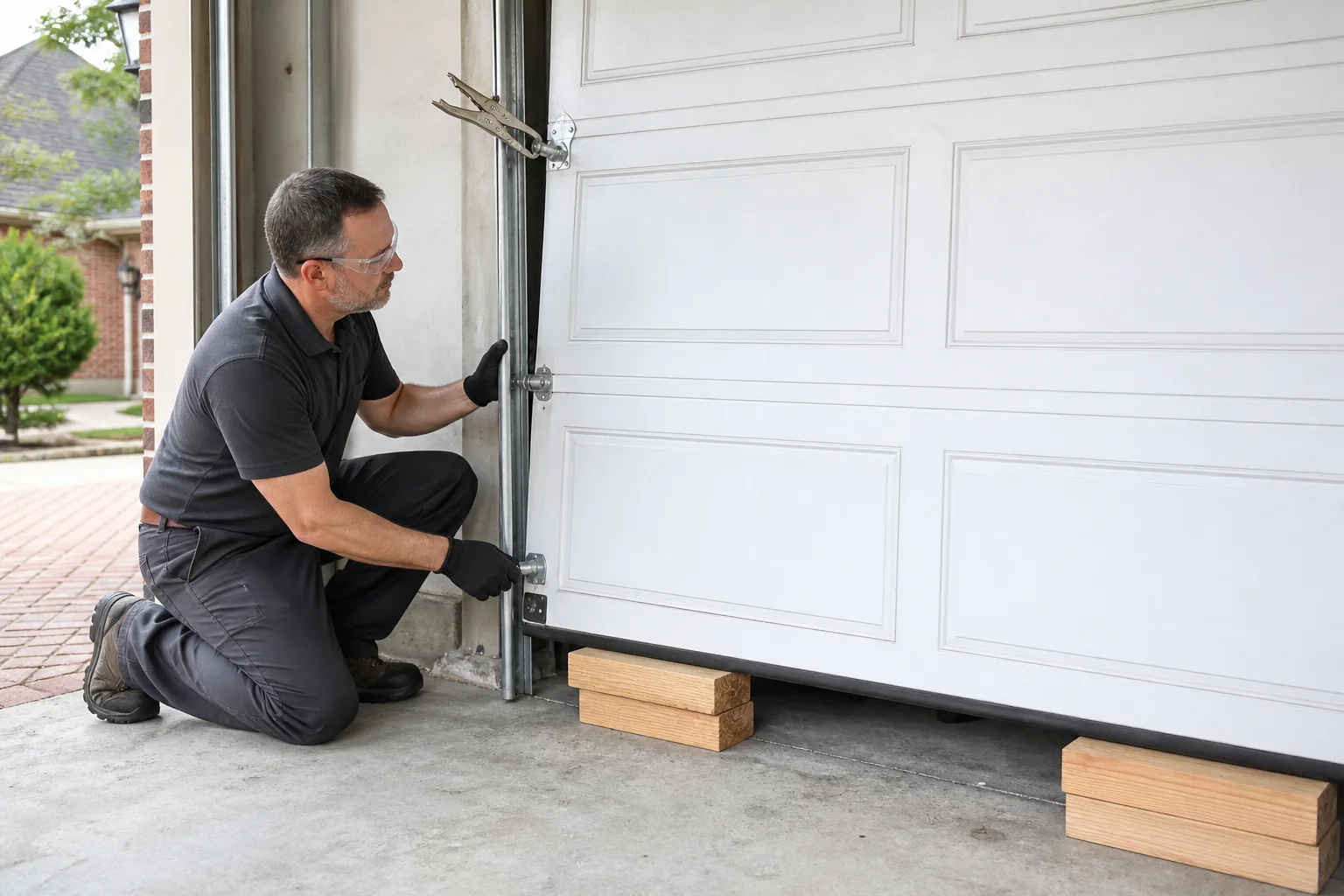
Off-track and stuck
Every extra cycle bends another panel and drags more cable out of line. Leave it where it is, keep the opening clear, and get it stabilized properly.
See what's included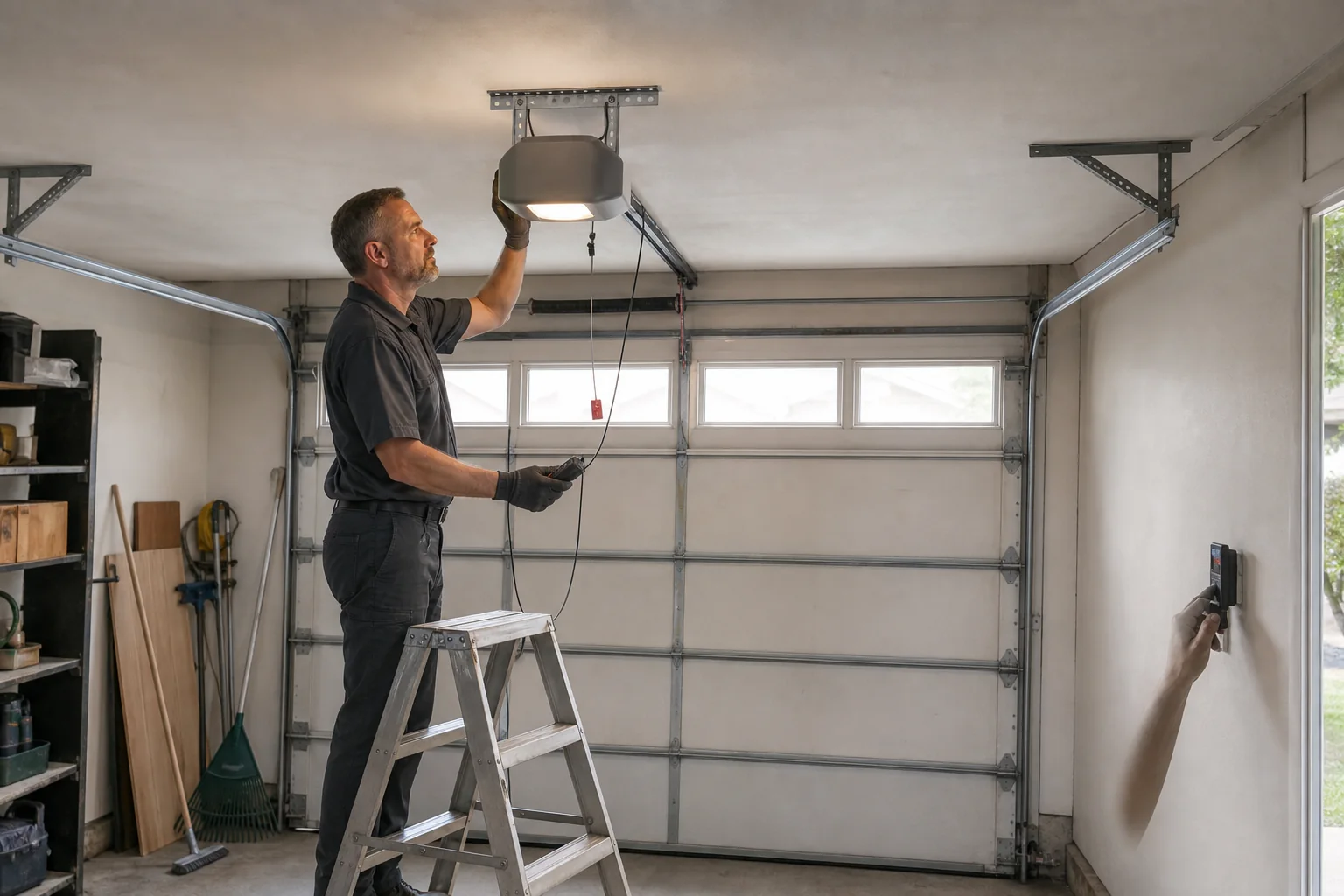
Openers
Motors take the blame for dead springs constantly. Worth knowing which one you've got before you buy an opener you didn't need.
See what's includedOrlando guide
Master-planned neighborhoods like Baldwin Park and Lake Nona hold their homes to written architectural standards, and garage doors are usually named in them. It's fine right up until one section gets damaged and the obvious fix is to swap that section. A new panel arrives in the original factory color, and your door has been standing in Florida sun for years.
The result can be a sound repair your association won't sign off on. Read the standards, or ask the association, before you approve a partial replacement. Say if you live somewhere with rules like these and the technician can price it both ways: the single section, and a whole door that matches itself.
College Park, Audubon Park and Delaney Park are full of one-story houses with a single narrow garage, or with a carport somebody enclosed later. Headroom above the opening is often minimal, the side room beside the tracks is tighter still, and the framing behind the drywall isn't always where a modern opener wants to bolt itself.
If that's your house, measure what you can safely reach from the floor: the width of the opening, the height of the opening, and the gap between the top of the door and the ceiling. With those three numbers you'll know which products are ruled out before anybody drives over.
Here's a pattern worth recognizing. The door closes fine all morning, then from mid-afternoon it goes down a foot and comes straight back up. It isn't a fault in the door. Low sun is shining directly into one of the two safety sensors near the floor and swamping the beam, and the opener reads that as an obstruction.
West-facing garages get this, and around Conway and the older streets off the lake chain there are plenty of them. A small hood over the sensor eye, or swapping the two units so the receiver faces away from the light, normally settles it. Don't tape over a sensor or run a jumper past it to force the door shut.
The neighborhood or cross streets, whether the garage faces the street or a rear lane, single or double door, and the behavior you're seeing, including the time of day if there's a pattern to it. Mention any architectural rules you already know about, since they shape the options.
Photos from ground level, please, not from a ladder. Send it before 5 p.m. on a weekday and you'll get a human response the same business day, and the technician confirms the scope and the price with you before starting the work.
Most common around Orlando
The door stays open, stops, or will not begin closing.
What to do about itA gap appears in the spring above the door or a loud bang precedes a heavy door.
What to do about itSensor lights blink or the door will not close from a remote.
What to do about itThe opener is silent, hums, or runs without moving the door.
What to do about itThe customer wants scope, parts, labor, fees, and alternatives in writing.
What to do about itOrlando questions
With the door fully closed, pull the red release cord hanging from the trolley and try lifting by hand. If it comes up smoothly and stays put, the opener is the problem and the door is fine. If it feels enormously heavy or won't budge, stop immediately, leave it down and tell us that. A heavy door means a spring or cable has failed and lifting it's dangerous.
That's almost always sun in the safety sensor. Low western light hits the receiving eye and drowns out the beam from the other side, so the opener thinks something is in the way. Shading the sensor or reversing which side the receiver sits on fixes it properly. Holding the wall button down every afternoon isn't a fix.
A spring has broken. All the weight the spring was balancing is now on the cables and the opener, and neither is built for it. Leave the door where it is, keep the opening clear of people and cars, and don't touch the springs, cables, or the brackets at the bottom corners.
No. Those sensors are the reason a closing door stops for a child or a pet in the opening, and taping one is asking the door to close blind. If you really must secure the garage, hold the wall button down so you're watching the door the whole way, then leave it alone and tell us which light is out.
Power is reaching the unit, so the fault is between the motor and the door. A stripped drive gear, a snapped chain or belt, or a trolley left disconnected after somebody used the release cord will all look like this. Watch the trolley while a second person presses the button and tell us whether it travels or stands still.
Ask for the repair option and the replacement option side by side, with what each one covers. The technician gives you the scope and the price before beginning, and you can decline either. If your neighborhood has architectural rules, say so up front, because that genuinely does affect whether a single new section is workable.
Orlando, FL
Photos of the damage, your community, and your cross streets. Repair and replacement are priced alongside each other before you decide.