

General repair
Garage Door Repair
Tell us what the door is doing and we'll get it in front of someone who can fix it — with the price agreed before the work starts.
See what's includedGarage door repair · Charleston, SC
Salt gets into the hardware long before the door quits. Tell us what your Charleston door is doing and see the price before work.
James Island, Johns Island, Daniel Island, and the streets either side of them.
Springs, cables, openers, sensors, tracks, panels, seals, and full replacements.
You hear what failed and what it costs first. Saying no at that point costs you nothing.
Ask before 5 p.m. on a weekday and you hear back that business day.
Why us for this door
Pressure under a double door doesn't release the way it does around a wall. It lifts and holds, working the rollers against the track and the door against its stops, and the damage shows up afterward as a door that runs rough rather than one that's visibly bent.
Salt has usually been working on the bottom brackets the whole time, so the fixings are the first thing to check. Say how close to the water you're and whether the garage is tucked under the house. Price agreed with you before work.
Get my door fixedWhere we work
James Island and Johns Island sit exposed; Cannonborough-Elliotborough and Wagener Terrace run tight and old. Say which is yours.
Plenty of the work we take isn't in Charleston proper. These are the towns around it and what tends to be different about a door there.
Don't see your street or your town? These are the places where the housing changes enough to change the job — not the edge of where we go, and not a promise about your exact address either. We take work across Charleston and the wider South Carolina area, and the address you send is what actually gets checked.Check my address
Repairs in Charleston
General repair
Tell us what the door is doing and we'll get it in front of someone who can fix it — with the price agreed before the work starts.
See what's included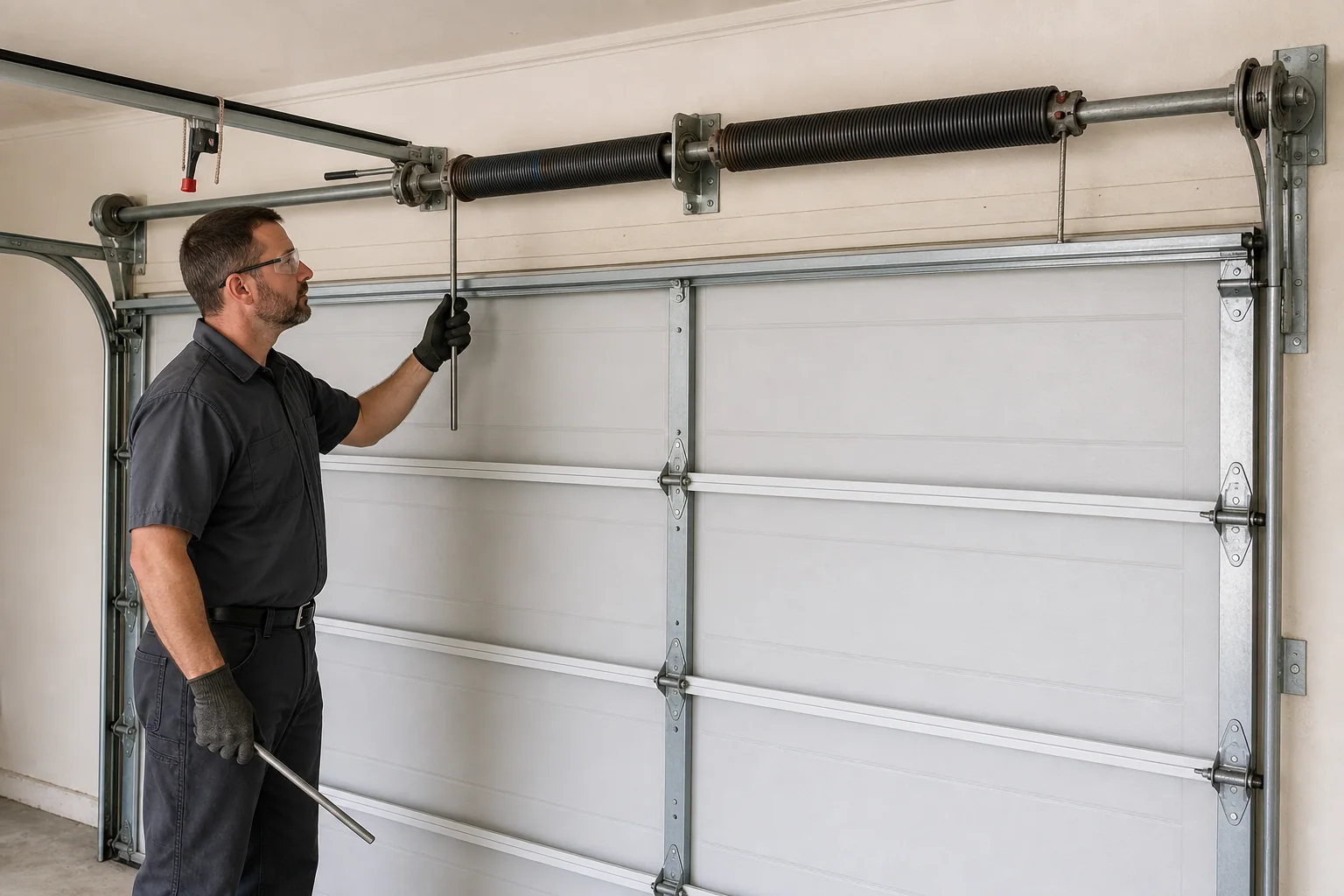
Springs and balance
If your door suddenly weighs a couple hundred pounds, a spring has almost certainly let go. Leave it down, keep everyone clear, and let someone with the right winding bars deal with it.
See what's included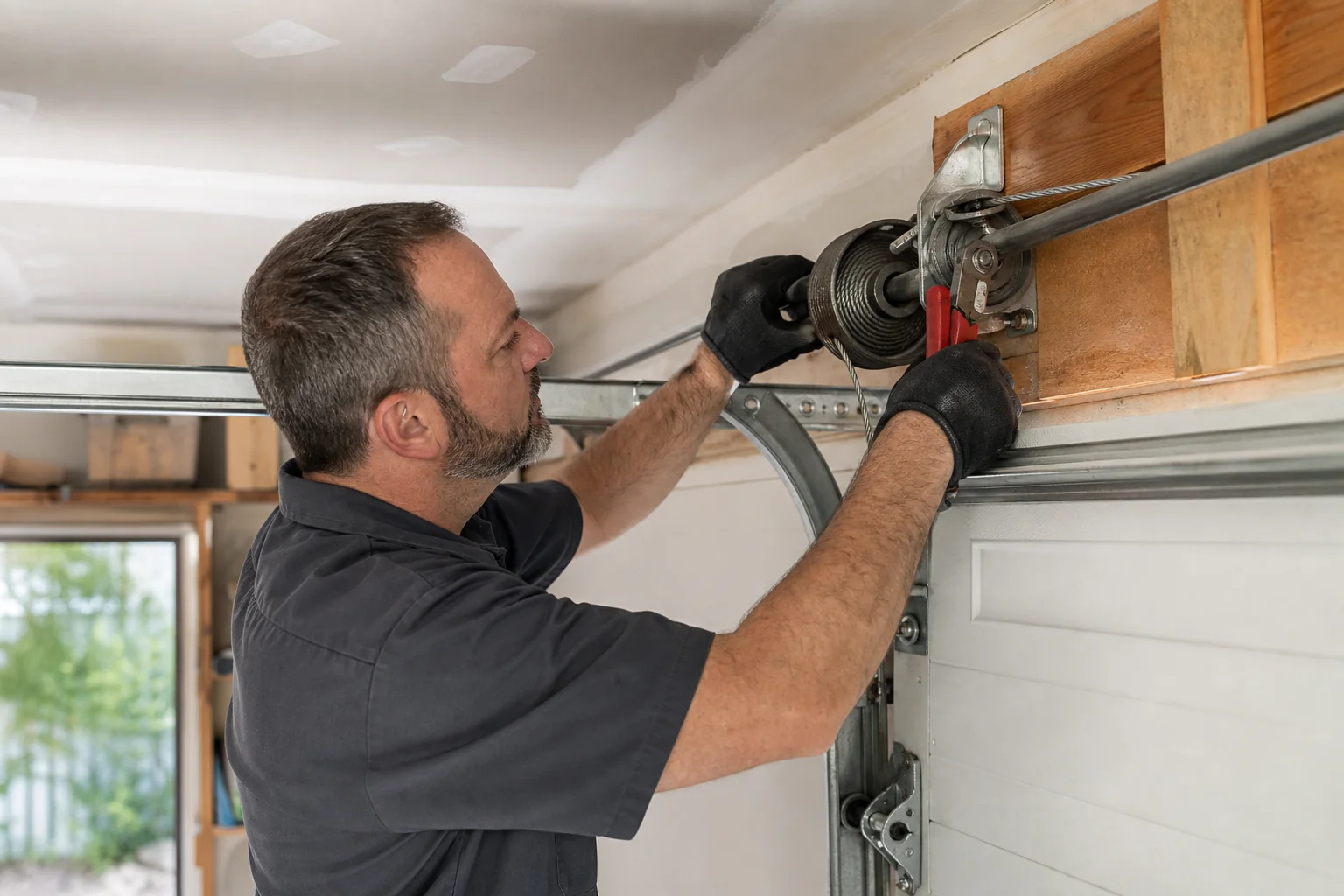
Cables and drums
One corner sitting lower, or a cable hanging off its drum, means the lift system is out of balance. It wants looking at before the next cycle, not after.
See what's included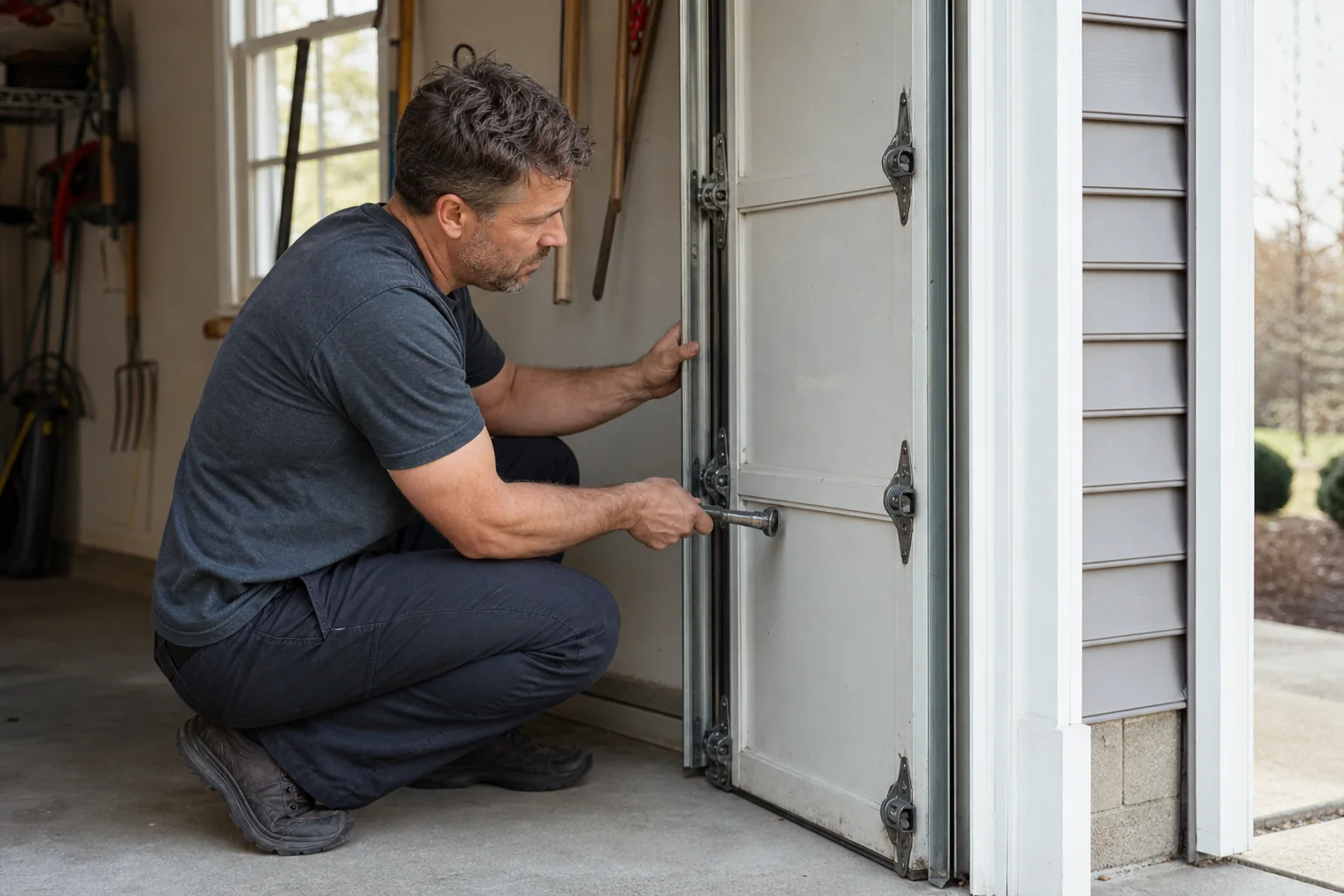
Tracks, rollers, hardware
Grinding in the same spot, a door that shakes the whole wall, a roller creeping out of its track — all cheap to sort now, all expensive once the door comes off.
See what's included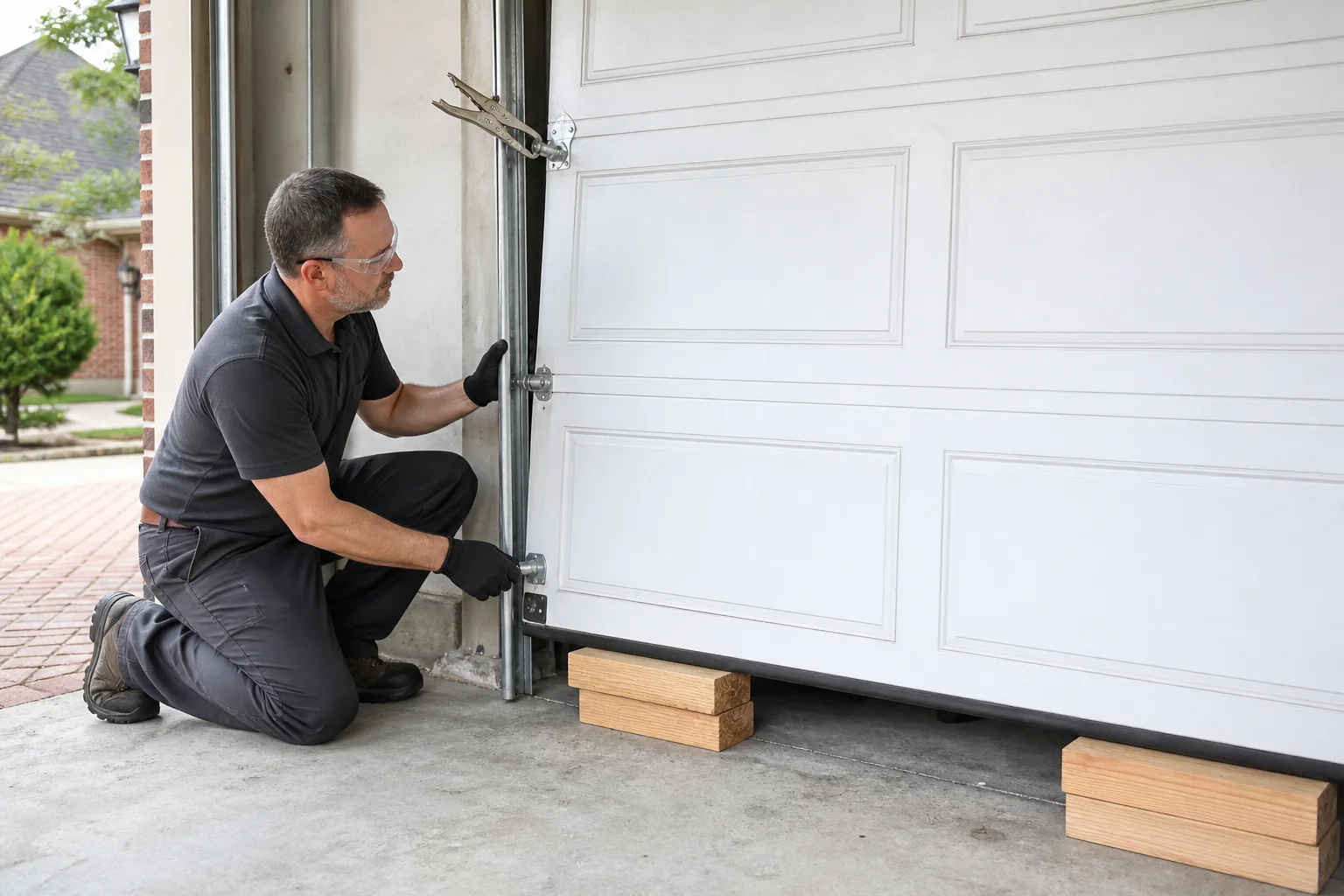
Off-track and stuck
Every extra cycle bends another panel and drags more cable out of line. Leave it where it is, keep the opening clear, and get it stabilized properly.
See what's included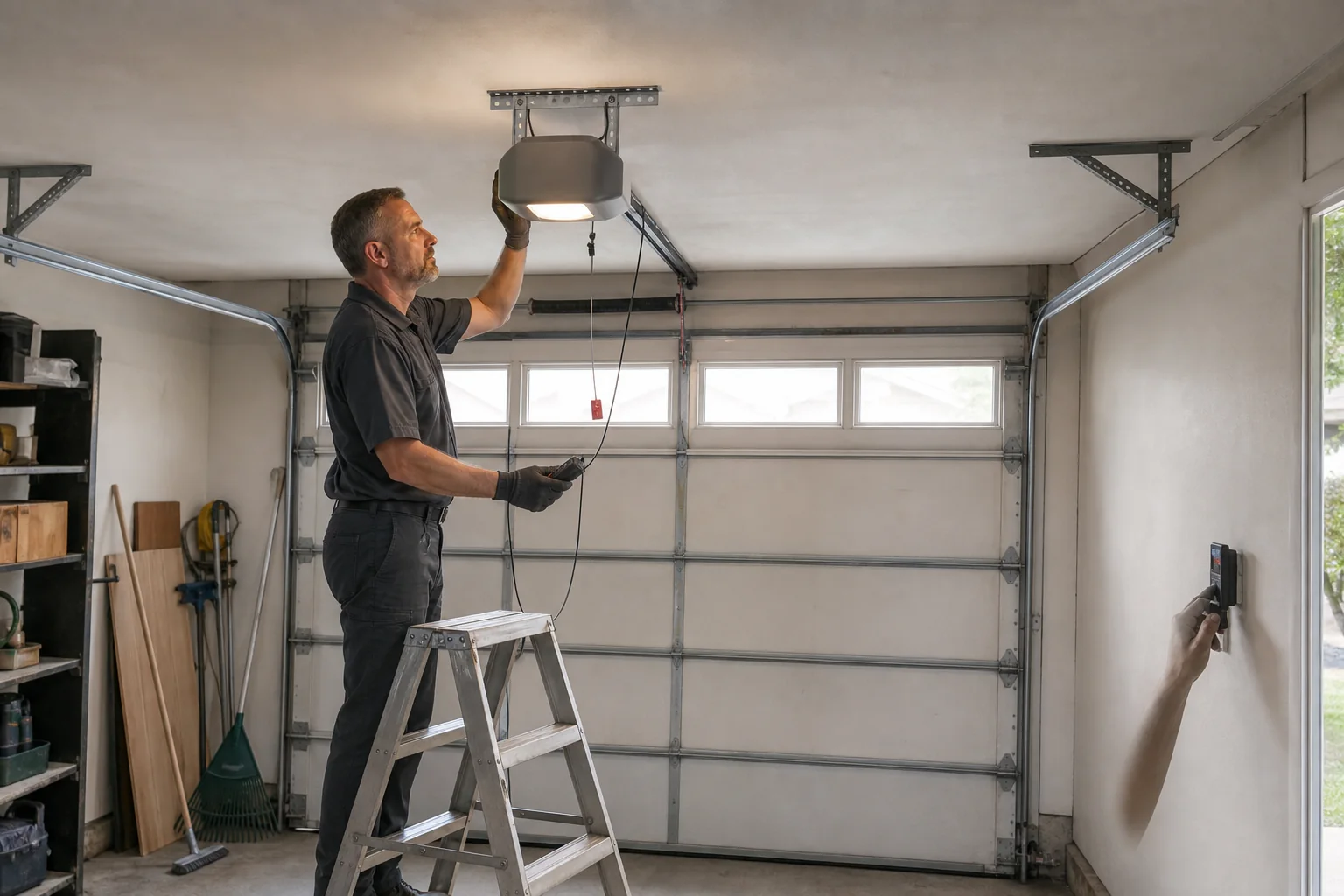
Openers
Motors take the blame for dead springs constantly. Worth knowing which one you've got before you buy an opener you didn't need.
See what's includedCharleston guide
Salt air is the running cost of a Charleston garage. On James Island and Johns Island, where lots sit close to the marsh and the breeze comes off open water, the parts that go first are the low ones: bottom brackets, the last few inches of cable where it meets the drum, and the rollers nearest the floor. Everything keeps working until one of them doesn’t.
If your door has gotten louder, drags on one side, or leaves rust marks on the slab, that’s worth looking at now instead of after a cable lets go. Tell us how long it’s been noisy and whether the sound happens all the way up or only near the ground.
The garage door is the largest opening on most houses here, and it takes weather before anything else does. Streets on Daniel Island run to wide double doors facing open frontage, and once wind pushes on a door that already has play in its tracks, the panels start working against each other.
You’ll usually hear that before you see it: a rattle worse than last year, a corner that catches, a door sitting slightly crooked in the opening. Check yours after a storm rather than waiting for it to stick. Tell us which direction it faces and whether the trouble began after a particular night.
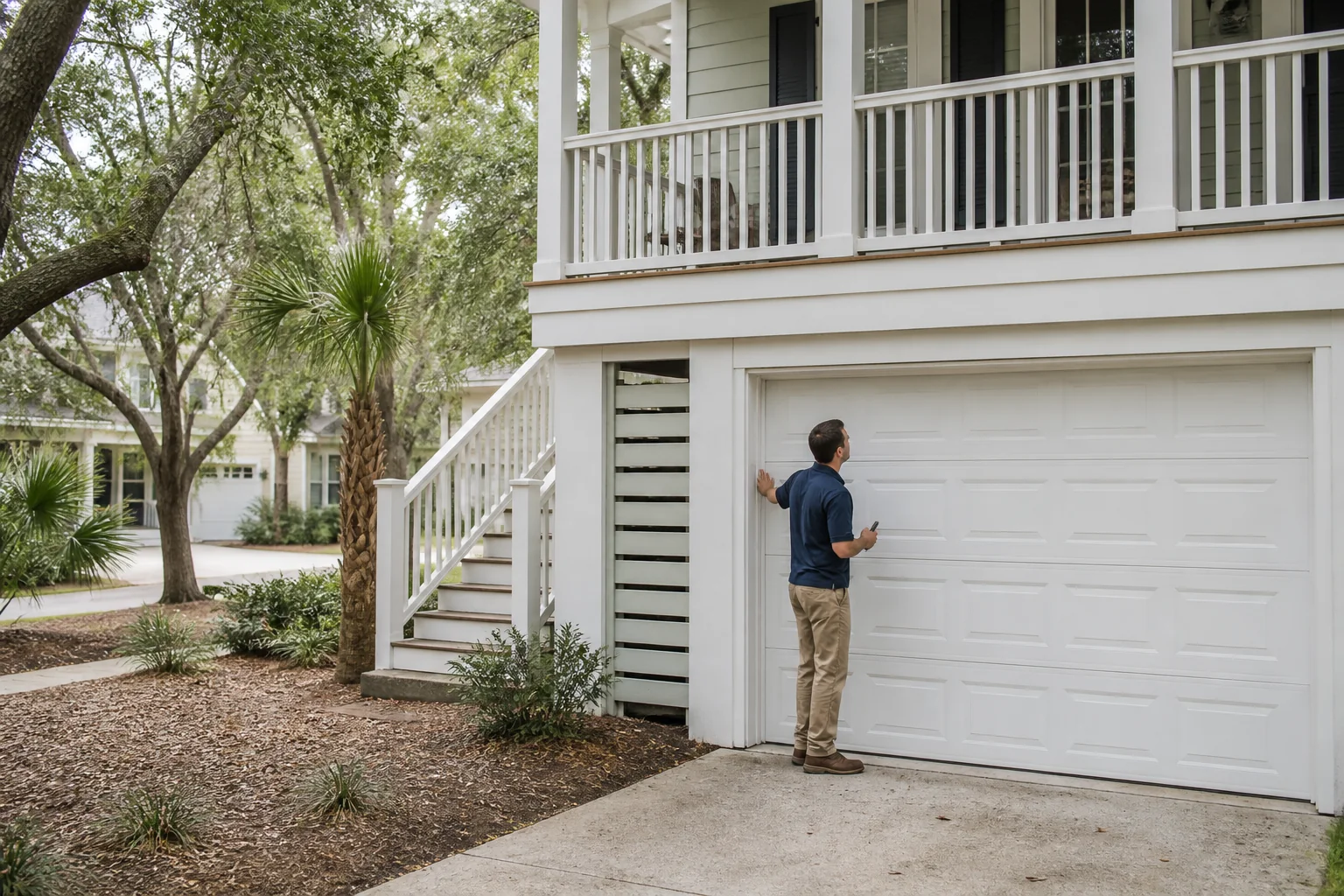
Plenty of Lowcountry houses are raised, with the garage set at ground level underneath the living space. That gives you low headroom for the opener rail, an opening that is often narrower than a modern stock door, and a slab that stays damp longer than the rest of the property.
It changes the parts and it changes the fit, so we’d rather know up front. Older West Ashley ranches frequently have a single-car opening from the mid-century that a standard replacement won’t drop into, and around Wagener Terrace and Cannonborough-Elliotborough the garage is often a small rear building off a service lane with nowhere to leave a vehicle. Measure the width if you can do it safely.
Cross streets, the door width, whether it sits under the house or stands on its own, and what actually happened: where it stopped, what you heard, whether a car is shut in behind it. You don’t need to name the broken part. Guessing from a description is how people end up buying an opener they didn’t need.
Photos from where you are standing help. Don’t climb for them. Send it before 5 p.m. on a weekday and a person replies the same business day, and the technician covering your address confirms the scope and the price before any work starts.
Most common around Charleston
The door stays open, stops, or will not begin closing.
What to do about itA gap appears in the spring above the door or a loud bang precedes a heavy door.
What to do about itSensor lights blink or the door will not close from a remote.
What to do about itThe opener is silent, hums, or runs without moving the door.
What to do about itThe customer wants scope, parts, labor, fees, and alternatives in writing.
What to do about itCharleston questions
A door that starts and quits almost always hit something the opener could feel. It might be a roller off the track, a cable that has slipped its drum, or a spring that has lost tension. Near the water it is often corrosion binding a roller in place. Keep everyone out from under it, don’t keep pressing the button, and tell us how far it travels and what it sounds like when it stops.
That is the door protecting someone, and the two commonest causes are the safety eyes near the floor and something in the tracks. Look along the bottom for a leaf, a hose reel, or a roller sitting proud. Then look at the small lights on each sensor bracket. Tell us what those lights are doing, and never tape a sensor or hold it out of line to force the door down.
That is a broken spring, and it is the one repair to stay away from. The full weight of the door is now sitting on cables and brackets that were never meant to hold it. Leave the door where it is, keep cars and people clear, and don’t touch the spring, the cables, or the brackets at the bottom corners. Tell us whether the door is up or down and we will get it to someone.
A sensor that flickers or dies is usually knocked out of alignment or has salt film and dust on the lens. Charleston garages get damp, so condensation on the eye is common too. Wipe both lenses with a dry cloth, check that neither bracket has been bumped by a bike or a trash can, and tell us whether the light is steady, flickering, or gone entirely.
Not necessarily. Start with the obvious: the outlet, the breaker, and whether a GFCI in the garage has tripped, which happens a lot in damp coastal garages. If the unit has power and still does nothing from the wall button, the logic board or the wall control may be the problem. Tell us what the wall button does versus the remote, because the difference points at different parts.
Yes. The technician looks at the door, tells you what failed, and puts the scope and the cost in front of you before any tool comes out. You can say no at that point. Using this site is free, we take no payment through it, and there is no charge for describing the problem.
Charleston, SC
Distance from the water, how the garage sits, and what the door does. Scope and price agreed with you before anyone starts.