

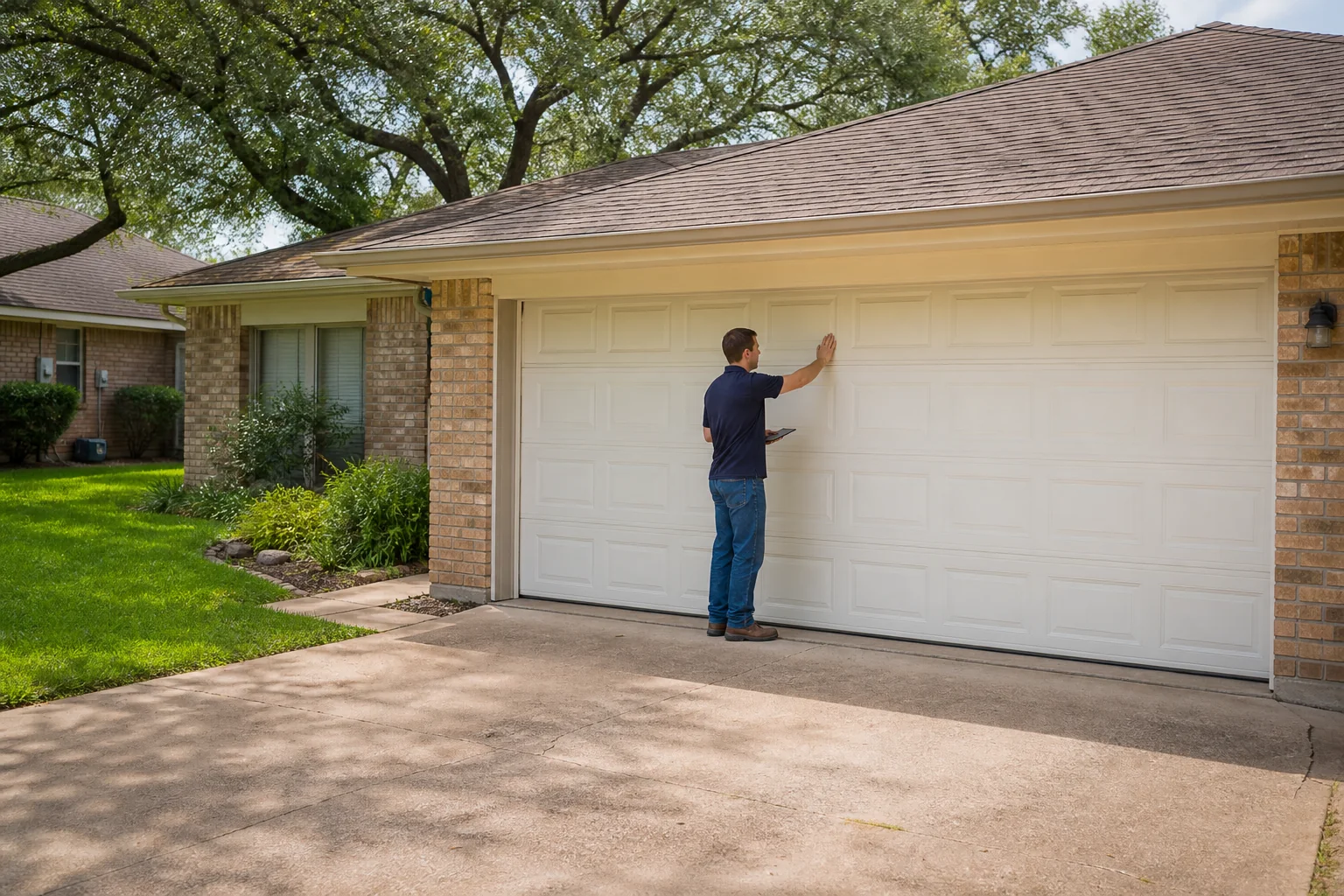
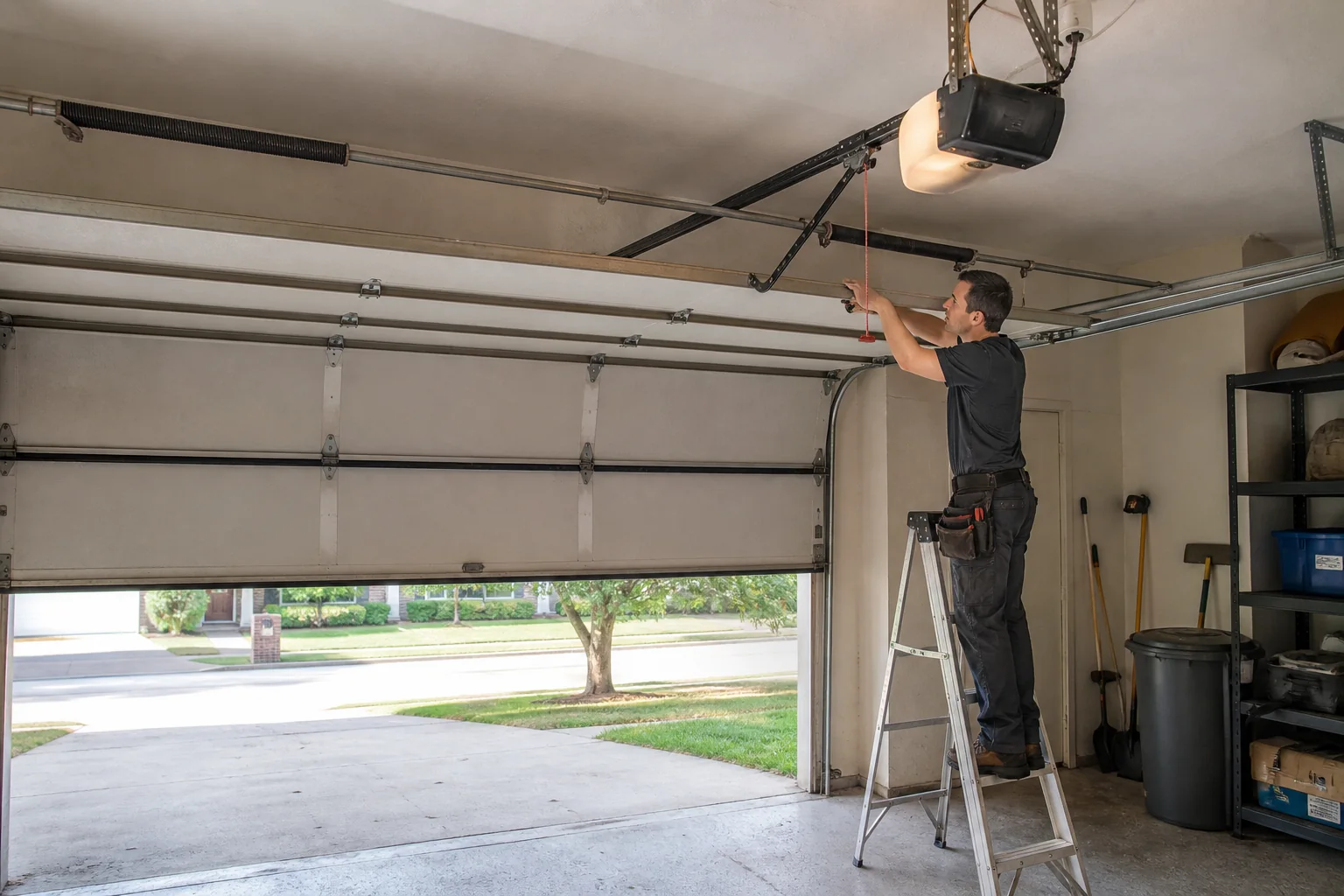
General repair
Garage Door Repair
Tell us what the door is doing and we'll get it in front of someone who can fix it — with the price agreed before the work starts.
See what's includedGarage door repair · Dallas, TX
Half of Dallas parks behind the house, and that changes the visit. Say what your door is doing and see the price before work.
Lakewood, Junius Heights, M Streets, and the streets either side of them.
Springs, cables, openers, sensors, tracks, panels, seals, and full replacements.
You hear what failed and what it costs first. Saying no at that point costs you nothing.
Ask before 5 p.m. on a weekday and you hear back that business day.
Why us for this door
An opener hanging off framing that was never sized for it works loose over time, and the door starts shuddering at the top of its travel. People chase that with rollers and lubricant for years. It's a mounting problem, and it's visible in thirty seconds to anyone who looks up rather than along.
Late-summer heat producing a door that reverses for no reason is the other Dallas standard, and that's a settings job. Say where the door stopped and what was in the way. Cost and scope agreed with you before work.
Get my door fixedWhere we work
Junius Heights and the M Streets run rear-entry garages; Preston Hollow and Lake Highlands face the street. Say which is yours.
Plenty of the work we take isn't in Dallas proper. These are the towns around it and what tends to be different about a door there.
Don't see your street or your town? These are the places where the housing changes enough to change the job — not the edge of where we go, and not a promise about your exact address either. We take work across Dallas and the wider Texas area, and the address you send is what actually gets checked.Check my address
Repairs in Dallas
General repair
Tell us what the door is doing and we'll get it in front of someone who can fix it — with the price agreed before the work starts.
See what's included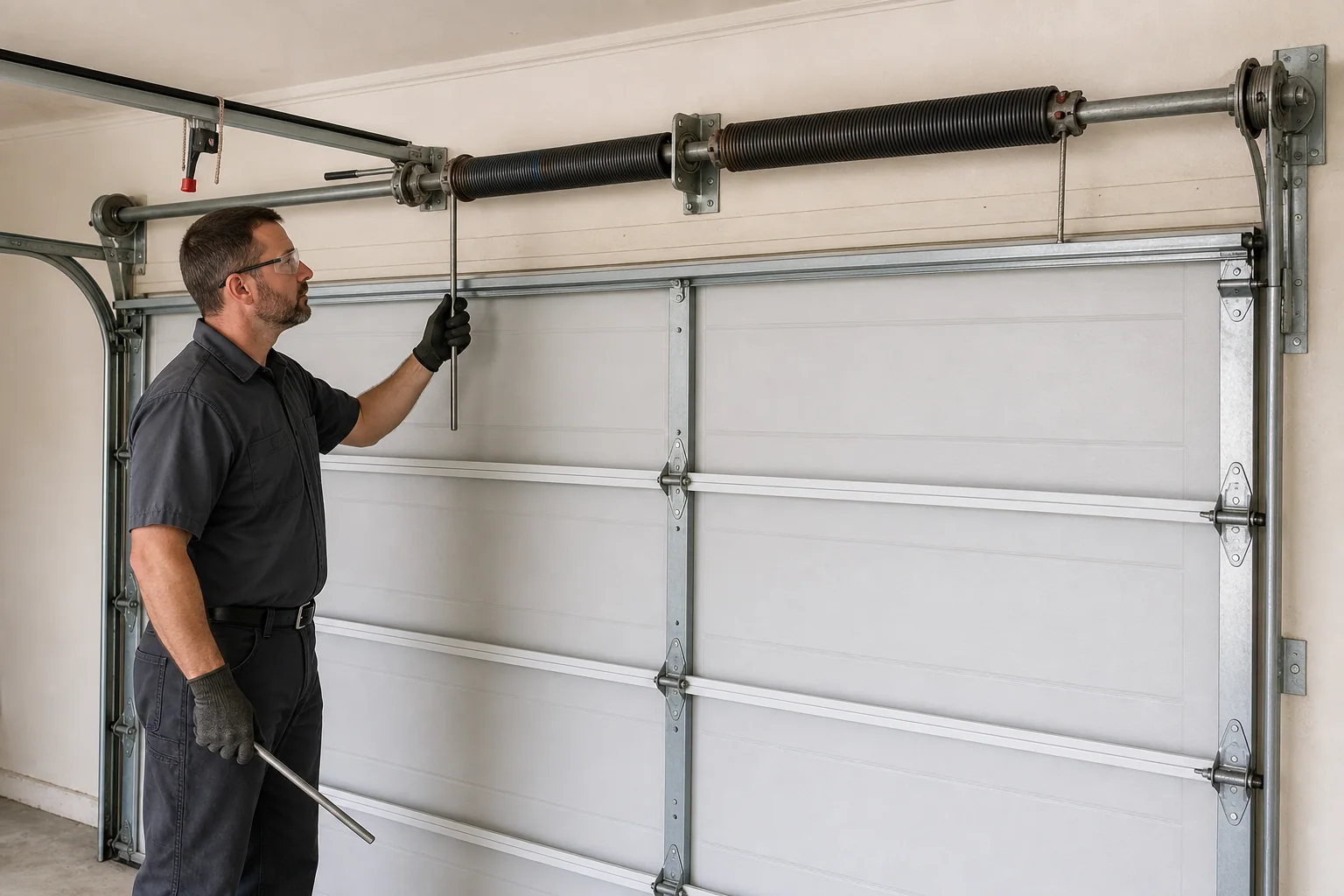
Springs and balance
If your door suddenly weighs a couple hundred pounds, a spring has almost certainly let go. Leave it down, keep everyone clear, and let someone with the right winding bars deal with it.
See what's included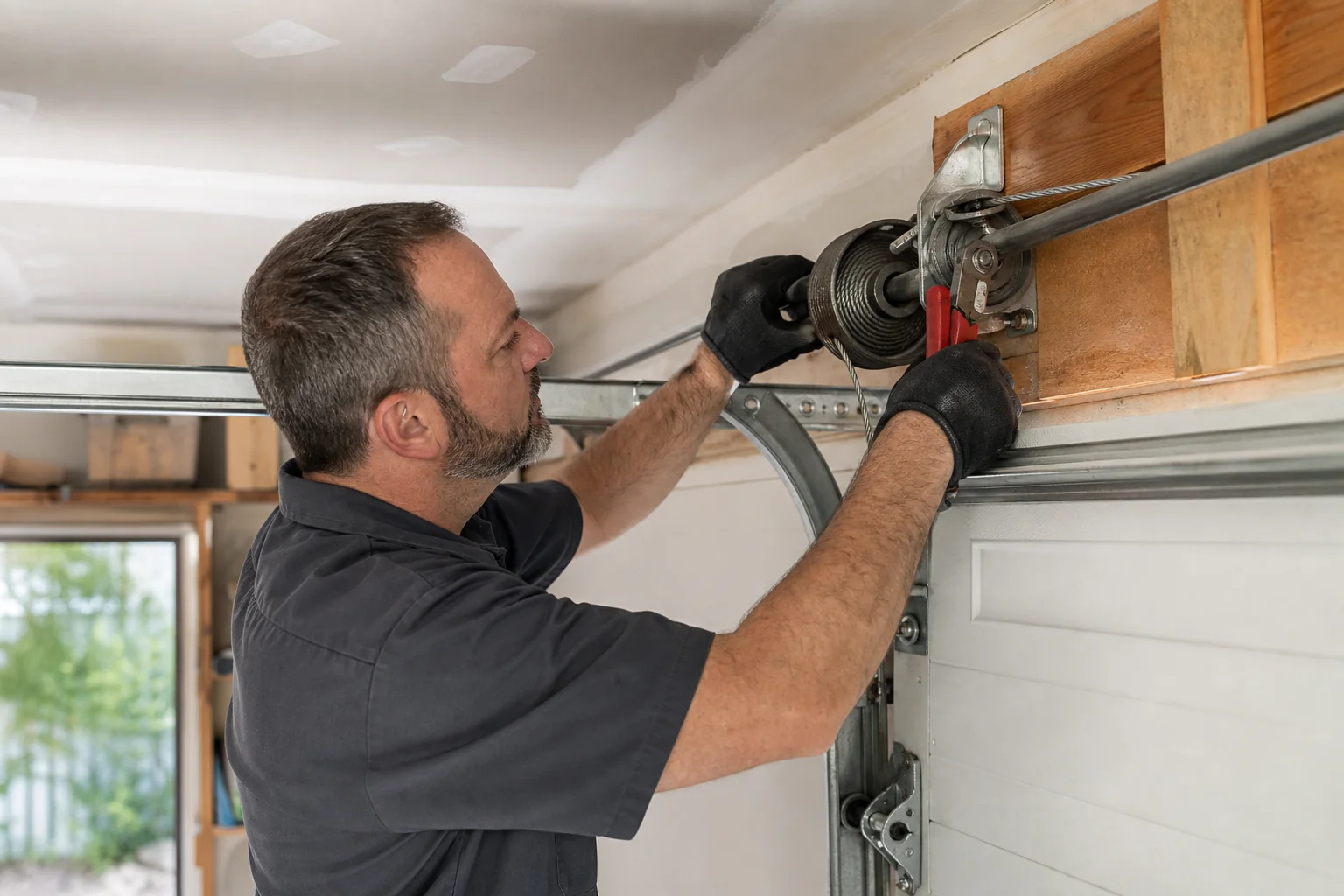
Cables and drums
One corner sitting lower, or a cable hanging off its drum, means the lift system is out of balance. It wants looking at before the next cycle, not after.
See what's included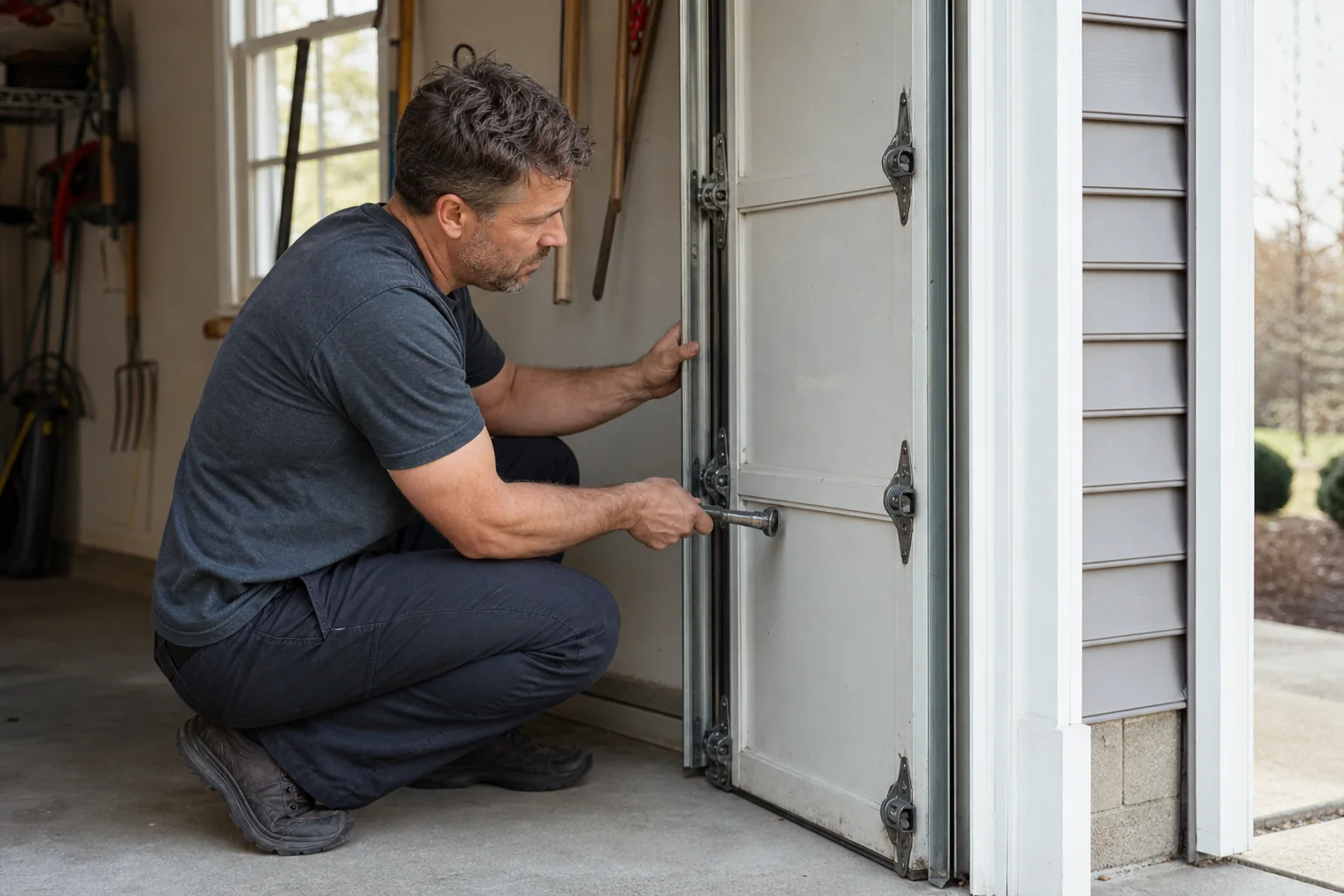
Tracks, rollers, hardware
Grinding in the same spot, a door that shakes the whole wall, a roller creeping out of its track — all cheap to sort now, all expensive once the door comes off.
See what's included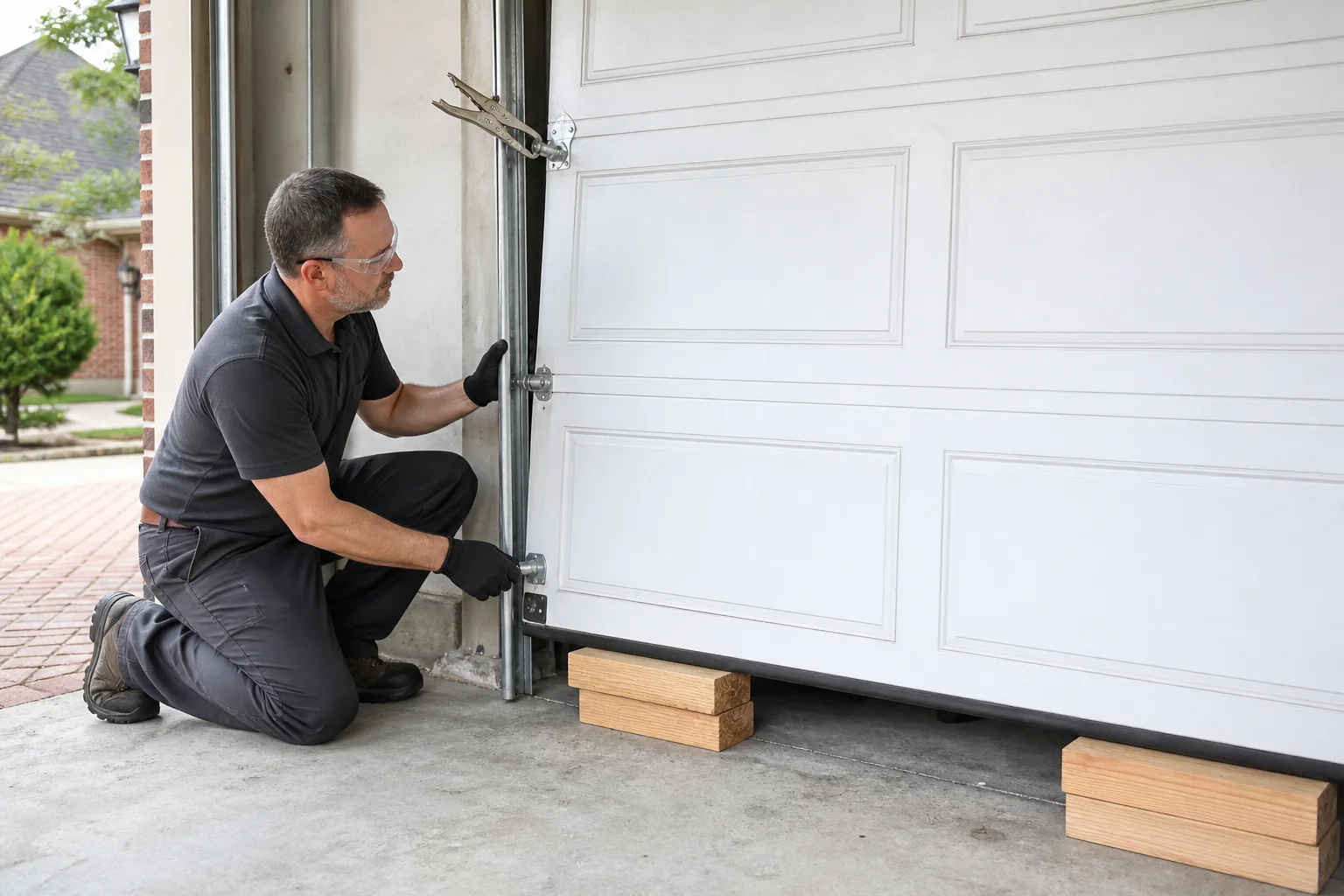
Off-track and stuck
Every extra cycle bends another panel and drags more cable out of line. Leave it where it is, keep the opening clear, and get it stabilized properly.
See what's included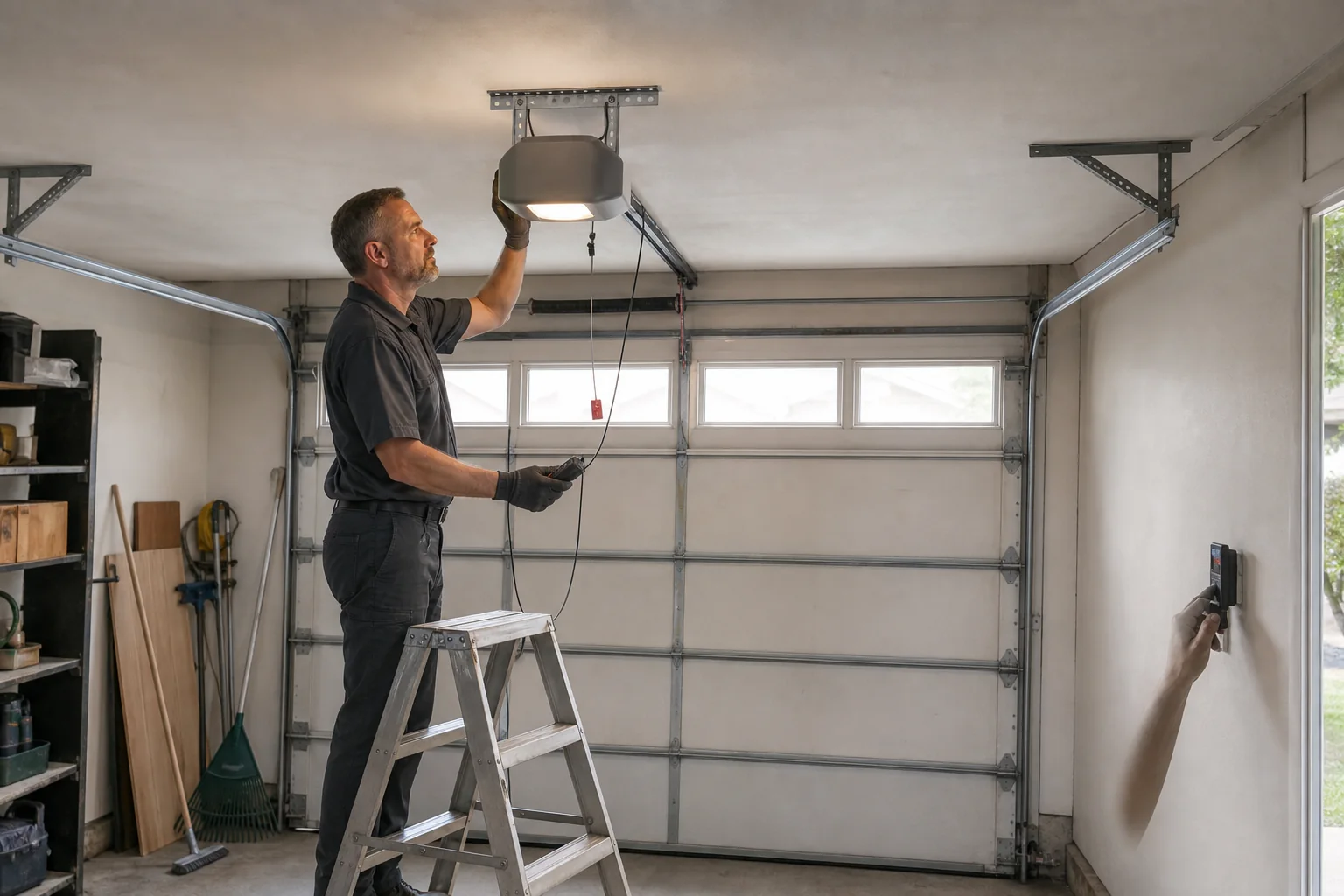
Openers
Motors take the blame for dead springs constantly. Worth knowing which one you've got before you buy an opener you didn't need.
See what's includedDallas guide
Lakewood, Junius Heights and the M Streets were laid out with the car kept behind the house, so the garage faces an alley instead of the street. Plenty of those alleys are one lane wide, half taken up by bins and parked cars, and a service van can end up stopping a good way short of your door.
None of that changes what's broken. It changes how long a technician is on site and how far every part gets moved by hand. Say up front whether we come off the alley or a driveway, and whether a gate or a code is involved, so you'll get an estimate that reflects it.
West of the river, Winnetka Heights and Kessler Park keep a lot of original detached garages: light timber framing, one narrow opening, and rafters that were never sized to hold a motor. An opener hung off those rafters works loose over the years, and then the door starts catching on the header on its way up.
You can check this from the ground. Stand inside with the door shut and look at whether the header above it has sagged, whether the opener rail runs level, and whether the two tracks stay parallel. You don't need to fix any of it. Just tell us, because a door in a building that has moved is a different repair.
By late August a shut Dallas garage runs hotter than the street outside. Grease that behaved in April thins and runs off the rollers, and a force setting that suited a cooler door starts reading an ordinary lift as an obstruction.
Low evening sun does something similar to the safety sensors on a west-facing drive, which is common through Preston Hollow and the newer streets out north. If the door only misbehaves at one time of day, it's the single most useful thing you can tell us. Look at the two small lights near the floor and say whether they are steady, blinking or out.
Give us the address with a cross street, single or double door, alley or driveway, and what happened on the last press: how far it moved, what you heard, and whether a car is shut in behind it. Don't try to name the failed part.
A photo from where you are standing helps more than a close-up, and please don't get on a ladder to take one. Anything sent before 5 p.m. on a weekday gets a reply from a person the same business day; later than that, the next business morning. The technician confirms the work and the cost before starting, and asking costs nothing.
Most common around Dallas
The door stays open, stops, or will not begin closing.
What to do about itA gap appears in the spring above the door or a loud bang precedes a heavy door.
What to do about itSensor lights blink or the door will not close from a remote.
What to do about itThe opener is silent, hums, or runs without moving the door.
What to do about itThe customer wants scope, parts, labor, fees, and alternatives in writing.
What to do about itDallas questions
Stop pressing it. A door that moves and then stops is usually being held by something mechanical: a cable off its drum, a roller out of the track, or a spring that has gone. The opener doesn't know that, so it keeps pulling and the damage spreads. Leave the car where it is, keep everyone out from under the door, and tell us how far it got and what it sounded like.
That's the door protecting somebody. It reverses when the sensor beam is broken or when the closing force meets something it reads as a person. Check the beam path for a bin, a bike or a bag of soil, then look at the two lights near the floor. Never tape the sensors together or hold the button down to force it shut.
That's almost always a spring, and it's the one thing we'd rather you left alone. All the weight the spring was carrying is now hanging on cables and brackets that were not designed to take it. Leave the door where it is, keep children and cars clear, and don't pull the emergency release while the door is up.
It's the door telling you the two sensors have lost sight of each other. Most of the time it's a knocked bracket, a lens with cobweb on it, or afternoon sun landing straight in the eye. Wipe both lenses with a dry cloth and see whether the lights settle. If they don't, say which side is blinking and what time of day it starts.
If both are dead, start with power: the ceiling outlet, the breaker, and whether a GFCI in the garage has tripped. Storms here knock those out regularly. If the light on the motor unit is on and the door still won't move, the gearbox or the board is the likely culprit, and that is worth a technician rather than a guess.
Yes. The technician looks at the door, tells you what failed and what it takes to put right, and gives you the price before a tool comes out. You can say no. This site doesn't take payment and doesn't charge you for asking.
Dallas, TX
Where it stopped, what was in the way, and your cross streets. Scope and price agreed with you before anyone starts.