

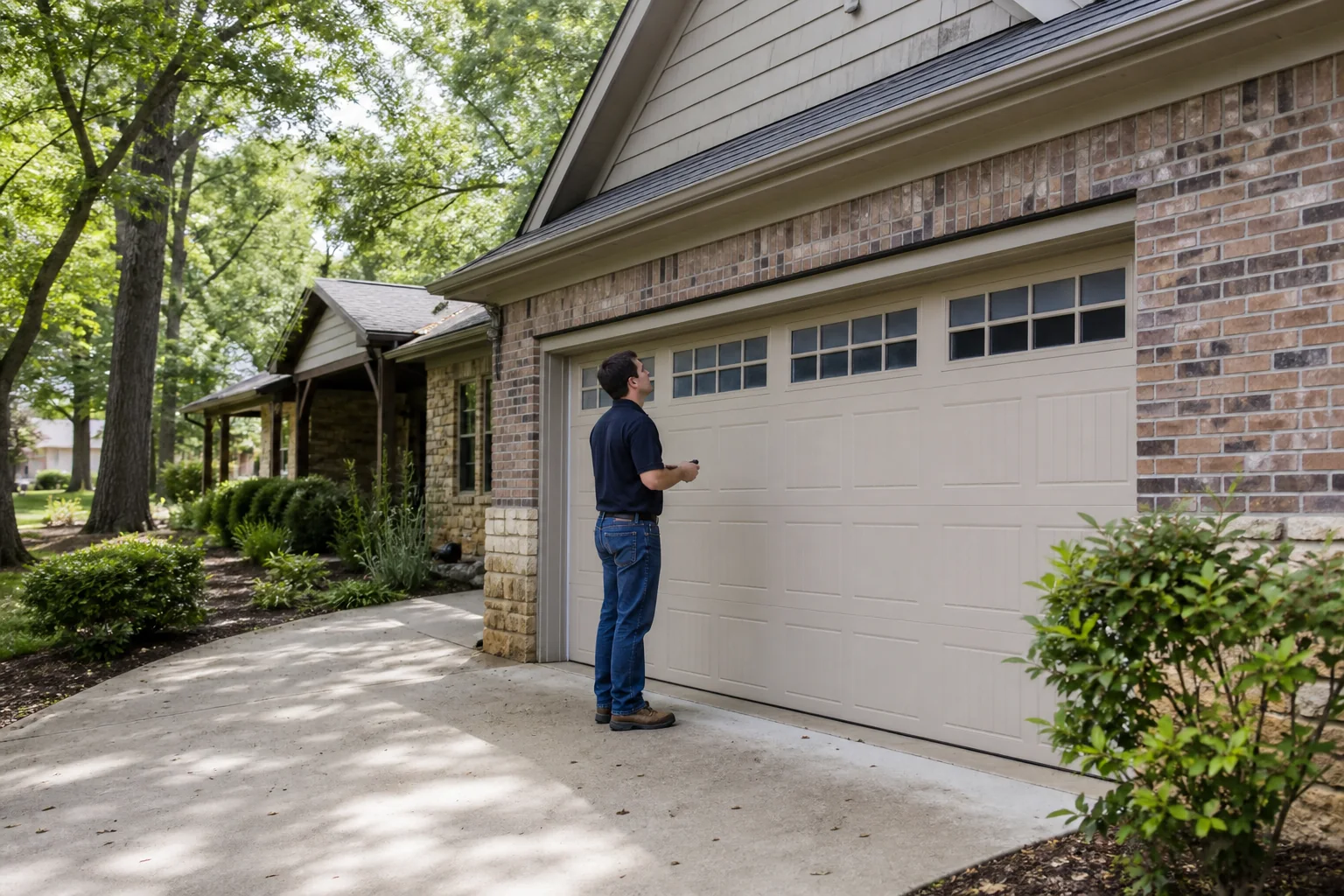
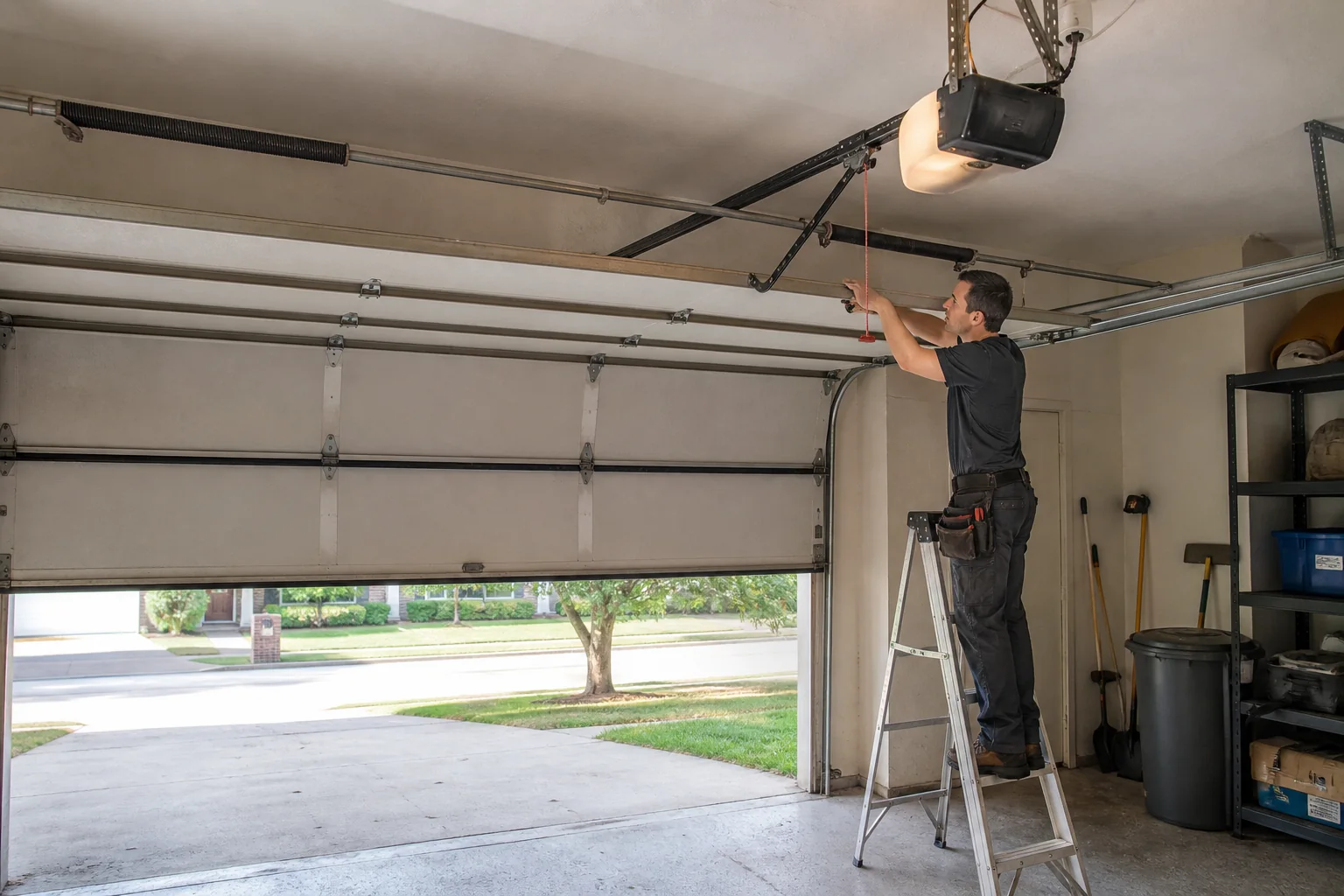
General repair
Garage Door Repair
Tell us what the door is doing and we'll get it in front of someone who can fix it — with the price agreed before the work starts.
See what's includedGarage door repair · Fayetteville, AR
Steep drives, older narrow garages, and storms that find the panels. Tell us what yours is doing and see the fault and the price before work starts.
Washington-Willow, Wilson Park, Mount Sequoyah, and the streets either side of them.
Springs, cables, openers, sensors, tracks, panels, seals, and full replacements.
You hear what failed and what it costs first. Saying no at that point costs you nothing.
Ask before 5 p.m. on a weekday and you hear back that business day.
Why us for this door
A wide double is the largest unsupported panel on most houses here, and a storm coming across the ridge pushes on all of it at once. The damage rarely shows as a hole. It shows as a door that has racked in its opening and now catches at the same point every cycle, which people put down to age until it comes off the track.
Add the older garages around Washington-Willow and Wilson Park, built for a car nobody drives now, and guessing from a distance is a bad idea. Describe what changed and when. The fault is named and the price agreed before anything is dismantled.
Get my door fixedWhere we work
Mount Sequoyah and Markham Hill climb hard, Salem Village and Butterfield don't. Tell us which and how a truck gets near the door.
Plenty of the work we take isn't in Fayetteville proper. These are the towns around it and what tends to be different about a door there.
Don't see your street or your town? These are the places where the housing changes enough to change the job — not the edge of where we go, and not a promise about your exact address either. We take work across Fayetteville and the wider Arkansas area, and the address you send is what actually gets checked.Check my address
Repairs in Fayetteville
General repair
Tell us what the door is doing and we'll get it in front of someone who can fix it — with the price agreed before the work starts.
See what's included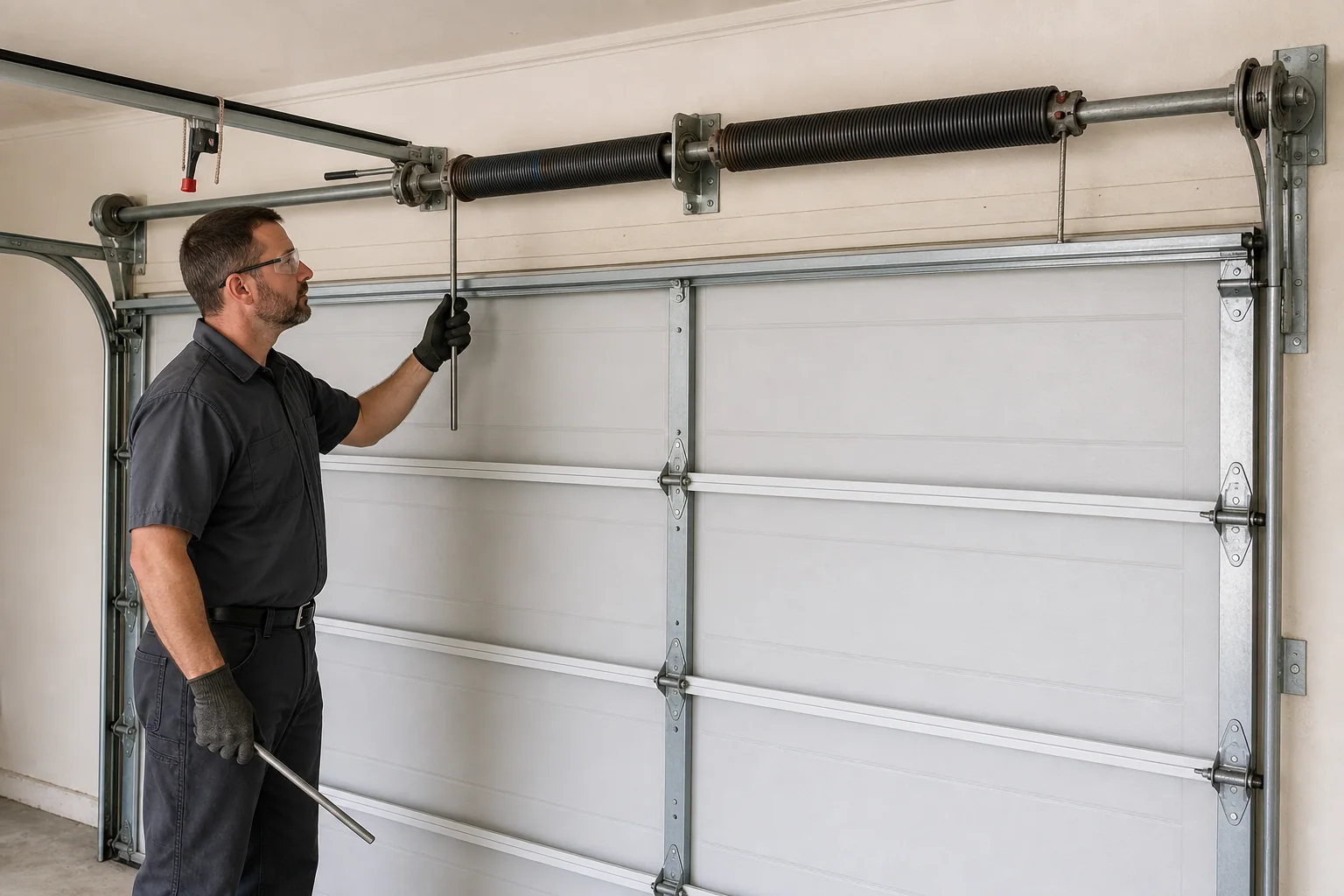
Springs and balance
If your door suddenly weighs a couple hundred pounds, a spring has almost certainly let go. Leave it down, keep everyone clear, and let someone with the right winding bars deal with it.
See what's included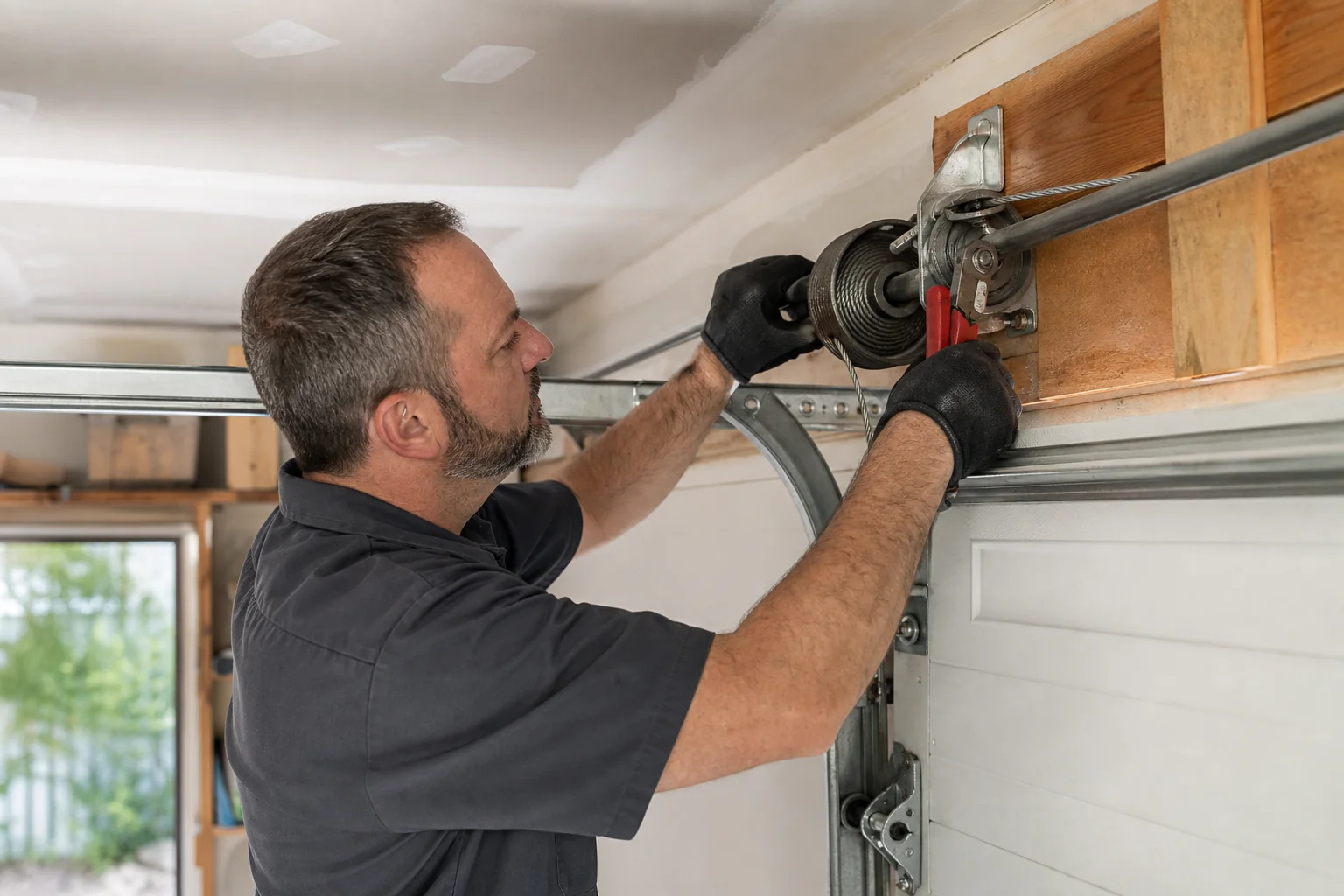
Cables and drums
One corner sitting lower, or a cable hanging off its drum, means the lift system is out of balance. It wants looking at before the next cycle, not after.
See what's included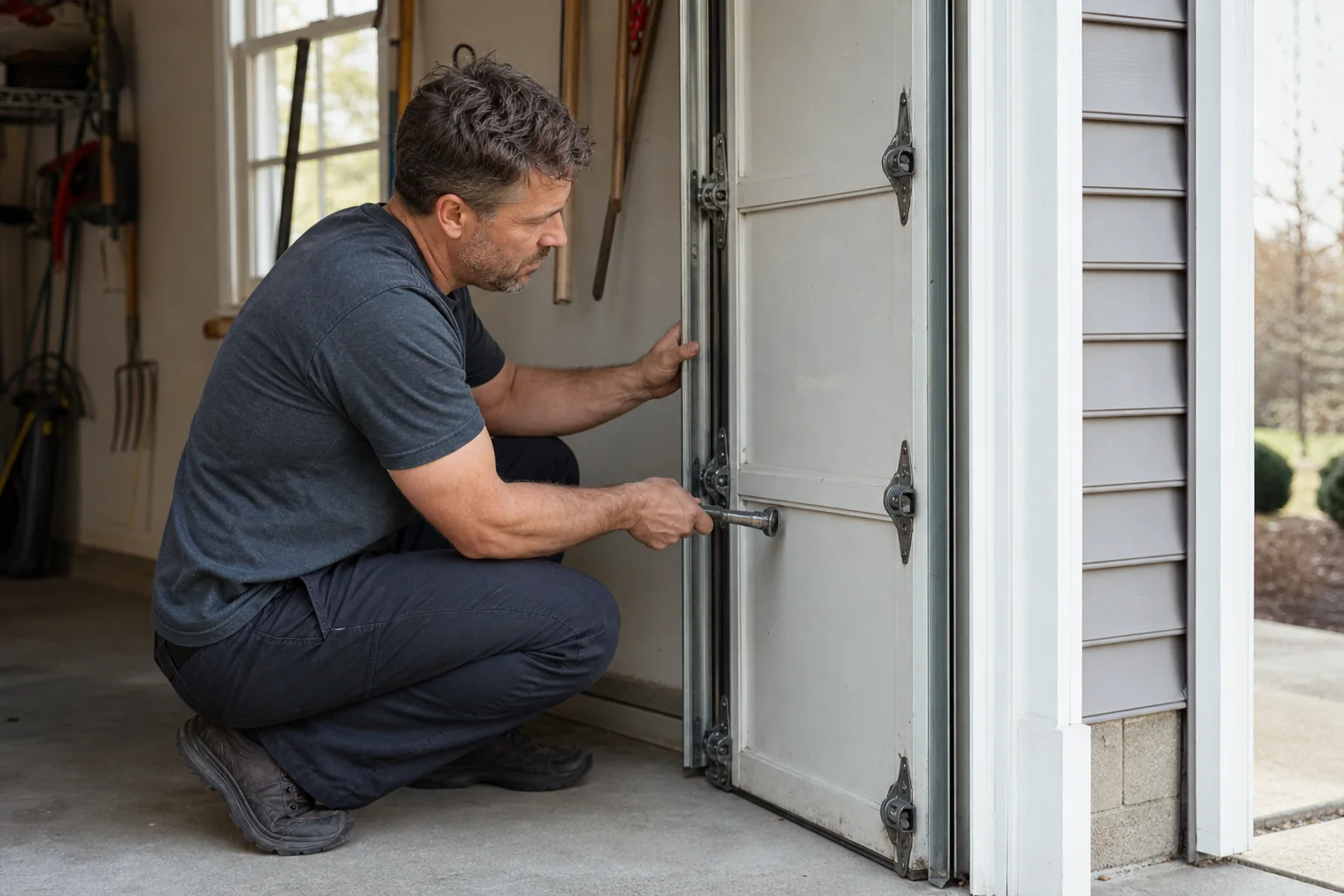
Tracks, rollers, hardware
Grinding in the same spot, a door that shakes the whole wall, a roller creeping out of its track — all cheap to sort now, all expensive once the door comes off.
See what's included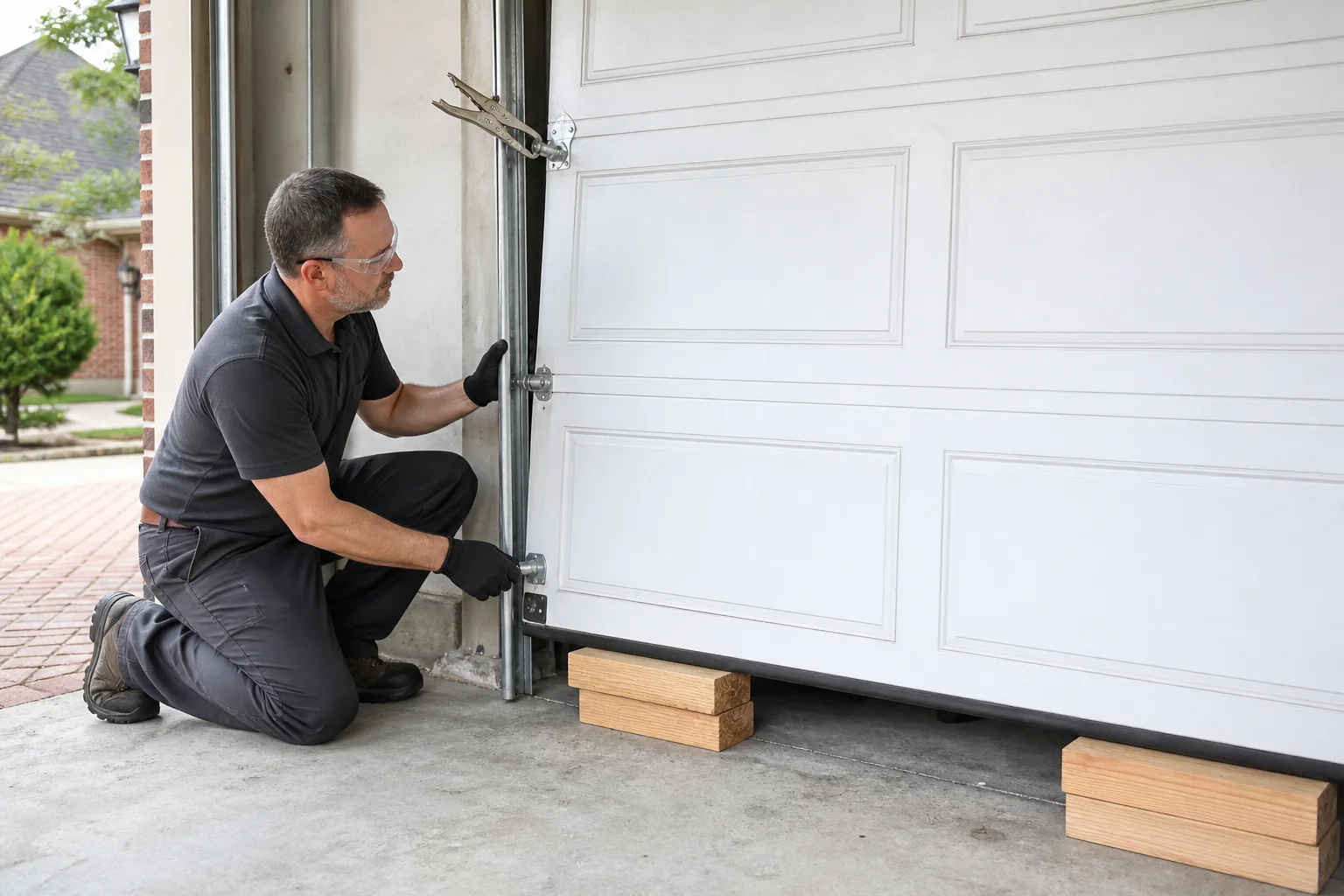
Off-track and stuck
Every extra cycle bends another panel and drags more cable out of line. Leave it where it is, keep the opening clear, and get it stabilized properly.
See what's included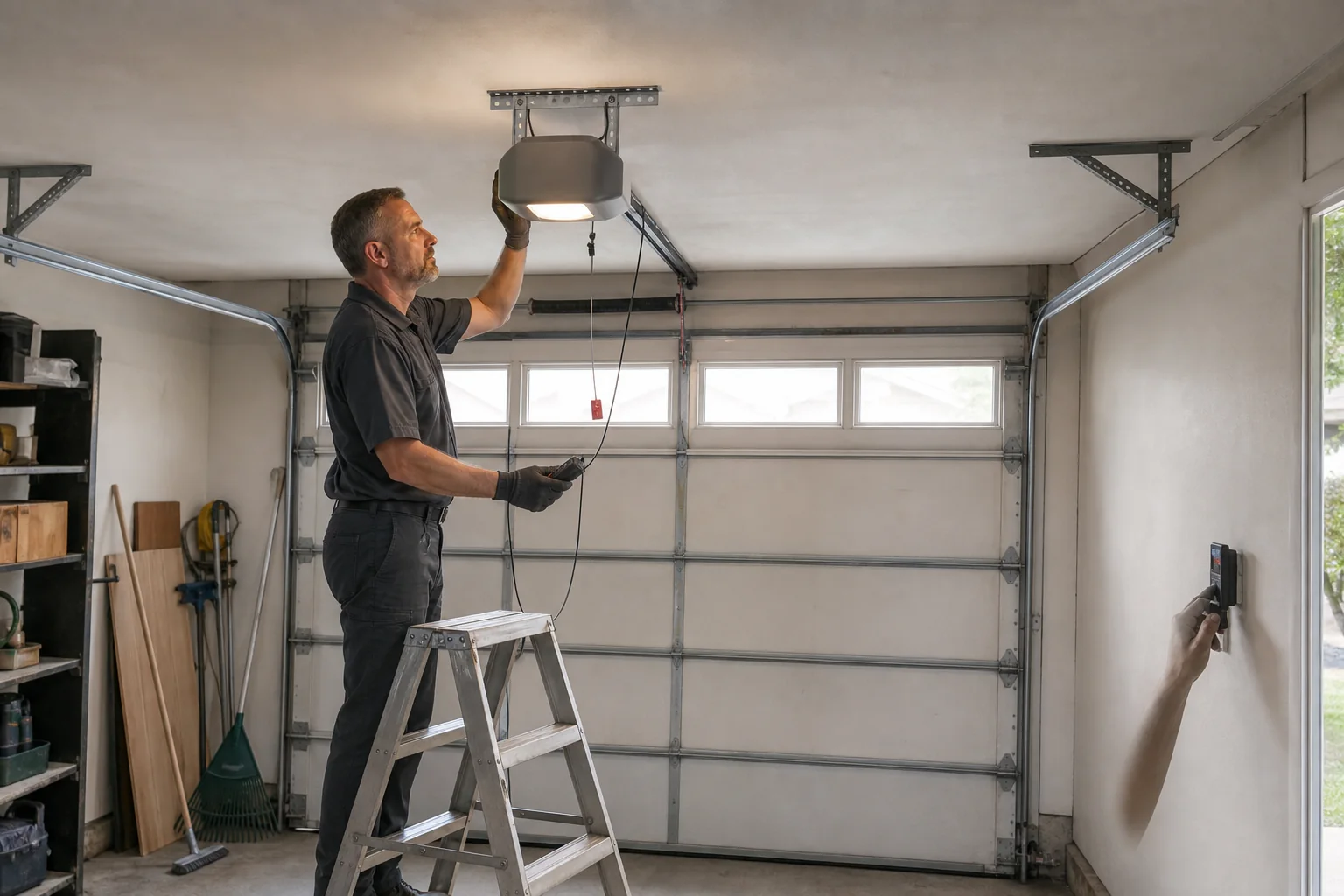
Openers
Motors take the blame for dead springs constantly. Worth knowing which one you've got before you buy an opener you didn't need.
See what's includedFayetteville guide
Fayetteville is built on hills and it shows in the driveways. On Mount Sequoyah the streets curve and pitch hard enough that a work vehicle can't always turn near the house, and Markham Hill approaches climb under heavy tree cover. That's not a reason to skip the job. It's a reason to know about it in advance.
Grade also affects the door itself. A drive that slopes toward the opening sends water and leaf litter at the bottom seal every storm, and a slab that has settled unevenly leaves one corner shutting before the other. Tell us whether your drive runs uphill or down and whether a van can pull in.
In Washington-Willow and around Wilson Park the garage usually sits detached at the back of the lot, and the opening is narrower and lower than anything sold as a standard size today. A replacement panel or a stock door often won't simply drop into it, and the headroom above the opening can be tight for a conventional opener rail.
None of that stops a repair. It does mean measurements matter more than usual, so a rough width and height from you saves a return trip. If your garage is a separate building, say how far it stands from the house and whether there's power out there.
Spring storms here bring gusts and hail together. The door is the biggest moving part of the house, and a strong push against it can bend a track, pop a roller, or crease a section just enough to make the whole thing bind on the way up. Butterfield and other later subdivisions run wide doubles facing open ground.
Hail leaves two different marks. A dent that only pocks the skin is cosmetic. One that folds a section changes how the door travels, and you'll usually hear the difference before you spot it. Tell us which direction the door faces and roughly when the weather came through.
Send the cross streets, the rough size of the opening, whether the garage is attached or detached, and what the door did when you last used it. If a car or a person is shut in, put that first. You're not expected to diagnose it, and we'd rather you didn't guess at a part.
A photo taken standing on the driveway is plenty. Don't climb anything for us. Requests in before 5 p.m. on a weekday get a human reply the same business day, and a technician confirms what the work involves and what it costs before starting.
Most common around Fayetteville
The door stays open, stops, or will not begin closing.
What to do about itA gap appears in the spring above the door or a loud bang precedes a heavy door.
What to do about itSensor lights blink or the door will not close from a remote.
What to do about itThe opener is silent, hums, or runs without moving the door.
What to do about itThe customer wants scope, parts, labor, fees, and alternatives in writing.
What to do about itFayetteville questions
There's a red cord hanging from the rail that disconnects the door from the opener. Pull it only with the door fully closed, because pulling it on a partly open door lets the weight drop. Once it's released the door should lift by hand. If it doesn't, or feels enormously heavy, stop and tell us that.
The sensors near the floor decide whether a close is allowed, and they're easy to knock out of alignment with a wheelbarrow or a bag of mulch. Damp weather and cobwebs on a lens do the same thing. Check the two indicator lights and tell us what they show. Never tape over a sensor to make the door behave.
Go and look, from the doorway rather than under the door. A snapped spring makes that noise and leaves a visible gap in the coil above the opening. If that's what you find, the door is now far heavier than it looks and the cables are under load. Keep everyone clear and leave the hardware untouched.
Yes, and it's useful information. The pair has to see each other cleanly, so a light that's dim, flickering, or out usually means alignment, a dirty lens, or a wire pinched where the bracket meets the track. It's a small job when it's caught early. Tell us the color and behavior of each one.
Check the breaker and whether the unit is actually plugged in, because a surge can trip either. If power is fine and there's still no light and no sound, the board may have taken the hit. Say whether anything else in the garage lost power at the same time, since that tells a technician where to look first.
Yes. The technician inspects the door, explains what failed, and puts the scope and the price to you before any tool comes out. Turning it down is a normal outcome and nobody should push past it. There's no charge for asking through this site and no payment is collected here.
Fayetteville, AR
Say what changed, when the weather came through, and where you are. The scope and the price reach you before any work starts.