

General repair
Garage Door Repair
Tell us what the door is doing and we'll get it in front of someone who can fix it — with the price agreed before the work starts.
See what's includedGarage door repair · Grand Junction, CO
Dust, sun and ground that moves are hard on a Grand Valley door. Tell us what yours is doing and you'll see the fault and the price first.
The Redlands, Orchard Mesa, Fruitvale, and the streets either side of them.
Springs, cables, openers, sensors, tracks, panels, seals, and full replacements.
You hear what failed and what it costs first. Saying no at that point costs you nothing.
Ask before 5 p.m. on a weekday and you hear back that business day.
Why us for this door
Ground movement out here works slowly on a garage opening, and a frame that has gone a fraction out of square puts all the load on one side of the door. It shows up as a scrape or a catch at the same point every cycle, which most people put down to a roller. Fitting new rollers into a crooked opening buys a few weeks.
Fine valley dust in the tracks does the rest. Say whether the catch happens at the same point each time, and whether this is a house door or a shop door, because they're different jobs. Then the scope and the price are agreed with you first.
Get my door fixedWhere we work
The Redlands and Paradise Hills run large and often gated; Fruitvale and Orchard Mesa have plenty of shop and outbuilding doors. Tell us which yours is.
Plenty of the work we take isn't in Grand Junction proper. These are the towns around it and what tends to be different about a door there.
Don't see your street or your town? These are the places where the housing changes enough to change the job — not the edge of where we go, and not a promise about your exact address either. We take work across Grand Junction and the wider Colorado area, and the address you send is what actually gets checked.Check my address
Repairs in Grand Junction
General repair
Tell us what the door is doing and we'll get it in front of someone who can fix it — with the price agreed before the work starts.
See what's included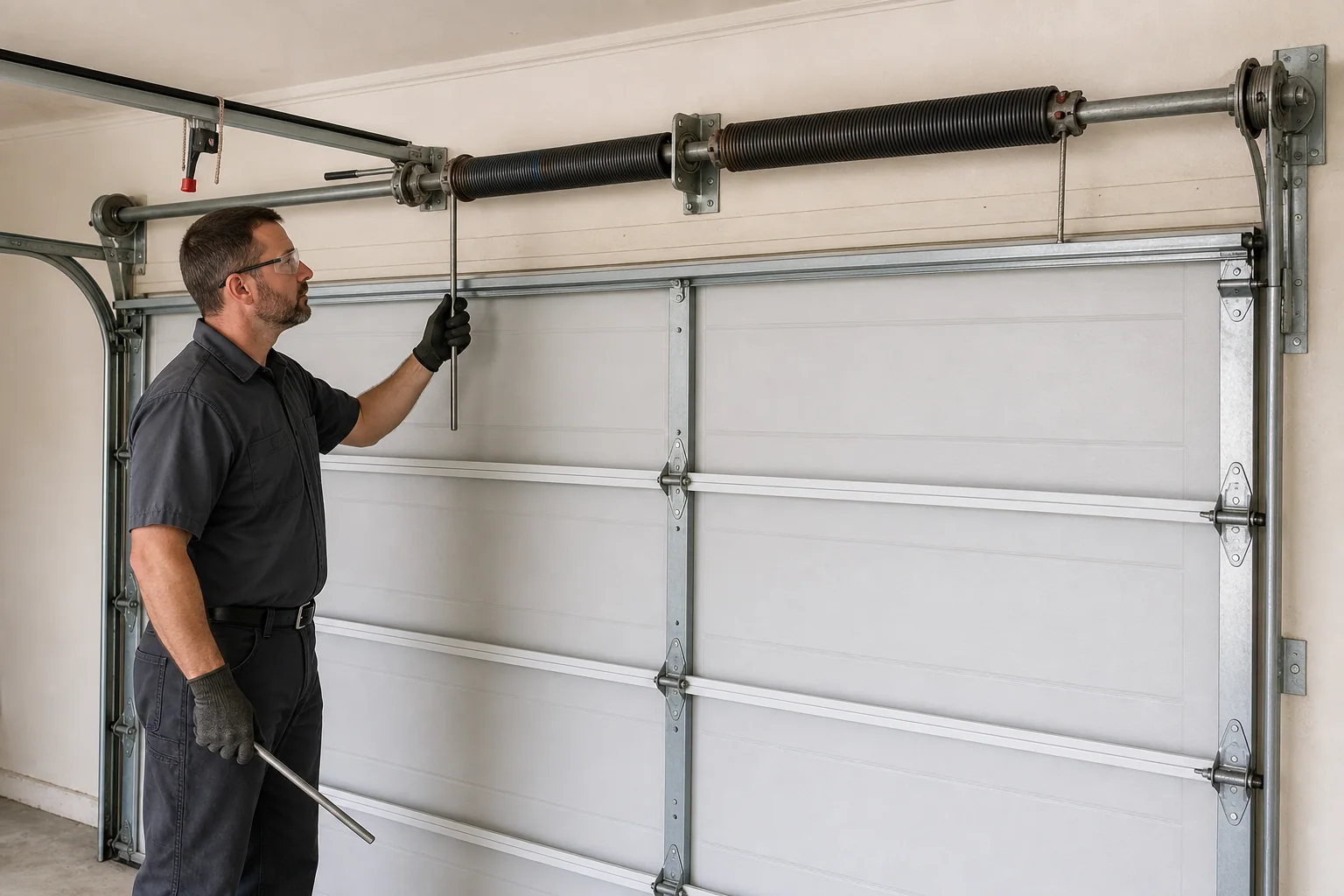
Springs and balance
If your door suddenly weighs a couple hundred pounds, a spring has almost certainly let go. Leave it down, keep everyone clear, and let someone with the right winding bars deal with it.
See what's included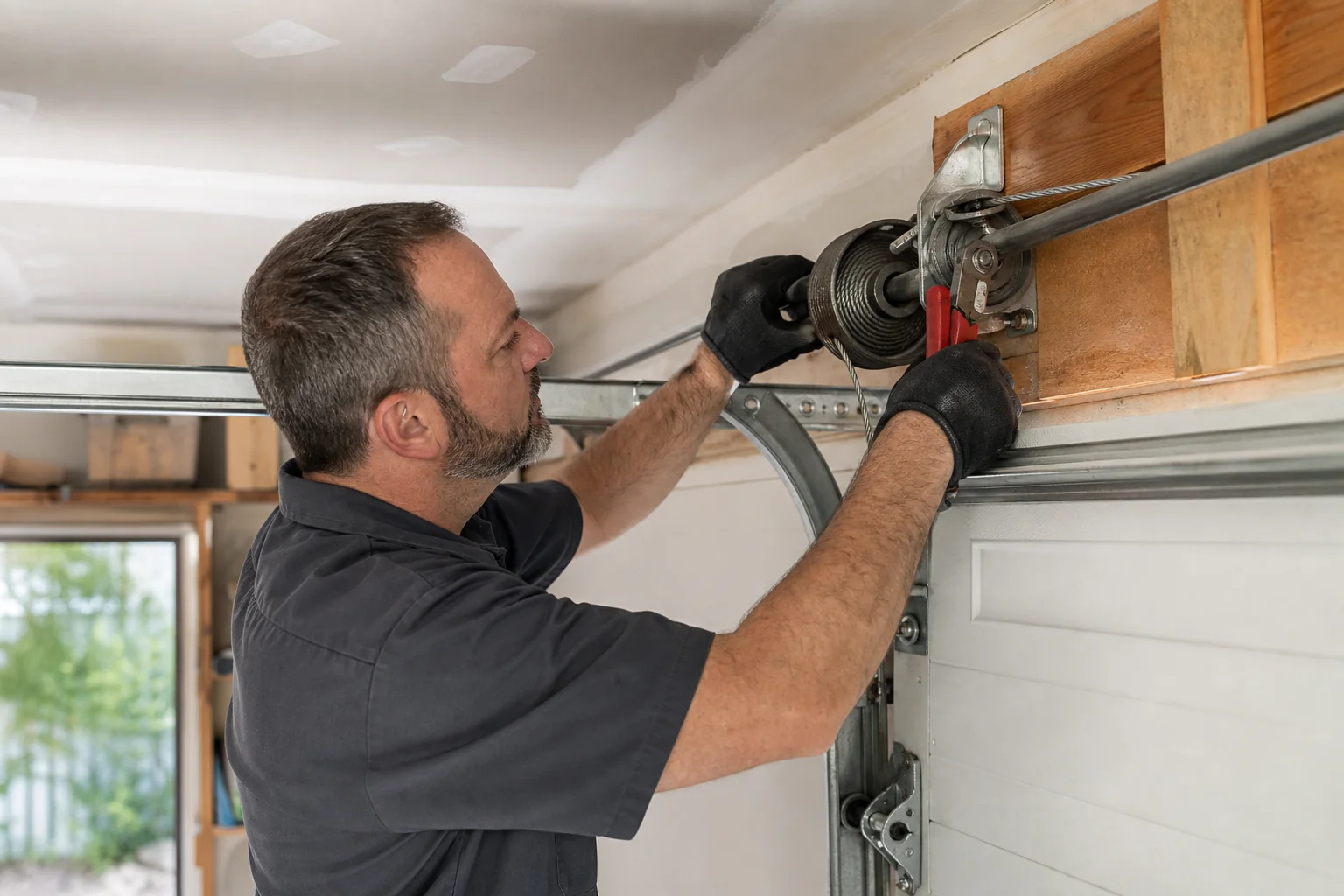
Cables and drums
One corner sitting lower, or a cable hanging off its drum, means the lift system is out of balance. It wants looking at before the next cycle, not after.
See what's included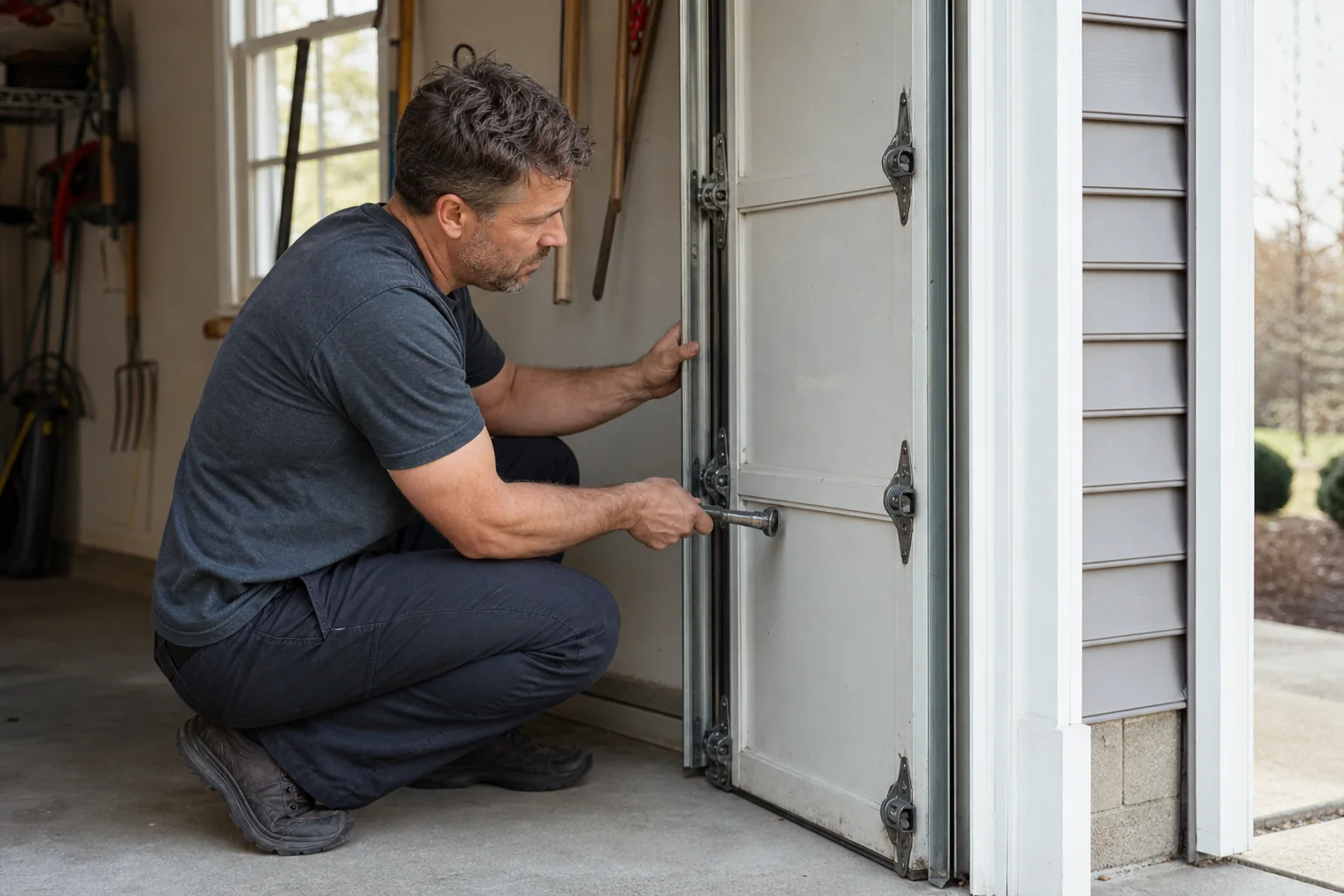
Tracks, rollers, hardware
Grinding in the same spot, a door that shakes the whole wall, a roller creeping out of its track — all cheap to sort now, all expensive once the door comes off.
See what's included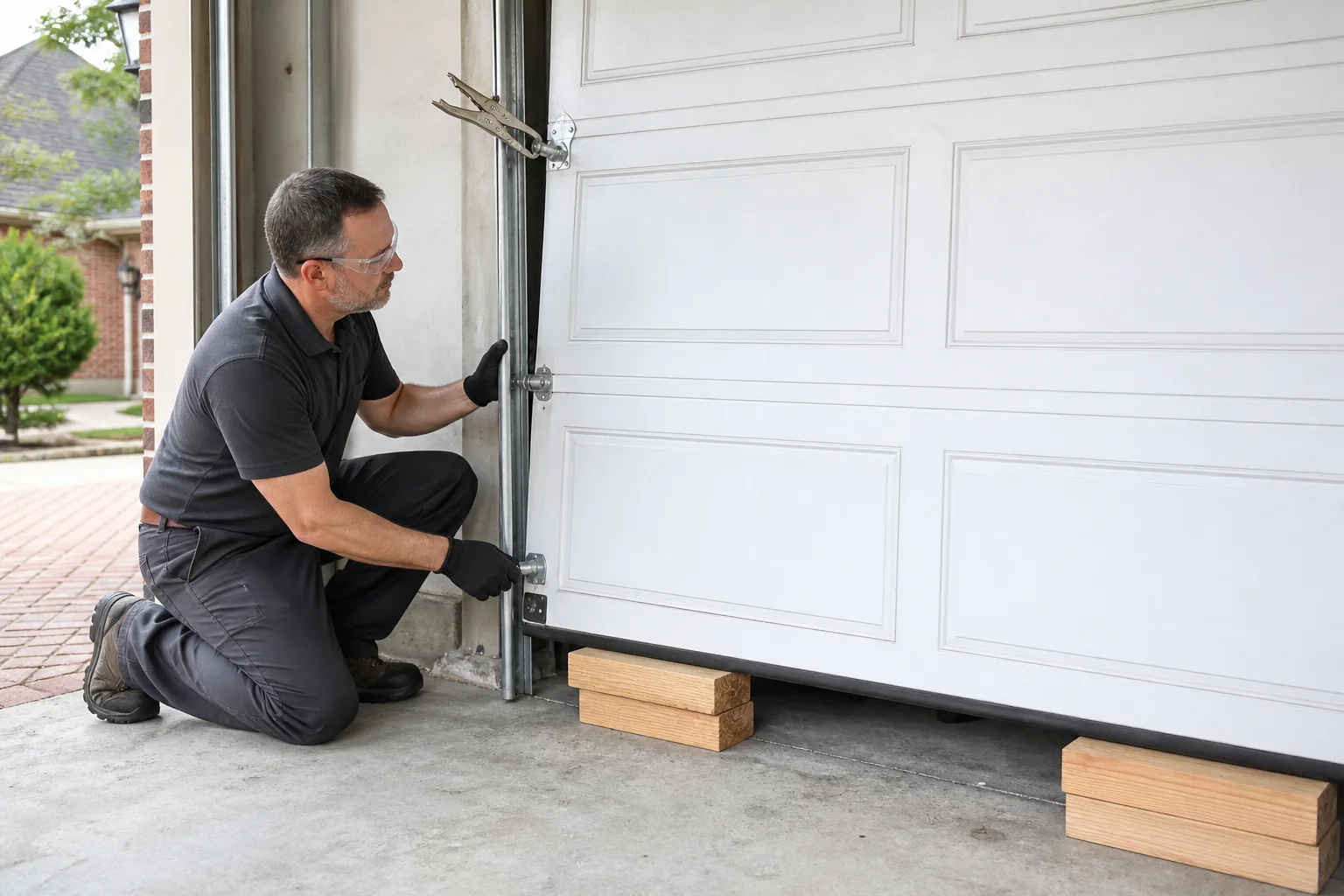
Off-track and stuck
Every extra cycle bends another panel and drags more cable out of line. Leave it where it is, keep the opening clear, and get it stabilized properly.
See what's included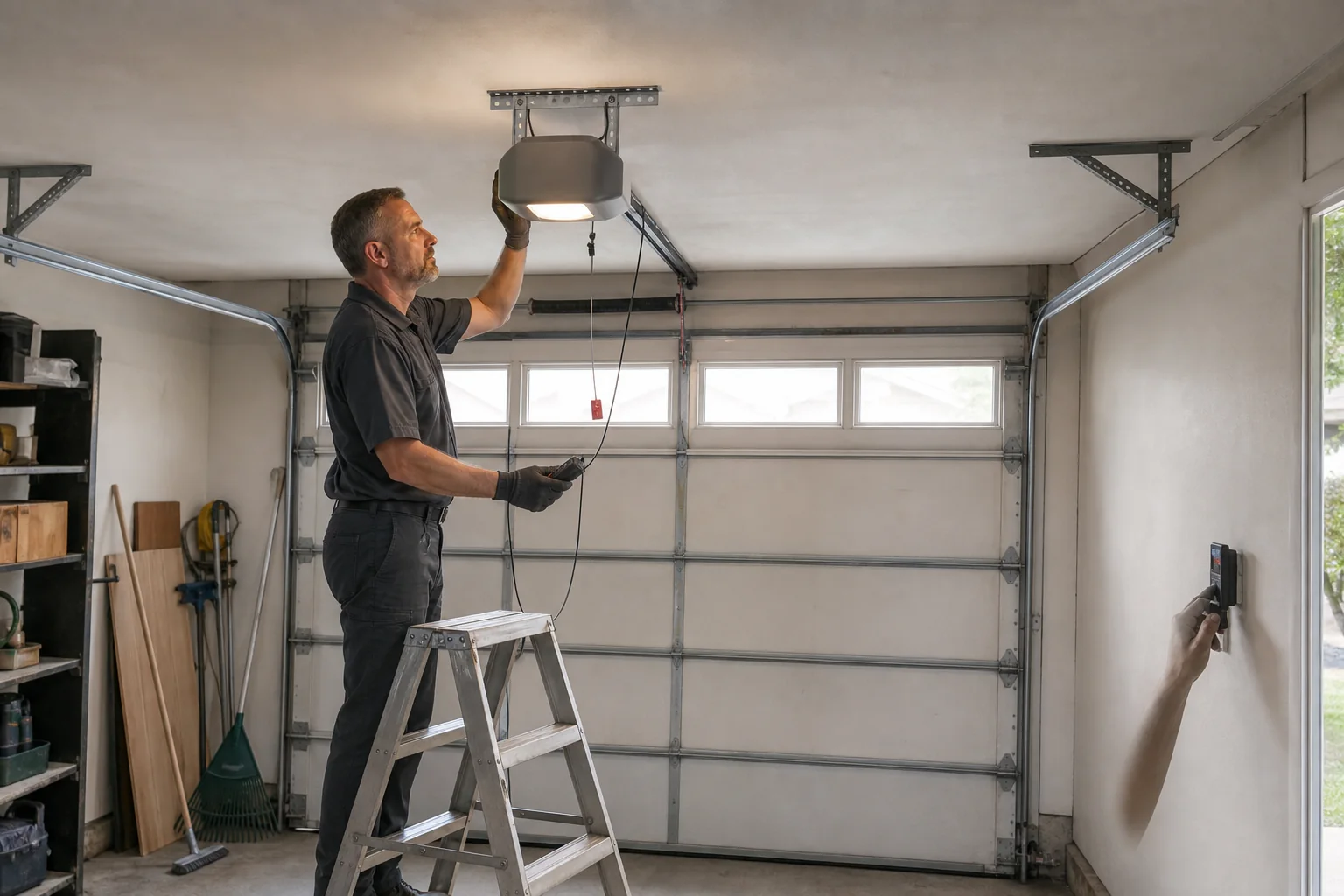
Openers
Motors take the blame for dead springs constantly. Worth knowing which one you've got before you buy an opener you didn't need.
See what's includedSponsored · New residential doors
Grand Junction, CO
Is your current door broken or stuck? Submit the main repair request instead
Grand Junction guide
Wind-blown dust is a constant in the Grand Valley, and a garage door is a very efficient way of collecting it. It settles on the tracks, packs into the roller bearings, and mixes with whatever grease is in there into something closer to grinding paste.
The symptom is a door that gets steadily louder and slower rather than failing outright, and in Orchard Mesa and Pear Park, where dirt lanes and open ground sit close to houses, it arrives sooner. If yours has been getting noisier for months, say that instead of only describing today.
Much of the valley sits on clay that swells when it gets wet and shrinks when it dries. Slabs and foundations move with it, and an opening that moves takes the tracks along with it. The door then rubs on one jamb, wears one set of rollers, and closes with a gap at one corner.
That's why replacing a roller or a seal on its own sometimes doesn't hold. In the Redlands and along the older Fruitvale streets it's worth having the opening checked as well as the door. Look at the closed door from inside and tell us whether the floor gap is even end to end.
Plenty of properties out toward Appleton and on the larger Pear Park lots have a detached shop or an RV bay as well as the house garage. Those doors are taller and much heavier, and they take different springs, different track, and sometimes a different class of opener.
A quote built around a standard two-car door won't survive contact with an RV bay. Tell us which door is the problem, roughly how tall and wide it is, and whether the building has power and light inside. That's what keeps this to a single trip.
Give us cross streets, which door it is, its rough size, and what it did: where it stopped, what you heard, whether a vehicle is shut in. You don't need to identify the failed component. Describing the behavior accurately is more use than naming a part you aren't sure about.
Photos taken from the ground are helpful, and don't climb to get them. Anything sent before 5 p.m. on a weekday gets a human reply the same business day, and the technician confirms the scope and the cost with you before starting. Nothing is charged for the request.
Most common around Grand Junction
The door stays open, stops, or will not begin closing.
What to do about itA gap appears in the spring above the door or a loud bang precedes a heavy door.
What to do about itSensor lights blink or the door will not close from a remote.
What to do about itThe opener is silent, hums, or runs without moving the door.
What to do about itThe customer wants scope, parts, labor, fees, and alternatives in writing.
What to do about itGrand Junction questions
That's usually a door too heavy for the opener to move, which most often means a spring has failed or the door is binding in the track. Stop trying, because each attempt loads parts that are already carrying more than they should. Look up at the spring above the door and tell us whether you can see a gap in it.
Sealing it rarely holds, because the usual cause is the door and the opening no longer agreeing with each other after the ground has moved. A stretched cable on one side does the same thing. Measure the gap roughly at each end, tell us the difference, and let someone look at the opening as well as the door.
That's almost always a torsion spring letting go. The door will be very heavy now, and whatever is holding it up wasn't designed for the load. Don't lift it, don't run the opener, and keep the area under the door clear. Tell us whether it's open or closed and whether a car is inside.
Looking fine and being aligned aren't the same thing. A bracket only needs nudging a fraction for the beam to miss, and dust on a lens does it too, of which there's plenty out here. Wipe both eyes, check whether the indicator lights hold steady, and tell us what you see.
The motor and the door have parted company. That's usually a stripped drive gear, a broken trolley, or a manual release that was pulled and never reconnected. Stop running it, because it does no good and can damage more. Tell us whether the carriage on the rail moves when the motor turns.
Yes. The technician looks at the door, tells you what's wrong, and gives you the scope and the price to agree before starting. You can turn it down. We don't process payment on this site, and asking costs nothing.
Grand Junction, CO
Say where it catches, what the building is, and your cross streets. The scope and the price come to you before anyone starts.