

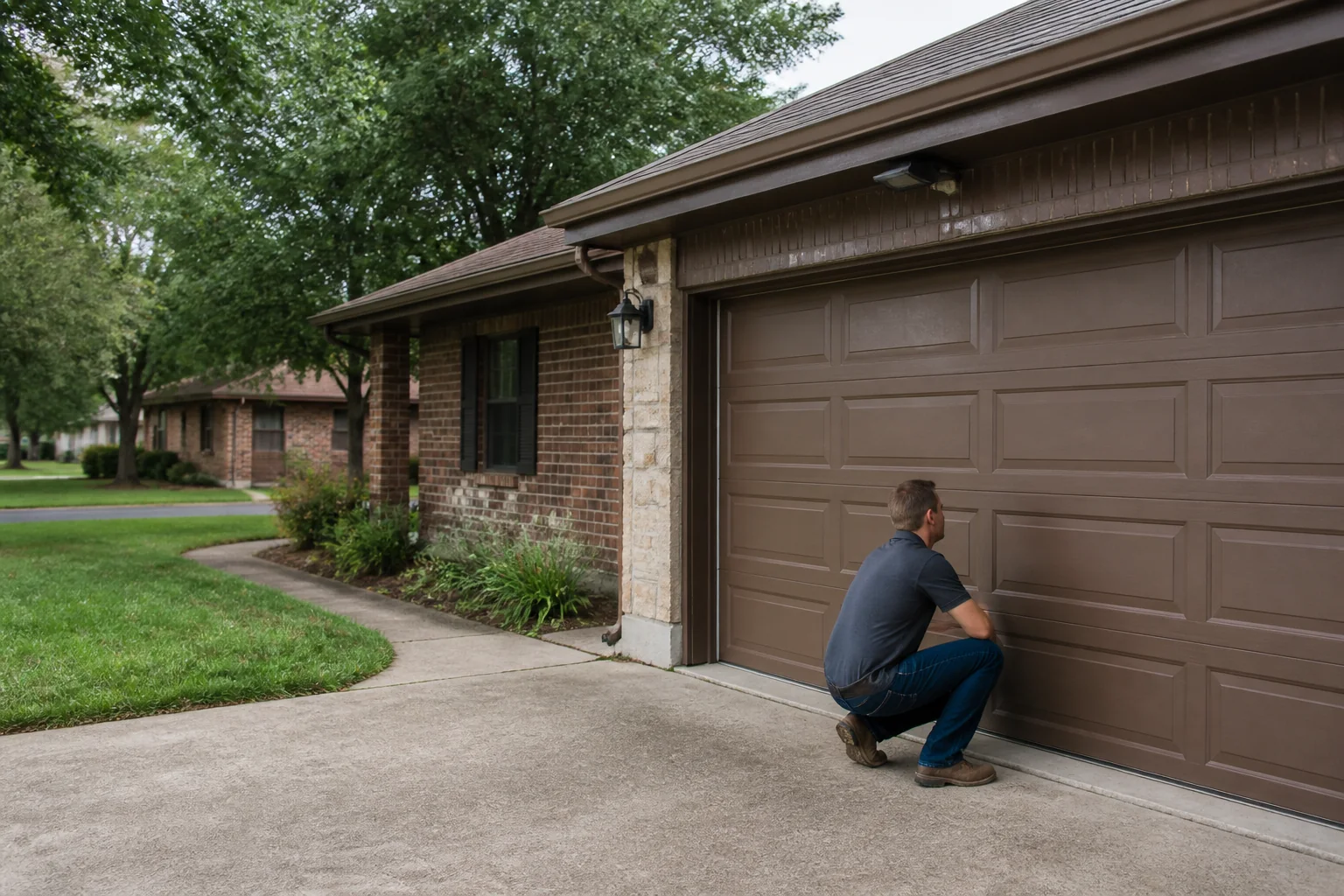
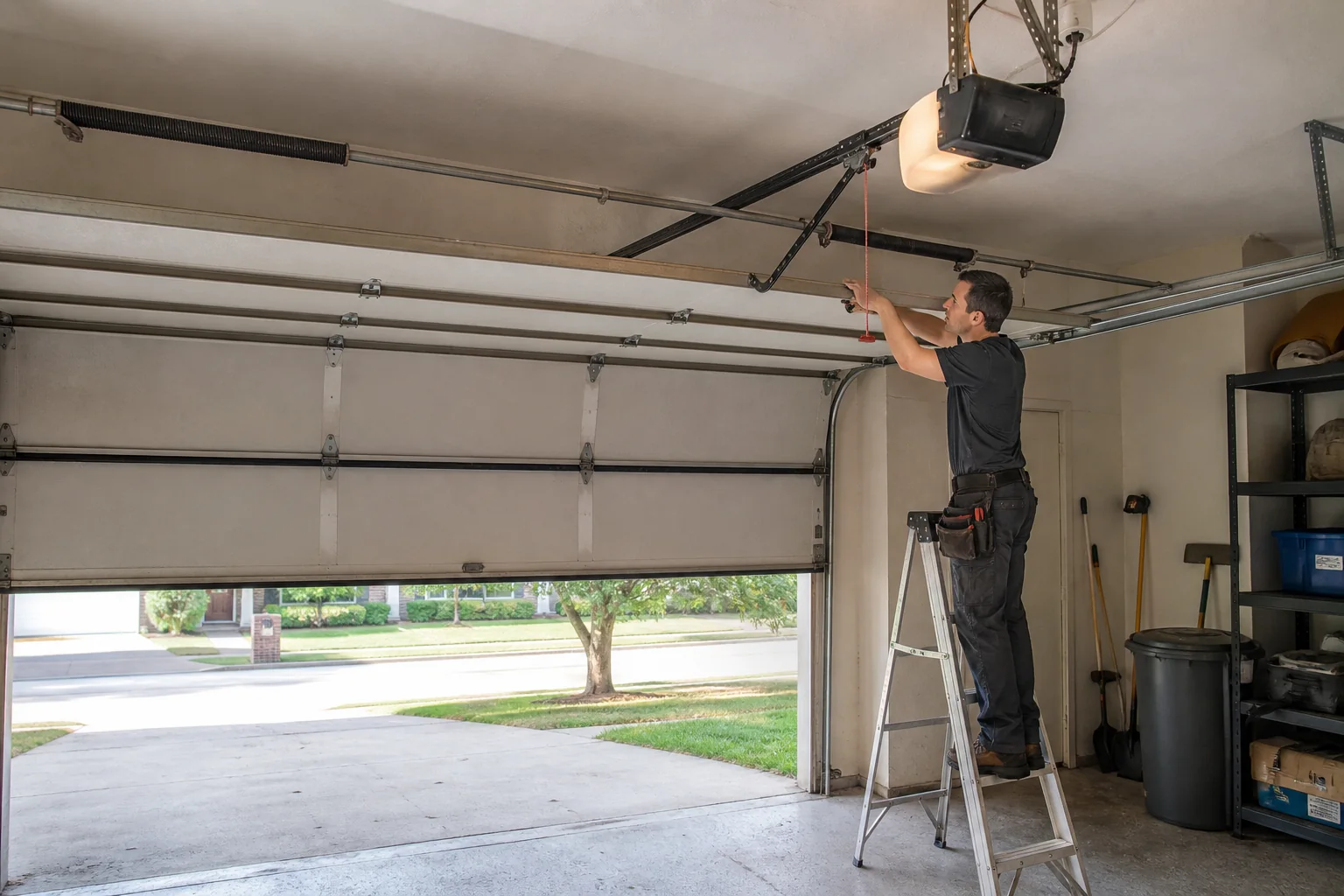
General repair
Garage Door Repair
Tell us what the door is doing and we'll get it in front of someone who can fix it — with the price agreed before the work starts.
See what's includedGarage door repair · Springfield, MO
Old single garages, ice on the slab, and hail nobody went looking for. Say what yours is doing and see the fault and the price first.
Rountree, Phelps Grove, University Heights, and the streets either side of them.
Springs, cables, openers, sensors, tracks, panels, seals, and full replacements.
You hear what failed and what it costs first. Saying no at that point costs you nothing.
Ask before 5 p.m. on a weekday and you hear back that business day.
Why us for this door
When the seal is iced down and the opener keeps pulling, the slack it creates lets a lift cable come off its drum. After that the door hangs unevenly and every further cycle drags it further out of line. It starts as a free fix, waiting for the sun, and ends as a cable and drum job.
If a storm damaged one section, be aware that one new section rarely matches the other three. Say what the door did and whether it has been forced. What it needs and what it costs are agreed with you before any work.
Get my door fixedWhere we work
Rountree and Midtown garages were built for one car and stayed that way; Galloway Village and Southern Hills run wider. Say which.
Plenty of the work we take isn't in Springfield proper. These are the towns around it and what tends to be different about a door there.
Don't see your street or your town? These are the places where the housing changes enough to change the job — not the edge of where we go, and not a promise about your exact address either. We take work across Springfield and the wider Missouri area, and the address you send is what actually gets checked.Check my address
Repairs in Springfield
General repair
Tell us what the door is doing and we'll get it in front of someone who can fix it — with the price agreed before the work starts.
See what's included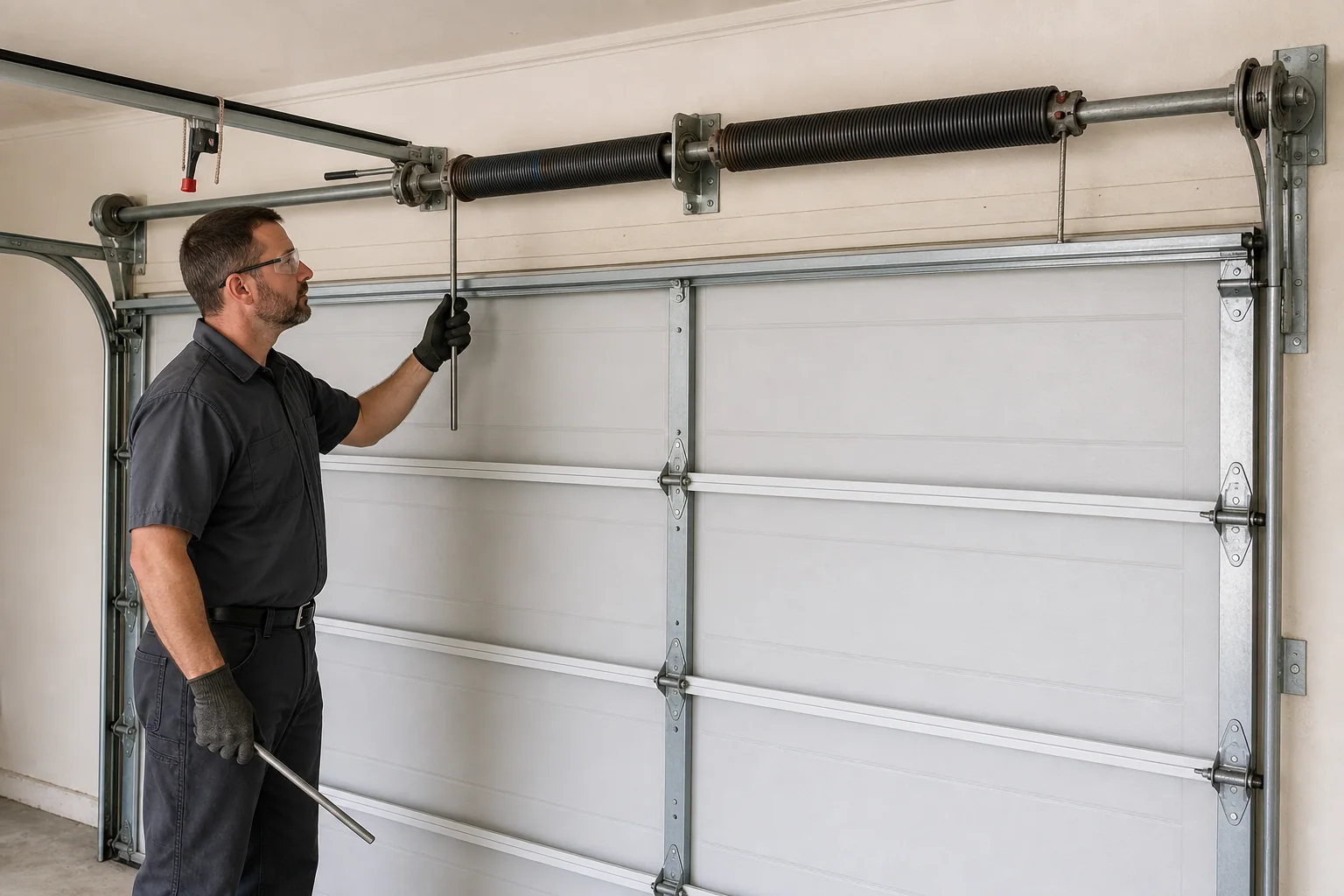
Springs and balance
If your door suddenly weighs a couple hundred pounds, a spring has almost certainly let go. Leave it down, keep everyone clear, and let someone with the right winding bars deal with it.
See what's included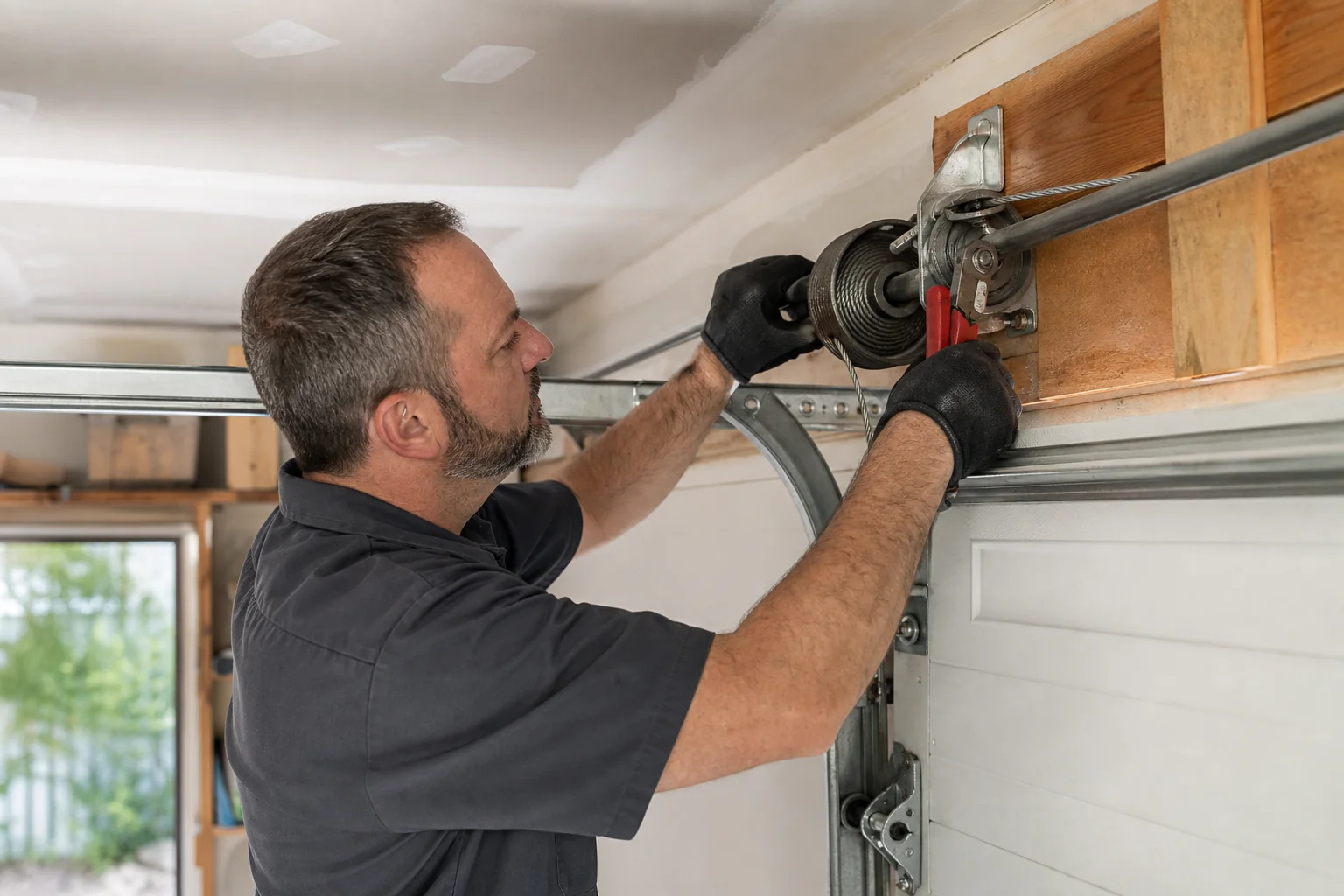
Cables and drums
One corner sitting lower, or a cable hanging off its drum, means the lift system is out of balance. It wants looking at before the next cycle, not after.
See what's included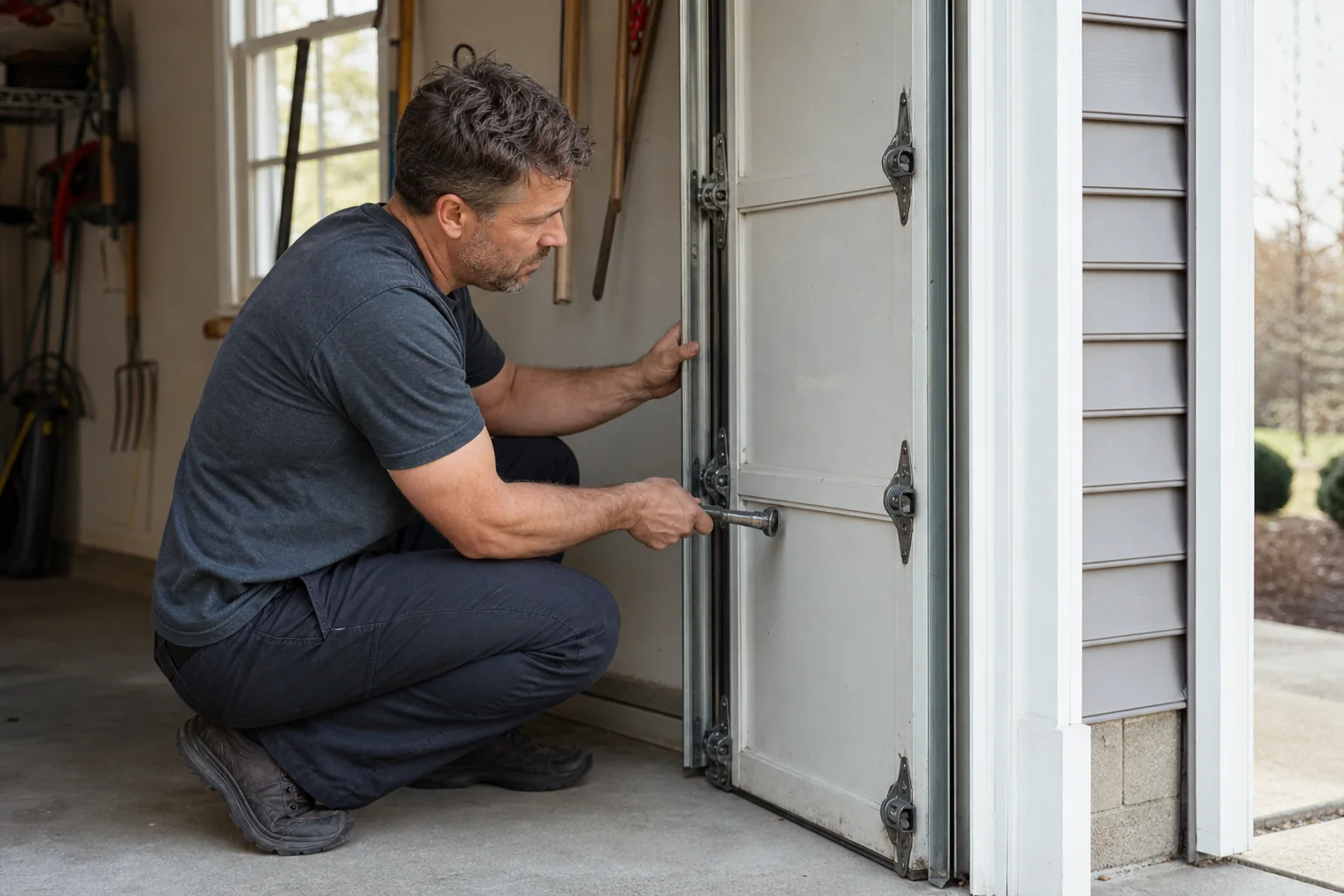
Tracks, rollers, hardware
Grinding in the same spot, a door that shakes the whole wall, a roller creeping out of its track — all cheap to sort now, all expensive once the door comes off.
See what's included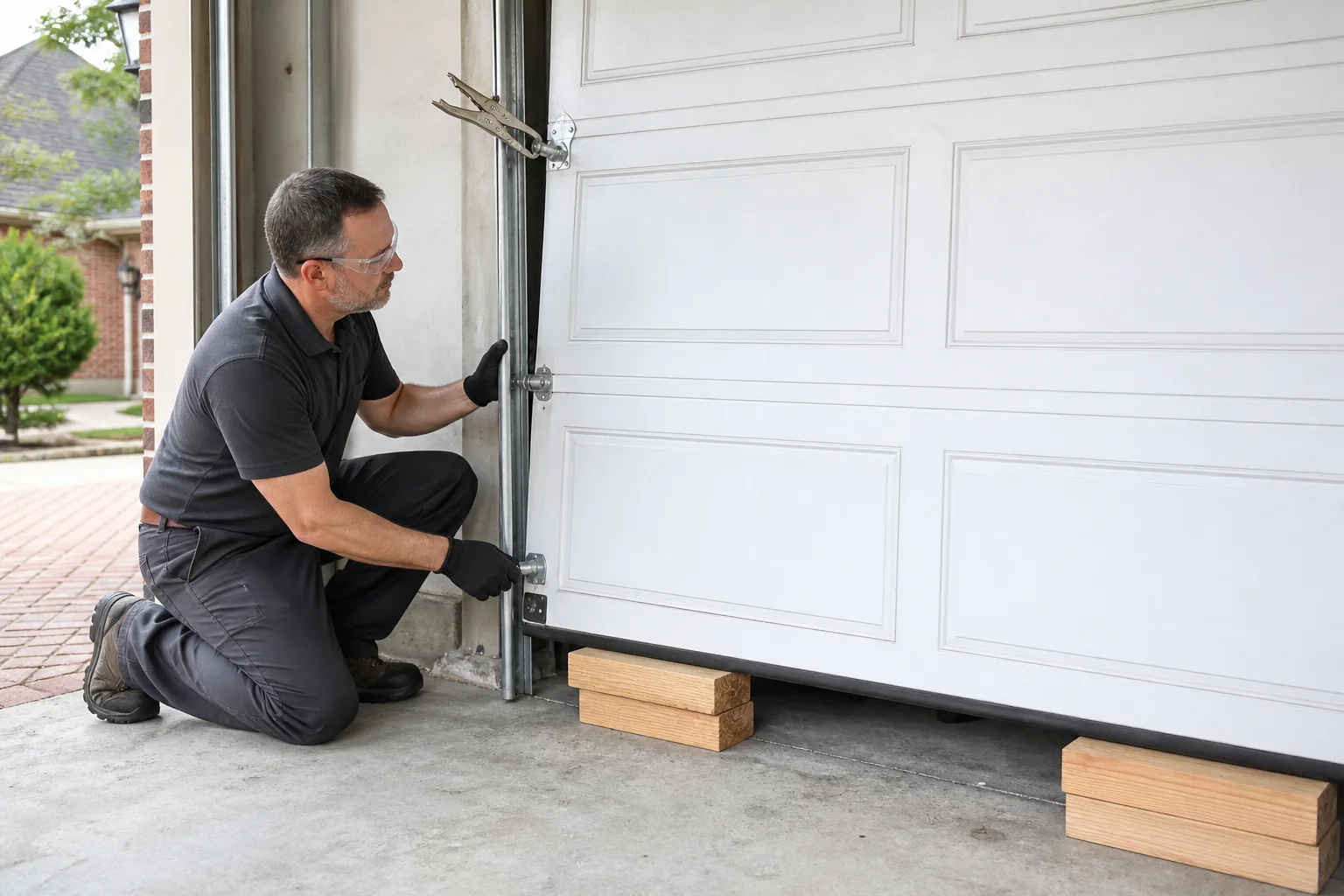
Off-track and stuck
Every extra cycle bends another panel and drags more cable out of line. Leave it where it is, keep the opening clear, and get it stabilized properly.
See what's included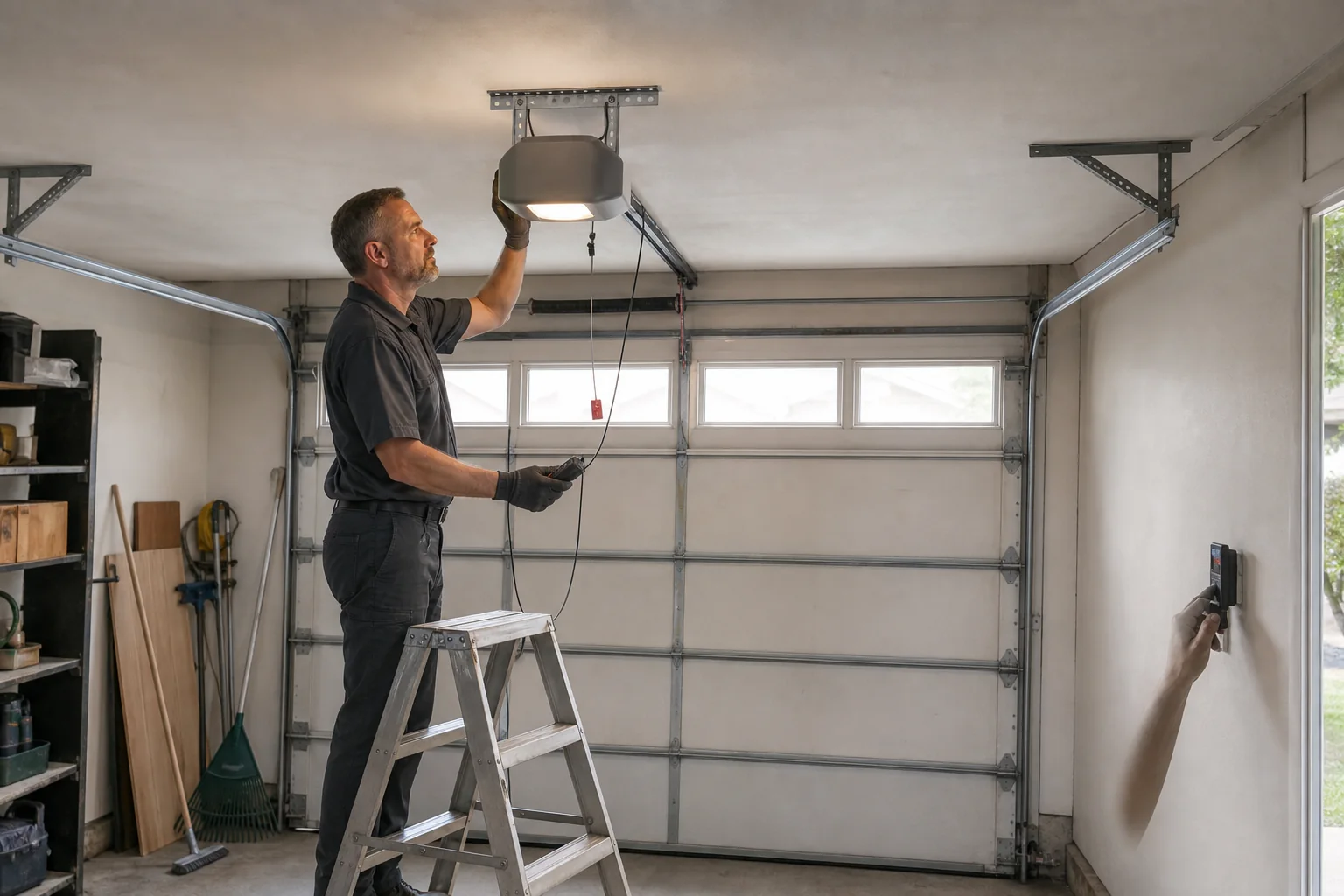
Openers
Motors take the blame for dead springs constantly. Worth knowing which one you've got before you buy an opener you didn't need.
See what's includedSpringfield guide
The garages behind the houses in Rountree and Phelps Grove were built to hold one car of a much smaller era, and nothing about them has grown since. The opening is narrow, the header sits low, and the side room between the track and the wall is thinner than any technician would like.
It matters for two reasons. A replacement section has to suit the opening you already have rather than the one a catalog assumes, and low headroom decides whether standard track goes back in. Measure the opening from the ground if you can, and put those numbers in your first message.
Ice is what turns a working Springfield door into a repair. Freezing rain glazes the apron, meltwater sets under the bottom rubber overnight, and by morning the seal is bonded to the concrete. The opener has no way of knowing. It pulls, one side breaks free before the other, and a lift cable comes off its drum and goes slack.
Once a cable is off, the door hangs crooked and the springs stop sharing the load evenly. Stop there and leave it alone. Tell us whether the door is sitting square in the opening, whether you can see a loose cable at one bottom corner, and how cold it was on that first attempt.
Hail through southwest Missouri finds the wide double doors on newer south-side building around Galloway Village and Southern Hills before it finds anything older and narrower. The first instinct is to ask for the damaged section on its own, which is often right, but only if that section can still be had.
Two things decide it: whether the maker still produces that profile, and whether a new panel will sit beside three that have faced the sun for years without looking obviously new. Both start with the label, usually stuck inside the door near one end or on the track. Photograph it and send it along with the picture of the damage.
Include the cross streets, the rough width of the opening, whether the garage is attached or standing behind the house, and what the door actually did. Where it stopped, what you heard, whether a car is shut in. You don't have to name the failed part, and we'd rather you didn't guess, because a guess is how people pay for a working opener.
Take photos from where you're standing, never from a ladder. Arriving before 5 p.m. on a weekday, it gets a reply from a person the same business day, and otherwise the next business morning. The technician confirms what the job involves and what it costs before any work starts.
Most common around Springfield
The door stays open, stops, or will not begin closing.
What to do about itA gap appears in the spring above the door or a loud bang precedes a heavy door.
What to do about itSensor lights blink or the door will not close from a remote.
What to do about itThe opener is silent, hums, or runs without moving the door.
What to do about itThe customer wants scope, parts, labor, fees, and alternatives in writing.
What to do about itSpringfield questions
Something is stopping it and the opener is doing what it should. Don't keep trying, because each attempt puts the full load through the gear and the cables. Look at whether the bottom seal is stuck to the floor and whether both sides lifted evenly before it gave up, then tell us what you saw.
That's the safety sensors. Holding the button is a deliberate override, and it's telling you the two eyes near the floor can't see each other. Check for a blinking or dark light on either side and tell us which one it is. Don't tape over them to make the problem go away, because that's the part protecting anyone under the door.
That's a broken spring. Leave it exactly as it is. The counterbalance is gone, so the door's full weight is on cables and brackets that weren't sized for it, and the spring holds tension even after it snaps. Keep people and cars clear of the opening and don't try to raise it by hand.
Then it probably isn't the sensors. A door that reverses with healthy eyes is usually meeting resistance: ice on the apron, a roller out of line, or a track that's been knocked. Tell us where in the travel it turns around and whether it's the same spot every single time.
That's a signal problem rather than a door problem. It's often a flat battery, a remote that lost its pairing, or interference from something new in the garage. Try a second remote if you have one, and tell us what happened. It saves the technician chasing a fault at the door that was never there.
The technician inspects the door, tells you what failed, and puts the scope and the price in front of you before any work begins. You can decline it there and then. There's no payment taken through this site and no cost to ask the question.
Springfield, MO
What the door did, whether it has been forced, and your cross streets. The scope and the price are agreed before work starts.