

General repair
Garage Door Repair
Tell us what the door is doing and we'll get it in front of someone who can fix it — with the price agreed before the work starts.
See what's includedGarage door repair · St. Louis, MO
Brick garages at the back of the lot, and openings that were never standard. Tell us what yours is doing and see the price first.
St. Louis Hills, Lindenwood Park, Bevo Mill, and the streets either side of them.
Springs, cables, openers, sensors, tracks, panels, seals, and full replacements.
You hear what failed and what it costs first. Saying no at that point costs you nothing.
Ask before 5 p.m. on a weekday and you hear back that business day.
Why us for this door
Masonry openings around The Hill, Dogtown and Bevo Mill are structural, so the door has to be made to fit the hole rather than the other way round. Anyone quoting a stock size without measuring is quoting for a door that won't go in, and the discovery happens on installation day.
A heaved apron will stop the door short of the floor as well, and wind finds a door already sitting crooked. Give us the neighborhood name rather than the ZIP, plus the opening size. Scope and price are agreed with you first.
Get my door fixedWhere we work
The Hill, Dogtown and Soulard run brick and narrow; St. Louis Hills and Lindenwood Park are wider. Name the neighborhood, not the ZIP.
Plenty of the work we take isn't in St. Louis proper. These are the towns around it and what tends to be different about a door there.
Don't see your street or your town? These are the places where the housing changes enough to change the job — not the edge of where we go, and not a promise about your exact address either. We take work across St. Louis and the wider Missouri area, and the address you send is what actually gets checked.Check my address
Repairs in St. Louis
General repair
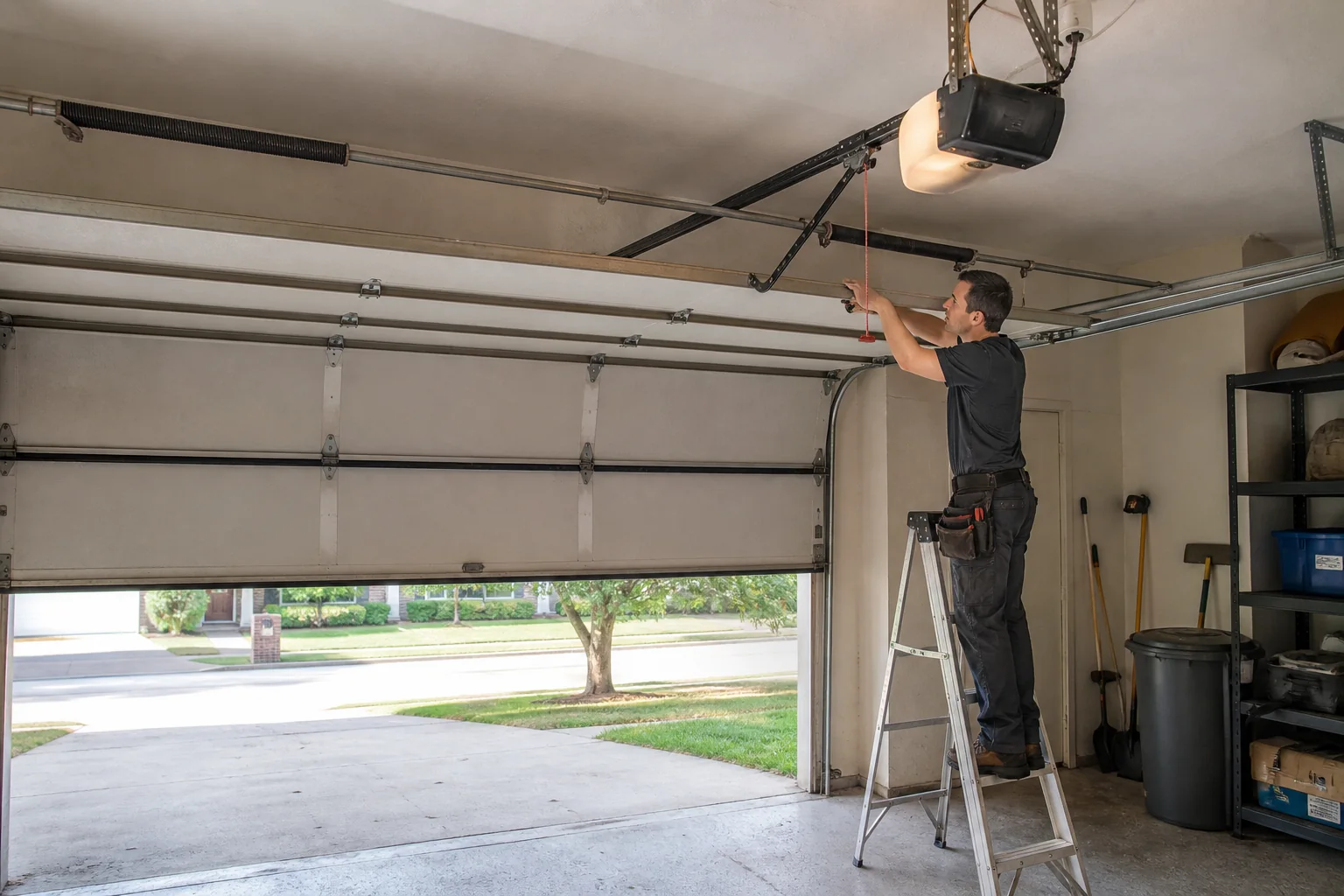
Tell us what the door is doing and we'll get it in front of someone who can fix it — with the price agreed before the work starts.
See what's included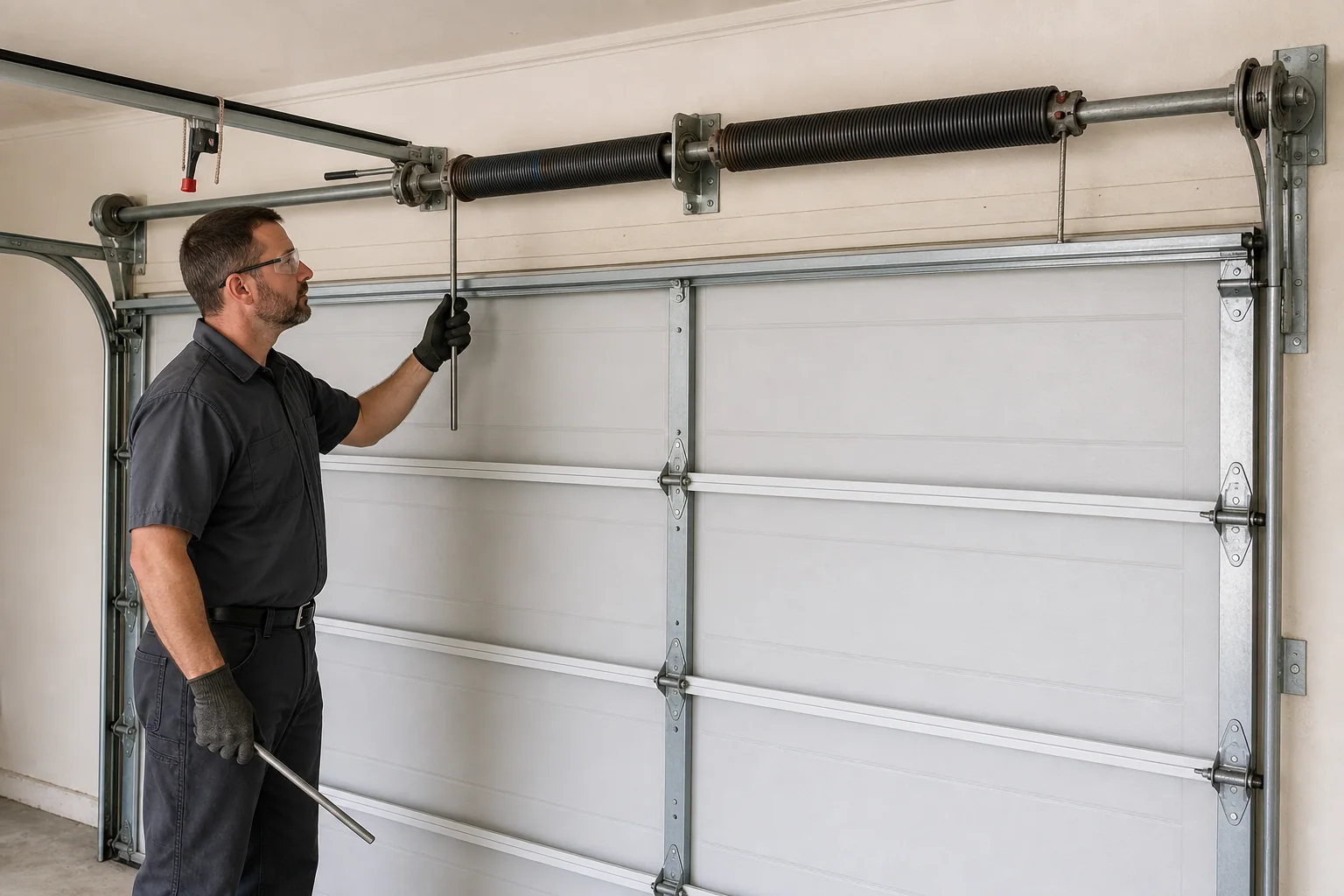
Springs and balance
If your door suddenly weighs a couple hundred pounds, a spring has almost certainly let go. Leave it down, keep everyone clear, and let someone with the right winding bars deal with it.
See what's included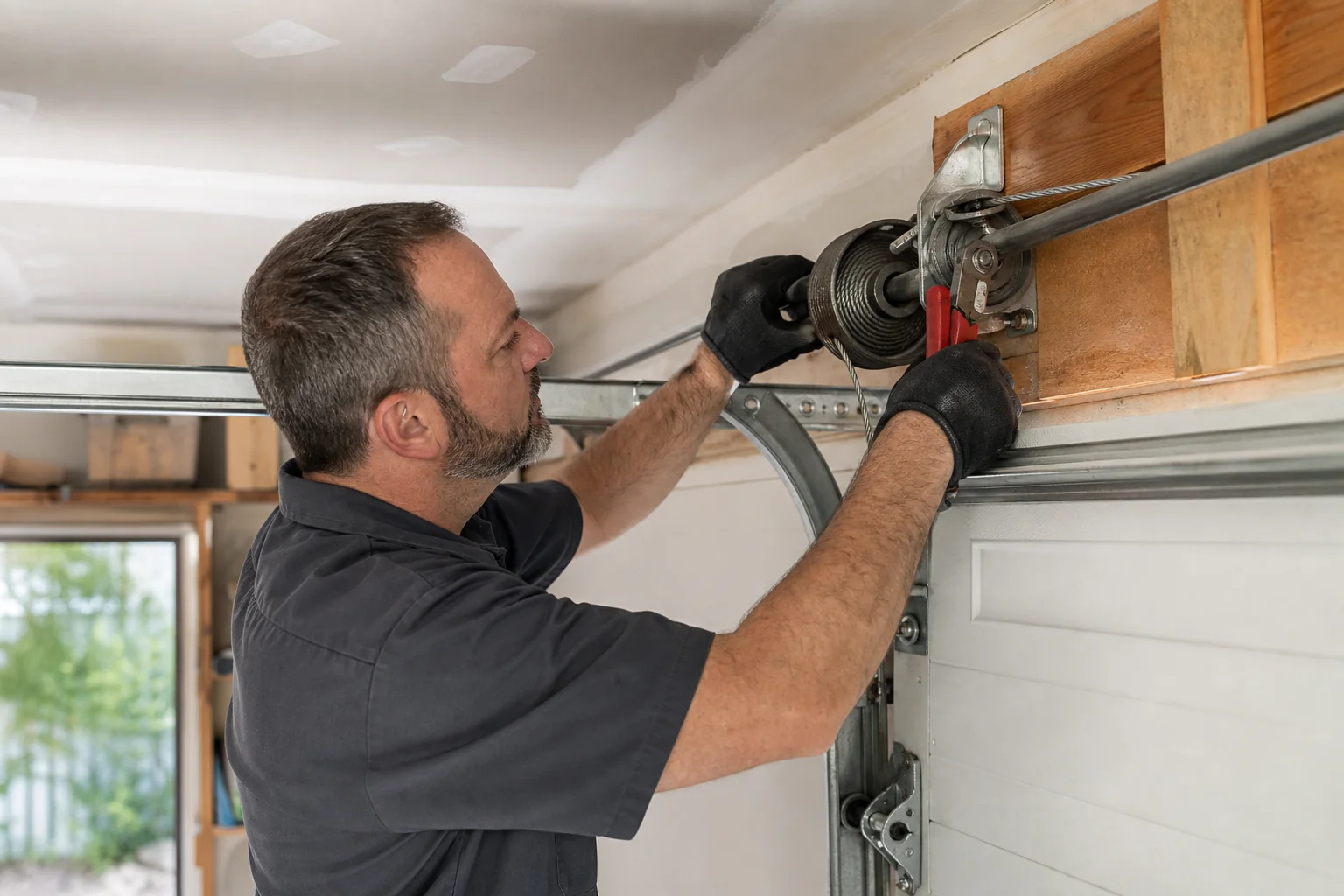
Cables and drums
One corner sitting lower, or a cable hanging off its drum, means the lift system is out of balance. It wants looking at before the next cycle, not after.
See what's included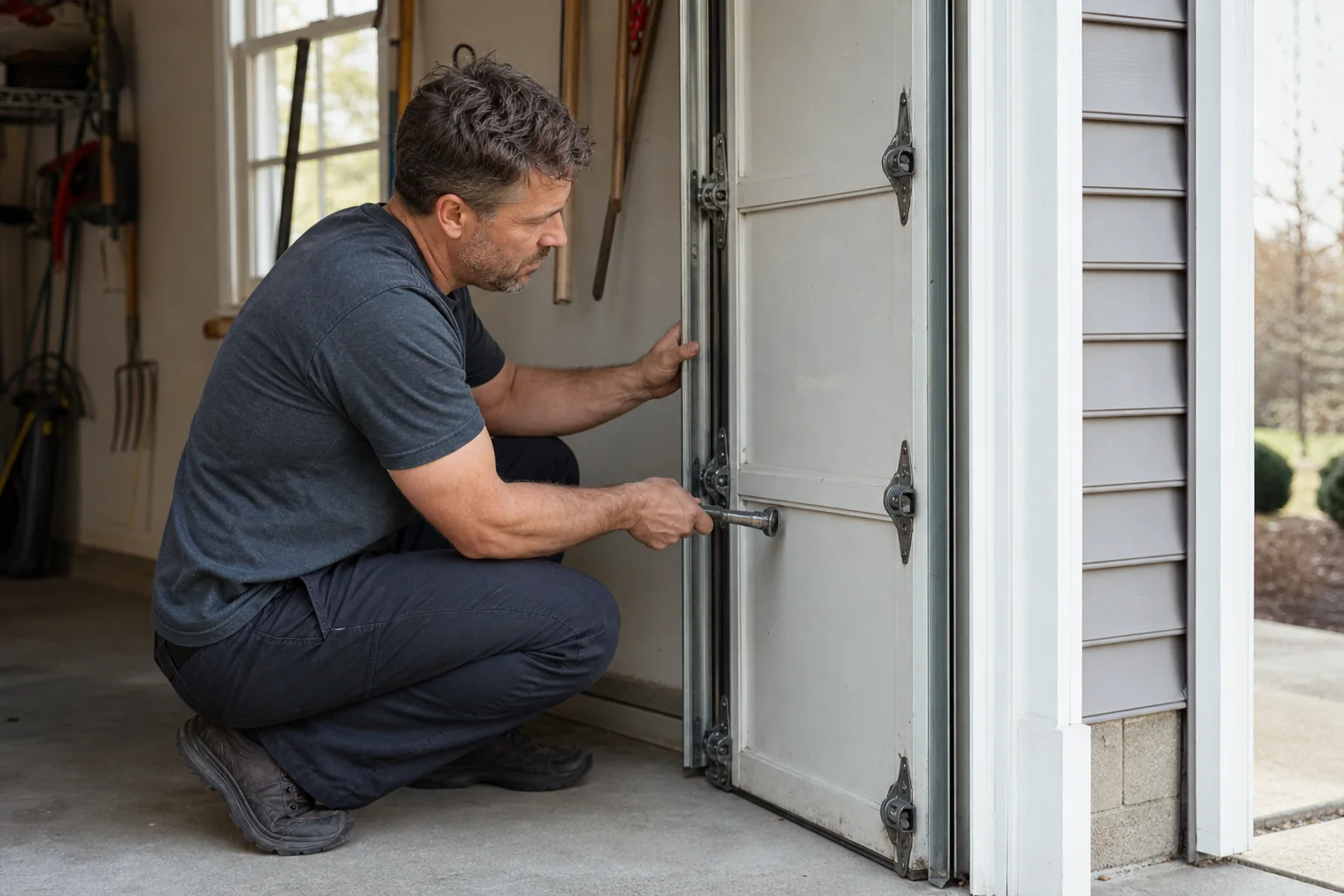
Tracks, rollers, hardware
Grinding in the same spot, a door that shakes the whole wall, a roller creeping out of its track — all cheap to sort now, all expensive once the door comes off.
See what's included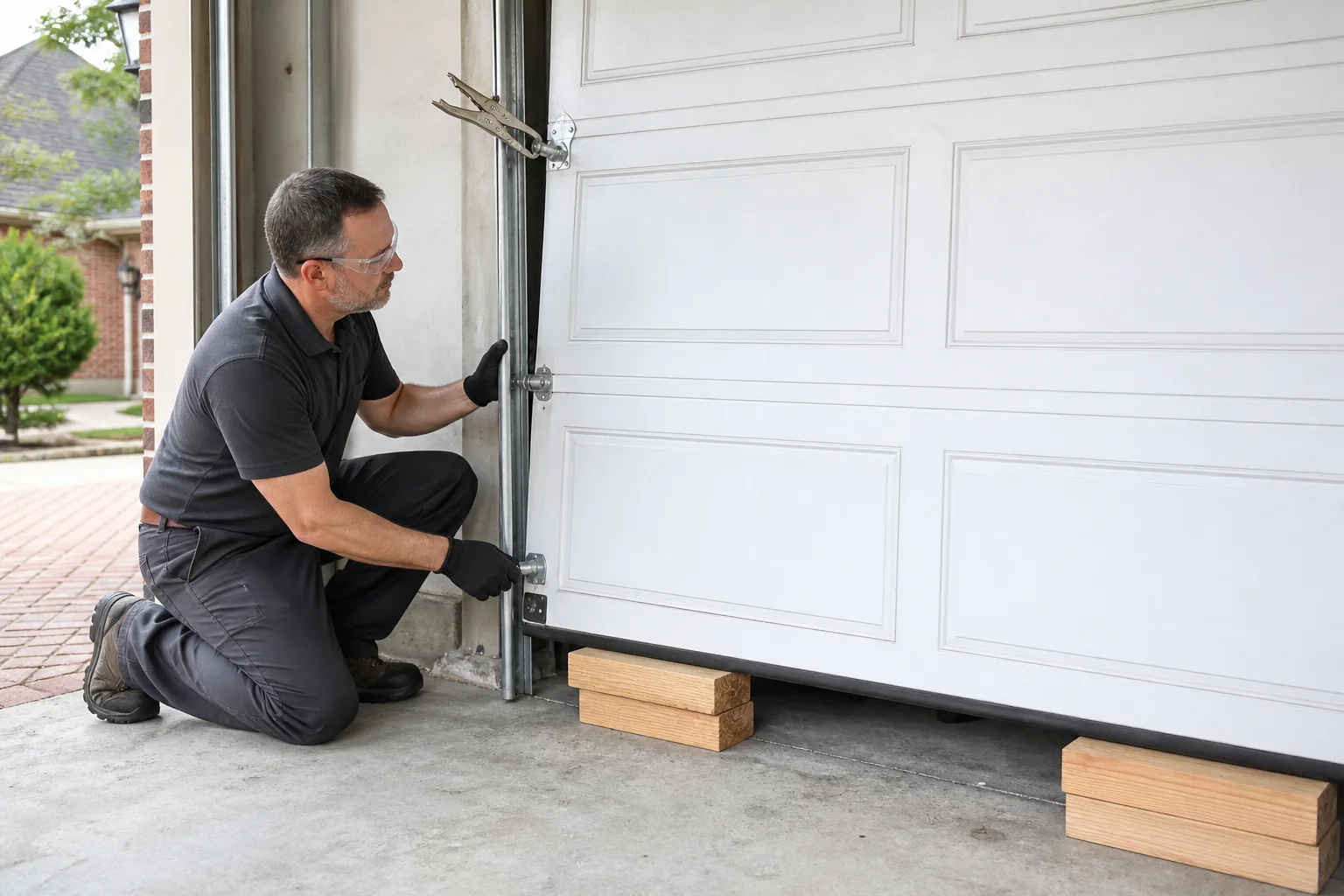
Off-track and stuck
Every extra cycle bends another panel and drags more cable out of line. Leave it where it is, keep the opening clear, and get it stabilized properly.
See what's included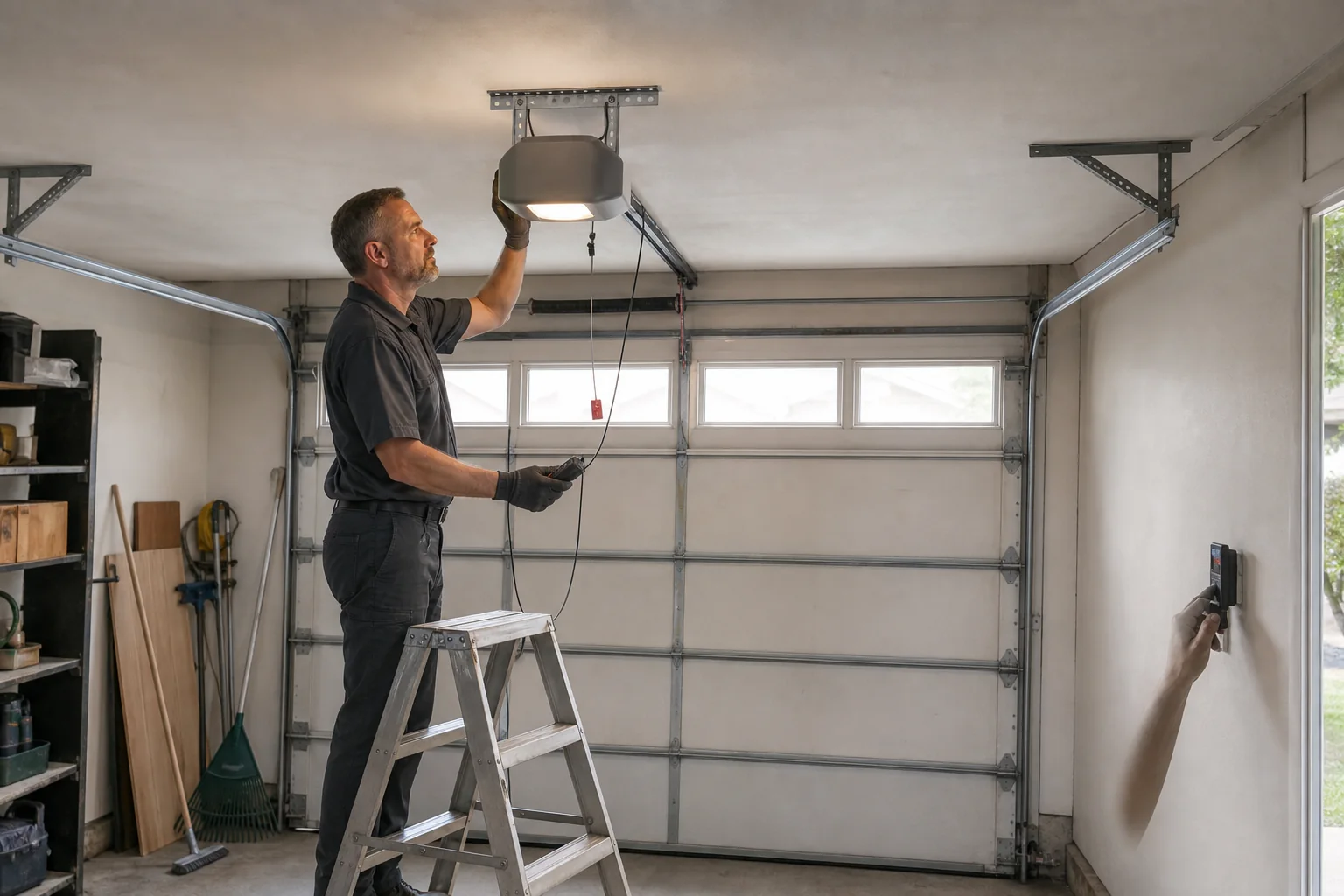
Openers
Motors take the blame for dead springs constantly. Worth knowing which one you've got before you buy an opener you didn't need.
See what's includedSt. Louis guide
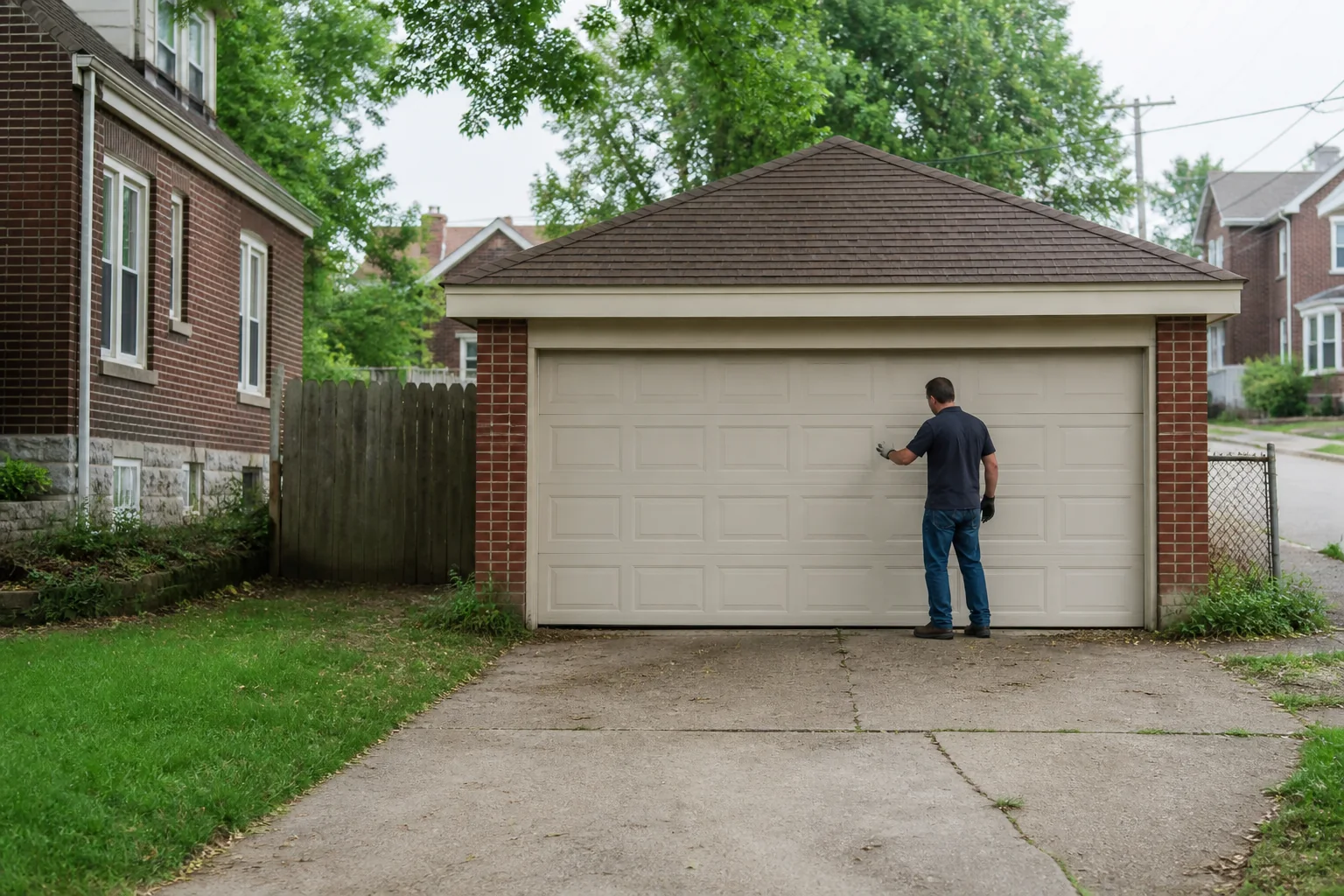
Most of the garages in Bevo Mill, Lindenwood Park and on the Hill are brick, built at the back of the lot on their own footings, with a masonry opening and a header that has been carrying load for a long time. Whatever door goes in has to suit the opening that's already there.
So if you're thinking about a wider door, or the frame has shifted and the door no longer sits square, that's a masonry question before it's a door question. Take one photo of the opening from inside with the door up and one from outside with it down, and let the technician tell you which of the two jobs you actually have.
Freeze and thaw work on the slab in front of the garage all winter, and on the narrow lots through Dogtown and Holly Hills that apron is usually old concrete. When it lifts at one corner the door meets it early on that side, the opener reads the resistance as an obstruction and reverses, and the sensors get blamed for something they didn't do.
Look along the bottom edge with the door shut and see whether the gap runs even from end to end. Salt tracked in off the street settles on the same low ground and works at the bottom fixtures from underneath. Tell us whether the gap is even, and whether one corner is noticeably tighter.
Storms coming up the river valley bring straight-line wind and hail inside the same afternoon. A door that already sits slightly out of square in an old opening is the one that gets pushed hardest, because the wind gets a purchase on the edge that isn't sealing properly.
Afterward the tell is usually noise rather than anything you can see. A knock at the same point in the travel, or the door pulling toward one side as it runs. Hail leaves the visible marks, but it's the change in how the door tracks that ends up costing money. Say when the storm came through and what changed after it.
People here describe where they live by neighborhood, and it tells a technician more than a ZIP code does, because it says what kind of garage they're walking up to before they get there. Add the nearest cross streets, whether the garage is brick and detached, and what the door actually did.
You don't need to identify the failed part. Photos from ground level are plenty, and we'd rather nobody went up a ladder. Sent before 5 p.m. on a weekday, it gets a human reply the same business day, otherwise the next business morning, and nothing is done until you've agreed the scope and the price.
Most common around St. Louis
The door stays open, stops, or will not begin closing.
What to do about itA gap appears in the spring above the door or a loud bang precedes a heavy door.
What to do about itSensor lights blink or the door will not close from a remote.
What to do about itThe opener is silent, hums, or runs without moving the door.
What to do about itThe customer wants scope, parts, labor, fees, and alternatives in writing.
What to do about itSt. Louis questions
Stop there. A door going up crooked usually means a lift cable has come off its drum or a roller has left the track, and forcing it will bend the section and the vertical rail. Leave it where it is and tell us which side is high, and whether you can see a slack cable at either bottom corner.
The opener thinks it hit something on the way down. On an old apron that's often true, because the concrete has lifted at one corner and the door meets it early on that side. Look along the bottom edge with the door shut and see whether the gap is even end to end, then tell us which corner is tight.
A spring has gone. That's the one job to leave alone, because a broken spring still holds tension and the door's full weight is now on the cables. Leave it, keep the opening clear of people and cars, and don't touch the springs, the cables or the brackets at the bottom corners.
Flickering usually means the pair are only just seeing each other. In an older detached garage that's often a bracket that has worked loose on a masonry wall, or a lens that has collected dust. Tell us what each light does, and leave them connected. A bypassed sensor is how people get hurt.
Check whether the garage runs off its own circuit first, because a detached garage here often does, and a tripped breaker will look exactly like a dead opener. If the power is good and it's still dead, say so and tell us roughly how old the unit is and whether the garage has flooded at any point.
Yes. The technician looks at the door, explains what failed, and gives you the scope and the price before picking up a tool. You can say no at that point and nothing else happens. We don't take payment through this site, and asking costs you nothing.
St. Louis, MO
The neighborhood, the opening width, and what the door did. You'll have the scope and the price before work begins.