

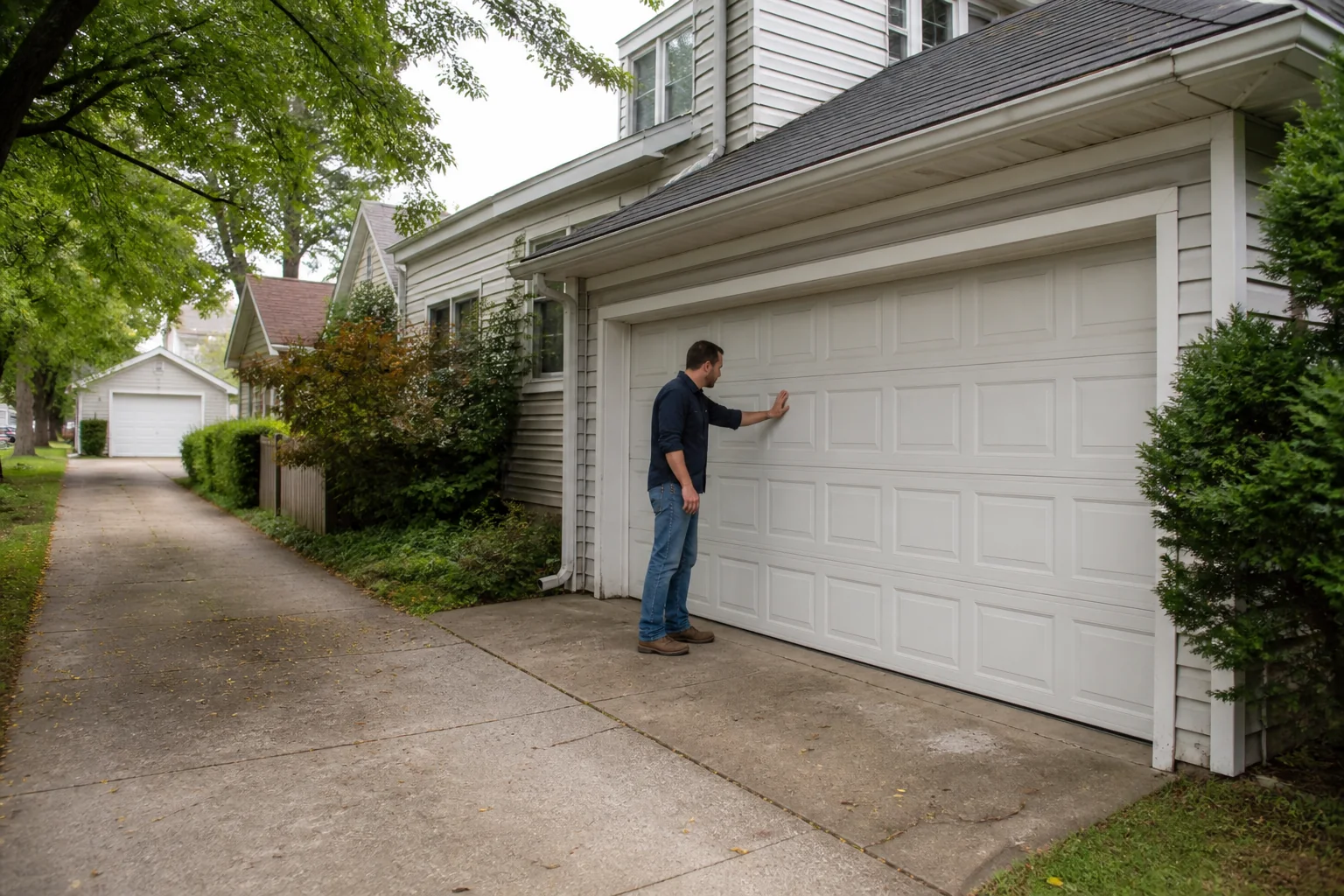
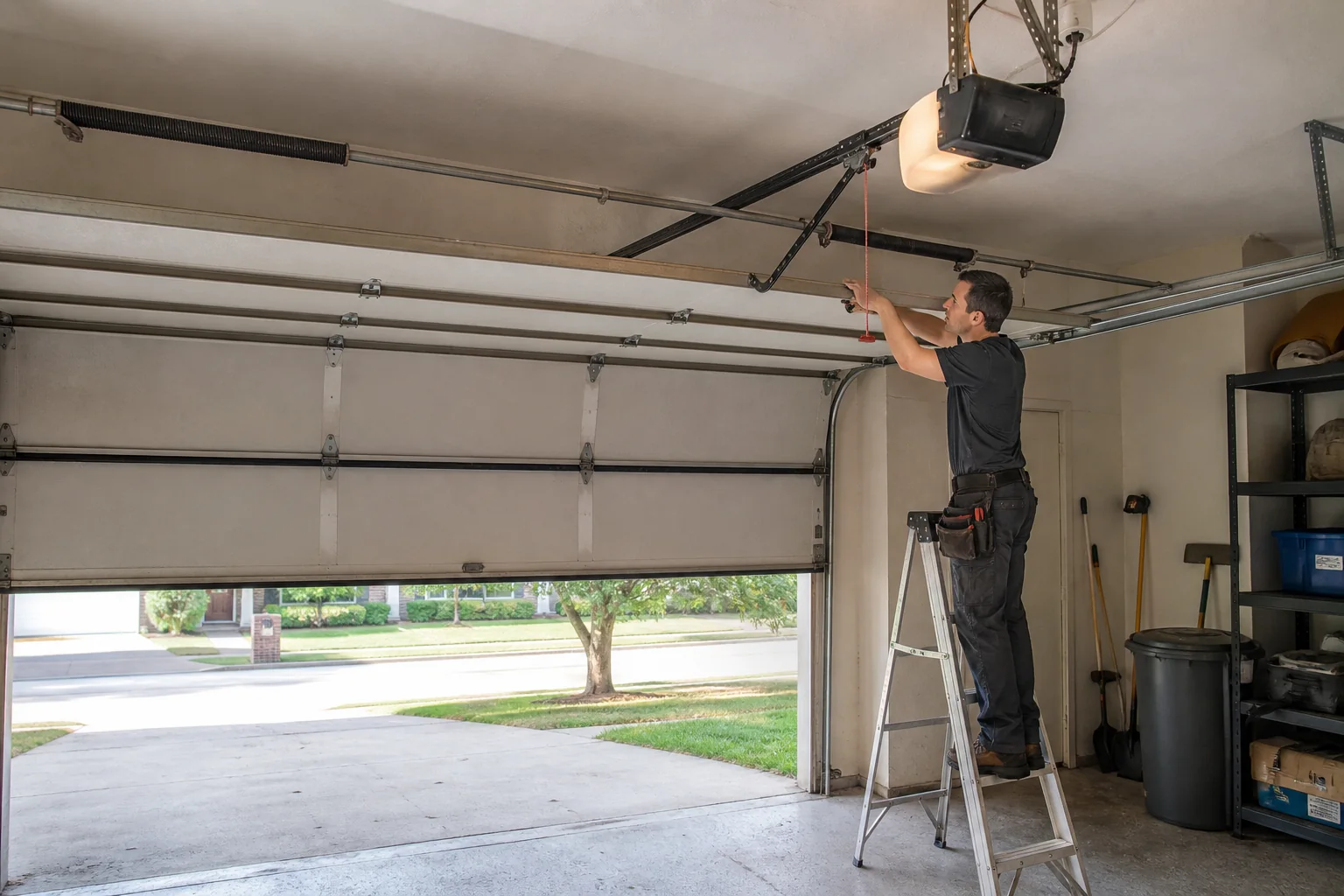
General repair
Garage Door Repair
Tell us what the door is doing and we'll get it in front of someone who can fix it — with the price agreed before the work starts.
See what's includedGarage door repair · Cleveland, OH
The garage is at the back of the lot, and in January that matters. Say what your Cleveland door is doing and see the price first.
Tremont, Detroit-Shoreway, North Collinwood, and the streets either side of them.
Springs, cables, openers, sensors, tracks, panels, seals, and full replacements.
You hear what failed and what it costs first. Saying no at that point costs you nothing.
Ask before 5 p.m. on a weekday and you hear back that business day.
Why us for this door
A Cleveland garage at the back of a long lot is only reachable if the run to it's clear, and in January that's the thing most likely to stop a repair happening on the day. It has nothing to do with the door and everything to do with whether the work can start.
Road salt melting off the car goes straight onto the bottom seal and the brackets behind it, which is what actually wears these doors out. Say how far back the garage sits and what the run looks like. Cost agreed before work.
Get my door fixedWhere we work
Tremont and Old Brooklyn run deep narrow lots; West Park and Kamms Corners have shorter drives. Say which, and how it's clearing.
Plenty of the work we take isn't in Cleveland proper. These are the towns around it and what tends to be different about a door there.
Don't see your street or your town? These are the places where the housing changes enough to change the job — not the edge of where we go, and not a promise about your exact address either. We take work across Cleveland and the wider Ohio area, and the address you send is what actually gets checked.Check my address
Repairs in Cleveland
General repair
Tell us what the door is doing and we'll get it in front of someone who can fix it — with the price agreed before the work starts.
See what's included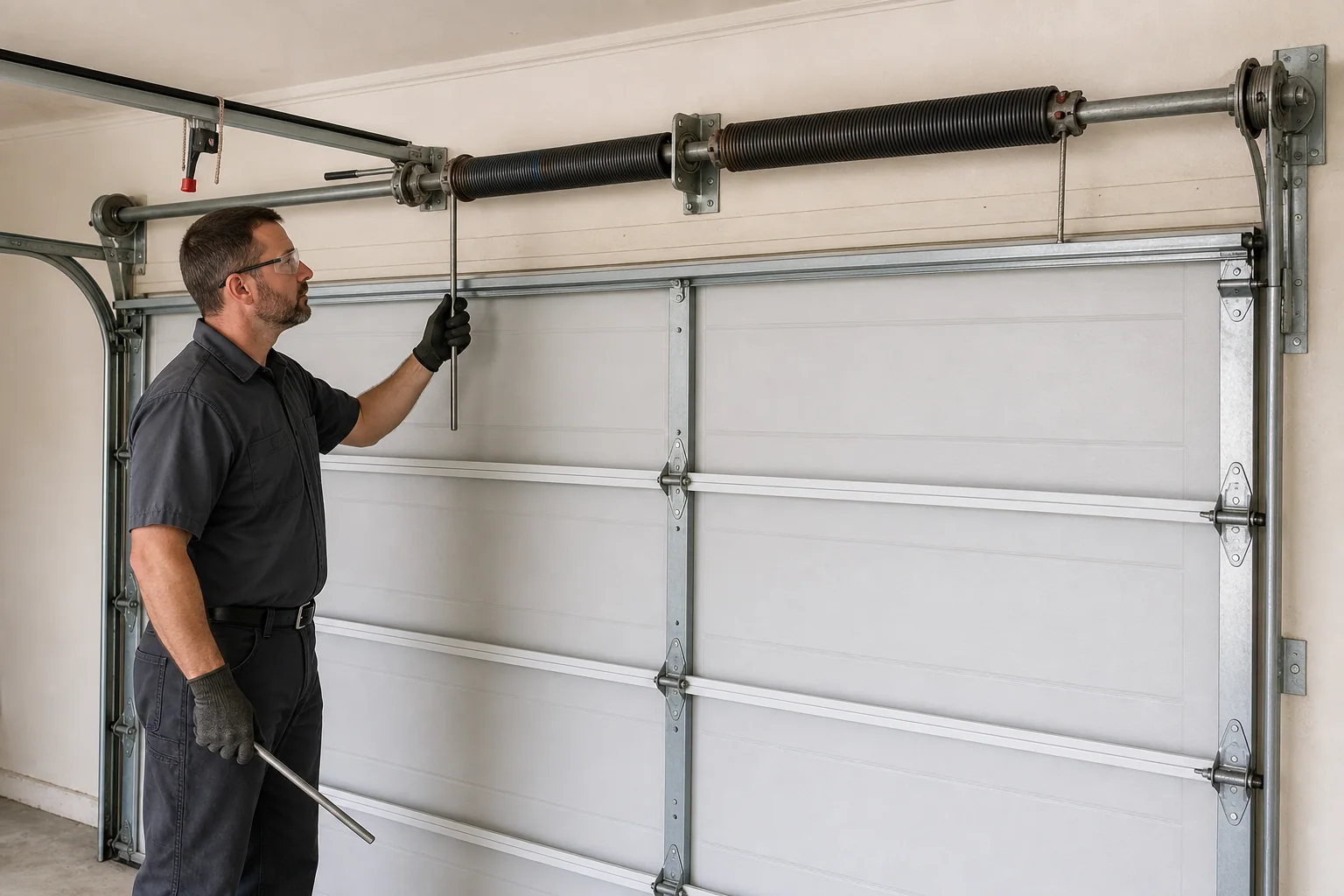
Springs and balance
If your door suddenly weighs a couple hundred pounds, a spring has almost certainly let go. Leave it down, keep everyone clear, and let someone with the right winding bars deal with it.
See what's included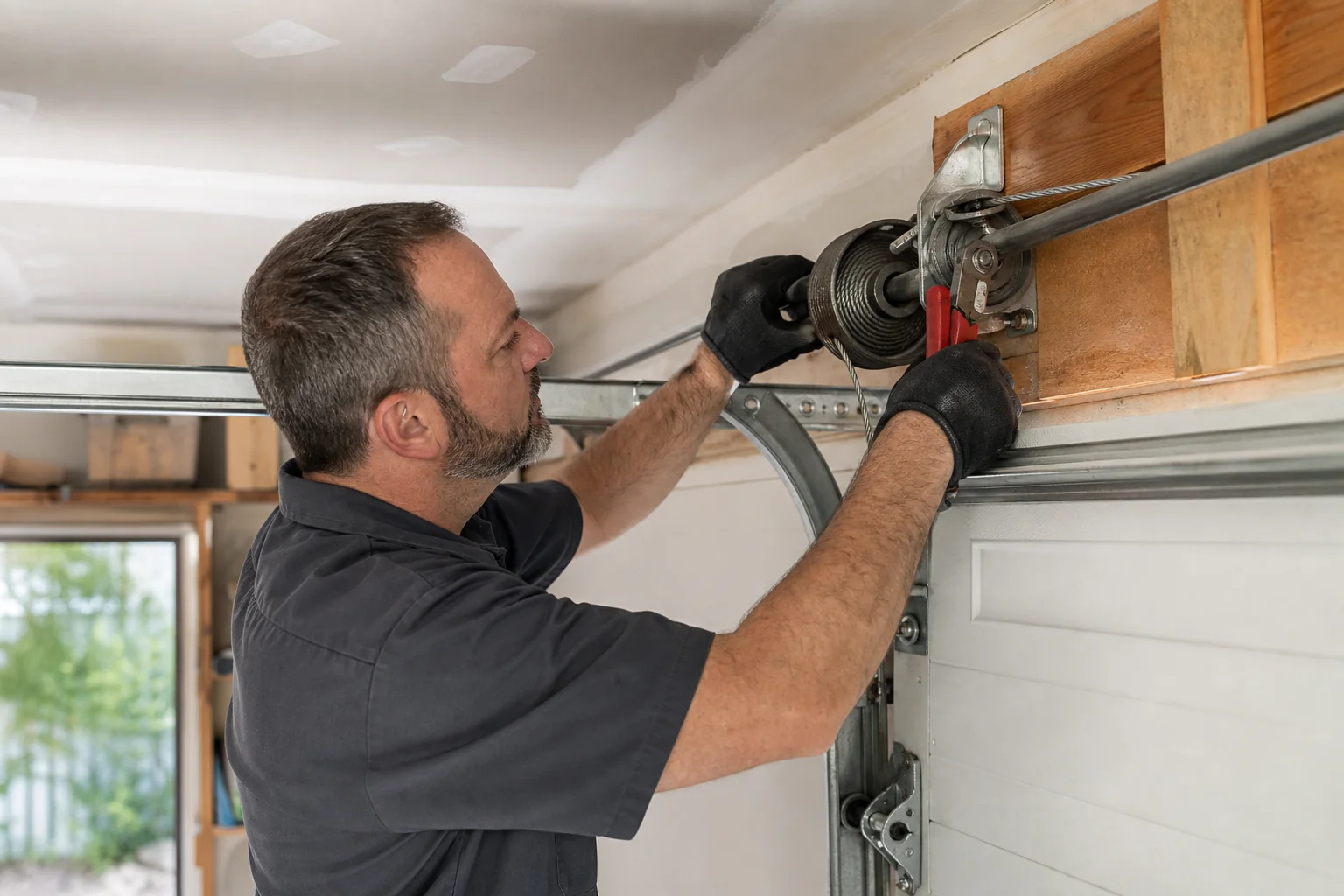
Cables and drums
One corner sitting lower, or a cable hanging off its drum, means the lift system is out of balance. It wants looking at before the next cycle, not after.
See what's included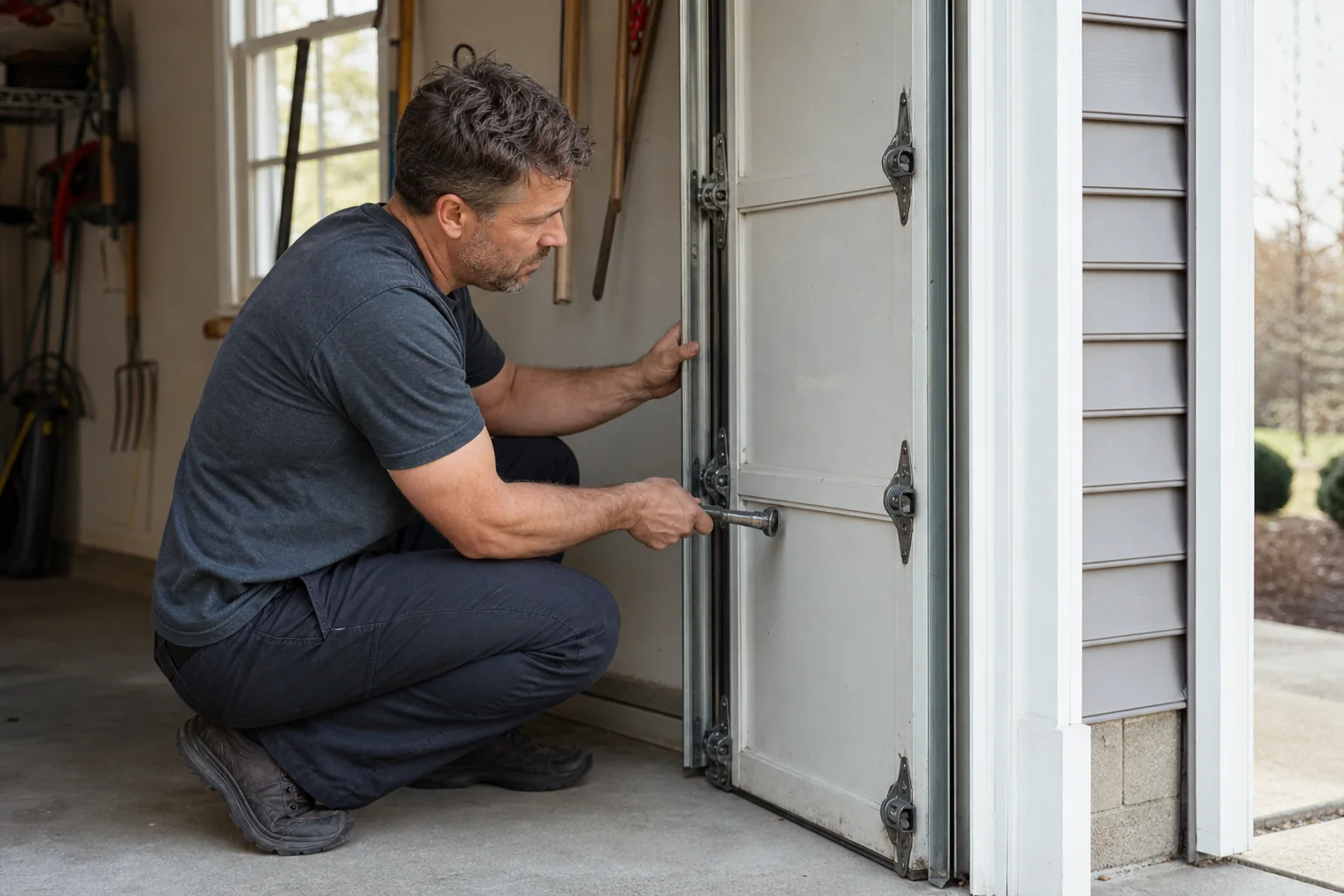
Tracks, rollers, hardware
Grinding in the same spot, a door that shakes the whole wall, a roller creeping out of its track — all cheap to sort now, all expensive once the door comes off.
See what's included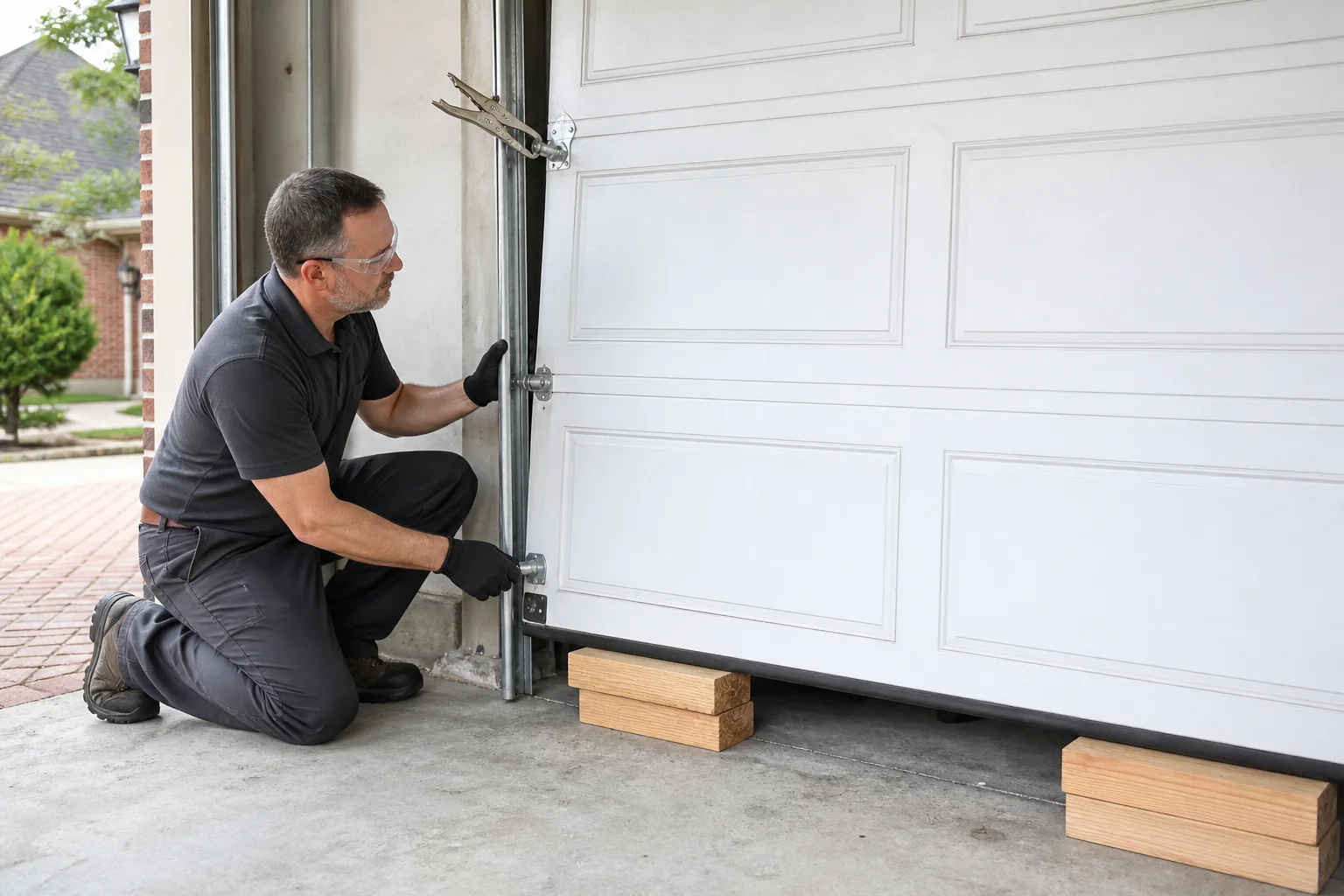
Off-track and stuck
Every extra cycle bends another panel and drags more cable out of line. Leave it where it is, keep the opening clear, and get it stabilized properly.
See what's included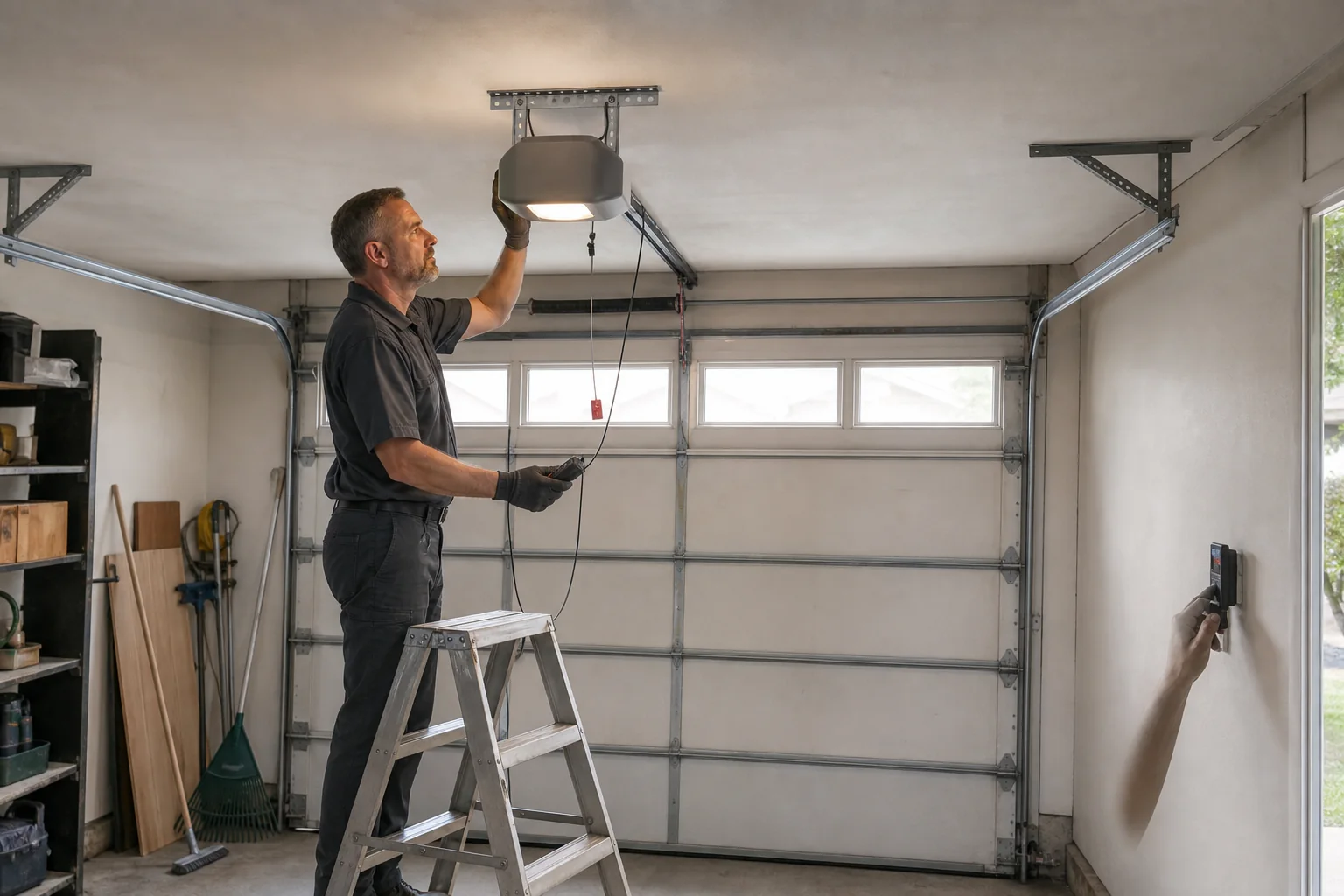
Openers
Motors take the blame for dead springs constantly. Worth knowing which one you've got before you buy an opener you didn't need.
See what's includedCleveland guide
Cleveland's older streets were laid out on narrow, deep lots, so the garage is usually a separate building right at the back, reached by a drive running the full length of the house. Tremont, Detroit-Shoreway and North Collinwood are full of them, and often that drive is shared with the neighbor.
Old Brooklyn, West Park and Kamms Corners have more properties where the drive is yours alone and there is room to turn. That difference decides whether a vehicle gets within reach of the door or has to work from the street, so say which one you have.
A long back drive is the first thing to vanish under a lake-effect band and the last thing anyone clears. A technician can be parked outside your house and still have no way to get a vehicle, a ladder and a replacement section down to a garage at the far end of the lot.
So if there is snow down when you write in, say whether the drive is open and whether the apron in front of the door has been dug out. If it hasn't and you can't manage it yourself, that is better known before a day is set than after. We'd rather move the appointment than waste your morning.
Every winter trip carries brine into the garage on the underside of the car, and it drips off where the car sits, which is inside the door. The bottom rubber goes hard, the brackets and cable ends sit in the wet, and the fixings carrying the whole weight of the door quietly lose material.
The signs are a line of daylight along the bottom edge, a floor that stays damp near the opening, and orange staining at the corner brackets. Don't fit a new seal and call it finished if the brackets underneath are pitted; tell us what those corners look like.
Give us the nearest cross streets, whether the garage is attached or a detached building at the rear, single or double, and what happened on the last press of the button. Say whether a car is trapped inside and whether the drive is passable today, because both change how the request gets handled.
You don't need to name the broken part; guessing is how people buy an opener when the problem was a cable. Ground-level photos are enough and nobody wants you on a ladder in January. Anything sent before 5 p.m. on a weekday gets a human answer that business day. The technician confirms the job and the cost before starting.
Most common around Cleveland
The door stays open, stops, or will not begin closing.
What to do about itA gap appears in the spring above the door or a loud bang precedes a heavy door.
What to do about itSensor lights blink or the door will not close from a remote.
What to do about itThe opener is silent, hums, or runs without moving the door.
What to do about itThe customer wants scope, parts, labor, fees, and alternatives in writing.
What to do about itCleveland questions
Say that first when you contact us, because a trapped vehicle changes the priority. Do not try to force the door up by hand if it feels heavy, since that weight is a sign a spring or cable has gone. If there is a side door, use it, and leave the main door exactly as it is until somebody has looked at it.
A gap at the bottom is either a seal that has hardened and shrunk back or a floor and door that no longer meet squarely. Both let weather in, but only one is fixed by a strip of rubber. Look at whether the gap is even across the width or worse at one end, and tell us which, because that answer decides the repair.
That is a broken spring, and cold nights are when they let go. Everything holding that door up is now doing a job it was not designed for. Keep people and cars clear, leave the door down, and do not touch the springs, the cables, or the brackets at the bottom corners while you wait.
It is common enough. Cold makes brackets contract and shift, condensation and road film fog the lenses, and piled snow near the opening can catch the beam. Wipe both lenses dry, clear a space around each unit, and tell us whether the lights hold steady afterward. Never tape or disconnect them to force a close.
Start with power. Garage outlets are often on a ground-fault breaker that has tripped, and a unit with no light and no sound usually is not getting any. Check the outlet and the breaker, then tell us whether the motor unit shows any light at all. That one detail separates an electrical problem from a failed board.
The technician inspects the door, explains what has failed, and gives you the scope and the cost before starting work. You can turn it down at that point without owing anything. This site takes no payment and there is no fee for sending a request.
Cleveland, OH
The symptom, the run to the garage, and your cross streets. You'll have the scope and the price before work begins.