

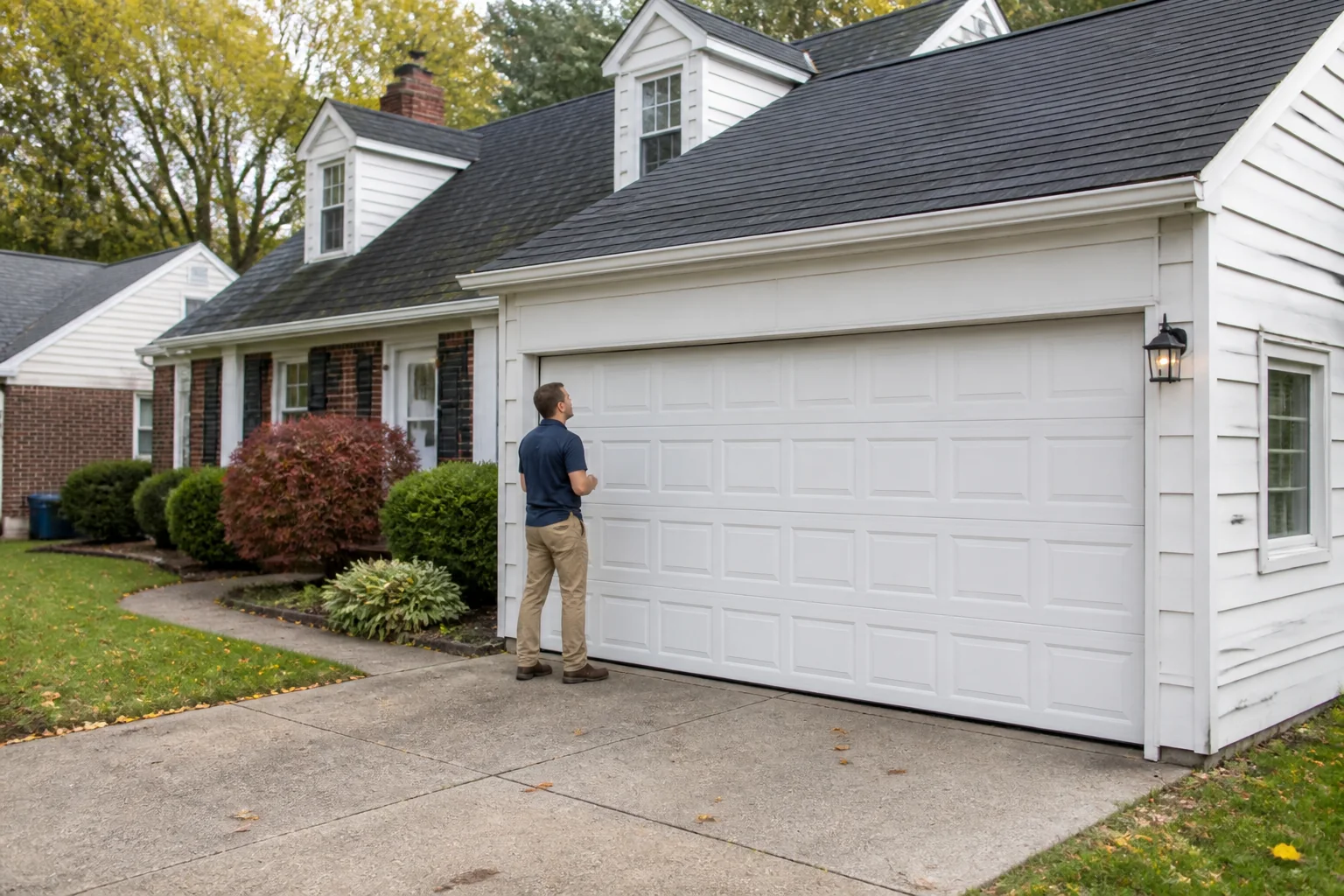
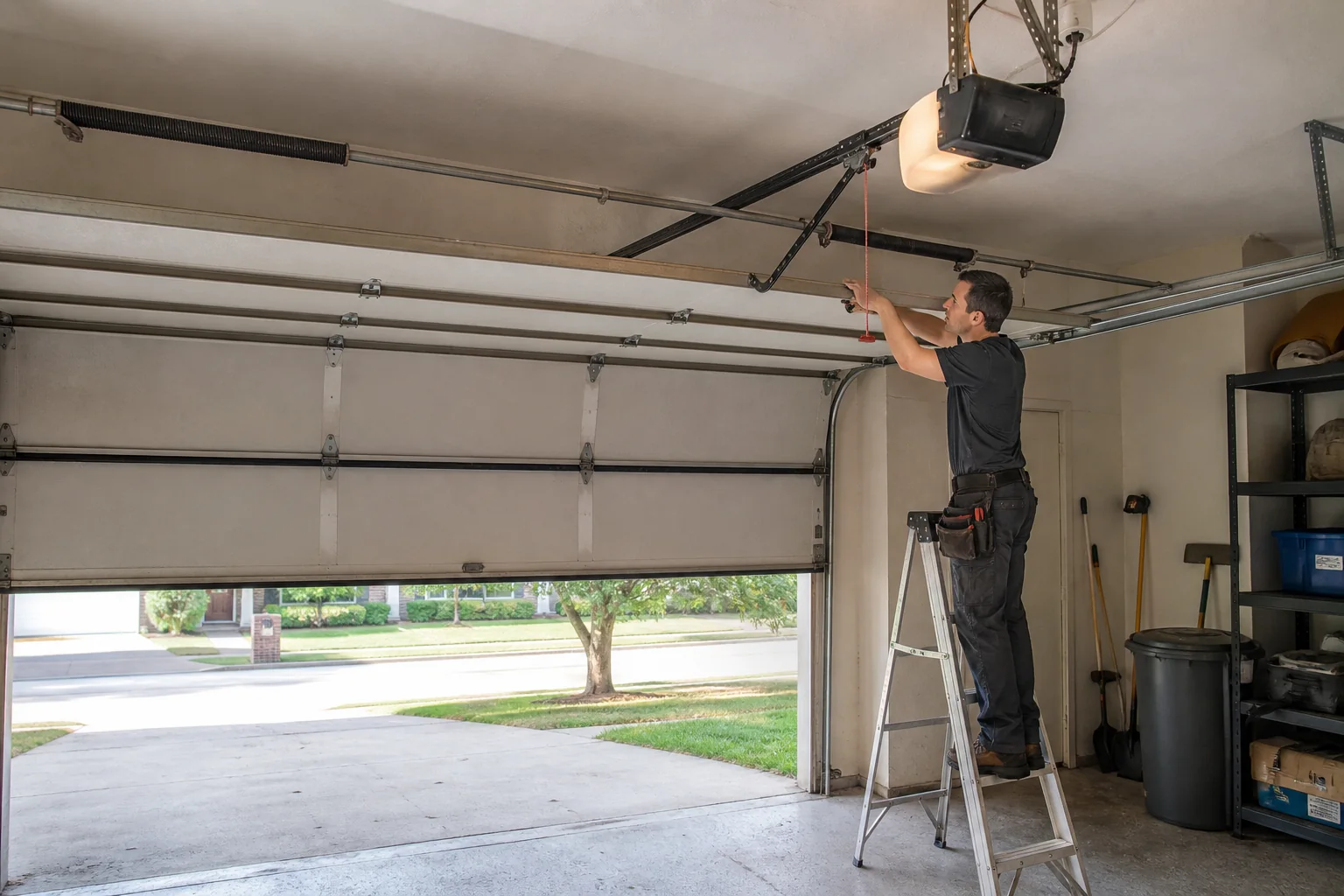
General repair
Garage Door Repair
Tell us what the door is doing and we'll get it in front of someone who can fix it — with the price agreed before the work starts.
See what's includedGarage door repair · Columbus, OH
A brick garage on the alley isn't the same job as a double in Hilliard. Say which is yours and see the fault and the price first.
German Village, Victorian Village, Olde Towne East, and the streets either side of them.
Springs, cables, openers, sensors, tracks, panels, seals, and full replacements.
You hear what failed and what it costs first. Saying no at that point costs you nothing.
Ask before 5 p.m. on a weekday and you hear back that business day.
Why us for this door
The same repair coming back is almost never bad luck with parts. It means the underlying cause was never addressed: an opening out of square, a door out of balance, or a slab that has moved. Fitting the same part a third time is the most expensive way to find that out.
Around German Village and Victorian Village the brick openings also change what can be bolted where. Say what has already been done to the door and what came back. What is actually wrong, and what it costs, is agreed with you first.
Get my door fixedWhere we work
German Village and Olde Towne East are brick and tight; Hilliard and Upper Arlington run standard doubles. Say which is yours.
Plenty of the work we take isn't in Columbus proper. These are the towns around it and what tends to be different about a door there.
Don't see your street or your town? These are the places where the housing changes enough to change the job — not the edge of where we go, and not a promise about your exact address either. We take work across Columbus and the wider Ohio area, and the address you send is what actually gets checked.Check my address
Repairs in Columbus
General repair
Tell us what the door is doing and we'll get it in front of someone who can fix it — with the price agreed before the work starts.
See what's included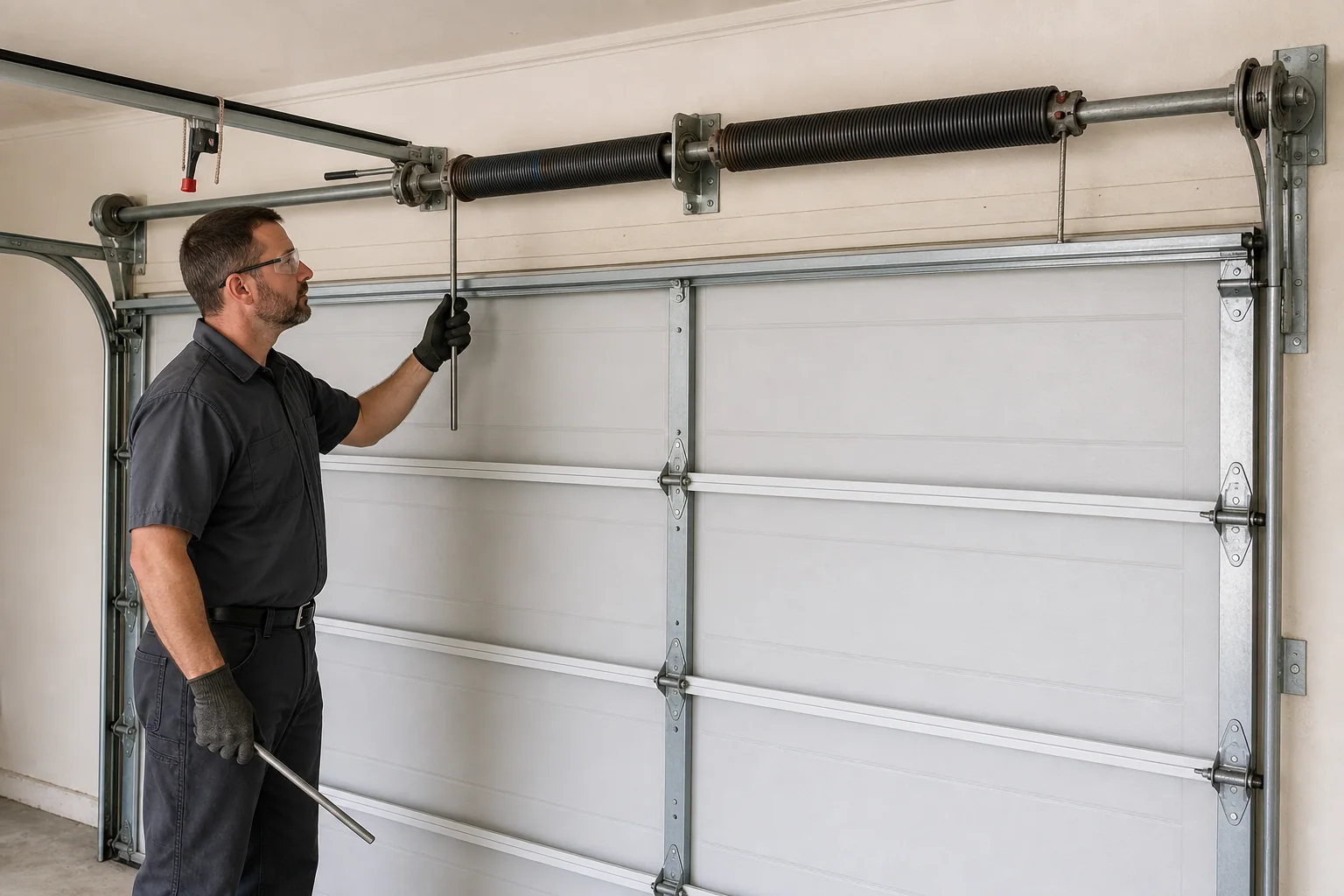
Springs and balance
If your door suddenly weighs a couple hundred pounds, a spring has almost certainly let go. Leave it down, keep everyone clear, and let someone with the right winding bars deal with it.
See what's included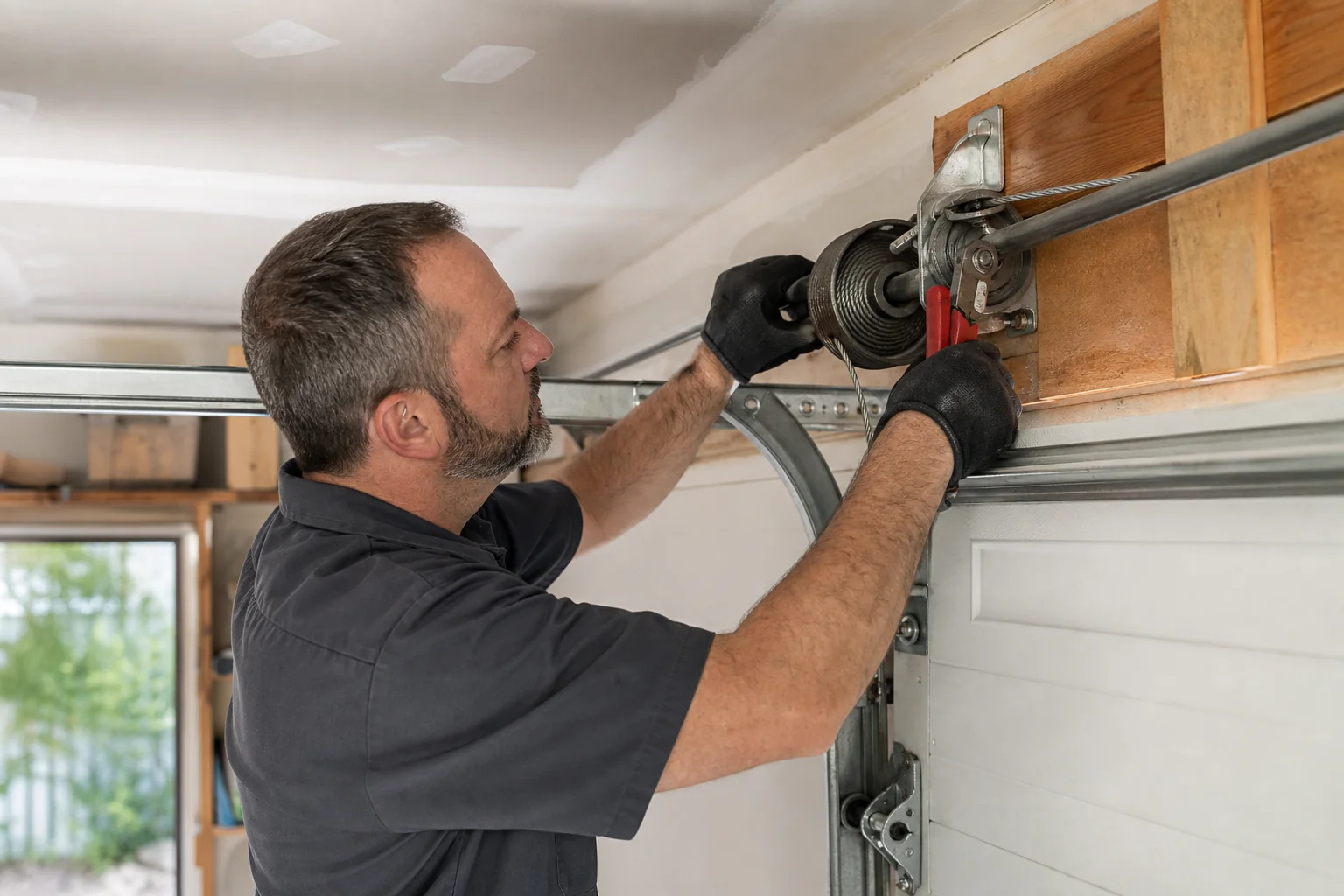
Cables and drums
One corner sitting lower, or a cable hanging off its drum, means the lift system is out of balance. It wants looking at before the next cycle, not after.
See what's included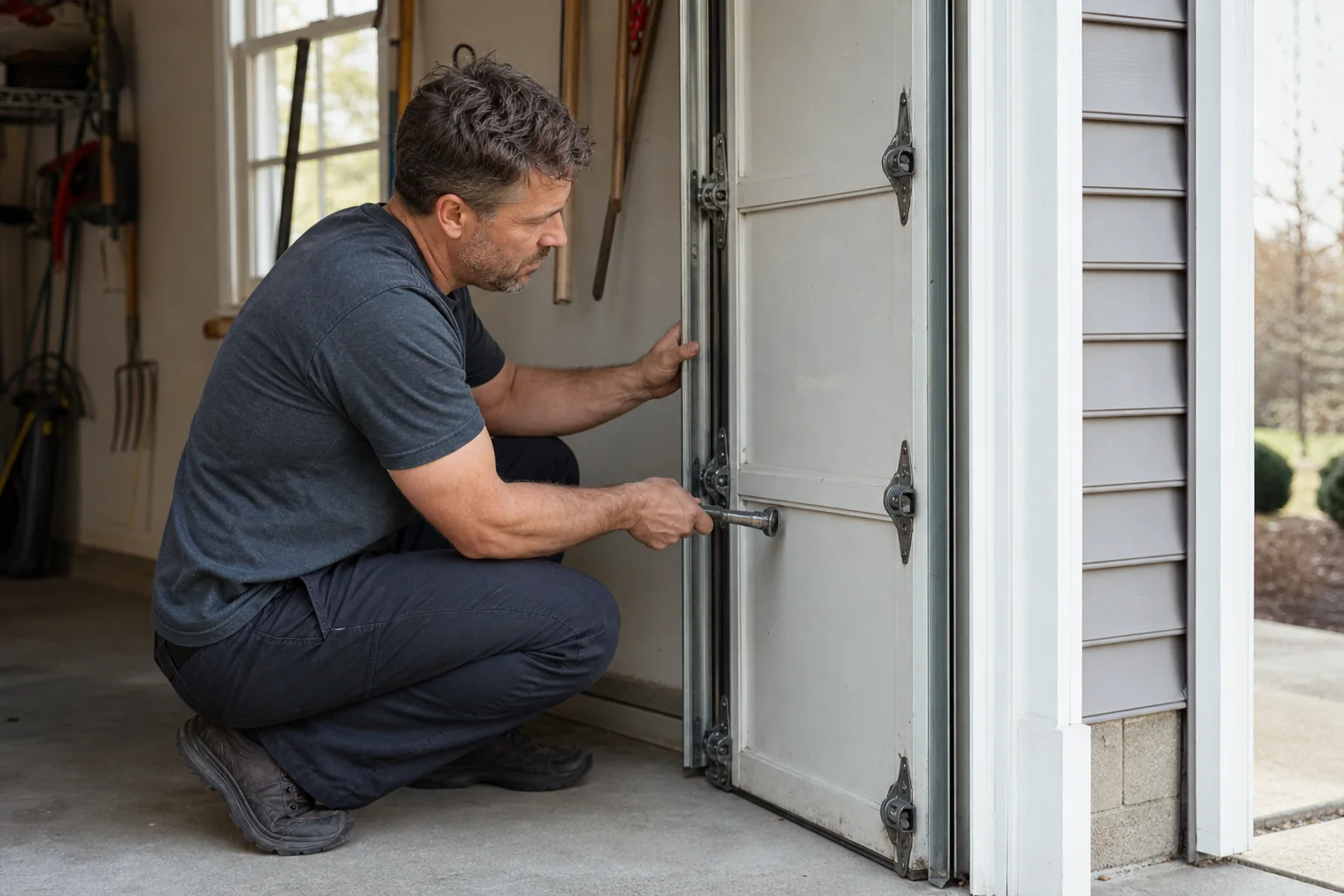
Tracks, rollers, hardware
Grinding in the same spot, a door that shakes the whole wall, a roller creeping out of its track — all cheap to sort now, all expensive once the door comes off.
See what's included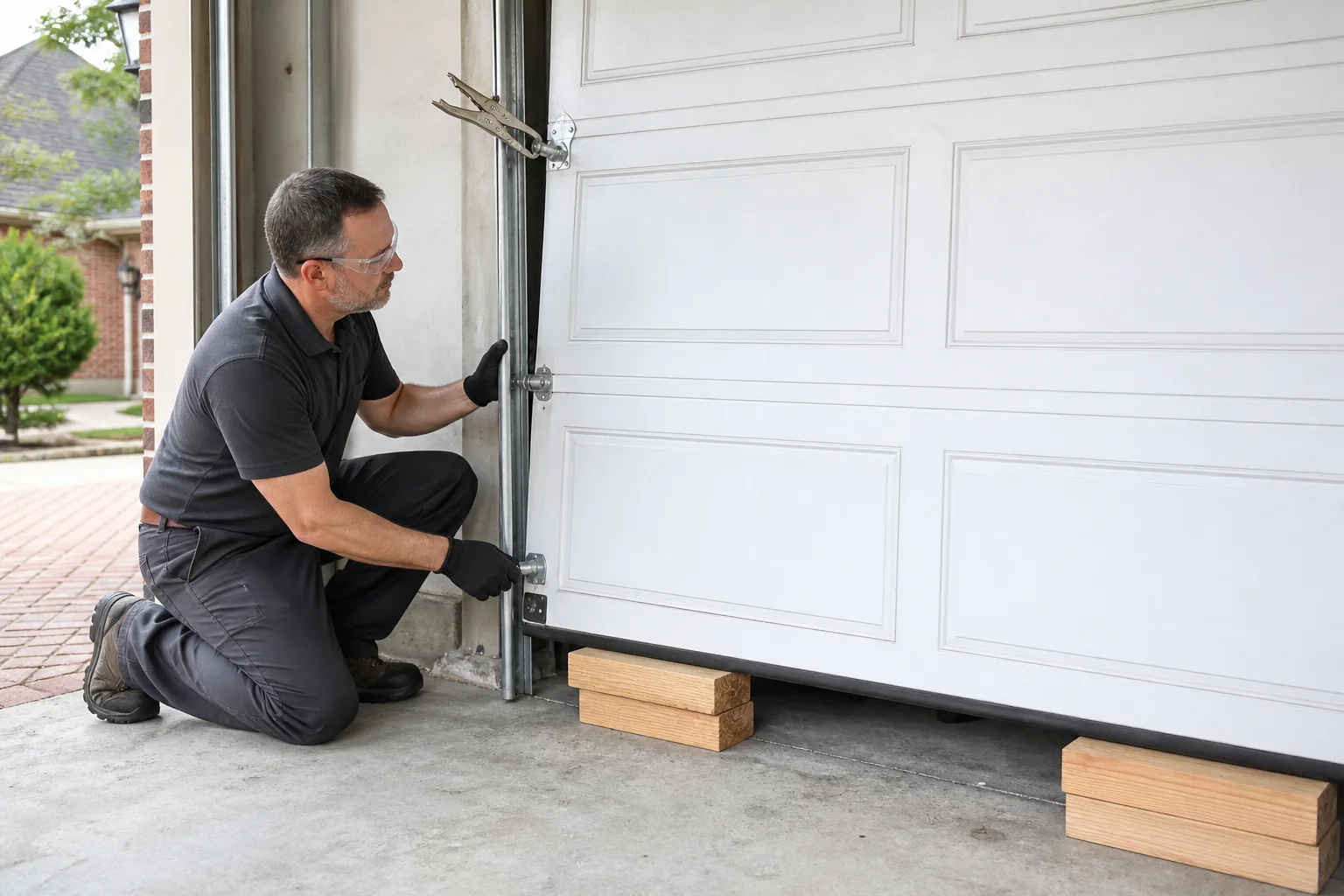
Off-track and stuck
Every extra cycle bends another panel and drags more cable out of line. Leave it where it is, keep the opening clear, and get it stabilized properly.
See what's included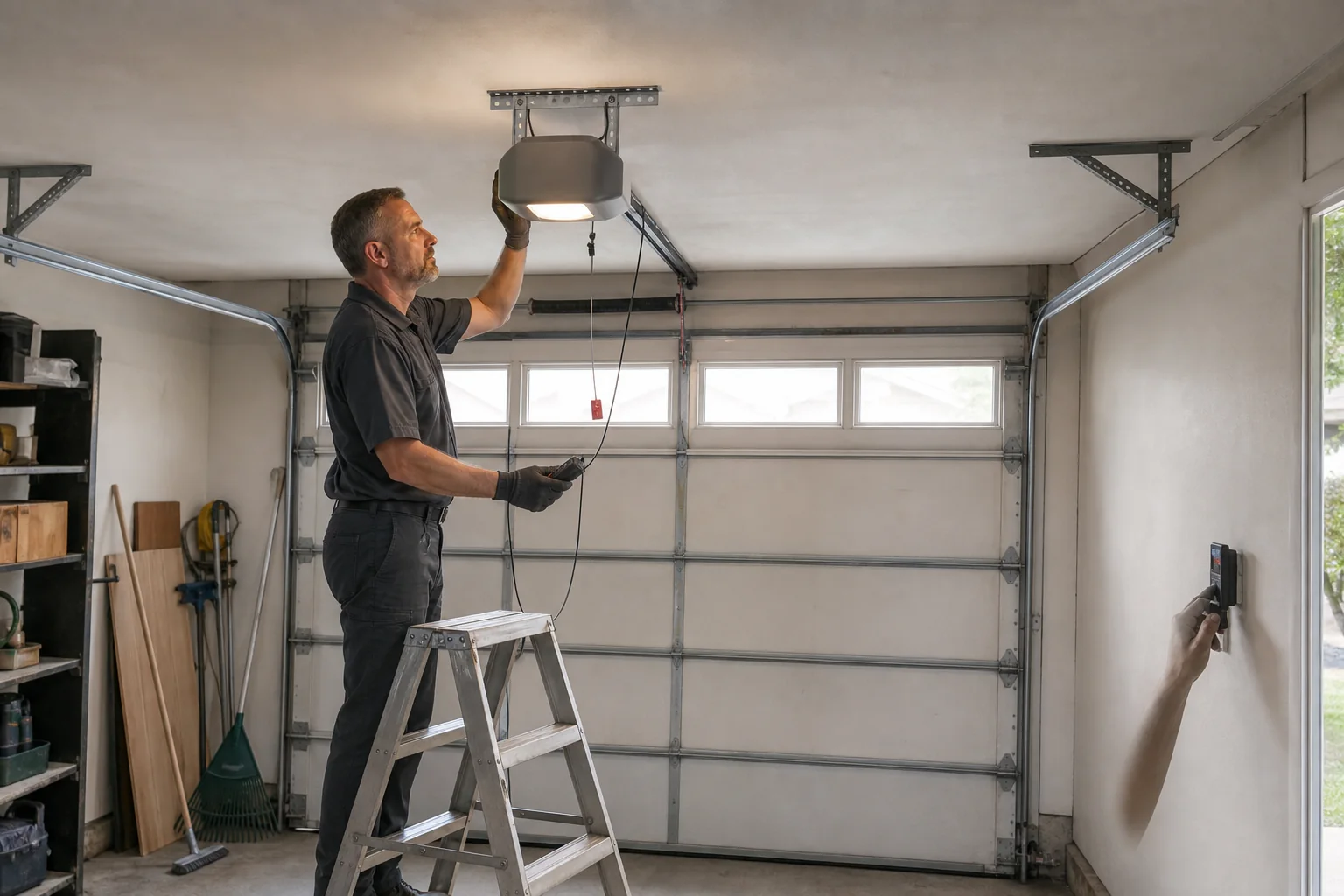
Openers
Motors take the blame for dead springs constantly. Worth knowing which one you've got before you buy an opener you didn't need.
See what's includedColumbus guide
The old brick streets of German Village, Victorian Village and Olde Towne East have garages to match: masonry buildings on the alley, with the opening framed in brick and very little timber for hardware to bite into. Track brackets, the spring anchor plate and the header bracket for the opener all need something solid behind them, so in a wall like that the fixing is a decision.
The openings often run narrow and low next to anything sold as standard. If somebody wants to talk about a new door instead of a repair, measure the width, the height and the clear space above, and send those figures. It's the difference between a real quote and a number that moves on site.
Clintonville's older houses tend to have a small garage at the far end of a long, narrow drive, and the door on it has usually been patched by a run of owners. A hinge here, a roller there, one section straightened at some point.
The question worth asking now is whether the sections are still true and whether the spring and track are matched to what is actually hanging there. A technician should say plainly which it is and then let you choose. If yours has had a string of small repairs, mention it, because that history changes what you'll be told.
Wide attached doubles on the newer streets in Hilliard and the established ones around Upper Arlington sit on a broad concrete apron, and once the seal stops meeting the slab across its full width you get wind straight through the garage. In a hard freeze that gap is where meltwater gathers and locks the rubber to the concrete overnight.
Sight along the bottom edge from inside with the lights off. If you can see daylight, don't lean harder on the button the next cold morning, because the opener will pull against a frozen seal until something in the drive gives way. Tell us where the gap is.
Cross streets, single or double, attached or an alley garage out back, and a plain account of what the door did: how far it moved, what you heard, whether it stopped and reversed, and whether a car is shut in. If you already have the opening measurements, add them.
Don't try to name the failed part; that is the bit people most often get wrong. Photos from where you stand are plenty. Requests in before 5 p.m. on a weekday get a reply from a person the same business day, and anything later gets one next morning. A technician then agrees scope and price with you up front.
Most common around Columbus
The door stays open, stops, or will not begin closing.
What to do about itA gap appears in the spring above the door or a loud bang precedes a heavy door.
What to do about itSensor lights blink or the door will not close from a remote.
What to do about itThe opener is silent, hums, or runs without moving the door.
What to do about itThe customer wants scope, parts, labor, fees, and alternatives in writing.
What to do about itColumbus questions
Mention the lack of a side door when you write in, because it changes how the visit is planned and whether anything inside is reachable. Do not lever the door up. If a spring has gone the weight is dangerous, and on an old masonry opening the hardware is anchored into brick that will not take being pulled on.
When it happens only in the last few inches, look at what the door is closing onto rather than at the door. A raised lip on the apron, a hardened seal, or grit packed under the rubber all read to the opener as an obstruction. Clear the floor, then tell us whether it still reverses and at what point.
Pull the release cord with the door closed and try lifting by hand from the bottom. A healthy door comes up with modest effort and stays where you leave it. If it feels like lifting a piece of furniture, or drops when you let go, the spring is the problem and you should put it back down and leave it alone.
No. They are set low deliberately so they catch a child or a pet at the height that matters, and raising them defeats that. If they keep getting knocked in a tight garage, the answer is better mounting or a small guard, not a new position. Tell us what keeps hitting them and a technician can sort the bracket out.
Check the simple things first, in this order: is the outlet live, has the wall control been locked out by a vacation switch, and has anybody pulled the emergency release. Any of those will make a working opener look dead. If all three are clear, tell us the brand and whether the motor unit lights up at all.
Yes. The technician looks at the door, tells you what failed and what the fix involves, and puts the price to you before any work begins. You can decline and owe nothing. There is no payment taken through this site and no charge to send a request.
Columbus, OH
What has been repaired before, what came back, and your cross streets. Scope and price agreed before anyone starts.