

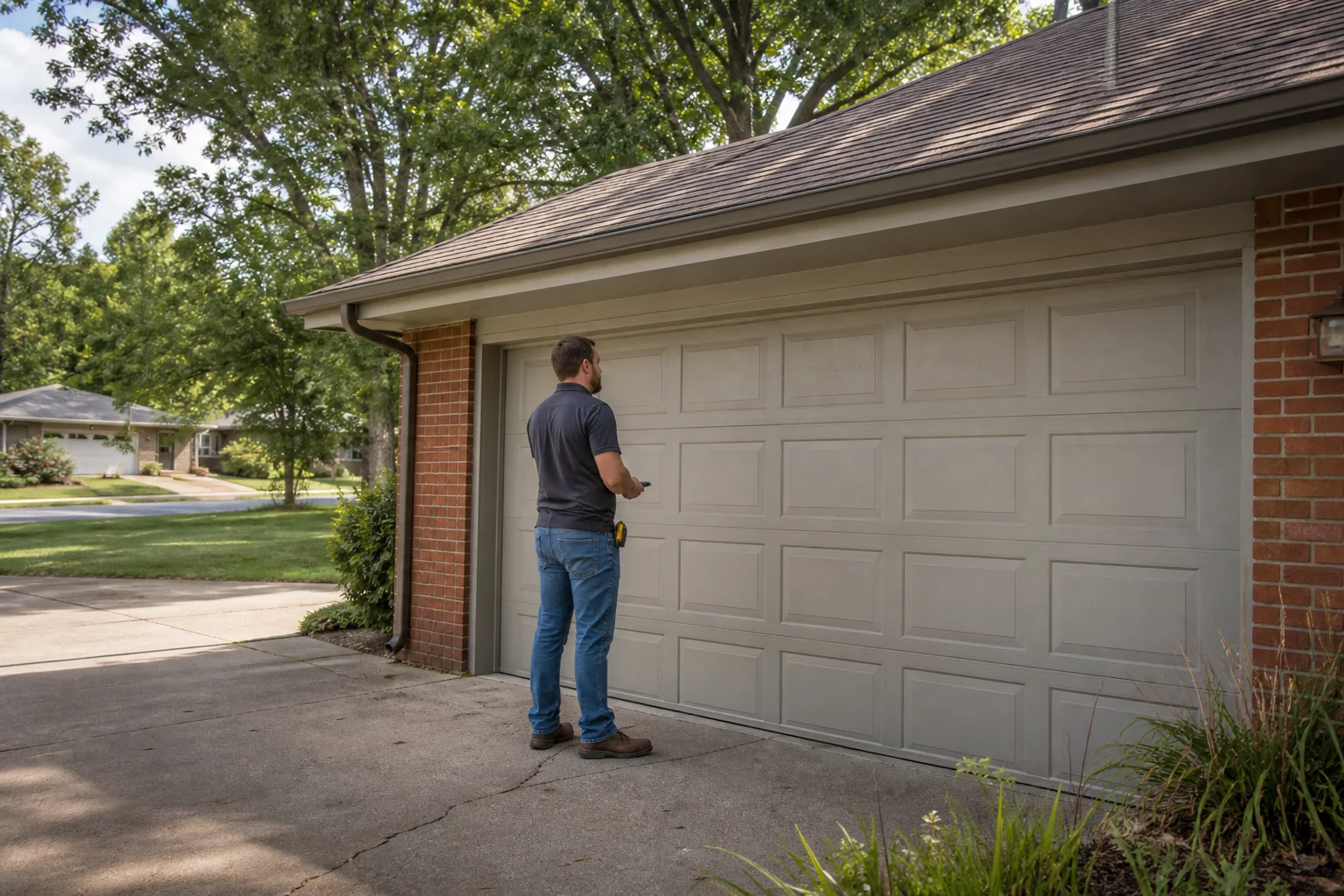
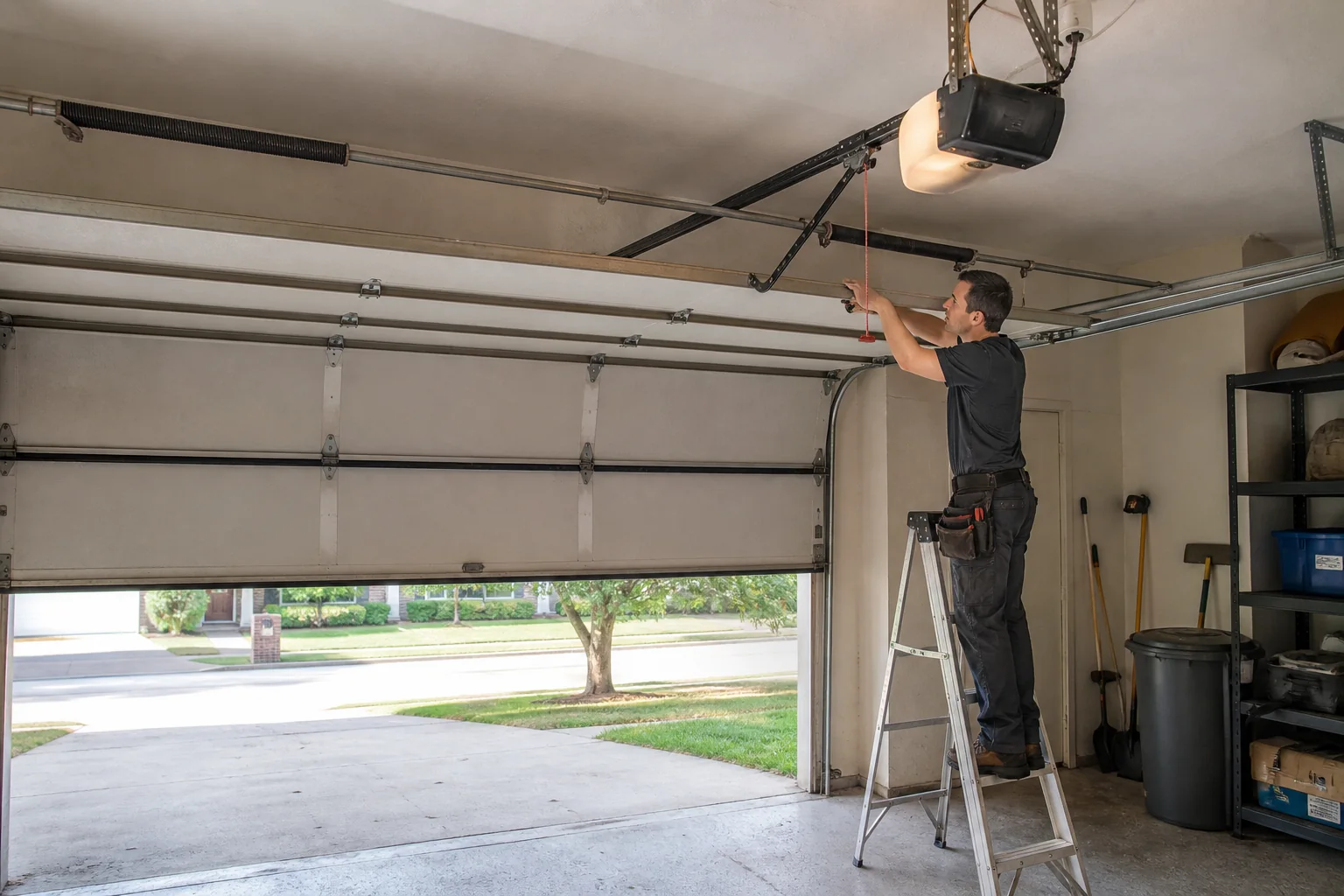
General repair
Garage Door Repair
Tell us what the door is doing and we'll get it in front of someone who can fix it — with the price agreed before the work starts.
See what's includedGarage door repair · Tulsa, OK
Low midtown headroom, wood doors and hail. Tell us what your Tulsa door is doing and see the fault and the price before work.
Maple Ridge, Lortondale, Ranch Acres, and the streets either side of them.
Springs, cables, openers, sensors, tracks, panels, seals, and full replacements.
You hear what failed and what it costs first. Saying no at that point costs you nothing.
Ask before 5 p.m. on a weekday and you hear back that business day.
Why us for this door
Timber takes on moisture through a humid summer and gains real weight, so a door that was balanced against its springs in winter is now heavier than they were set for. It drags, the opener strains, and the drive gear takes the punishment. In January the same door runs perfectly and nobody believes there was a fault.
Midtown roofs sit low, and so does the headroom, which limits what hardware fits. Say what the door is made of and when it misbehaves. What has actually gone wrong and what it costs is agreed with you before work.
Get my door fixedWhere we work
Maple Ridge and Swan Lake sit low with old wood doors; Lortondale and Ranch Acres differ. Say which, and what the door is made of.
Plenty of the work we take isn't in Tulsa proper. These are the towns around it and what tends to be different about a door there.
Don't see your street or your town? These are the places where the housing changes enough to change the job — not the edge of where we go, and not a promise about your exact address either. We take work across Tulsa and the wider Oklahoma area, and the address you send is what actually gets checked.Check my address
Repairs in Tulsa
General repair
Tell us what the door is doing and we'll get it in front of someone who can fix it — with the price agreed before the work starts.
See what's included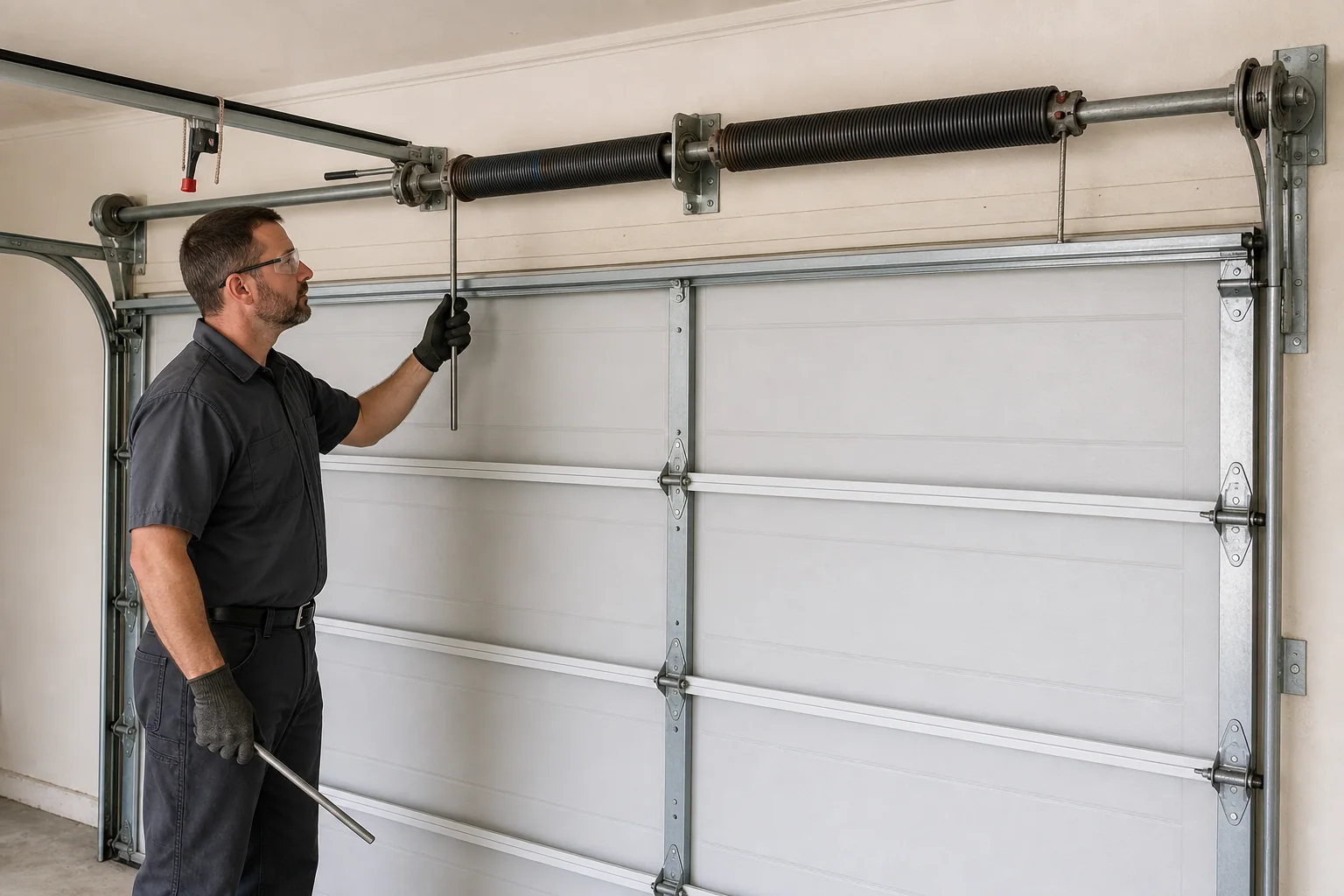
Springs and balance
If your door suddenly weighs a couple hundred pounds, a spring has almost certainly let go. Leave it down, keep everyone clear, and let someone with the right winding bars deal with it.
See what's included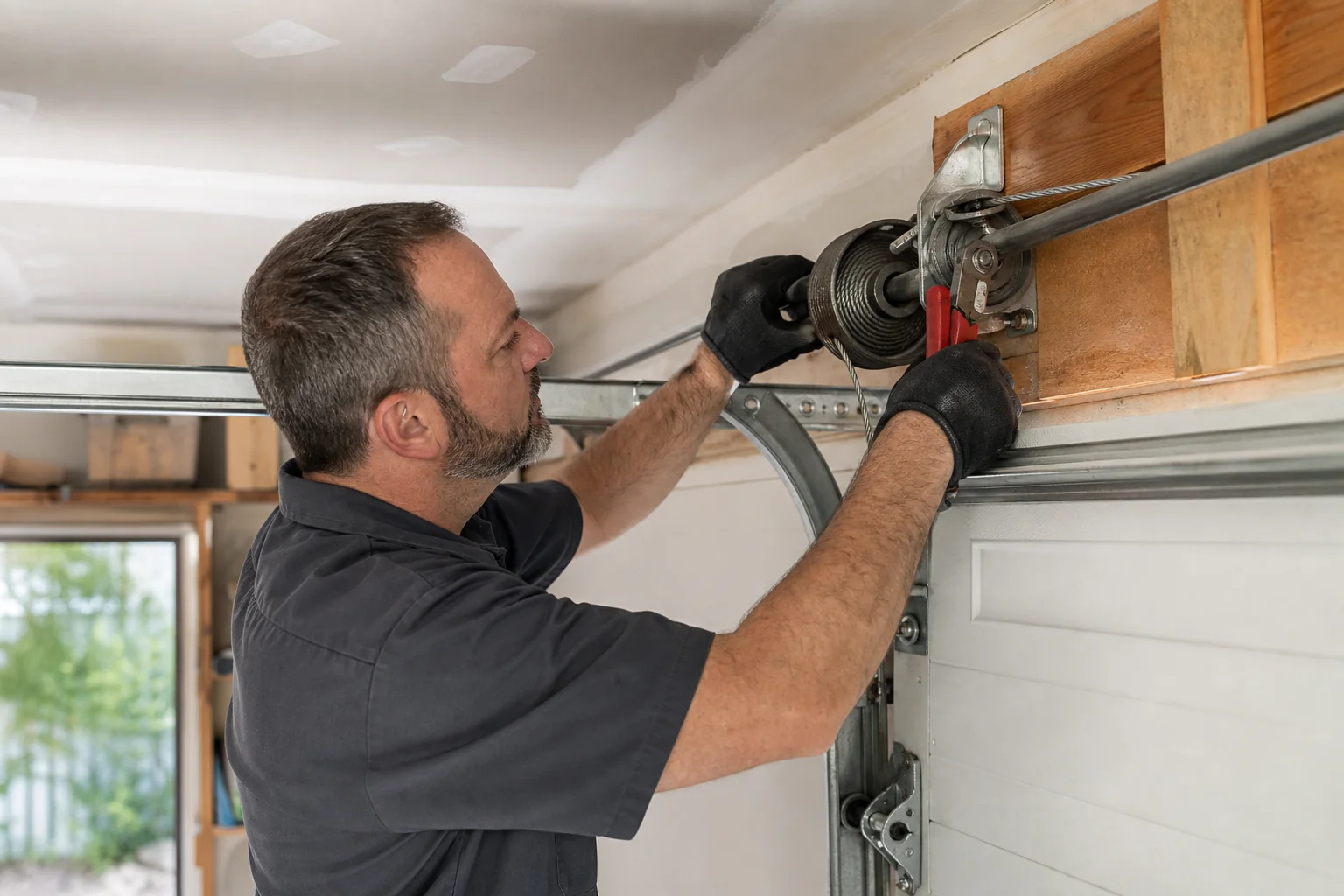
Cables and drums
One corner sitting lower, or a cable hanging off its drum, means the lift system is out of balance. It wants looking at before the next cycle, not after.
See what's included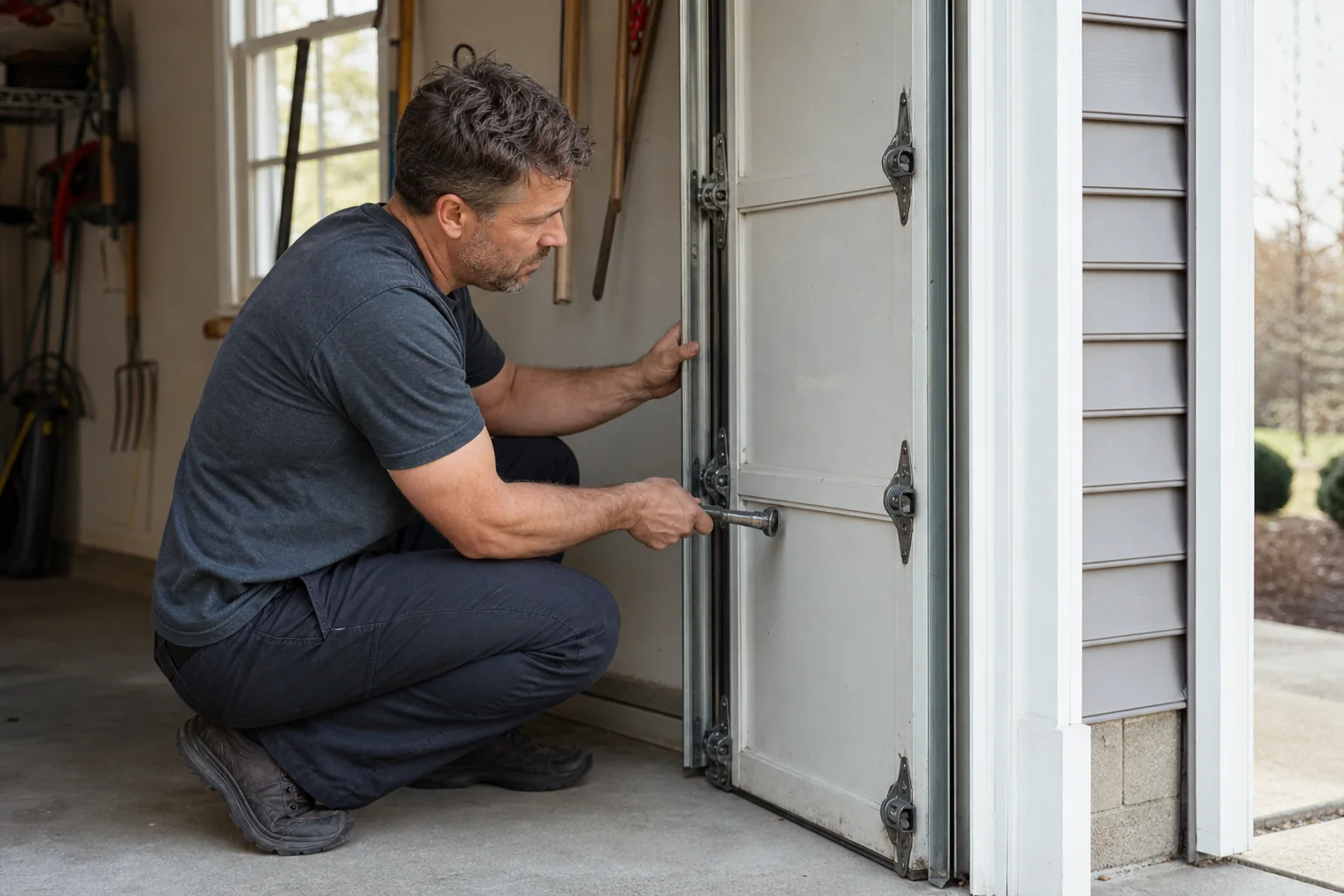
Tracks, rollers, hardware
Grinding in the same spot, a door that shakes the whole wall, a roller creeping out of its track — all cheap to sort now, all expensive once the door comes off.
See what's included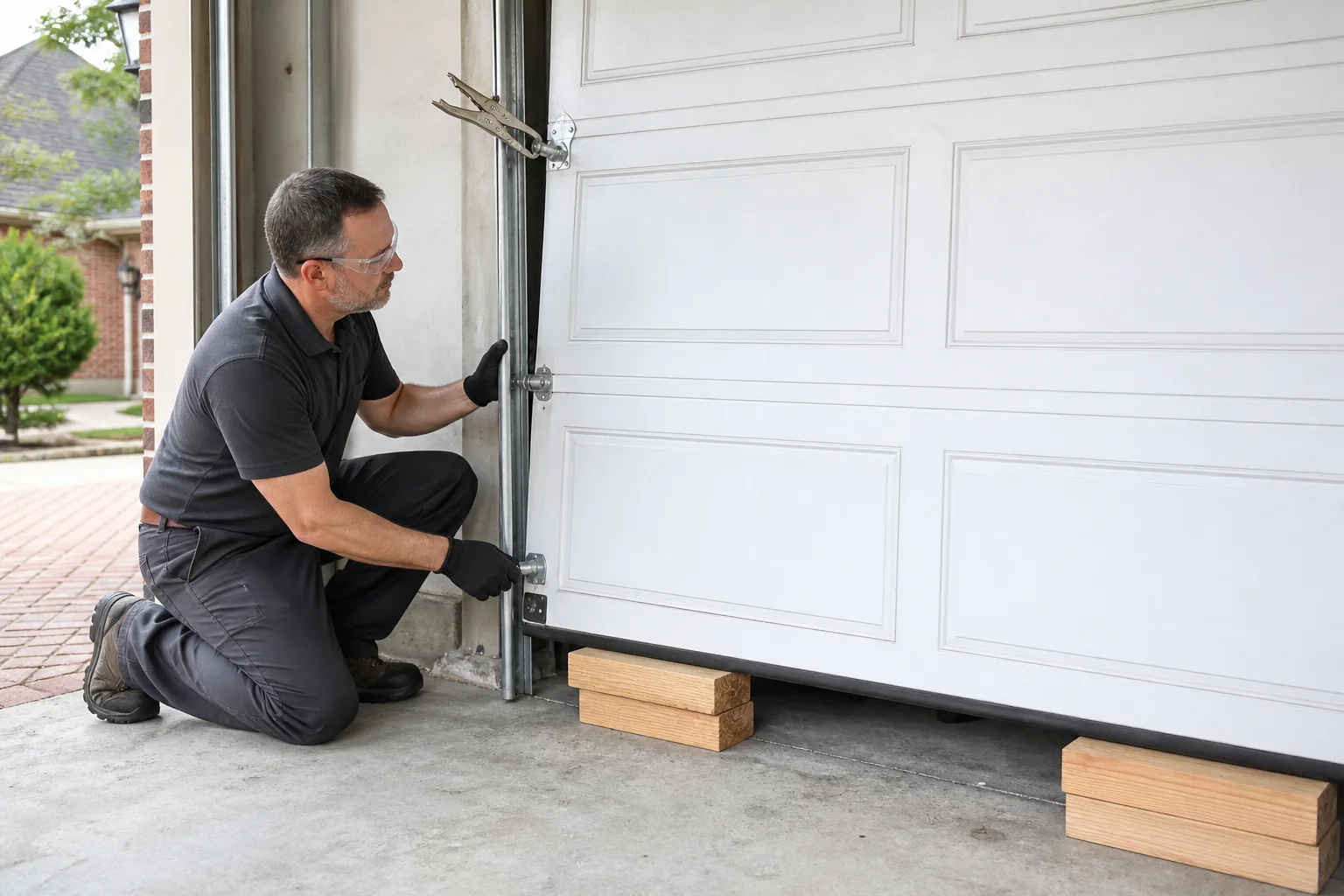
Off-track and stuck
Every extra cycle bends another panel and drags more cable out of line. Leave it where it is, keep the opening clear, and get it stabilized properly.
See what's included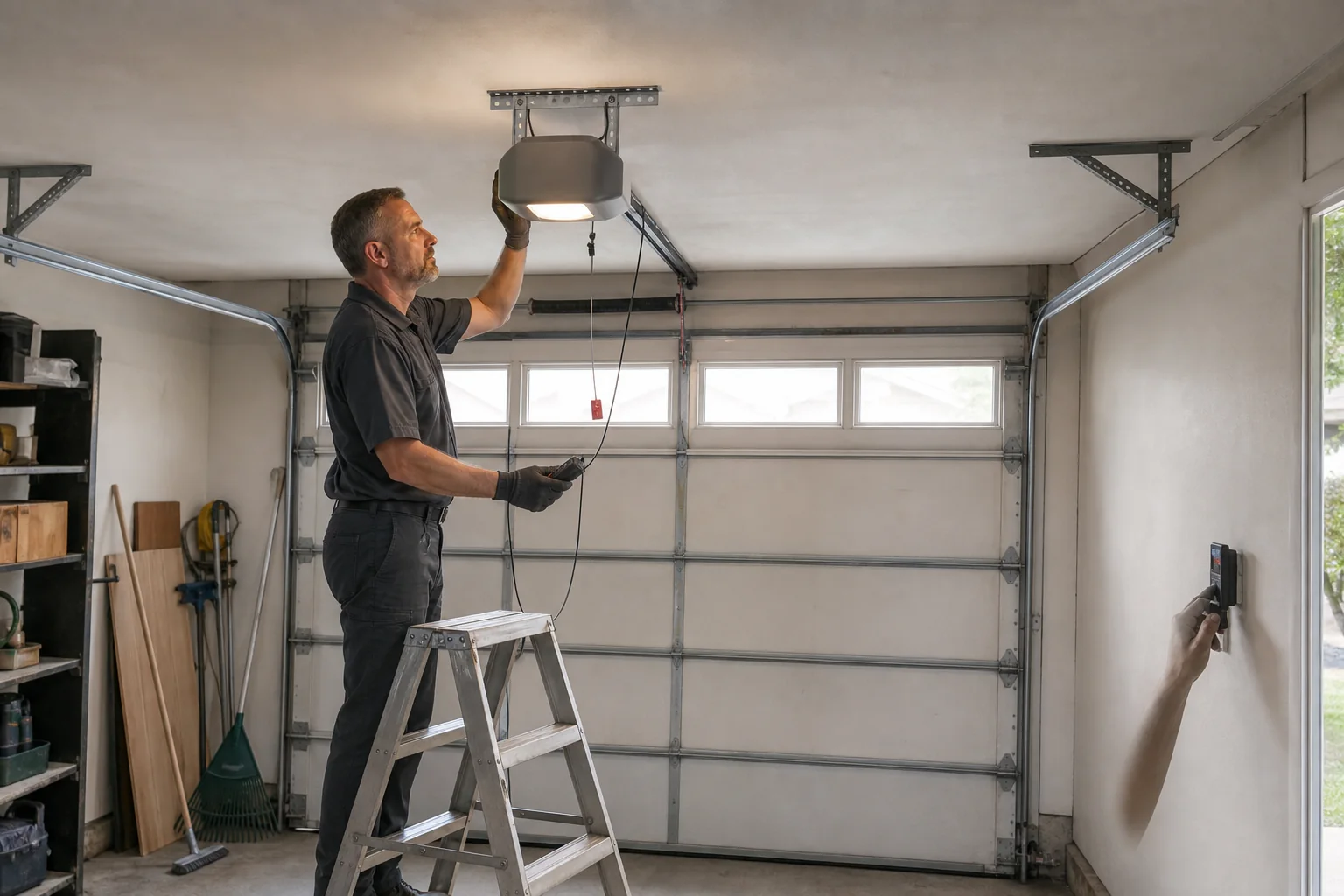
Openers
Motors take the blame for dead springs constantly. Worth knowing which one you've got before you buy an opener you didn't need.
See what's includedTulsa guide
Lortondale and Ranch Acres are full of long, low postwar houses, and the garages match them: wide openings with very little space between the top of the door and the ceiling. That space is exactly what a standard track and opener rail need.
It's the first thing to settle before anyone promises you a new door or a new opener. Low-headroom track, a jackshaft opener mounted on the wall beside the opening, or neither, is a decision made with a tape measure rather than a catalog. Measure from the top of the opening to the ceiling and send that number along with everything else.
Maple Ridge, Florence Park and parts of Brookside still run real wood doors in real wood jambs. Summers here are hot and wet at once, so those doors take on moisture, swell across the width, and start rubbing the stops. Come winter they dry out and run fine again.
If yours is sticking now and was faultless six months ago, say that plainly. A door that binds seasonally usually needs the jamb and the stops adjusted, not an opener with more pull behind it. Forcing a swollen wood door with a stronger motor is how it gets torn off its hinges.
After a hailstorm the question is rarely whether the door is dented. It's whether the dented sections can be replaced on their own. Patterns get discontinued, embossing changes between model years, and an older door often can't be patched with anything that looks like the rest of it.
That's worth knowing before you file, not after. Photograph the whole door from a few steps back and the worst section close up, look inside the door for a manufacturer label, and tell us roughly how old it is. Say whether it still runs, too, because a creased section can bow enough to bind in the track.
Cross streets, single or double, wood or steel, roughly how old, and exactly what happened the last time you pressed the button. Mention it straight away if a car or a person is stuck behind the door.
Don't try to name the failed part, and don't climb up to photograph a spring. Send the request before 5 p.m. on a weekday and a person gets back to you the same business day. A technician then confirms what the job involves and what it costs before starting, and you're free to say no.
Most common around Tulsa
The door stays open, stops, or will not begin closing.
What to do about itA gap appears in the spring above the door or a loud bang precedes a heavy door.
What to do about itSensor lights blink or the door will not close from a remote.
What to do about itThe opener is silent, hums, or runs without moving the door.
What to do about itThe customer wants scope, parts, labor, fees, and alternatives in writing.
What to do about itTulsa questions
Take your finger off the button. When the motor strains against a door that won't move, something is holding the door: a spring that's gone, a roller out of the track, or a wood door swollen tight against the jamb. Each attempt makes it worse. Tell us whether the door is wood or steel and whether it's been getting harder over the last few weeks.
Holding the button overrides the safety beam, so the opener is telling you the sensors aren't happy. Don't keep using that override. Look at the small lights near the floor, wipe both lenses with a dry cloth, and check that neither bracket has been kicked out of line. Tell us whether the lights are steady, blinking, or dark.
That's a broken torsion spring, and the door is now unsafe to run or to lift. Everything downstream of it, the cables, the drums and the bottom brackets, is carrying load it wasn't sized for. Leave the door where it is, keep cars out from under it, and don't let anyone try to wind a replacement. Photograph it from the floor and send that with your request.
Then look further along. A door that reverses at the same height every time is usually meeting resistance, such as a roller binding in a warped stretch of track or a wood door catching on a jamb that's swollen in humid weather. A door that reverses at random heights is more likely electrical. Tell us which pattern yours follows.
A buzz with no movement usually means the motor is trying to turn something that won't turn, or a capacitor has failed. Either way, don't keep retrying it. If you've already pulled the manual release, tell us whether the door was easy or heavy to lift by hand, because that one detail tells a technician a great deal before they arrive.
That depends on the age of the door, whether matching sections are still made, and what actually failed. Springs, rollers, cables and openers are repair items on almost any door. Dented or split sections on an older door are where replacement starts to make sense. Send the age and a photo, and the technician will put both options and both prices in front of you before starting.
Tulsa, OK
The material, the season it plays up, and your cross streets. You'll have the scope and the price before anyone starts.