

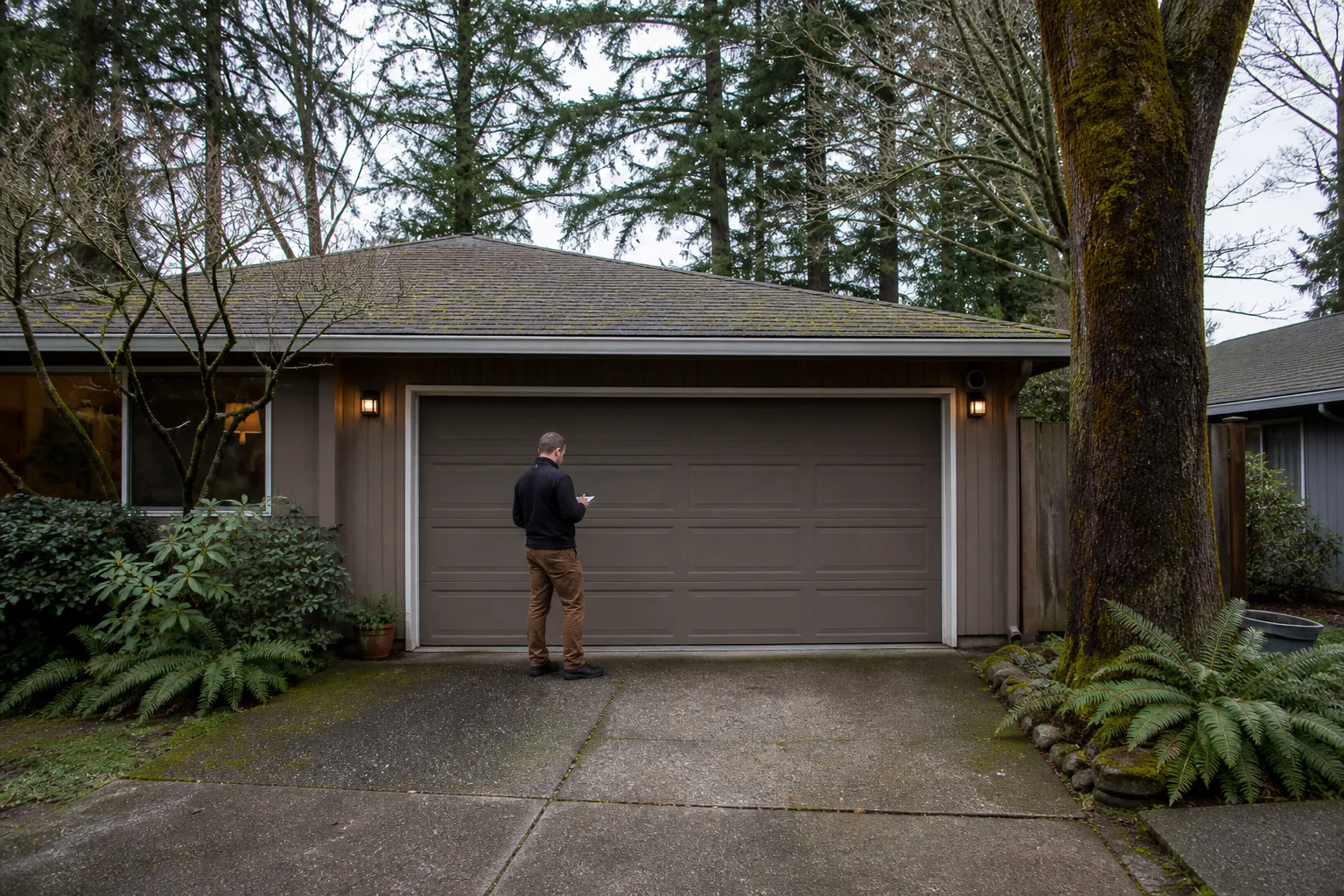
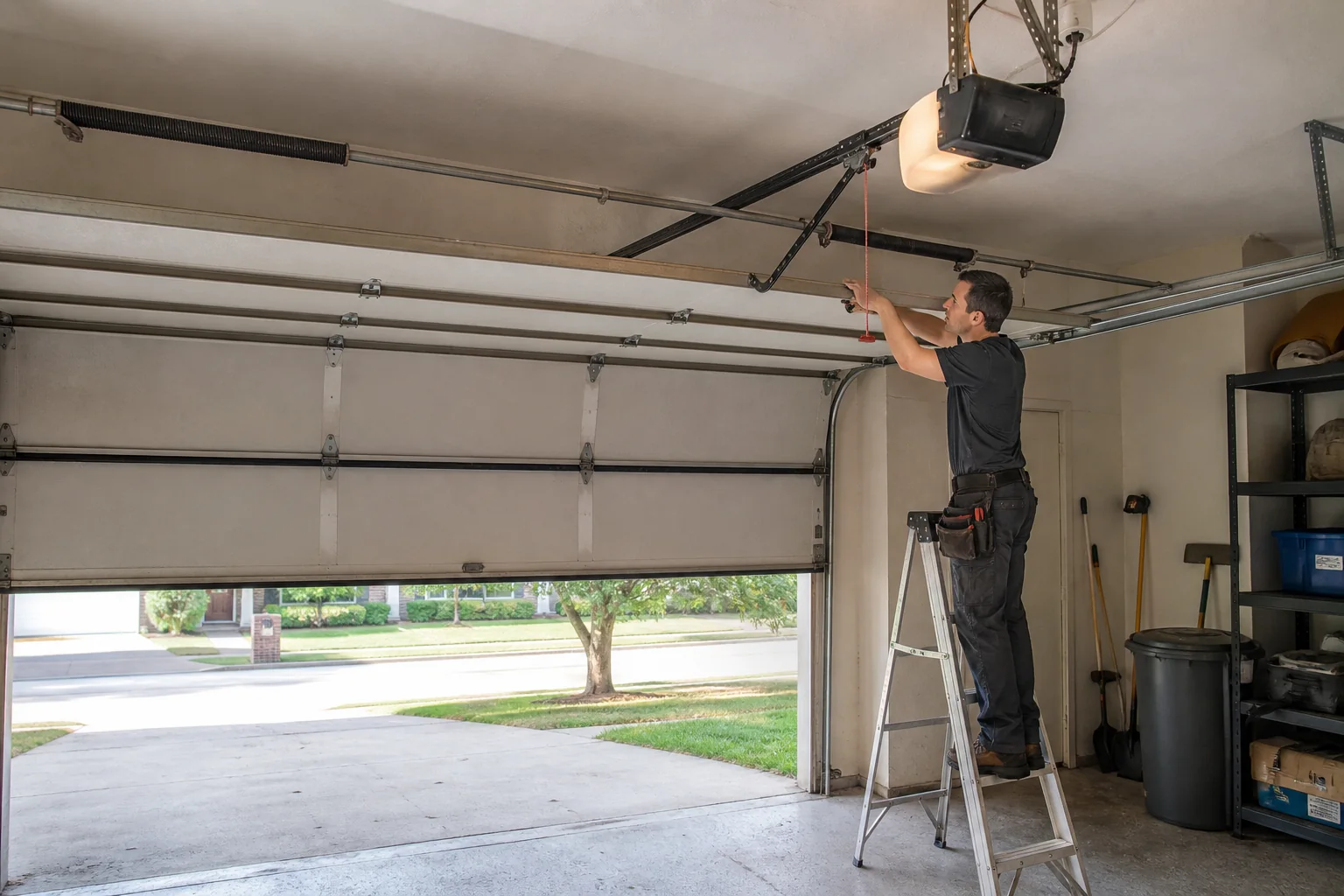
General repair
Garage Door Repair
Tell us what the door is doing and we'll get it in front of someone who can fix it — with the price agreed before the work starts.
See what's includedGarage door repair · Eugene, OR
Wet winters find every soft spot in a Eugene garage door. Tell us what yours is doing and see the fault and the price first.
Whiteaker, Friendly Area, Jefferson Westside, and the streets either side of them.
Springs, cables, openers, sensors, tracks, panels, seals, and full replacements.
You hear what failed and what it costs first. Saying no at that point costs you nothing.
Ask before 5 p.m. on a weekday and you hear back that business day.
Why us for this door
The lowest rail sits closest to standing water and takes the most of it, so that's where a timber door softens first. Once it has, the fixings holding the bottom brackets no longer have solid wood to grip, and those brackets carry the full load of the door through the cables.
Wet-season faults that look exactly like a dead opener are the other Eugene standard, and they're usually damp in the sensor wiring instead. Eugene lots run deep, so say which door you mean. Cost and scope agreed with you before work.
Get my door fixedWhere we work
Whiteaker and Jefferson Westside run deep lots with more than one door; Cal Young and Santa Clara are simpler. Say which you mean.
Plenty of the work we take isn't in Eugene proper. These are the towns around it and what tends to be different about a door there.
Don't see your street or your town? These are the places where the housing changes enough to change the job — not the edge of where we go, and not a promise about your exact address either. We take work across Eugene and the wider Oregon area, and the address you send is what actually gets checked.Check my address
Repairs in Eugene
General repair
Tell us what the door is doing and we'll get it in front of someone who can fix it — with the price agreed before the work starts.
See what's included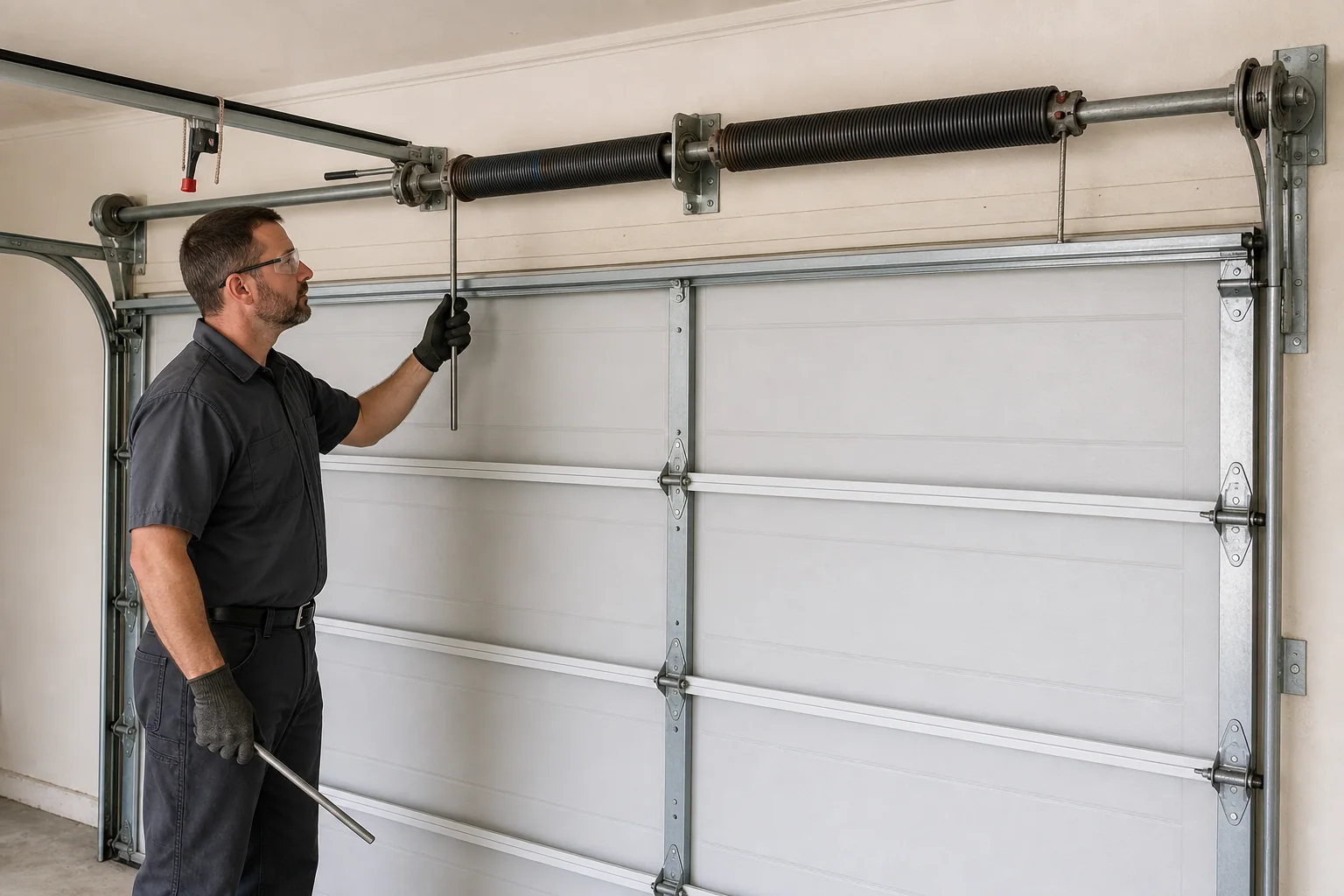
Springs and balance
If your door suddenly weighs a couple hundred pounds, a spring has almost certainly let go. Leave it down, keep everyone clear, and let someone with the right winding bars deal with it.
See what's included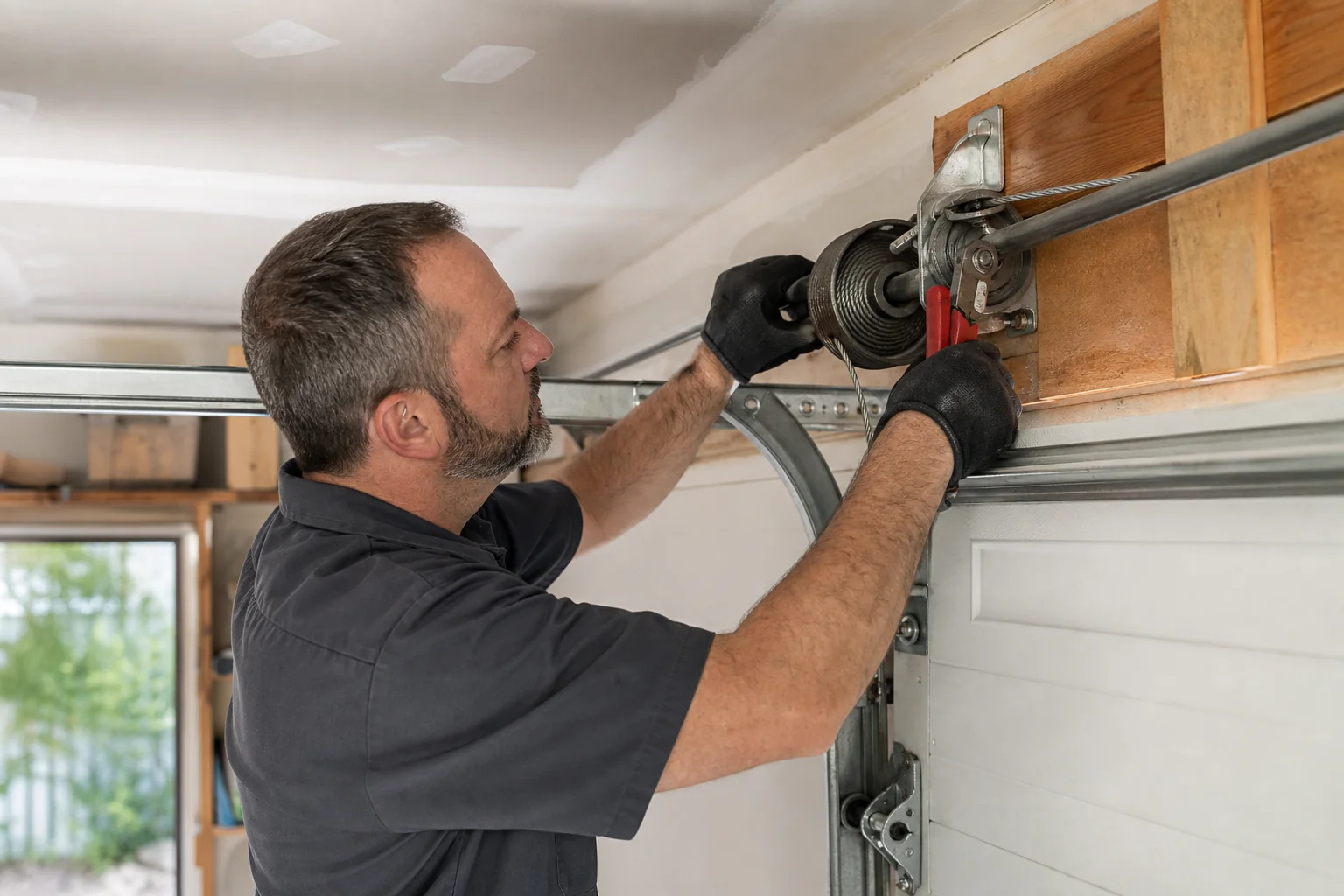
Cables and drums
One corner sitting lower, or a cable hanging off its drum, means the lift system is out of balance. It wants looking at before the next cycle, not after.
See what's included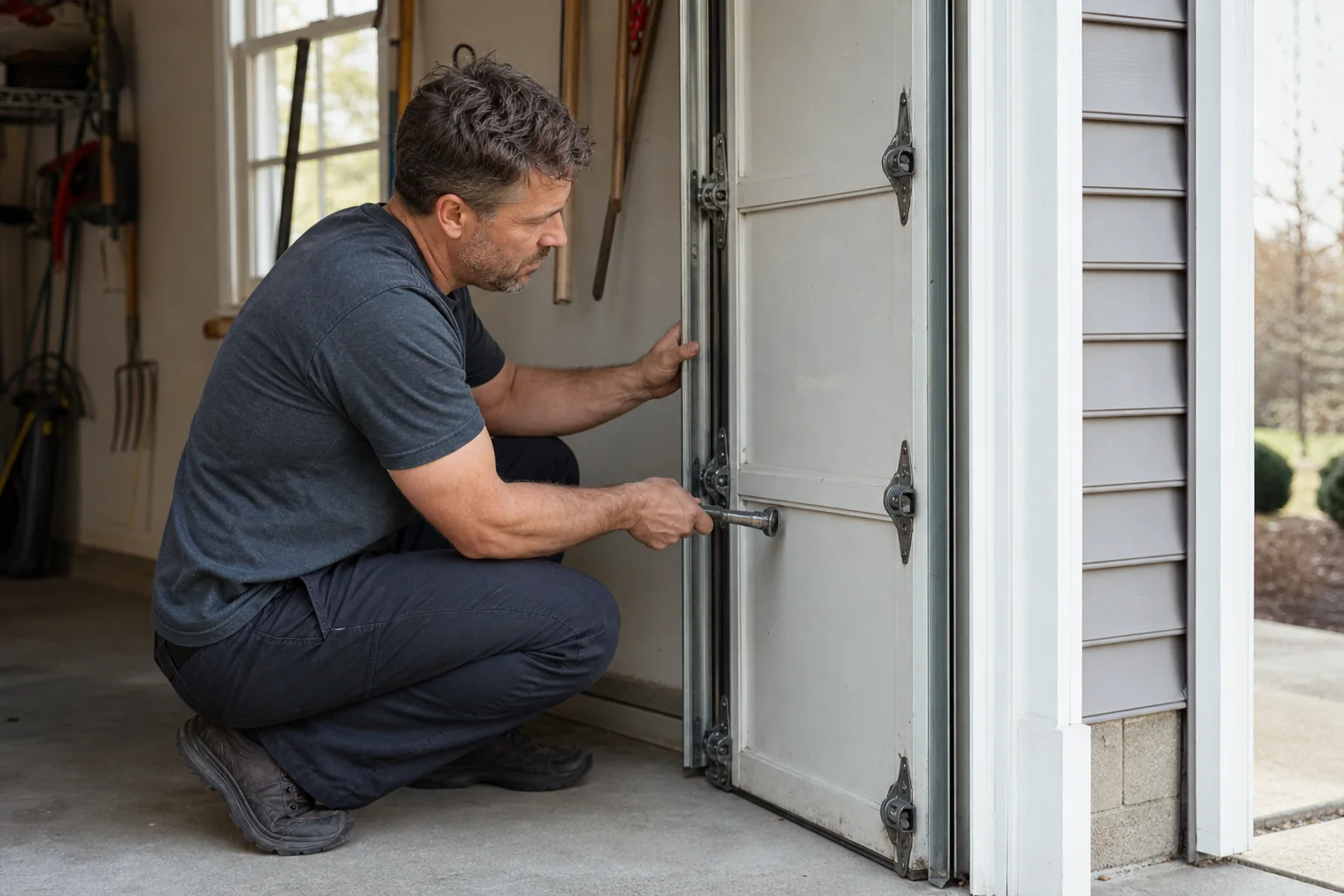
Tracks, rollers, hardware
Grinding in the same spot, a door that shakes the whole wall, a roller creeping out of its track — all cheap to sort now, all expensive once the door comes off.
See what's included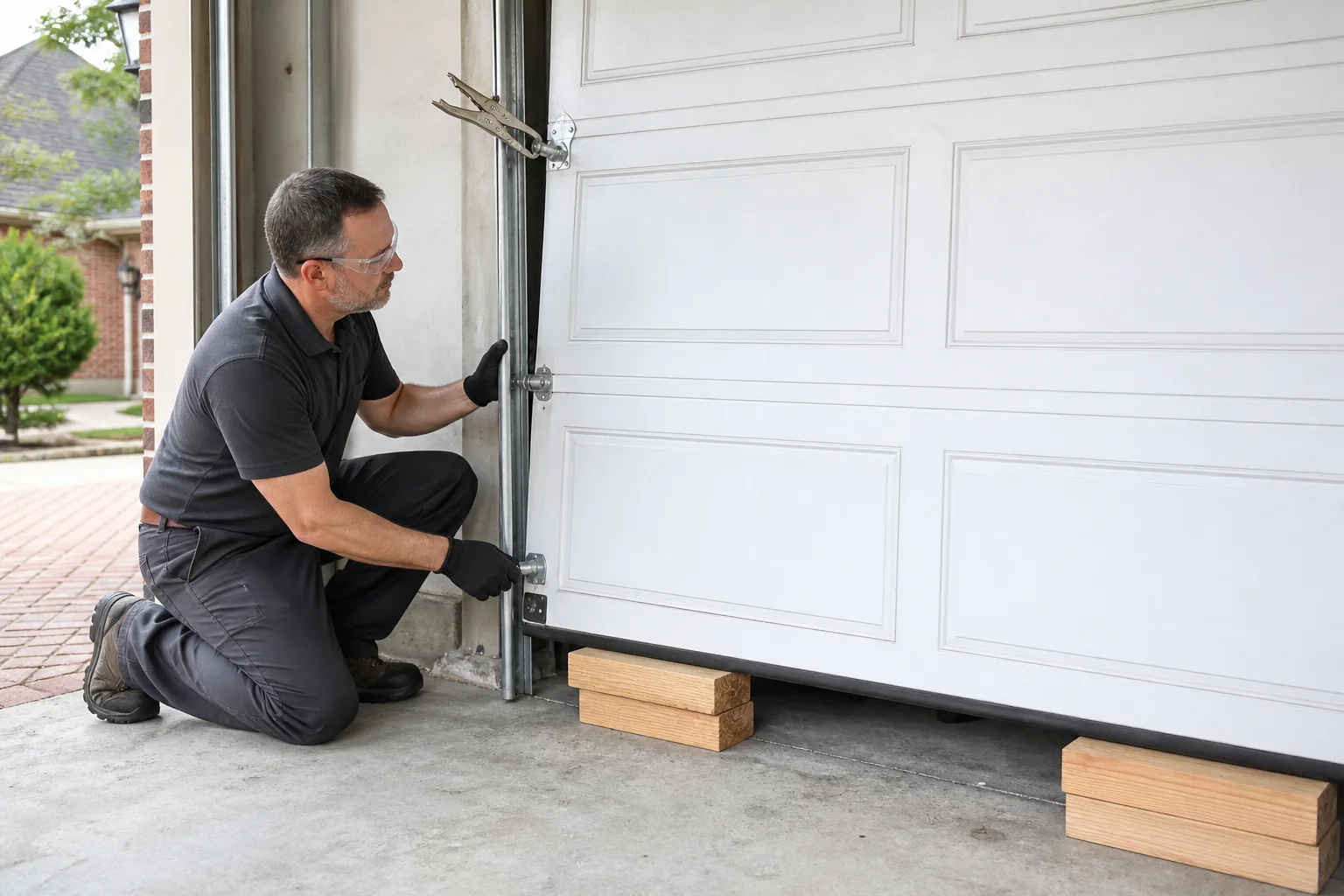
Off-track and stuck
Every extra cycle bends another panel and drags more cable out of line. Leave it where it is, keep the opening clear, and get it stabilized properly.
See what's included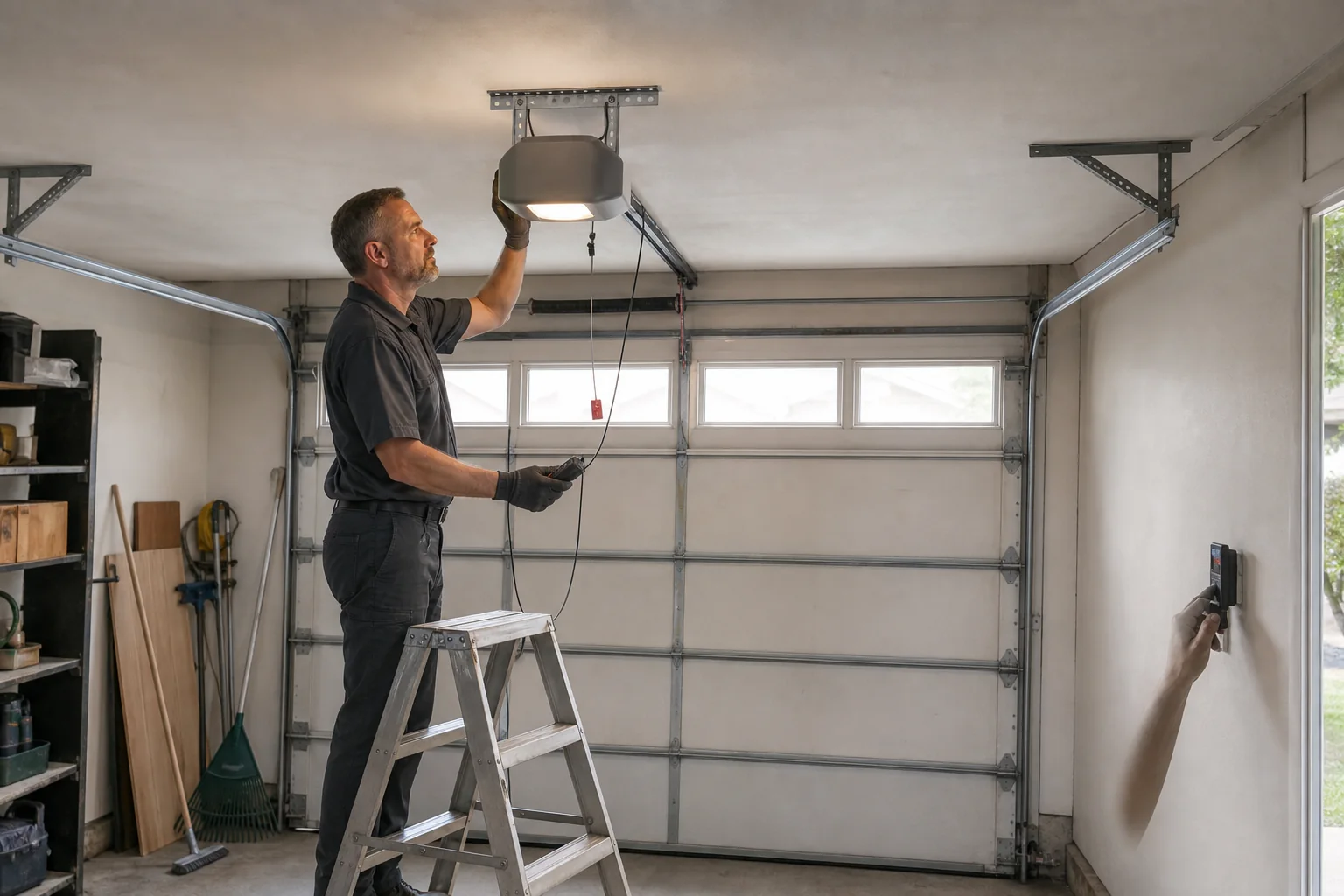
Openers
Motors take the blame for dead springs constantly. Worth knowing which one you've got before you buy an opener you didn't need.
See what's includedEugene guide
Whiteaker, the Friendly area and Jefferson Westside still have plenty of original wood doors hanging in unheated garages. They stand in standing water most of the winter, and the bottom rail is what gives way: it softens, the fixings lose their grip, and the section starts carrying water it was never meant to hold.
A waterlogged door is a heavier door, and the springs above it were wound for the dry weight. That's why one of these fails in February rather than August. If the bottom edge feels soft when you press it, say so, and don't test it by hauling the door up by that rail.
Properties along River Road and through Santa Clara sit on long lots, and many have more than one door: an attached garage near the house and a shop or second garage set well back. Cal Young is mostly attached garages under low eaves, while the streets off Crest Drive climb hard enough that the drive falls away from the opening.
So say which door you mean, how far it is from where a van can park, and whether there's a gate or a soft verge in between. It doesn't change the diagnosis. It changes how long someone is on site, and you'd rather know that beforehand.
Two local classics get blamed on the opener. Cold damp mornings leave condensation on the safety sensor lenses, so the door refuses to close until the air dries out. And moss, fir needles and grit build up in the bottom track until a roller climbs out of it.
Neither one needs a new motor. Before anything else, wipe both sensor lenses dry, look at what's packed into the track, and check whether a gutter is emptying onto the apron in front of the door. Then tell us whether the fault is worse first thing.
Cross streets, which door, single or double, wood or steel, and what actually happened: what you pressed, how far the door traveled, what you heard, where it stopped. Lead with it if a car or a person is shut in.
You're not expected to name the broken part, because that's the technician's job. Photos taken standing on the floor are enough. Send it before 5 p.m. on a weekday and you'll hear from a person the same business day, then a technician sets out the scope and the price before any work starts.
Most common around Eugene
The door stays open, stops, or will not begin closing.
What to do about itA gap appears in the spring above the door or a loud bang precedes a heavy door.
What to do about itSensor lights blink or the door will not close from a remote.
What to do about itThe opener is silent, hums, or runs without moving the door.
What to do about itThe customer wants scope, parts, labor, fees, and alternatives in writing.
What to do about itEugene questions
A door that has been getting harder is telling you something has been wearing out for a while: springs losing their pull, rollers seizing, or a wood door taking on water and getting heavier. Stop running it. Tell us how long it's been building, whether the door is wood or steel, and whether anything has changed about the noise it makes.
That's usually condensation on the safety sensor lenses. A damp morning fogs them, the beam drops out, and the opener won't close the door until things dry off. Wipe both lenses with a dry cloth and see whether the fault goes away. If it still won't close once everything is dry, tell us, because that's a different problem.
That's the classic broken spring. An opener lifts a balanced door easily and a dead-weight one hardly at all, which is why you get a few inches and then nothing. Don't keep trying it, don't lift it manually, and keep the space under the opening clear. Springs are wound under serious tension and aren't a repair to take on yourself.
Yes, gently. A dry cloth on the lens and a hand-clear of the debris around the bracket. Don't hose them down, and don't move the brackets around to make the lights come on. If the lights only settle when you nudge one, the alignment or the wiring has gone and it needs looking at rather than propping.
The trolley has come off the door, usually because the manual release was pulled and never re-engaged, or because the connecting arm has broken. Close the door fully first, then look at the arm running from the rail down to the top section. Tell us what you see there, and don't keep running the opener while it's disconnected.
That's for the technician to state, and they should state it before they come out rather than on your doorstep. What we can tell you is that the scope and the price get confirmed with you before any work starts, that you can say no, and that nothing at all is charged through this site.
Eugene, OR
Which door, what it's made of, and what it does when wet. Scope and price are agreed with you before any work starts.