

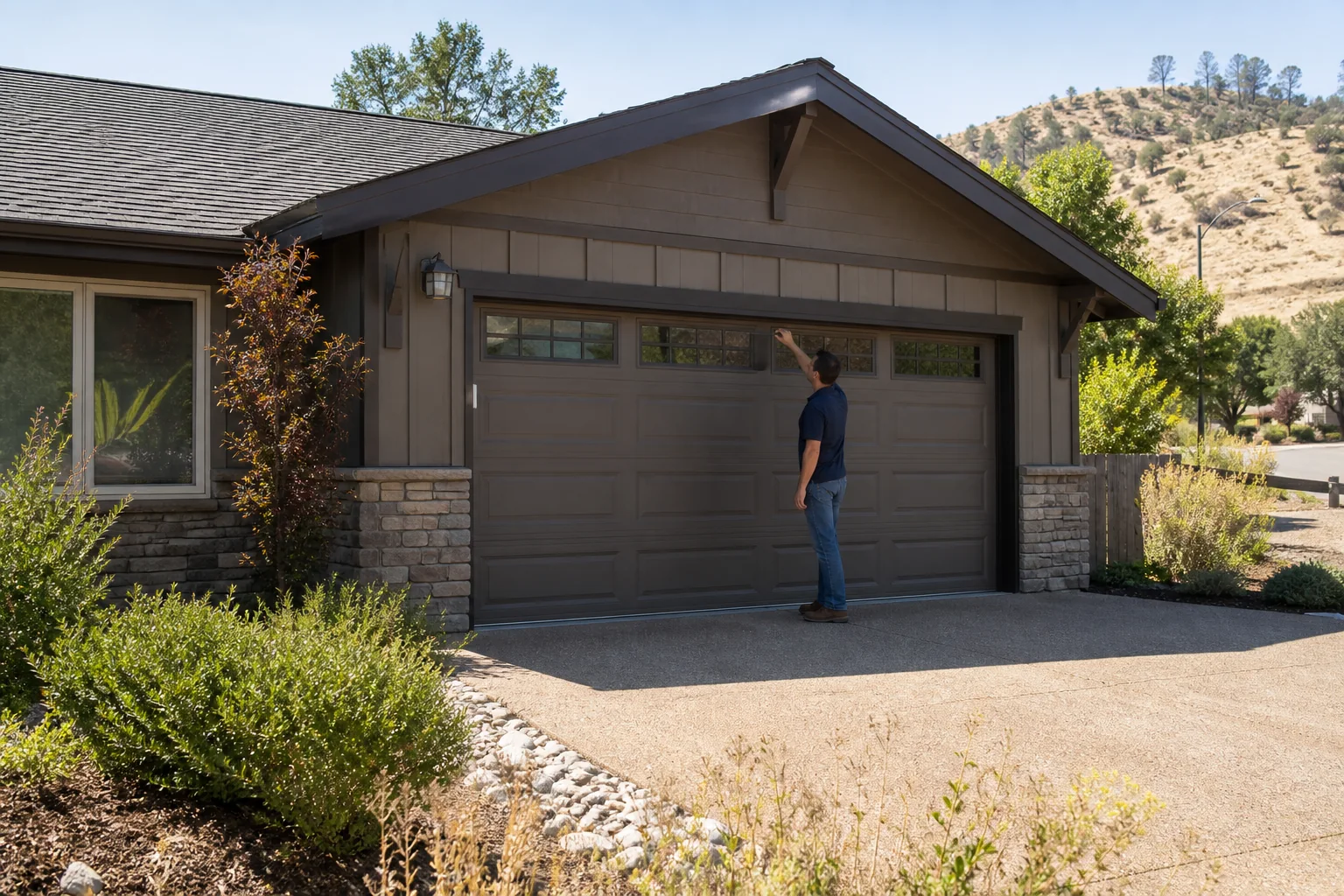
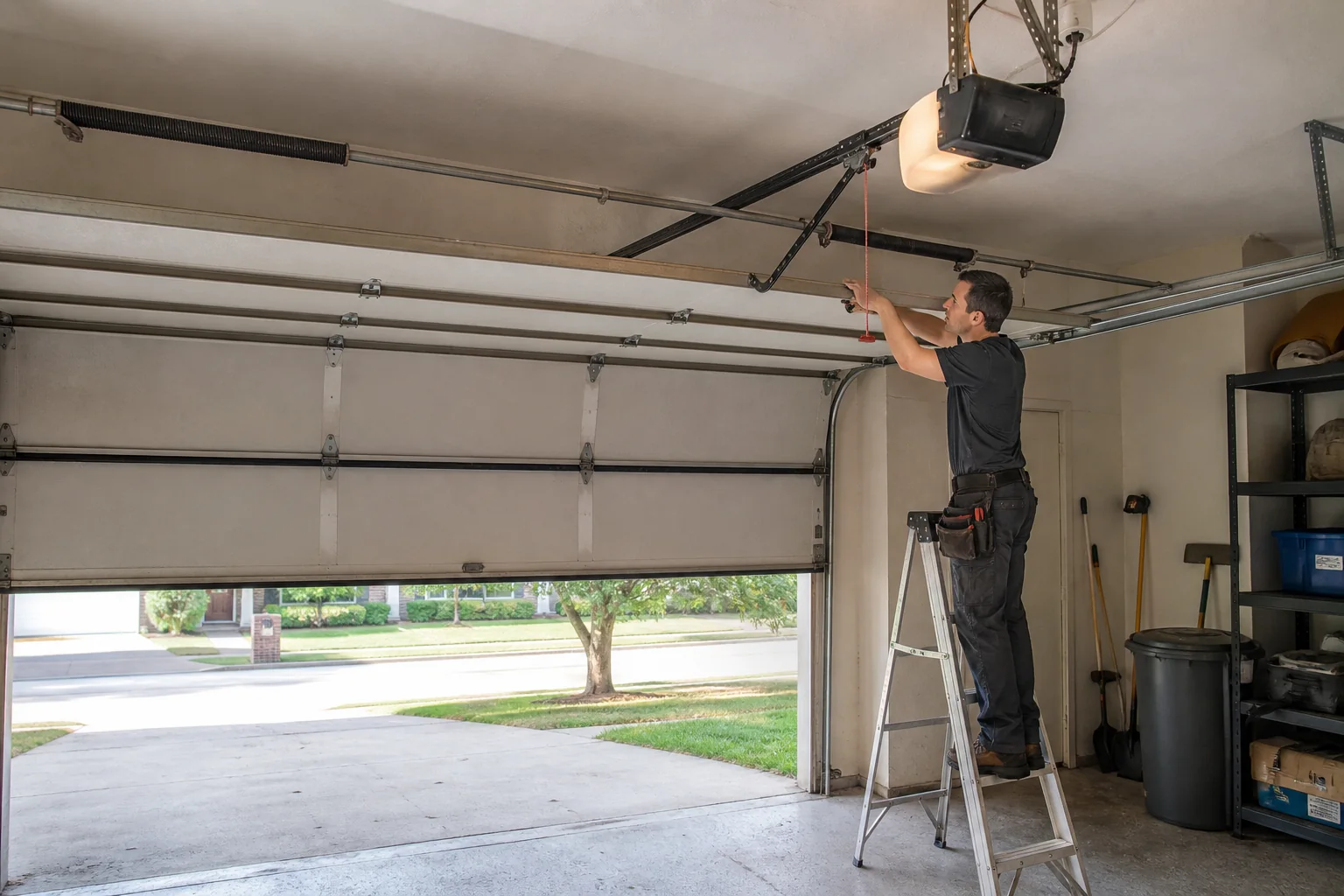
General repair
Garage Door Repair
Tell us what the door is doing and we'll get it in front of someone who can fix it — with the price agreed before the work starts.
See what's includedGarage door repair · Medford, OR
Hot summers and foggy winters pull Medford doors out of adjustment. Say what yours is doing and see the fault and the price first.
Liberty Park, West Medford, Cedar Links, and the streets either side of them.
Springs, cables, openers, sensors, tracks, panels, seals, and full replacements.
You hear what failed and what it costs first. Saying no at that point costs you nothing.
Ask before 5 p.m. on a weekday and you hear back that business day.
Why us for this door
Force settings made in cold damp weather are wrong once the garage is running at summer temperature, so a door that was fine all winter starts reversing halfway or refusing to close in the afternoon. Nothing has broken. The settings simply no longer match the conditions, and re-setting them is quick.
The bottom seal is the first thing a Rogue Valley summer genuinely ruins, and that's a small job too. Say when it started and how the driveway runs, flat and short or steep and long. Price is agreed with you before work.
Get my door fixedWhere we work
Cedar Links and Saddle Ridge climb; Liberty Park and West Medford are flatter and older. Say which is yours.
Plenty of the work we take isn't in Medford proper. These are the towns around it and what tends to be different about a door there.
Don't see your street or your town? These are the places where the housing changes enough to change the job — not the edge of where we go, and not a promise about your exact address either. We take work across Medford and the wider Oregon area, and the address you send is what actually gets checked.Check my address
Repairs in Medford
General repair
Tell us what the door is doing and we'll get it in front of someone who can fix it — with the price agreed before the work starts.
See what's included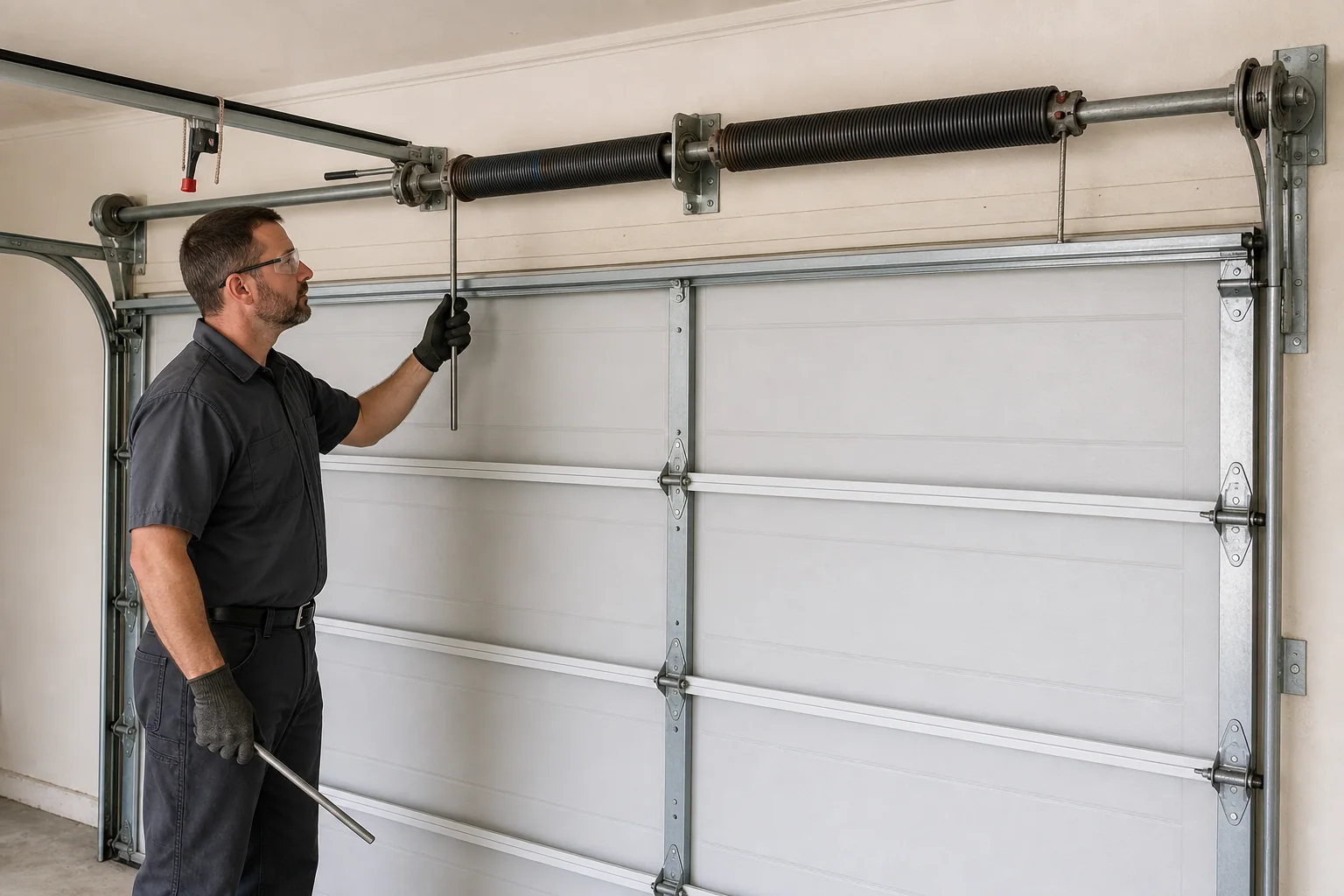
Springs and balance
If your door suddenly weighs a couple hundred pounds, a spring has almost certainly let go. Leave it down, keep everyone clear, and let someone with the right winding bars deal with it.
See what's included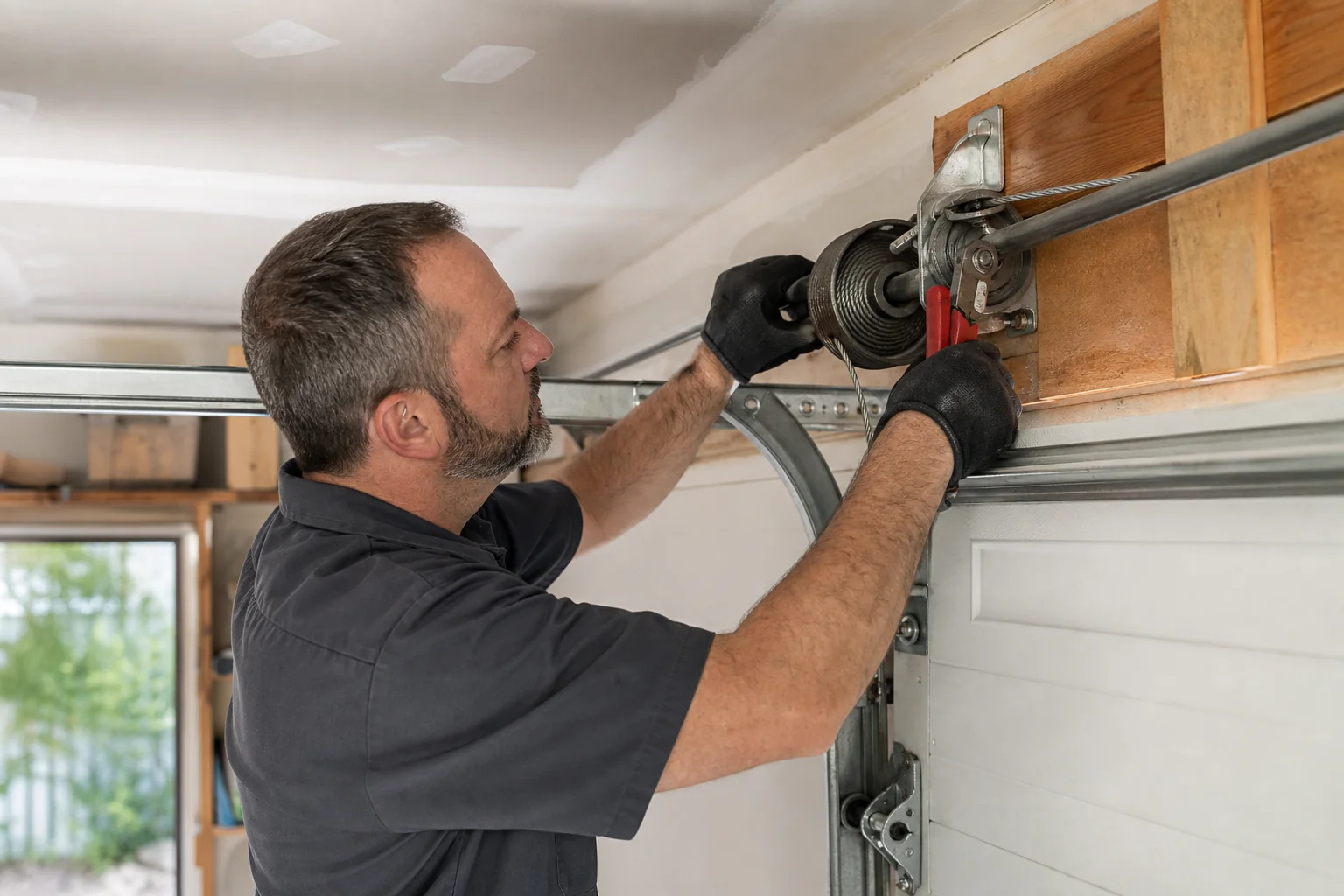
Cables and drums
One corner sitting lower, or a cable hanging off its drum, means the lift system is out of balance. It wants looking at before the next cycle, not after.
See what's included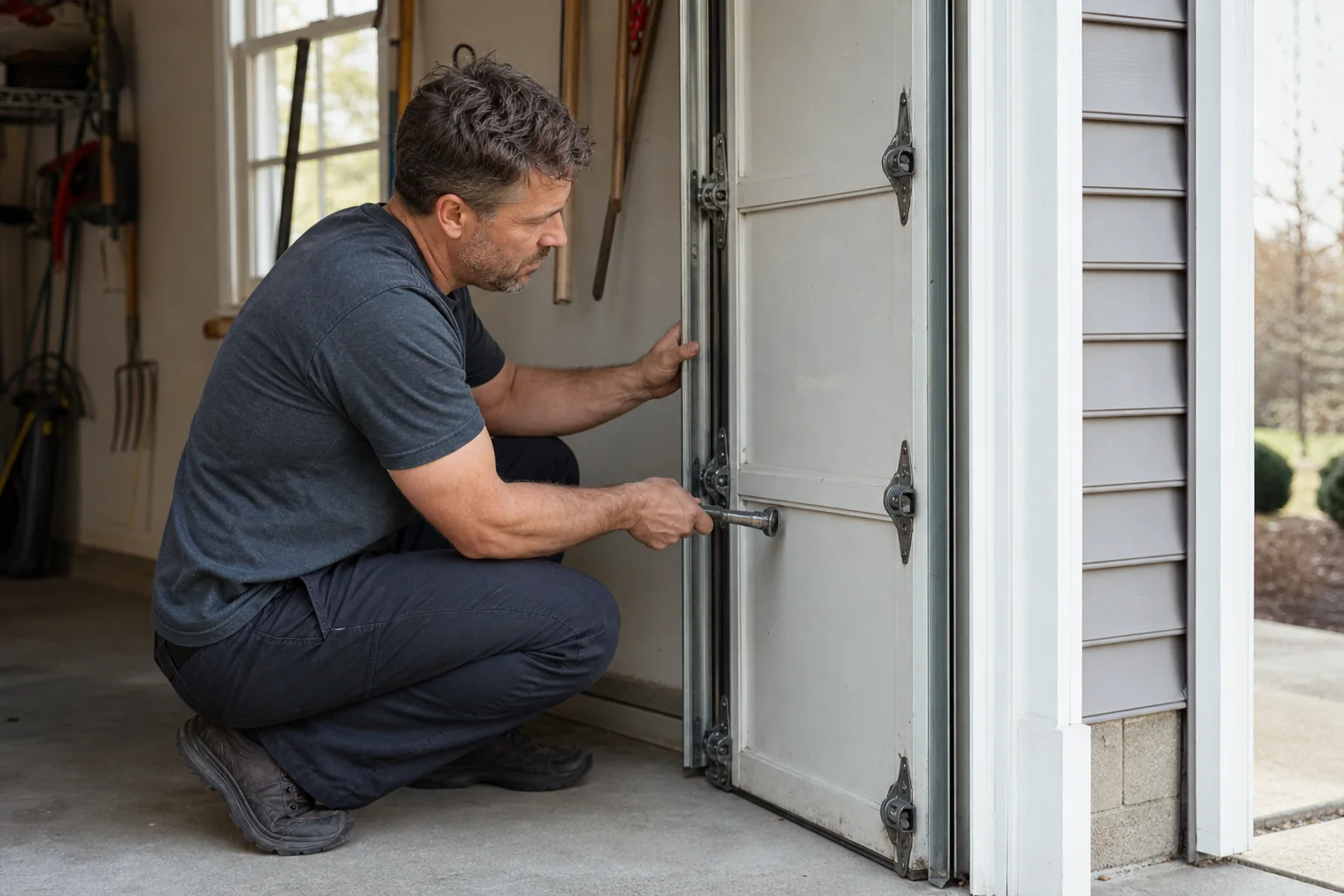
Tracks, rollers, hardware
Grinding in the same spot, a door that shakes the whole wall, a roller creeping out of its track — all cheap to sort now, all expensive once the door comes off.
See what's included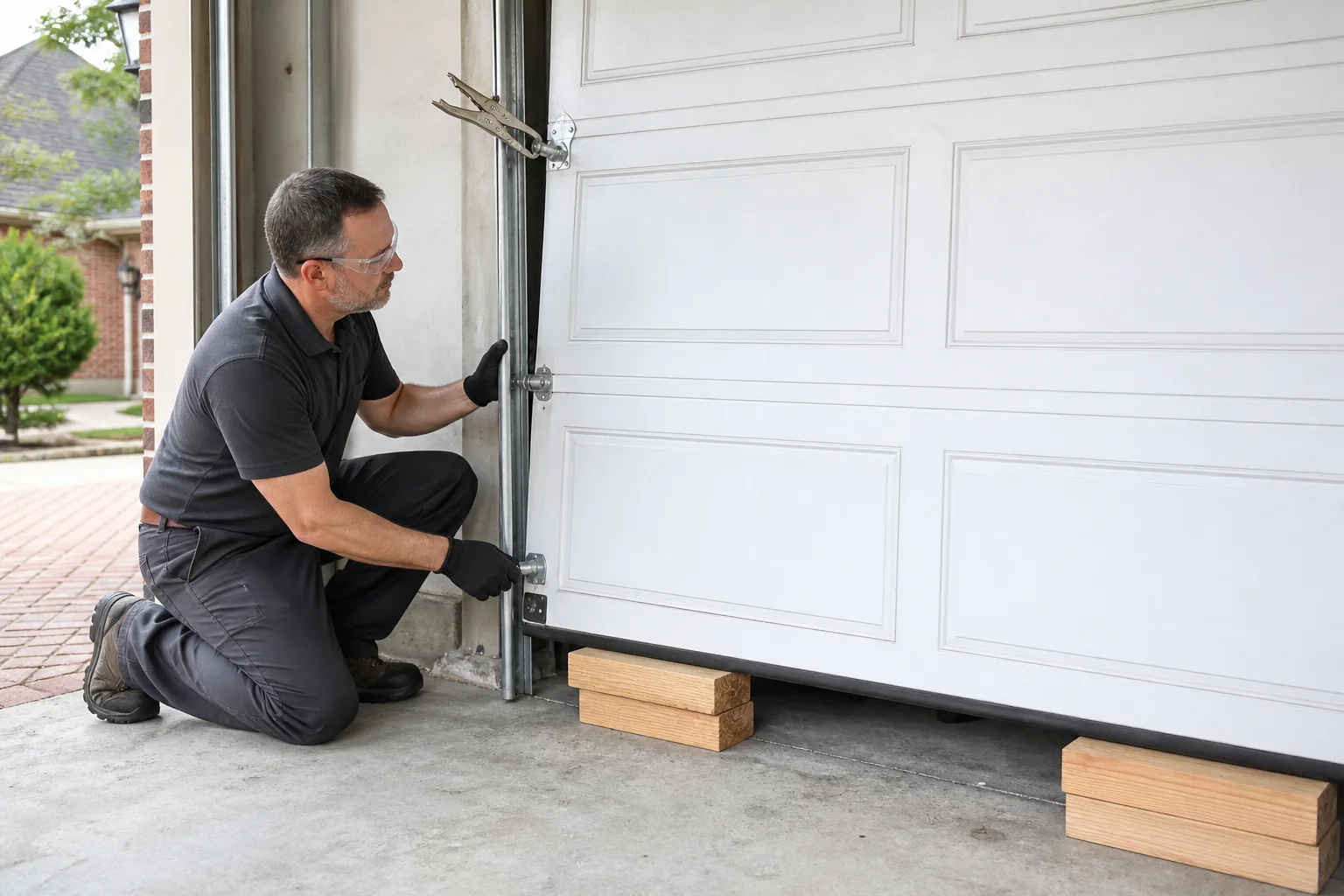
Off-track and stuck
Every extra cycle bends another panel and drags more cable out of line. Leave it where it is, keep the opening clear, and get it stabilized properly.
See what's included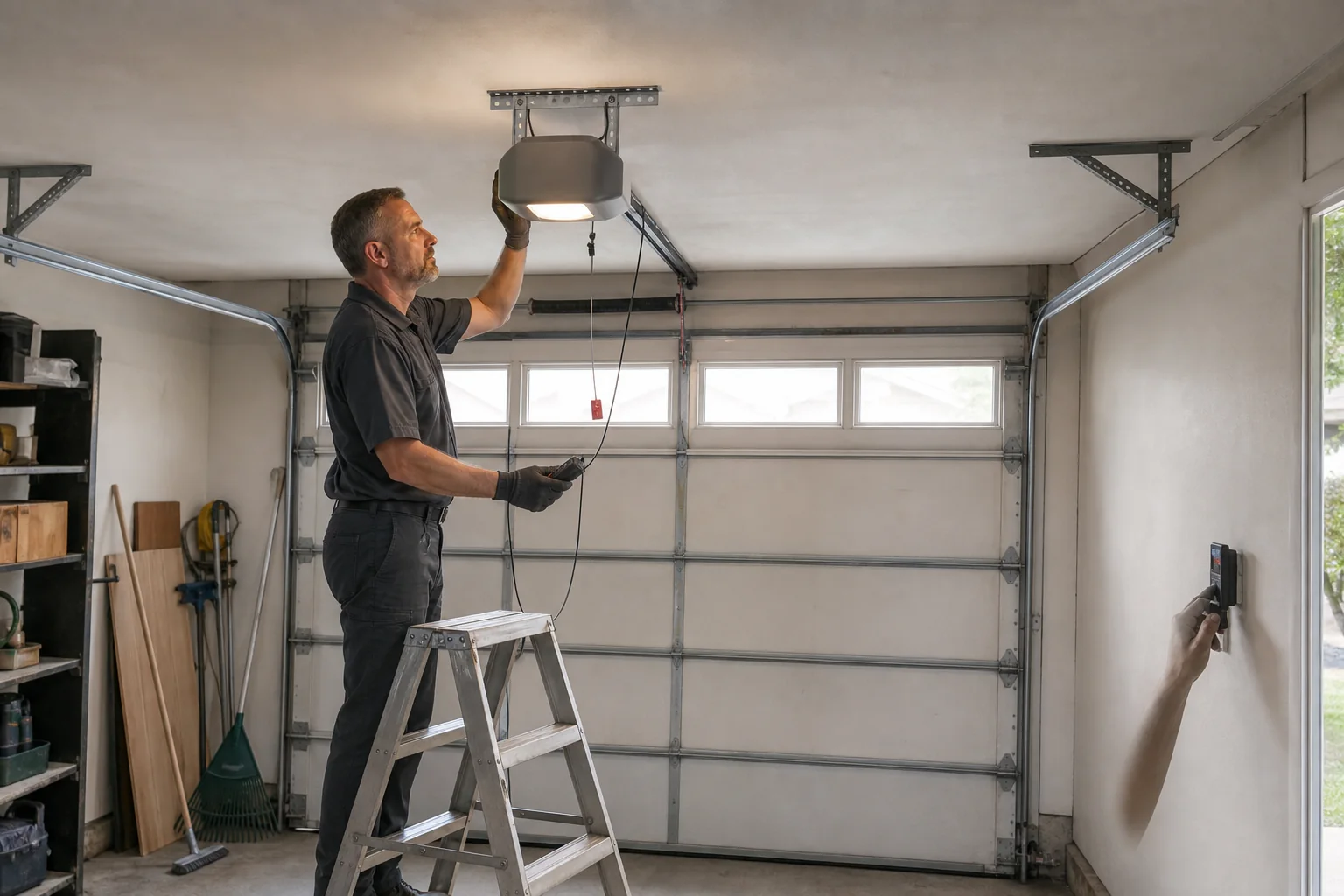
Openers
Motors take the blame for dead springs constantly. Worth knowing which one you've got before you buy an opener you didn't need.
See what's includedMedford guide
West Medford and Liberty Park are the flat older side of town: small houses, short driveways, and garages that are frequently detached and set behind the house. Climb east into Saddle Ridge and Summerfield and the drives get long and steep, while Cedar Links sits in between with street-facing double doors on newer builds.
That's the difference between backing a van up to the opening and hauling a spring twenty yards uphill. It doesn't change what failed. It does change the time on the job, so tell us which one you've got and whether anything is parked in the way.
Openers work to a force setting, and springs pull differently hot than cold. In a valley that gets genuinely hot in summer and sits under cold fog in winter, a door balanced in one season can start stalling or reversing in the other. Same door, same opener, nothing actually broken.
So the useful detail is when it happens. If yours only reverses in the afternoon, or only struggles on the coldest mornings, that points at balance and force rather than a failed part. Tell us the time of day and the season it started, and don't crank the force screws up to push through it. That adjustment is what removes the safety.
A long dry summer bakes the rubber along the bottom of the door until it's hard, flattened and split at the ends. You won't notice while the weather stays dry. The first real rain shows you, because water runs straight under the door and across the slab.
The same summer packs the track with dust and films the safety sensor lenses until the beam drops out and the door won't close. Both are straightforward to sort and easy to describe. Look along the bottom of the closed door for daylight and tell us what you can see.
Start with cross streets, single or double, attached or detached, and the sequence of what happened: button pressed, how far it moved, what you heard, where it stopped. Say immediately if a vehicle or a person is shut in.
Naming the broken part isn't your job. Ground-level photos are plenty and nobody needs you on a ladder. Requests in before 5 p.m. on a weekday get a human reply the same business day, and a technician confirms the scope and the price with you before starting. The site is free to use.
Most common around Medford
The door stays open, stops, or will not begin closing.
What to do about itA gap appears in the spring above the door or a loud bang precedes a heavy door.
What to do about itSensor lights blink or the door will not close from a remote.
What to do about itThe opener is silent, hums, or runs without moving the door.
What to do about itThe customer wants scope, parts, labor, fees, and alternatives in writing.
What to do about itMedford questions
A single click with no movement means the motor tried and something stopped it. That could be a broken spring, a jammed roller, or a door stuck to the slab on a cold foggy morning. Don't keep clicking it. Tell us the time of day, whether it worked yesterday, and whether you heard anything let go beforehand.
That pattern is usually about balance and force rather than a broken part. Heat changes how the springs pull and how much resistance the door meets, so an opener set on a cool morning can read a hot afternoon as an obstruction. Don't turn the force adjustment up to get past it, because that's the setting that makes the door reverse off an obstacle. Tell us the times it happens.
That's a spring. With one broken, the opener is trying to lift the entire door unassisted and its safety cut-out stops it almost immediately, which is the behavior you're describing. Leave the door down, keep people and vehicles out from under it, and don't attempt to wind or replace a torsion spring yourself.
Very likely. Fine dust and ash settle on the lenses across a dry Rogue Valley summer and weaken the beam until the opener stops trusting it. Wipe both lenses with a dry cloth, check that neither bracket has been knocked, and try again. If it still won't close, tell us whether the lights are steady, blinking, or dark.
Start with power. Check whether the light on the opener comes on and whether the outlet it's plugged into is live, because a tripped breaker looks identical to a failed opener from where you're standing. If it has power and still does nothing, say so and tell us the make if you can read it on the housing. That saves a trip made with the wrong part.
Not honestly, and neither should anyone else. The same symptom can be a ten-minute adjustment or a full spring and cable job, and the difference is only clear at the door. What you will get is the scope and the price in front of you before any work starts, with the option to decline. Nothing is charged through this site.
Medford, OR
When it misbehaves, how the drive runs, and your cross streets. The scope and the price are agreed before anyone starts.