

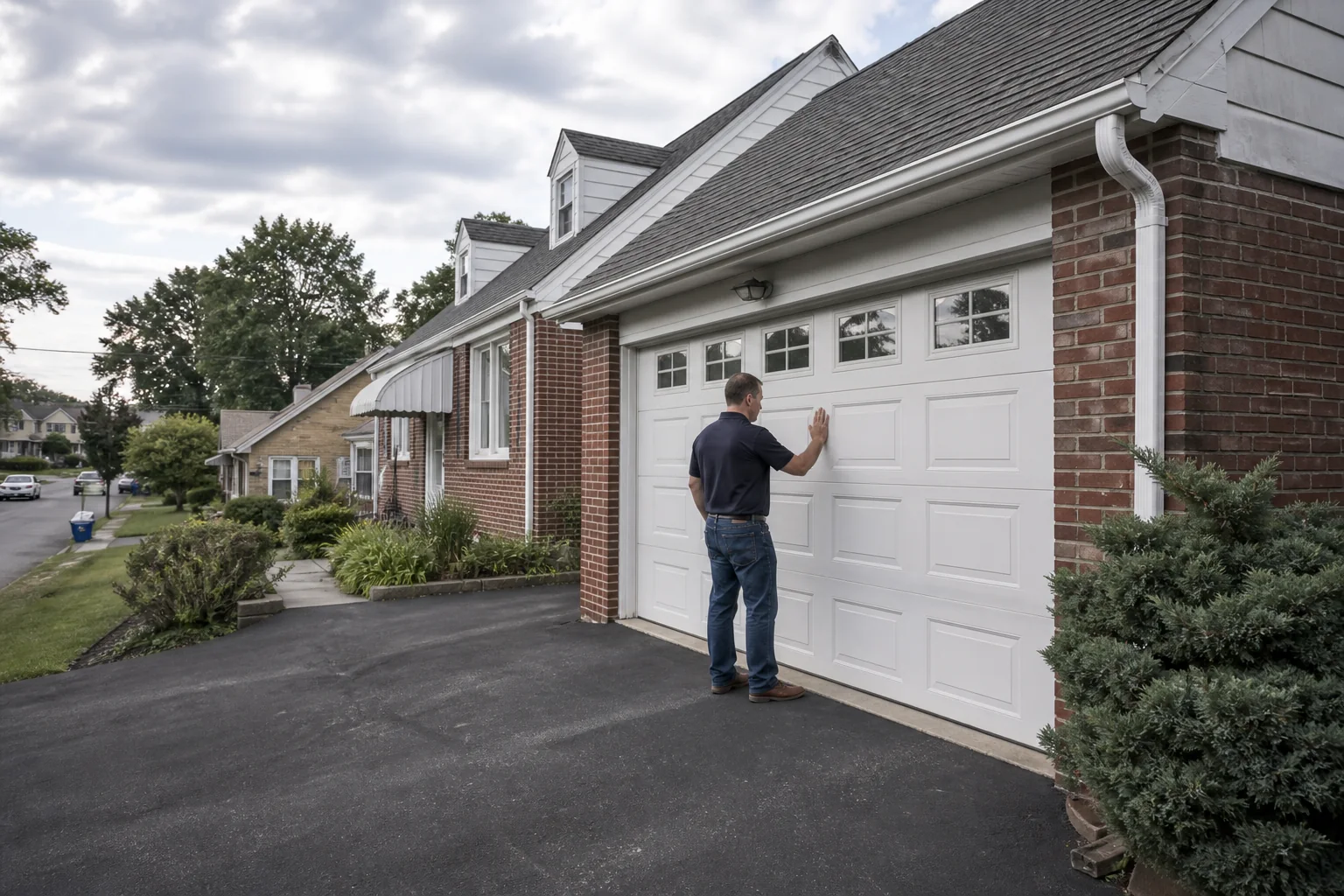
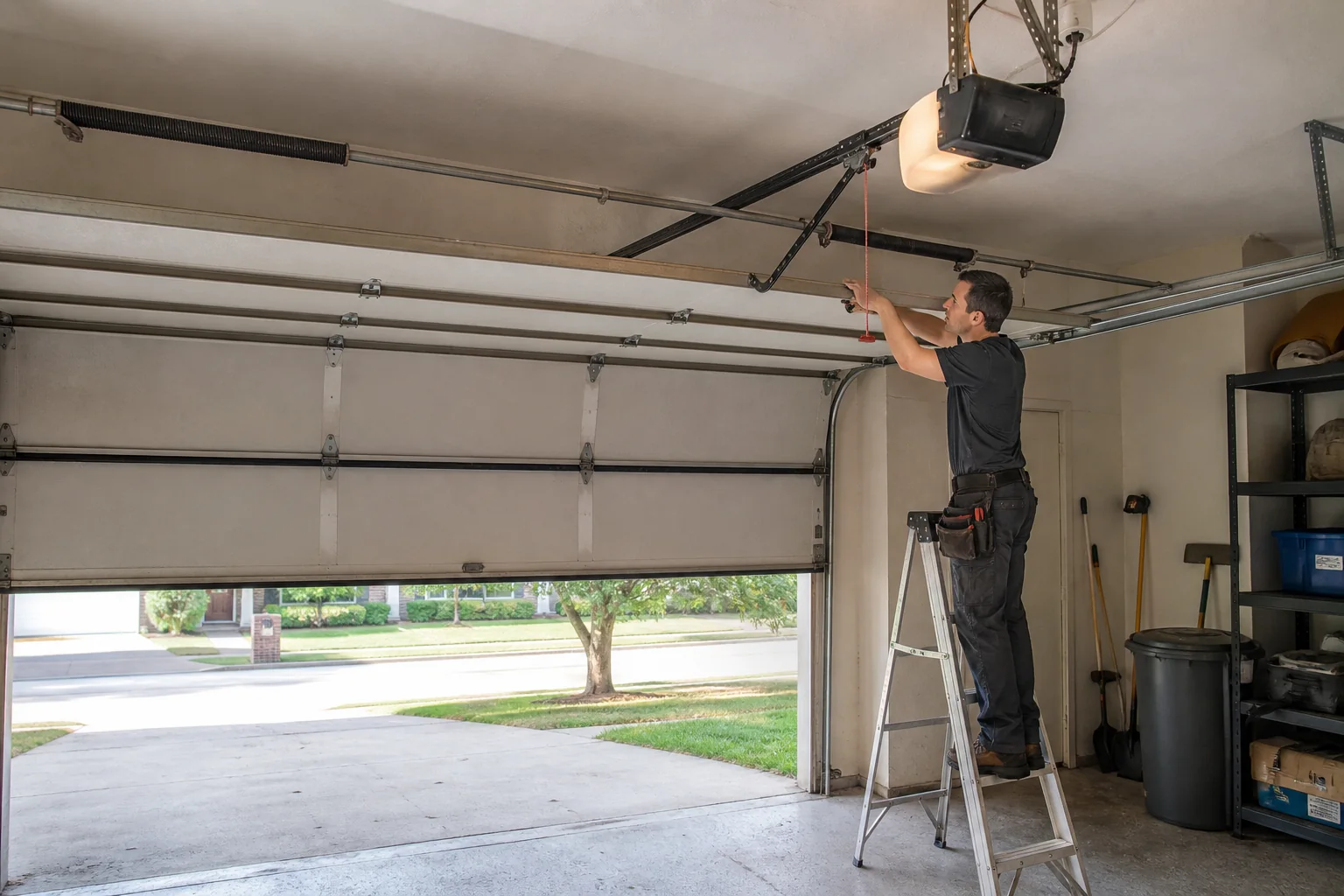
General repair
Garage Door Repair
Tell us what the door is doing and we'll get it in front of someone who can fix it — with the price agreed before the work starts.
See what's includedGarage door repair · Allentown, PA
Most of what goes wrong here starts at the bottom of the door. Say what your Allentown door is doing and see the price first.
Old Allentown, West End, East Allentown, and the streets either side of them.
Springs, cables, openers, sensors, tracks, panels, seals, and full replacements.
You hear what failed and what it costs first. Saying no at that point costs you nothing.
Ask before 5 p.m. on a weekday and you hear back that business day.
Why us for this door
Brine is more aggressive than rock salt and it drips off the vehicle onto the slab in exactly the spot where the bottom brackets and cable ends live. Those parts hold the door's weight. They corrode where you can't see, and the first sign is often the failure itself.
On a cold morning the seal can also be stuck to the concrete, and forcing it's what breaks working doors. Say what happened on that press and where the alley meets your garage. Scope and price are agreed with you before work.
Get my door fixedWhere we work
Old Allentown and Rittersville run tight rear alleys; South and North Allentown have driveways. Say which is yours.
Plenty of the work we take isn't in Allentown proper. These are the towns around it and what tends to be different about a door there.
Don't see your street or your town? These are the places where the housing changes enough to change the job — not the edge of where we go, and not a promise about your exact address either. We take work across Allentown and the wider Pennsylvania area, and the address you send is what actually gets checked.Check my address
Repairs in Allentown
General repair
Tell us what the door is doing and we'll get it in front of someone who can fix it — with the price agreed before the work starts.
See what's included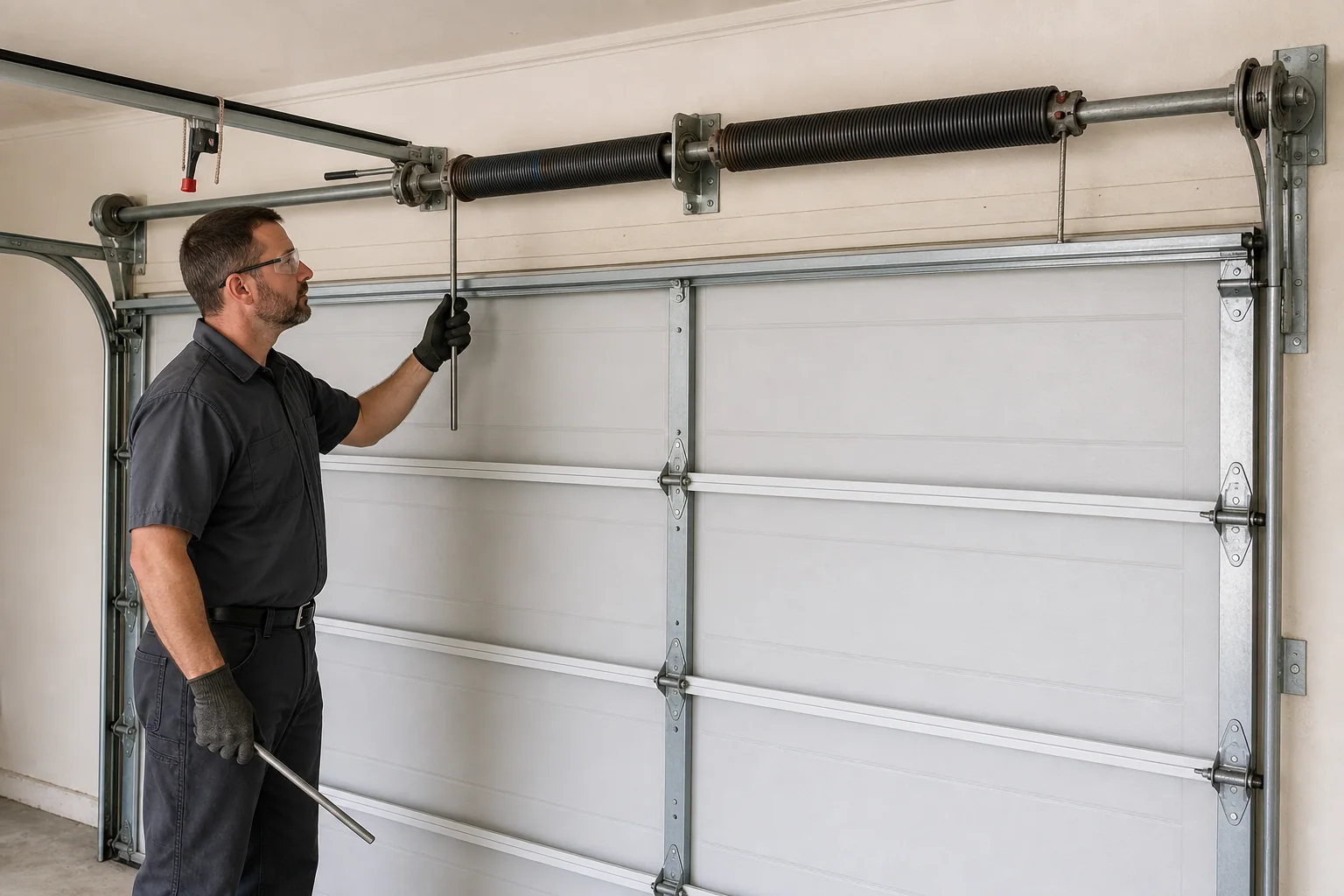
Springs and balance
If your door suddenly weighs a couple hundred pounds, a spring has almost certainly let go. Leave it down, keep everyone clear, and let someone with the right winding bars deal with it.
See what's included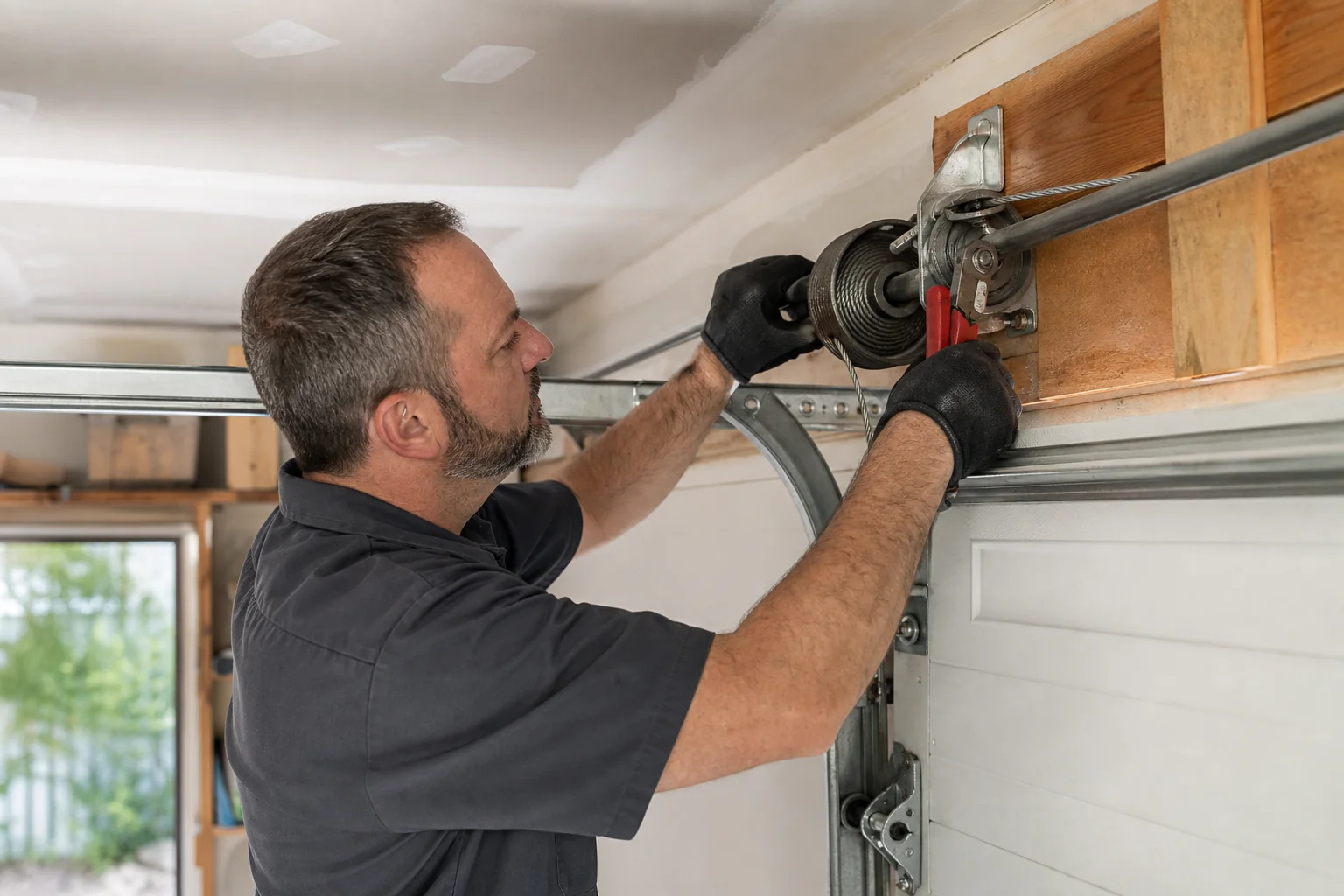
Cables and drums
One corner sitting lower, or a cable hanging off its drum, means the lift system is out of balance. It wants looking at before the next cycle, not after.
See what's included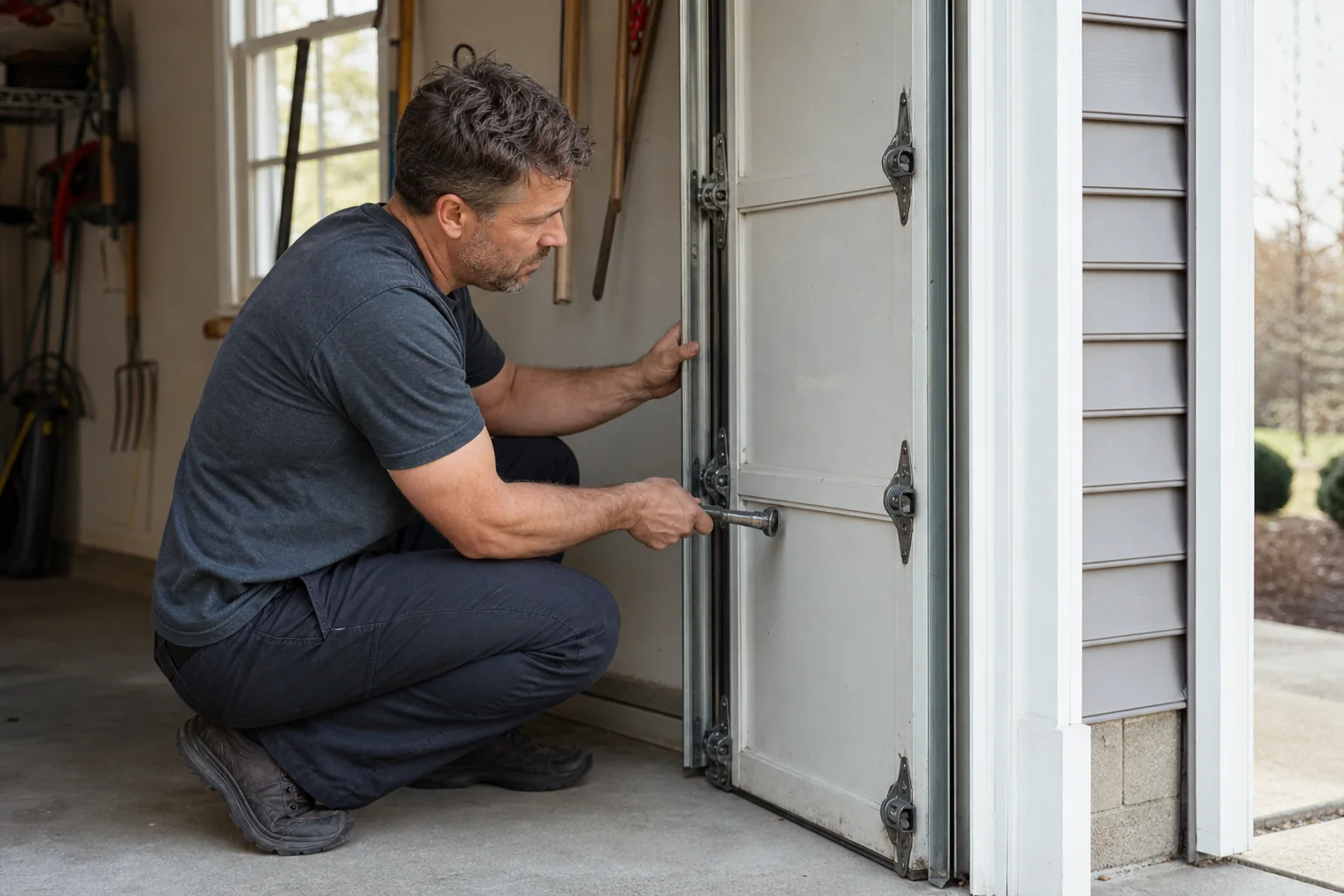
Tracks, rollers, hardware
Grinding in the same spot, a door that shakes the whole wall, a roller creeping out of its track — all cheap to sort now, all expensive once the door comes off.
See what's included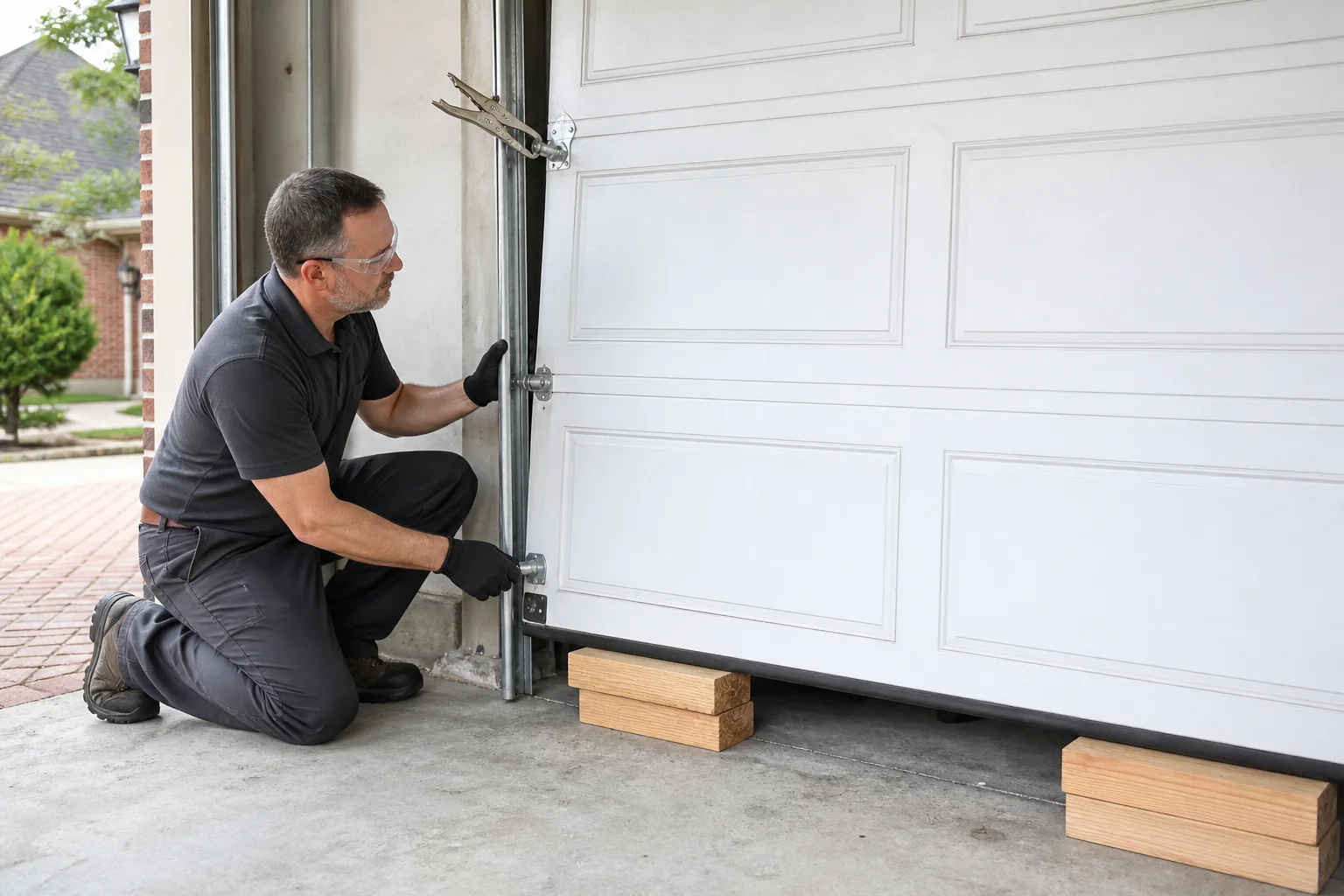
Off-track and stuck
Every extra cycle bends another panel and drags more cable out of line. Leave it where it is, keep the opening clear, and get it stabilized properly.
See what's included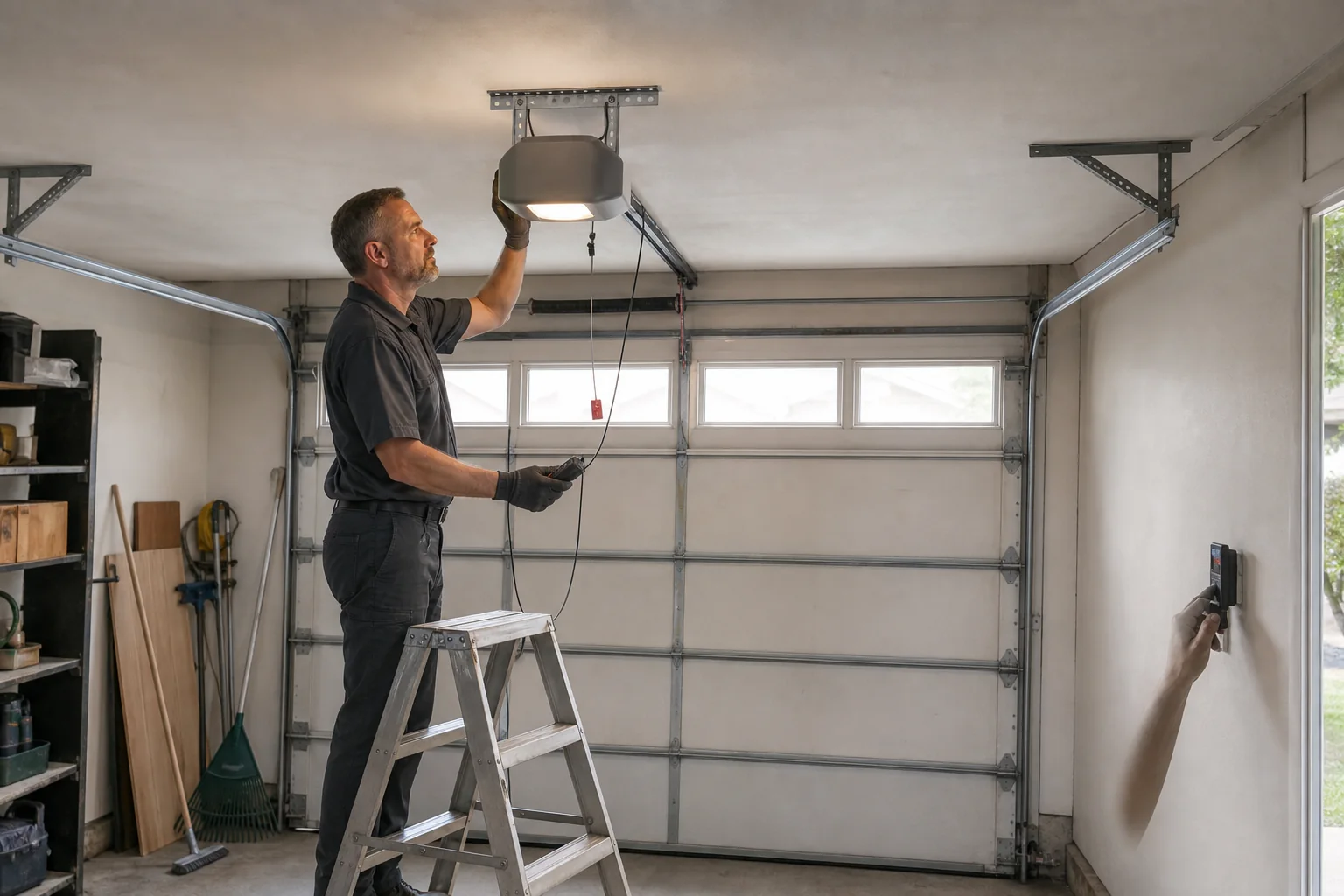
Openers
Motors take the blame for dead springs constantly. Worth knowing which one you've got before you buy an opener you didn't need.
See what's includedAllentown guide
Behind the twins and rowhomes of Old Allentown, and behind a good stretch of the West End, the garage sits at the back of the lot with its door facing a service alley rather than the street. Those alleys collect parked cars, trash carts, and snow the plows never reach.
It doesn't change what is broken. It changes whether a truck can pull up to the opening or has to sit a street away while sections and track are walked in. Say up front whether we are coming down the alley or up a driveway, and whether the alley is passable this week.
Every winter the car comes home coated in salt and parks a foot from the door. It drips onto the slab, and the bottom brackets, the ends of the lift cables and the lowest section of track sit in that puddle until spring.
That's why a door in an unheated Allentown garage so often fails at the bottom corners rather than anywhere obvious. If you can see orange staining around the brackets, or the cable looks frayed where it meets the drum, stop cycling the door. Tell us what you can see and leave it closed.
Meltwater runs under the bottom rubber during the day and freezes there overnight. By morning the door is glued down, and the opener has no way of knowing it. It pulls anyway, and something upstream gives: a gear, a cable off its drum, or the top section bent out of line.
If the door strains and doesn't move when it is below freezing, stop pressing. Let the sun get at the slab, or free the rubber by hand if you can do that standing up and safely. Newer attached garages around East Allentown and Rittersville do this just as readily as the old ones, so the trick is worth knowing either way.
Tell us roughly where you are, because cross streets are enough. Say whether we are coming off an alley or a driveway. Say whether the door is a single or a double and whether the garage is attached or standing on its own. Then describe what it did: how far it moved, what you heard, and whether a car is shut in behind it.
Photos from where you stand are useful, and nobody needs you on a ladder. Get it to us before 5 p.m. local on a weekday and a person replies the same business day; after that it's the next business morning. The technician confirms the work and the price with you before anything is taken apart.
Most common around Allentown
The door stays open, stops, or will not begin closing.
What to do about itA gap appears in the spring above the door or a loud bang precedes a heavy door.
What to do about itSensor lights blink or the door will not close from a remote.
What to do about itThe opener is silent, hums, or runs without moving the door.
What to do about itThe customer wants scope, parts, labor, fees, and alternatives in writing.
What to do about itAllentown questions
Don't keep pressing the button, because that is how a stuck door becomes a broken opener. If there is a side door, use it and leave the main door closed. Tell us how far the door travelled, what it sounded like, and that a vehicle is shut in, so whoever picks it up knows it matters today.
You can usually secure it manually. Pull the release cord while the door is fully down, then slide the manual lock or clamp a pair of locking pliers onto the track just above a roller so the door cannot be lifted. Do that only if the door is already closed and sitting level. Then tell us what it was doing before it stopped closing.
That gap means the spring has snapped, so the counterbalance is gone and the door now weighs what it actually weighs. It is not a job to attempt: those springs hold a great deal of stored energy even when broken. Keep the door down, keep people clear, and leave the winding cones and cables alone.
Then it may not be the sensors. A door that will not start closing can also be a track obstruction, a travel limit set wrong, or the opener sensing more resistance than it expects, which is common when it's cold and the seal is stiff. Tell us whether the motor tries and stops, or does nothing at all.
The motor is turning and the drive is not passing that along to the door. On a chain or belt unit that is usually a disconnected trolley or a worn drive gear; on a screw drive it can be the coupler. Don't keep running it, because you'll only chew the gear further. Tell us what you can hear and whether the chain or belt moves.
Yes. The technician inspects the door, explains what has failed, and sets out the scope and the price before picking up a tool. If the answer is a full replacement rather than a repair, you should hear both options and why. Nothing is charged through this site.
Allentown, PA
What the door did, the state of the brackets, and your cross streets. The price is agreed with you before any work.