

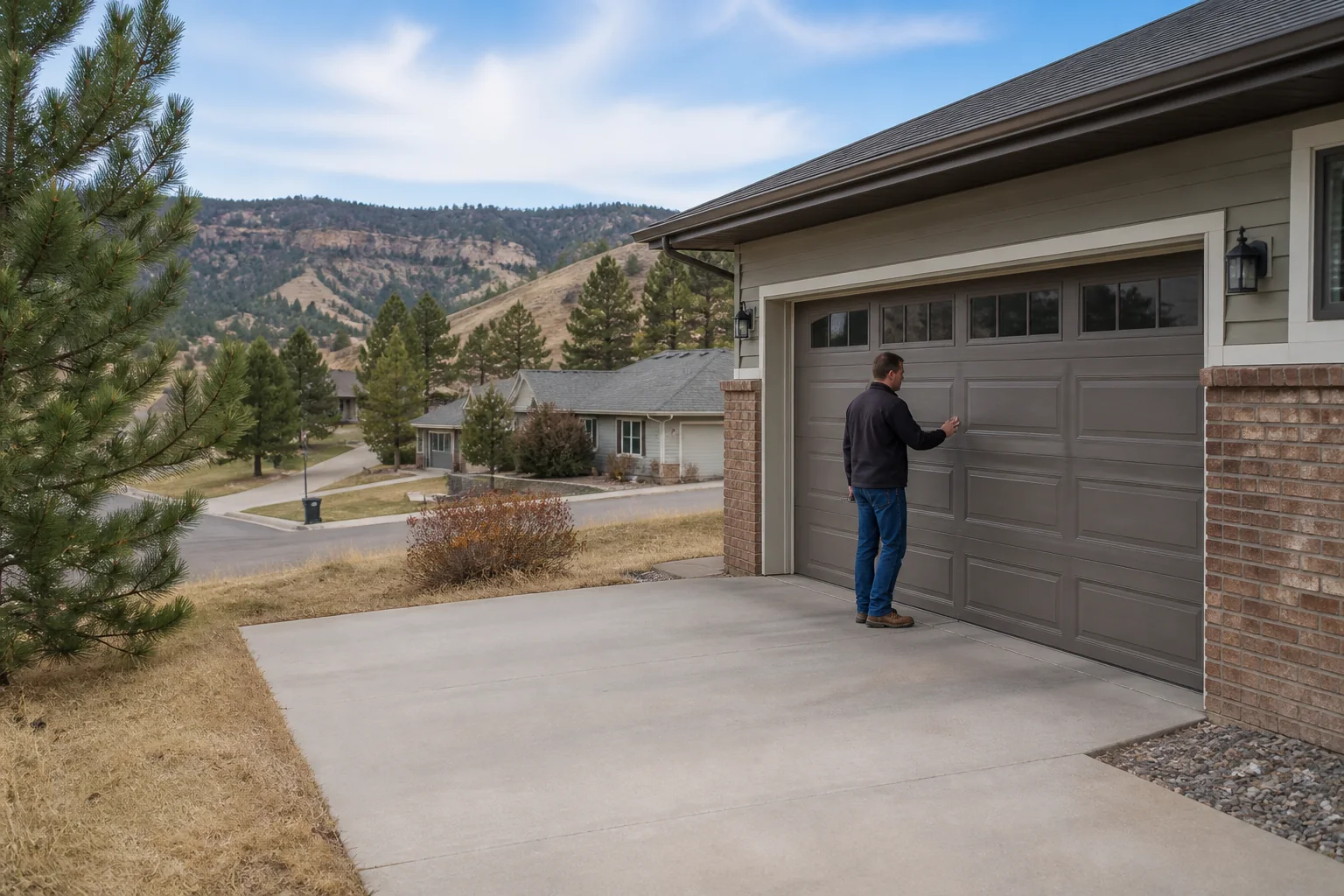
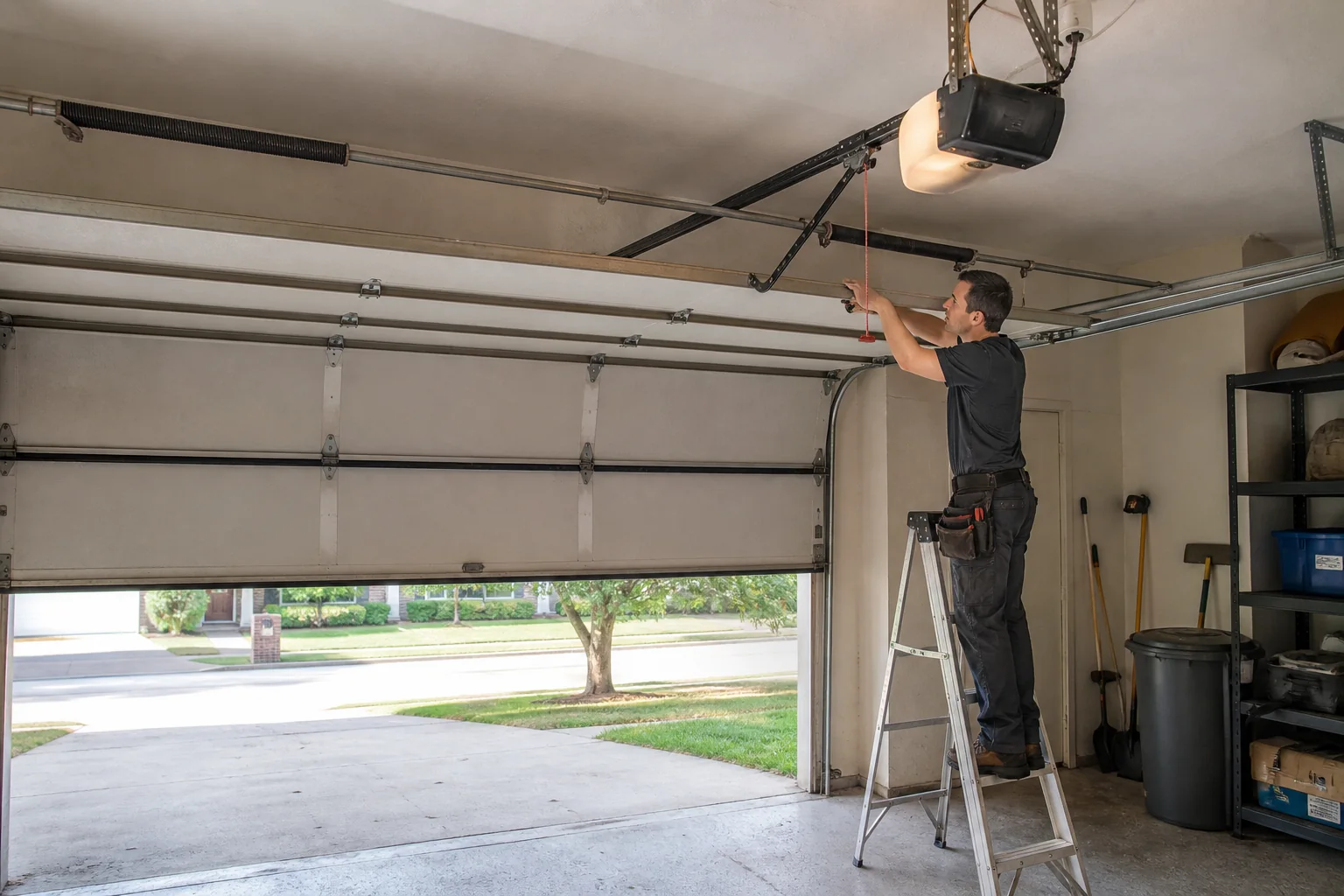
General repair
Garage Door Repair
Tell us what the door is doing and we'll get it in front of someone who can fix it — with the price agreed before the work starts.
See what's includedGarage door repair · Rapid City, SD
Hail, hard cold and a driveway that climbs. Tell us what your Rapid City door is doing and see the fault and the price first.
West Boulevard, Canyon Lake, Chapel Valley, and the streets either side of them.
Springs, cables, openers, sensors, tracks, panels, seals, and full replacements.
You hear what failed and what it costs first. Saying no at that point costs you nothing.
Ask before 5 p.m. on a weekday and you hear back that business day.
Why us for this door
A dent marks the skin and can be left. A crease runs across the section and takes its stiffness with it, so the panel bows as the door travels and starts binding in the track. From the driveway they look much the same, which is why hail damage here gets written off as cosmetic and then costs more later.
A spring that was fine in July also gets marginal in January, and the two often arrive together. Say what the panels look like from the side and how steep the drive is. Cost and scope agreed with you before work.
Get my door fixedWhere we work
Skyline and Chapel Valley climb hard; Rapid Valley and Robbinsdale sit flatter. Say which, and what the panels look like.
Plenty of the work we take isn't in Rapid City proper. These are the towns around it and what tends to be different about a door there.
Don't see your street or your town? These are the places where the housing changes enough to change the job — not the edge of where we go, and not a promise about your exact address either. We take work across Rapid City and the wider South Dakota area, and the address you send is what actually gets checked.Check my address
Repairs in Rapid City
General repair
Tell us what the door is doing and we'll get it in front of someone who can fix it — with the price agreed before the work starts.
See what's included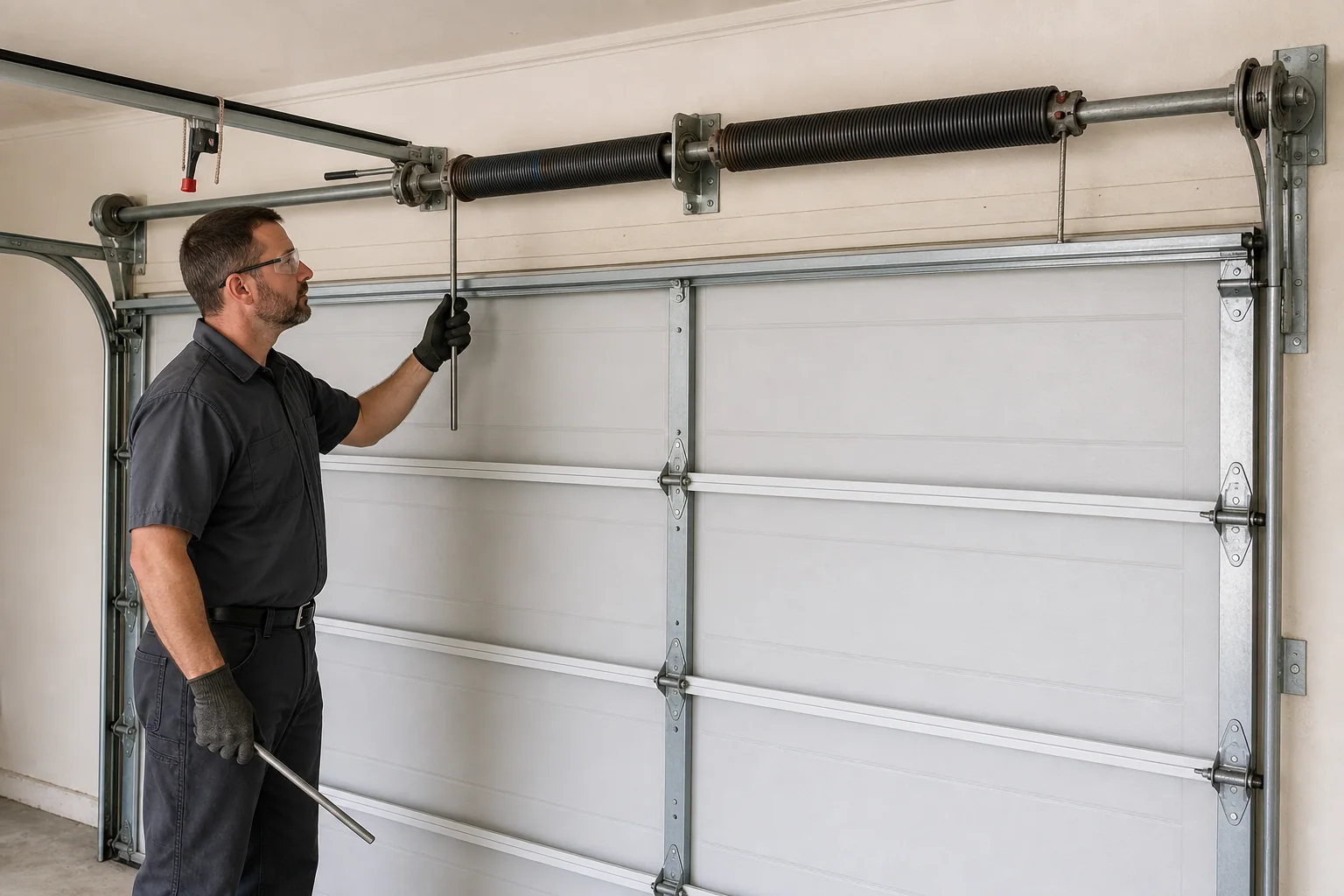
Springs and balance
If your door suddenly weighs a couple hundred pounds, a spring has almost certainly let go. Leave it down, keep everyone clear, and let someone with the right winding bars deal with it.
See what's included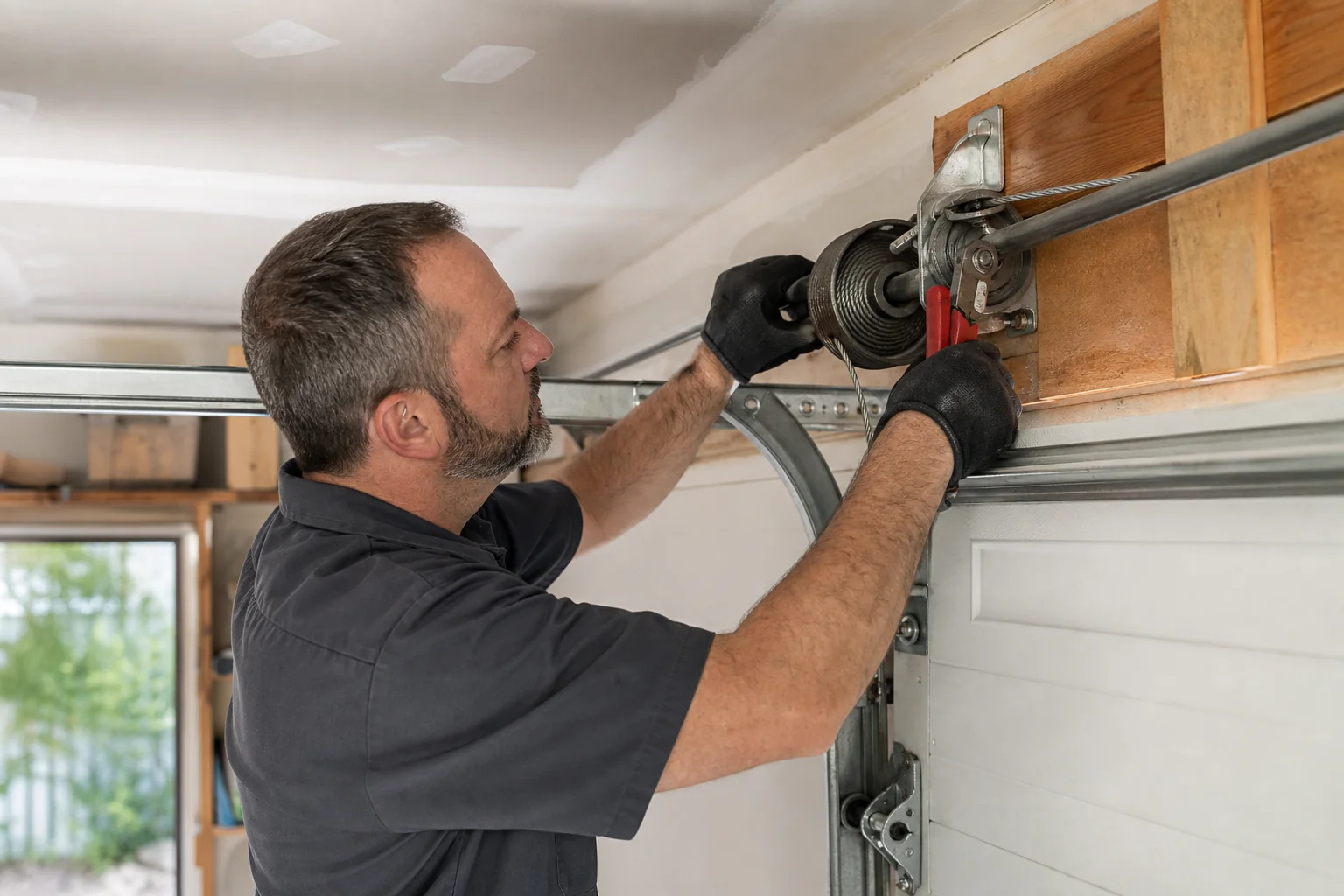
Cables and drums
One corner sitting lower, or a cable hanging off its drum, means the lift system is out of balance. It wants looking at before the next cycle, not after.
See what's included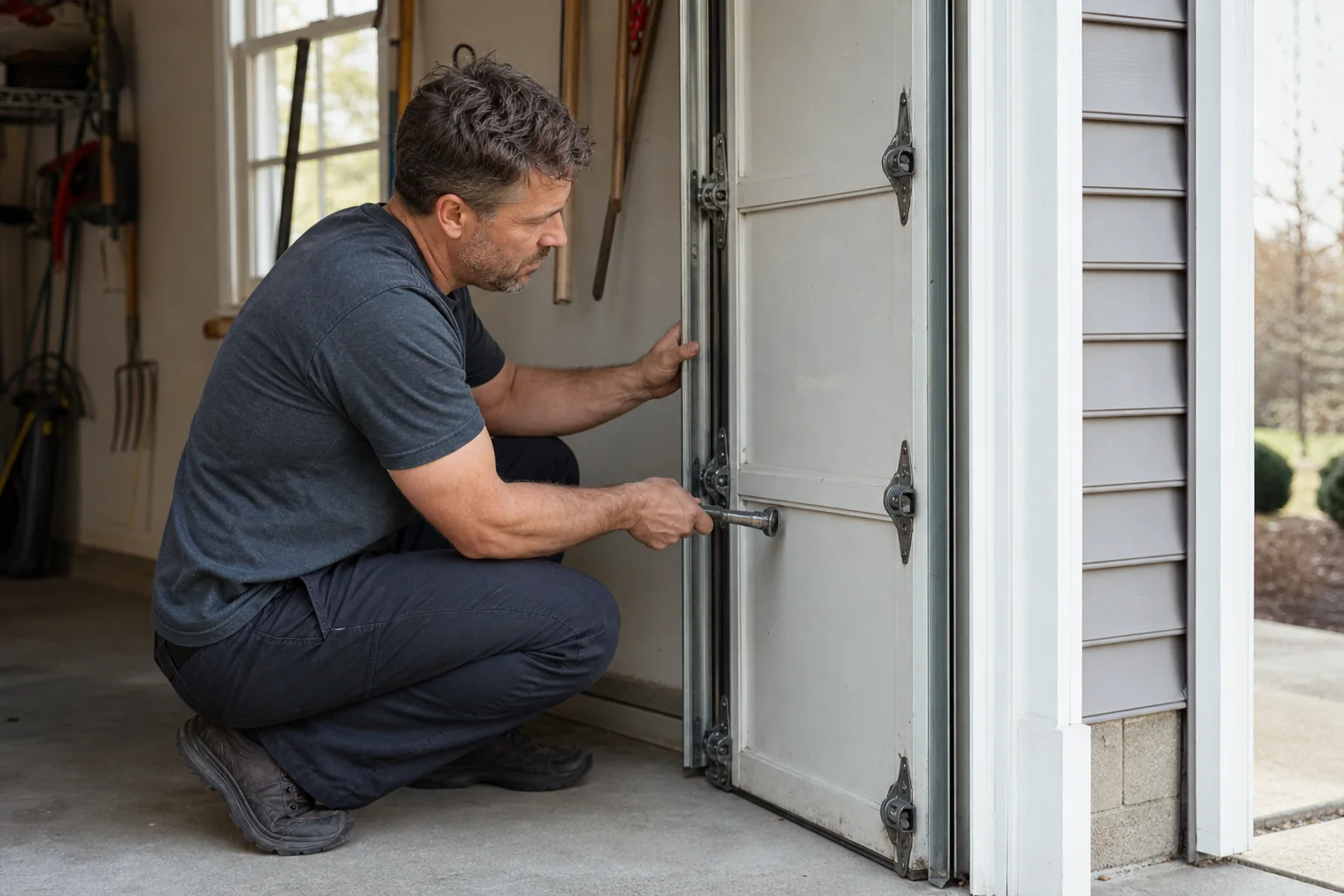
Tracks, rollers, hardware
Grinding in the same spot, a door that shakes the whole wall, a roller creeping out of its track — all cheap to sort now, all expensive once the door comes off.
See what's included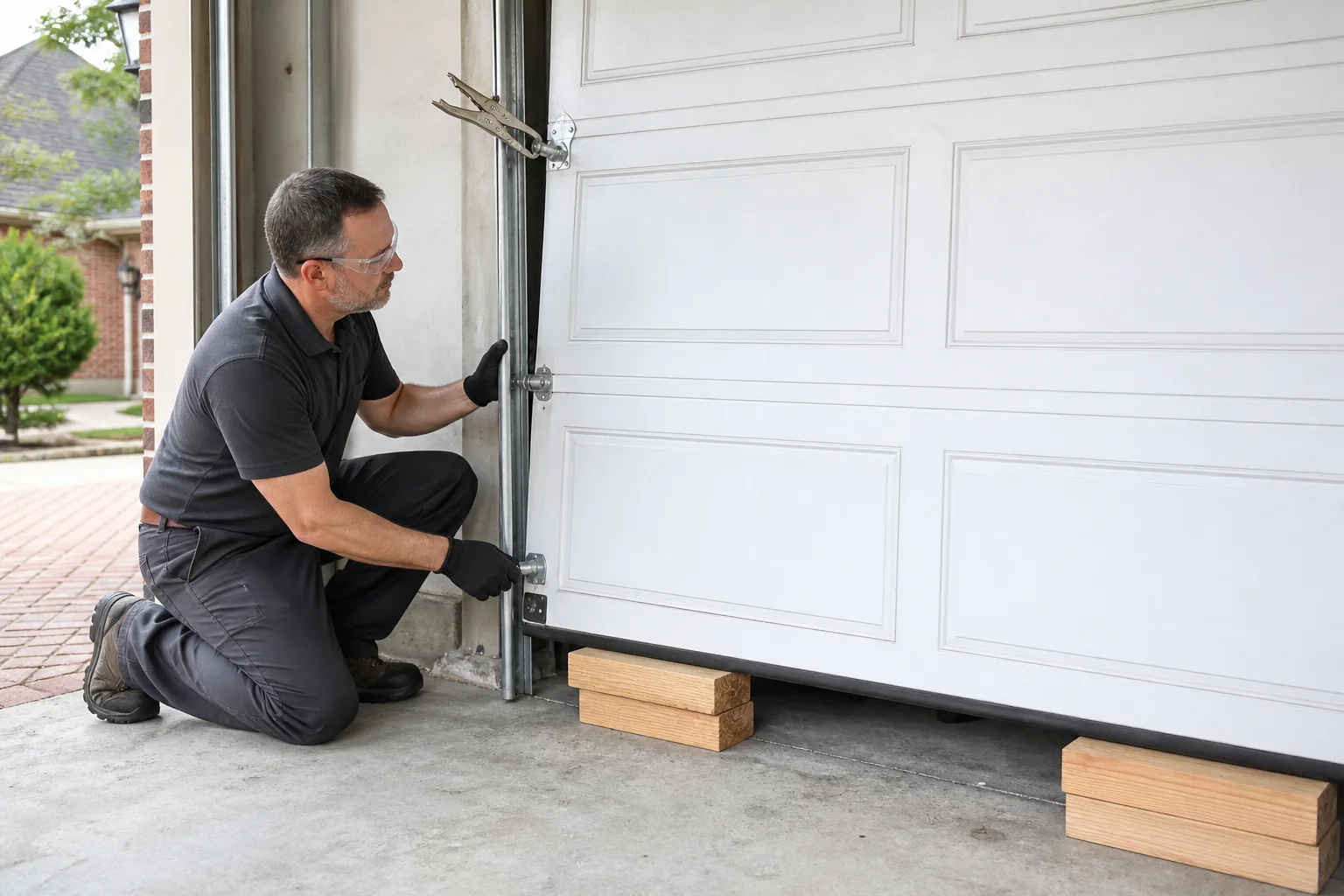
Off-track and stuck
Every extra cycle bends another panel and drags more cable out of line. Leave it where it is, keep the opening clear, and get it stabilized properly.
See what's included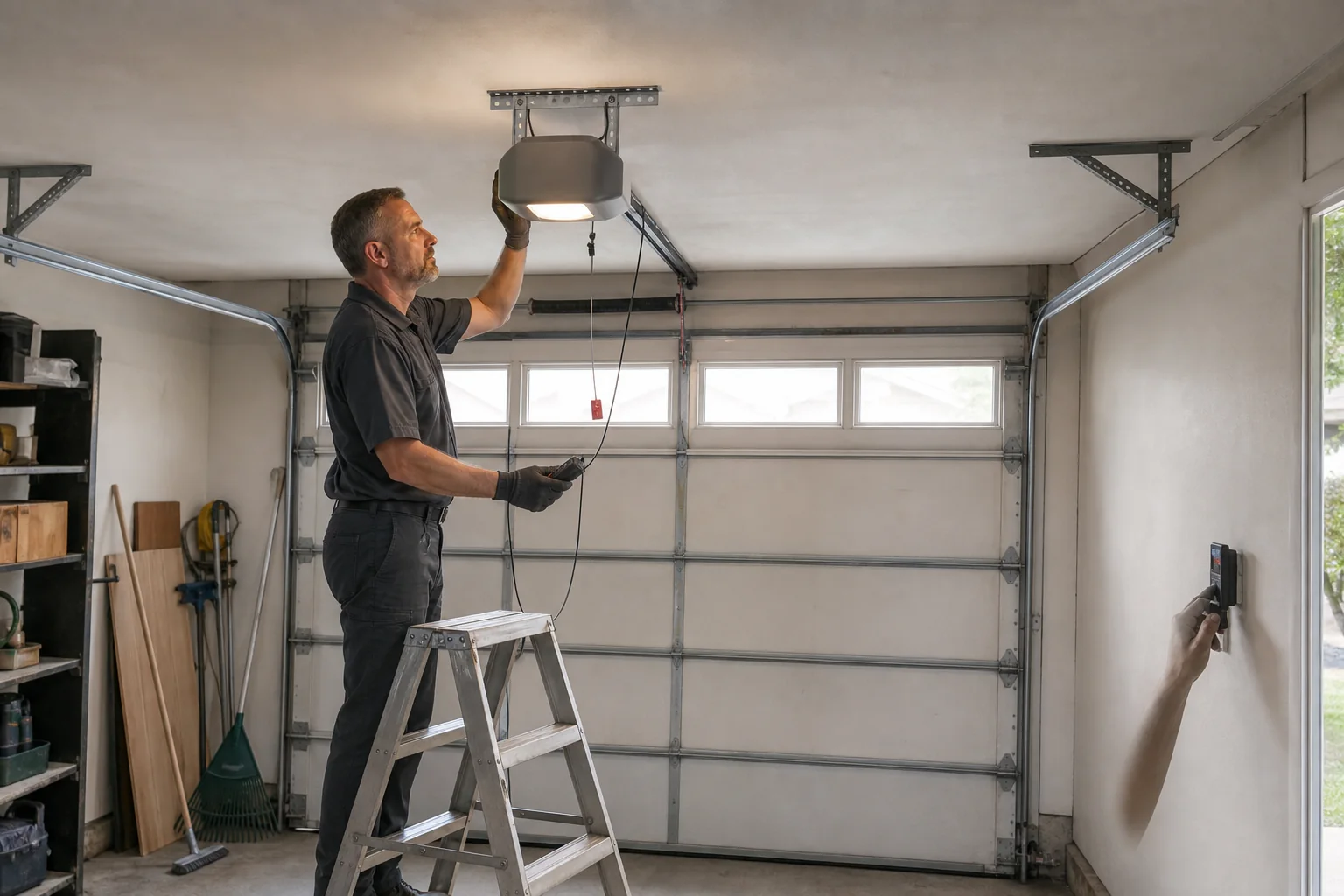
Openers
Motors take the blame for dead springs constantly. Worth knowing which one you've got before you buy an opener you didn't need.
See what's includedRapid City guide
Hail is the loudest thing that happens to a garage door here and the easiest to write off. People check the roof and the truck, glance at the door, see dimples and move on. A dimple in the skin is cosmetic and you can live with it. A dent that creases the section is different, because it stiffens the panel and changes how it rolls through the curve of the track.
You’ll hear that change before you see it. Rapid Valley sits open to the east with nothing much between the houses and the weather, so doors out there take the full hit. If yours came through a storm and now sounds different, tell us which way it faces and roughly when the storm came through.
Springs give up a little of their lift when the steel is deep cold, and everything else stiffens at the same time: grease in the rollers, the hinges, the gearbox in the opener. A door already near the end of its spring life rises without complaint in summer, then sits there groaning on a January morning while the motor strains.
There is a test you can do yourself. With the door shut, pull the release handle, lift the door by hand to about waist height and let go. A balanced door mostly stays put. One that drops or springs upward needs attention, and that isn’t work to take on with hand tools. Tell us what it did and leave it alone.
West of downtown the ground gets serious. Chapel Valley and the streets climbing toward Skyline have driveways that pitch hard and curve as they go, with barely enough level ground in front of the garage to turn a vehicle. Through winter that same pitch holds ice most of the morning.
None of it stops the work, but it does change how long the job takes and where a technician can set up, and we’d rather that was known before you’re given a number. Say whether your approach is flat, the way most of Robbinsdale and Canyon Lake are, or whether it climbs hard from the street.
Give us the nearest cross streets, whether the garage is attached or a separate building, how many cars it covers, and exactly what happened. Plenty of West Boulevard houses keep the garage at the back of the lot, which is worth saying. What you heard matters too: a bang is one thing, a hum with no movement is another.
You don’t need to identify the part. Photos from the driveway are useful and a ladder isn’t worth it. Send it before 5 p.m. on a weekday and a person replies the same business day, and the technician confirms the scope and the price before anything is started.
Most common around Rapid City
The door stays open, stops, or will not begin closing.
What to do about itA gap appears in the spring above the door or a loud bang precedes a heavy door.
What to do about itSensor lights blink or the door will not close from a remote.
What to do about itThe opener is silent, hums, or runs without moving the door.
What to do about itThe customer wants scope, parts, labor, fees, and alternatives in writing.
What to do about itRapid City questions
Stop running it. A straining motor on a cold morning usually means the door is heavier than the springs can handle, or the bottom seal has frozen down to the concrete. Either way, every extra attempt risks the drive gear or a cable. Let the garage warm up, try lifting by hand from a standing position if it is safe, and tell us how it felt and what noise the opener made.
Ice under the seal keeps the door from closing all the way, and the opener reads that as an obstruction and sends it back up. Clear the ice off the slab where the door lands rather than forcing the door onto it. If the rubber has torn on the ice, that is a straightforward replacement. Tell us whether the door stops short or touches down and bounces.
Leave it open and keep everyone clear of the opening. A door held up only by the opener after a spring failure can come down without warning. Do not park under it and do not try to bring it down yourself. Tell us the door is stuck open when you write in, because that gets treated differently from one stuck shut.
Cold does strange things to old sensor wiring, especially where a wire is stapled tight or has cracked insulation, and condensation inside the housing will do it as well. Look at whether both units have the same problem or just the one. Never tape over or bypass a sensor to work around it. Tell us whether the fault tracks the temperature.
An opener that gives up early has hit resistance it did not expect. In this climate that is often a stiff, poorly balanced door in cold weather rather than a fault in the unit. Turning the force setting up to push through it is the wrong move and will break something else. Tell us whether it stops at the same point each time.
The technician confirms the scope and the price with you before starting. If they find something else once the door is open, they should stop and talk to you rather than carry on. You can decline at any point before work begins. Using this site is free and no payment is taken through it.
Rapid City, SD
A photo from the side, the grade, and your cross streets. Scope and price are agreed with you before anyone starts.