

General repair
Garage Door Repair
Tell us what the door is doing and we'll get it in front of someone who can fix it — with the price agreed before the work starts.
See what's includedGarage door repair · Hartford, CT
Salt, slush and a narrow drive are what Hartford doors have to survive. Say what yours is doing and see the fault and the price before work starts.
West End, Blue Hills, Barry Square, and the streets either side of them.
Springs, cables, openers, sensors, tracks, panels, seals, and full replacements.
You hear what failed and what it costs first. Saying no at that point costs you nothing.
Ask before 5 p.m. on a weekday and you hear back that business day.
Why us for this door
Salt comes off the car and the street and lands on the bottom brackets, cable ends and fasteners at floor level, and those are the parts under load. By the end of a Barry Square or Parkville winter a door can look perfectly sound at eye height while the fixings carrying it are quietly going.
It's a cheap thing to catch and an ugly thing to miss. Send a photo along the bottom of the door with the symptom, and if the building is a two-family, say who can approve work. What has failed and what it costs is agreed with you first.
Get my door fixedWhere we work
The West End and Blue Hills run detached garages down long side drives; Barry Square and Behind the Rocks are dense two-family stock. Tell us which.
Plenty of the work we take isn't in Hartford proper. These are the towns around it and what tends to be different about a door there.
Don't see your street or your town? These are the places where the housing changes enough to change the job — not the edge of where we go, and not a promise about your exact address either. We take work across Hartford and the wider Connecticut area, and the address you send is what actually gets checked.Check my address
Repairs in Hartford
General repair
Tell us what the door is doing and we'll get it in front of someone who can fix it — with the price agreed before the work starts.
See what's included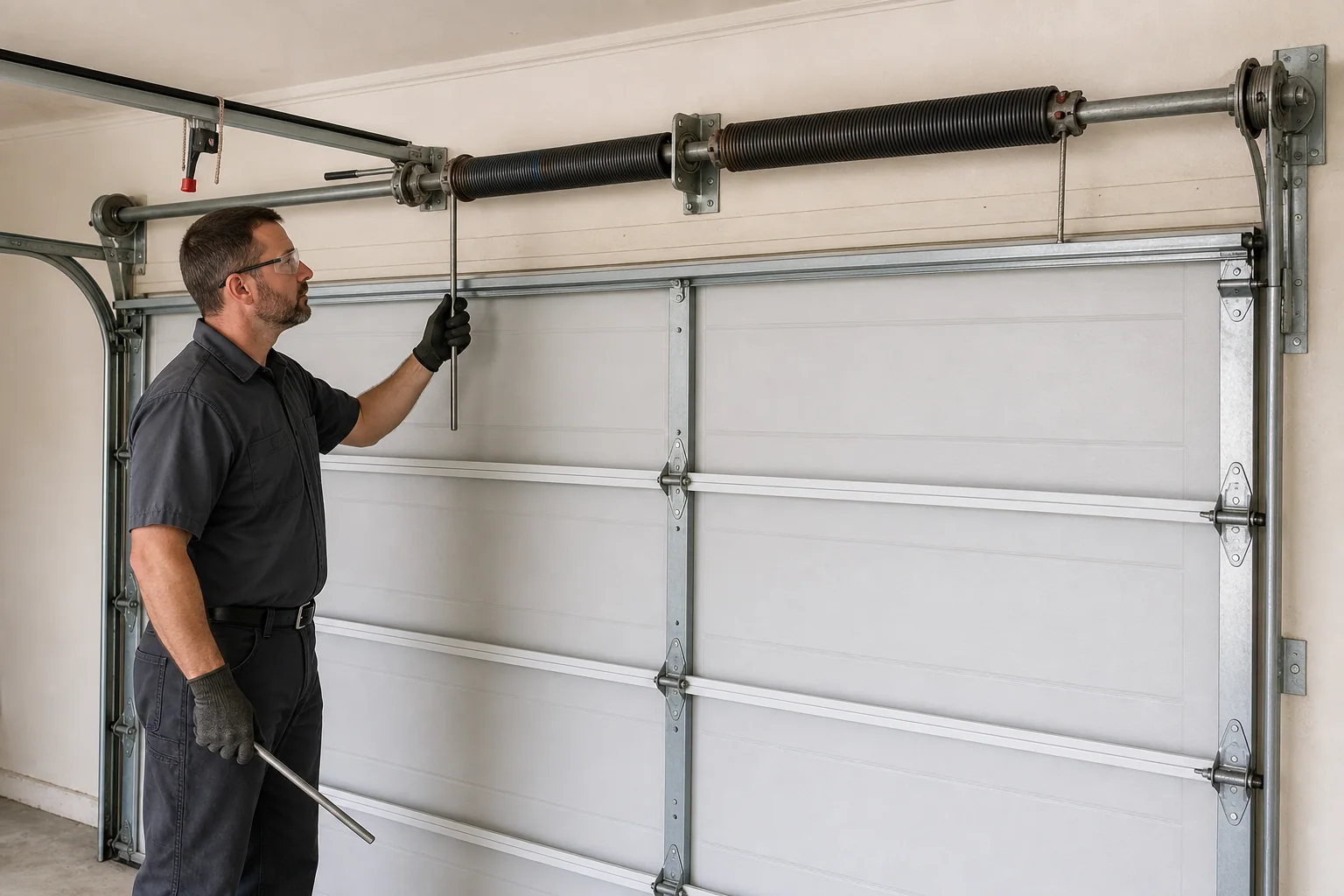
Springs and balance
If your door suddenly weighs a couple hundred pounds, a spring has almost certainly let go. Leave it down, keep everyone clear, and let someone with the right winding bars deal with it.
See what's included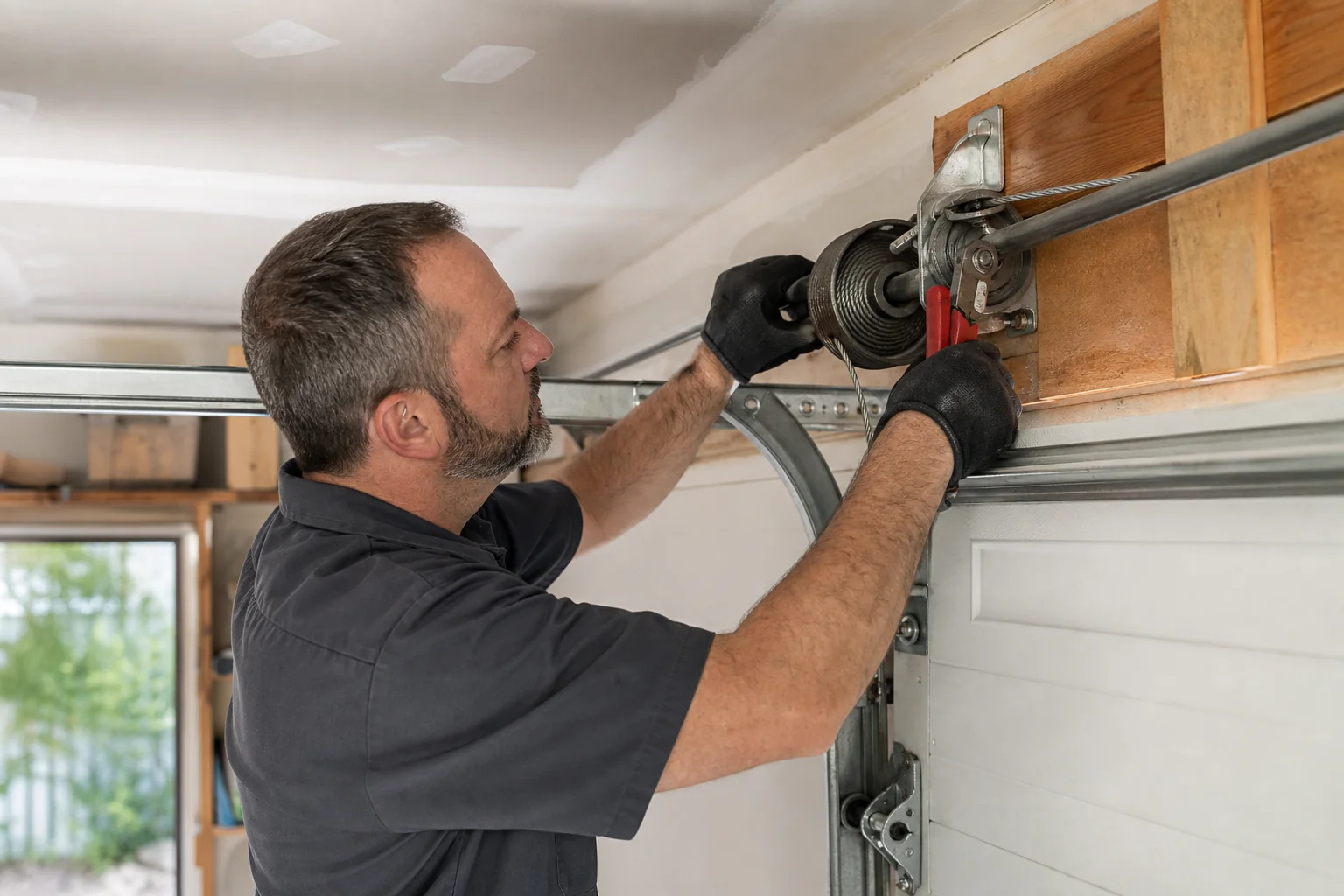
Cables and drums
One corner sitting lower, or a cable hanging off its drum, means the lift system is out of balance. It wants looking at before the next cycle, not after.
See what's included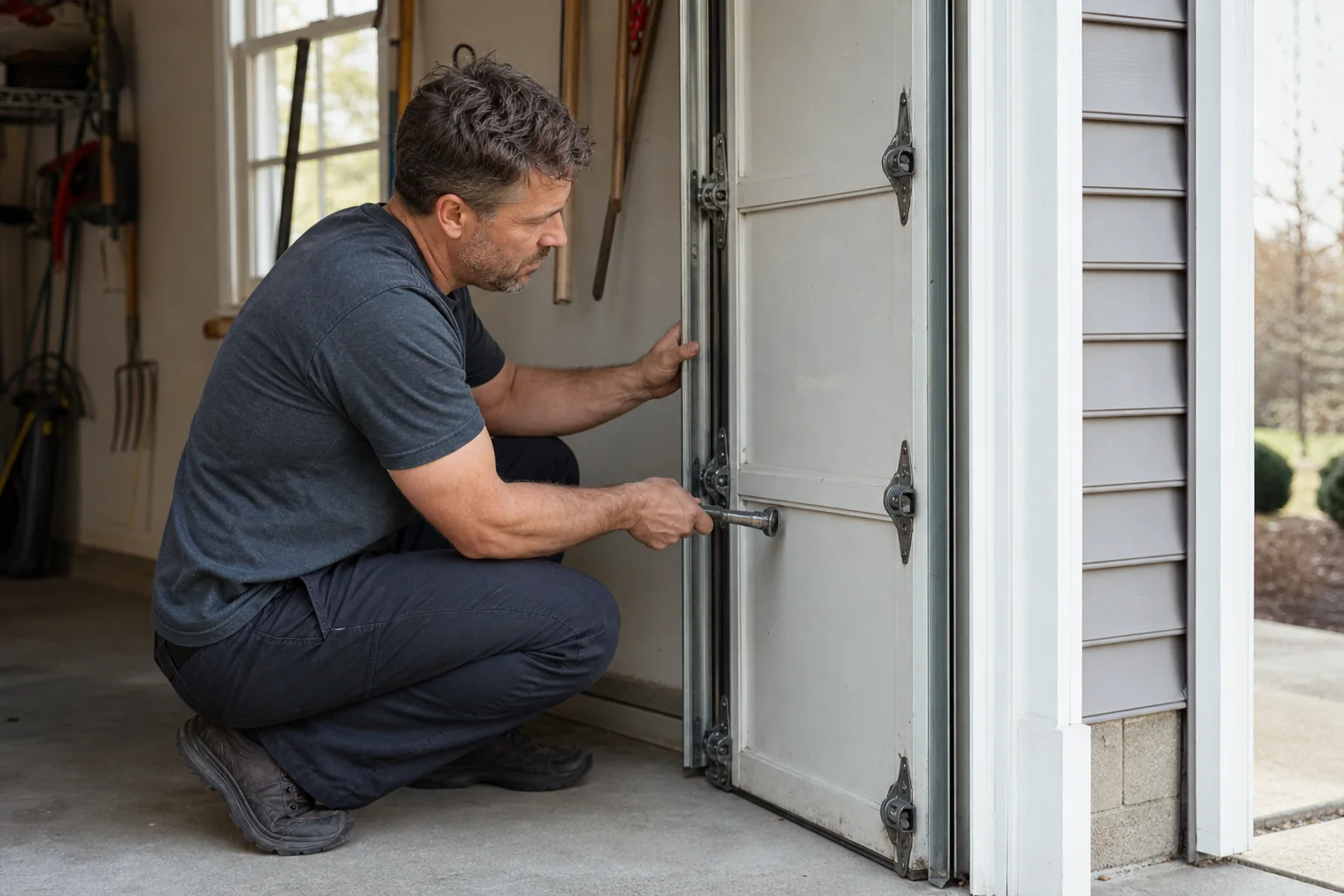
Tracks, rollers, hardware
Grinding in the same spot, a door that shakes the whole wall, a roller creeping out of its track — all cheap to sort now, all expensive once the door comes off.
See what's included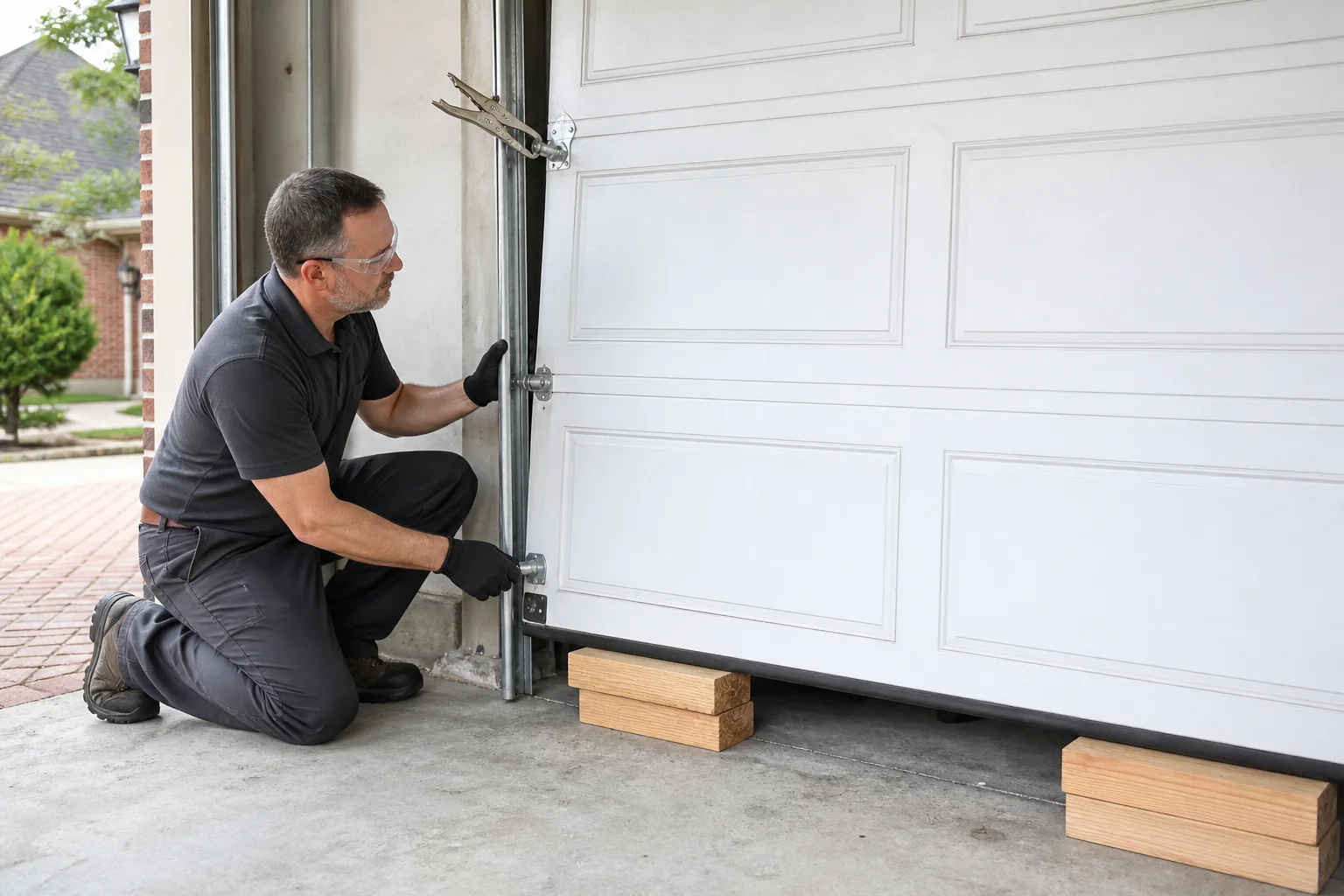
Off-track and stuck
Every extra cycle bends another panel and drags more cable out of line. Leave it where it is, keep the opening clear, and get it stabilized properly.
See what's included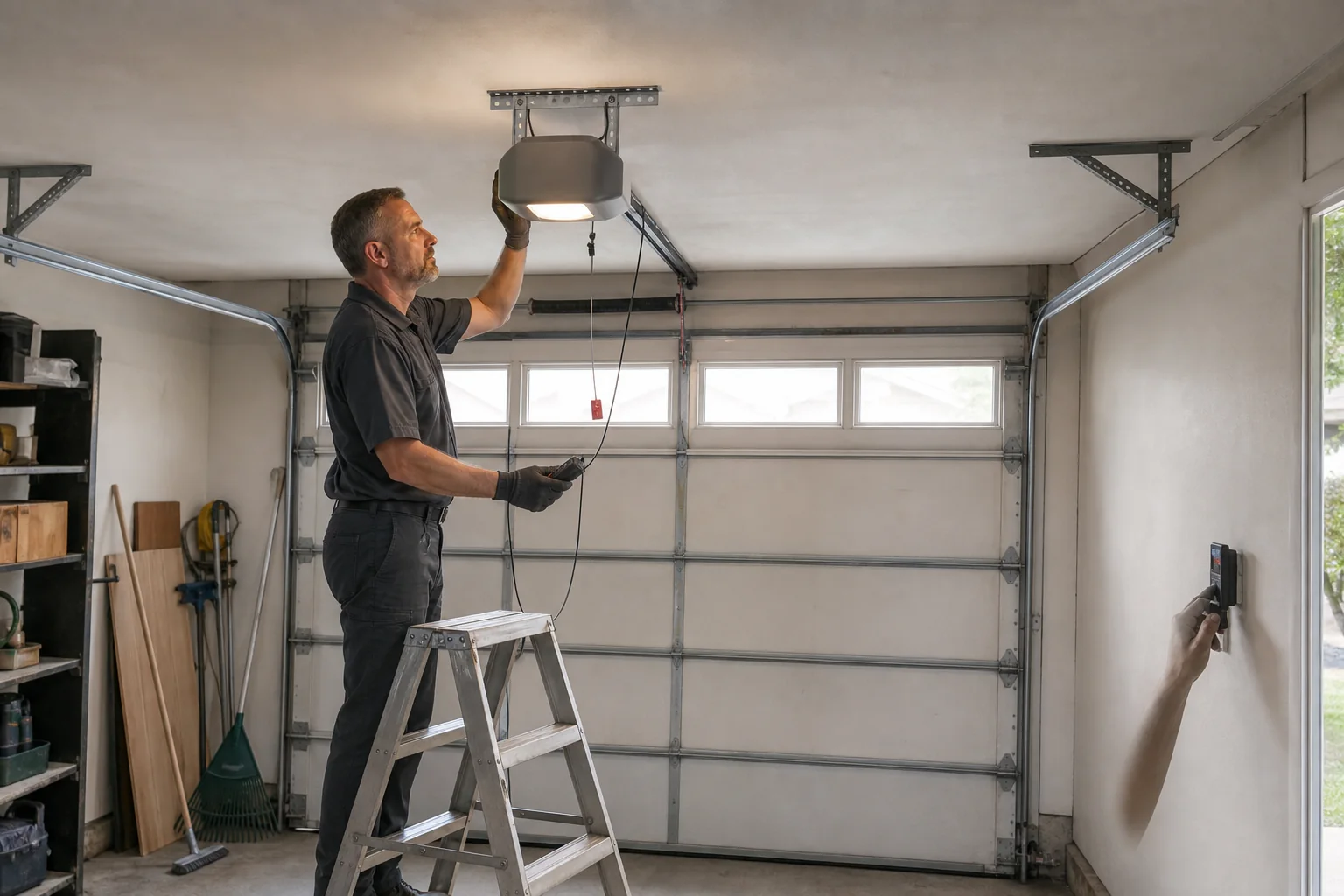
Openers
Motors take the blame for dead springs constantly. Worth knowing which one you've got before you buy an opener you didn't need.
See what's includedHartford guide
Every winter the street gets treated and the car brings it home. The spray and the slush land at the foot of the door, and the parts that suffer are the ones nobody looks at: bottom brackets, the cable ends anchored into them, the rollers, and the track feet sitting in the wet.
That's why a Hartford door often fails at a bottom corner rather than in the middle. If yours is a house where the car parks inside all winter, mention it, and mention any rust you can see. A corroded bottom bracket is not a part to test by pulling on it, because the cable is under load right there.
A lot of Hartford is two- and three-family housing, and around Barry Square and Parkville a single garage or a short row behind the building often serves more than one household. The door gets used far more than a single-family door does, and it wears accordingly.
It also raises a question we'd rather settle first: who authorizes the repair and pays for it. Owner, tenant or property manager, tell us which you are and who signs off. Nothing slows a job down like a technician standing at a door that nobody present can commit to.
Detached garages at the back of the lot are the norm in the West End, Blue Hills and Behind the Rocks, reached by a drive not much wider than a car. Add banked snow along both sides and the working space around the door disappears entirely.
A technician needs room to stand square to the opening and to swing a section. If your drive is tight, or the snow hasn't been cleared back to the garage, say so before the visit is booked. It's a fixable problem when it's known and a wasted trip when it isn't.
Cross streets, whether the garage is attached or behind the house, single or double, and what the door did: where it stopped, the noise, whether a car is shut in. You don't need to name the part. An accurate account of the symptom is worth more than a guess at the cause.
Photos from where you're standing help. Don't climb for them. Anything in before 5 p.m. on a weekday gets a human reply the same business day, and the technician confirms the scope and the price with you before any work begins. There's no charge to ask.
Most common around Hartford
The door stays open, stops, or will not begin closing.
What to do about itA gap appears in the spring above the door or a loud bang precedes a heavy door.
What to do about itSensor lights blink or the door will not close from a remote.
What to do about itThe opener is silent, hums, or runs without moving the door.
What to do about itThe customer wants scope, parts, labor, fees, and alternatives in writing.
What to do about itHartford questions
Check the bottom edge first. A door iced to the slab won't move, and the opener will keep pulling against it until something breaks. Let the ice release, or free the seal by hand from a standing position if you can do that safely. If instead the door feels loose and very heavy, stop there and tell us, because that's a different failure.
Something at floor level is telling it to stop: a ridge of ice, a strip of packed snow, or a down-limit set slightly too low so the opener reads the contact as an obstruction. Clear the threshold and try again. Tell us whether the reversal happens at exactly the same spot each time.
That's a spring or a cable no longer supporting the weight, and it's genuinely dangerous. Don't prop it, don't stand under it, and don't drive a car through the opening. Get everyone clear, leave the door closed if it's closed, and tell us what you saw and heard.
Almost never. A dark eye usually means a knocked bracket, a loose wire at the terminal, or a lens covered in road grime, and those are small repairs. Tell us which side is dark and whether anything bumped the track. Let a technician confirm it rather than replacing an opener on a guess.
Start with power. Check the outlet the opener is plugged into and the breaker for the garage circuit, since these often share one with outdoor outlets. If power is there and the unit is still dead, the board or the transformer may have gone. Tell us what you find and whether the release cord has been pulled.
A technician. We're not sending our own people, because we don't have any. What we do is get your problem to someone who covers your address, and they set out the scope and the price with you before they start.
Hartford, CT
The symptom, who can approve the work, and how the drive runs in February. That's enough to scope and price it before anyone starts.