

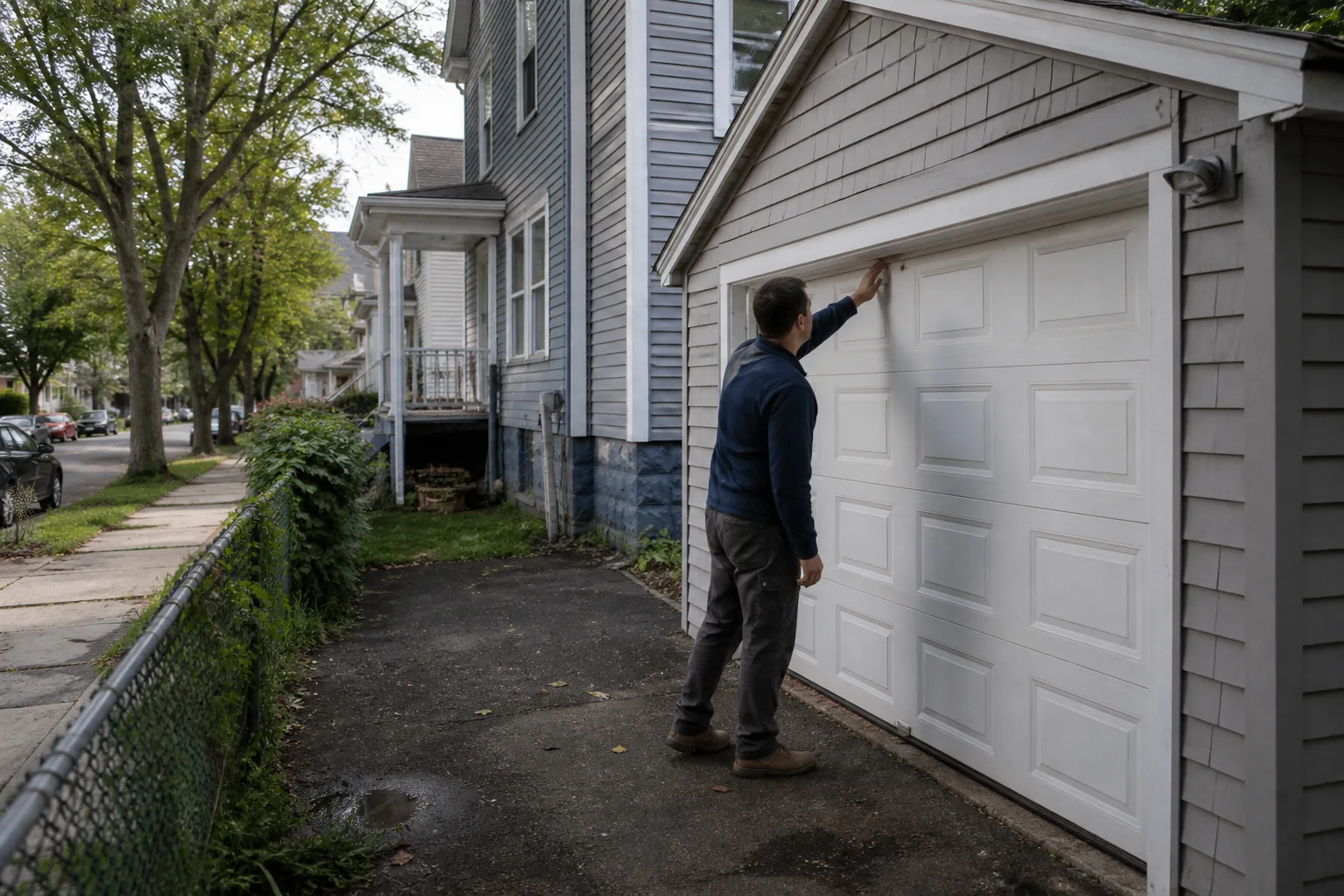
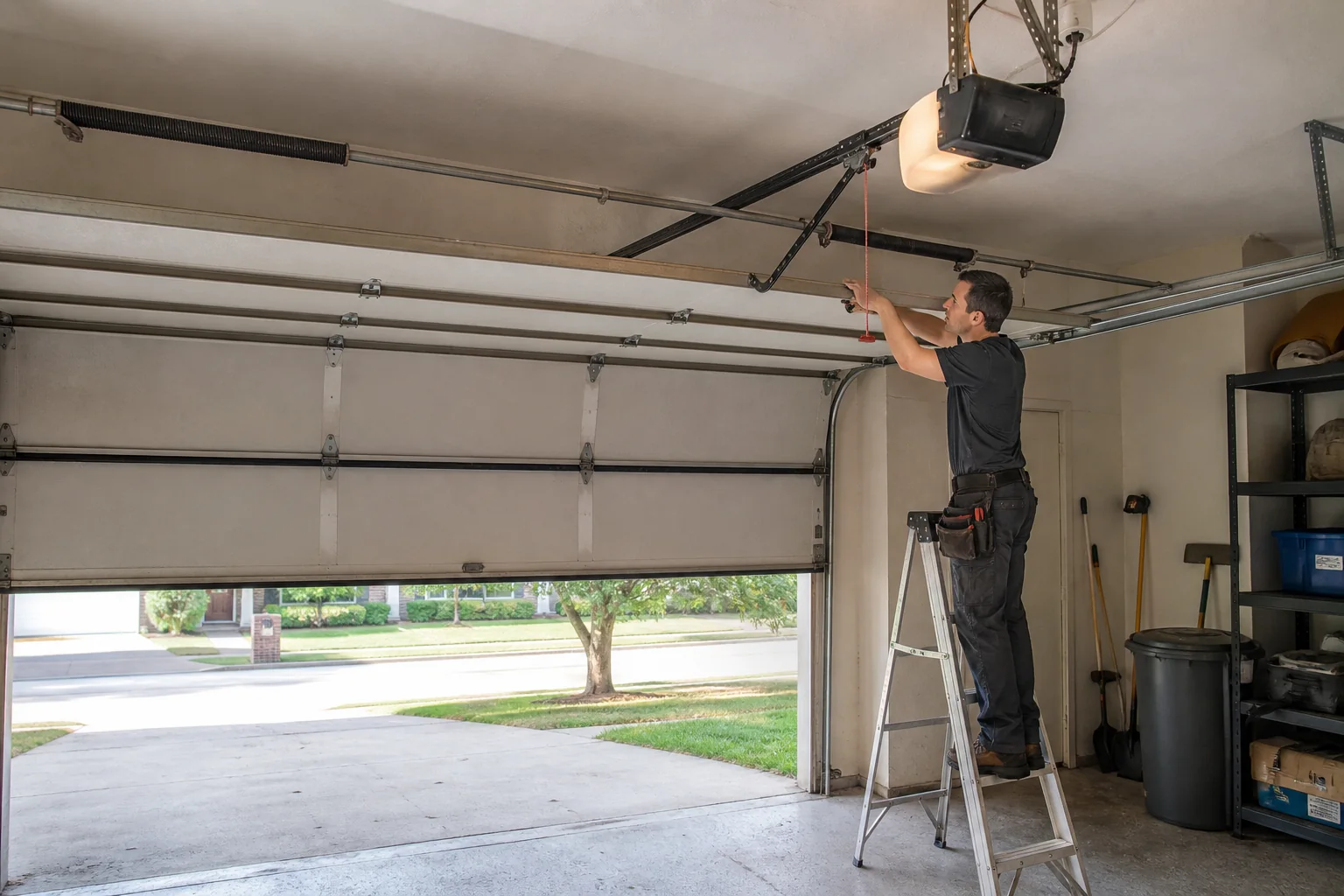
General repair
Garage Door Repair
Tell us what the door is doing and we'll get it in front of someone who can fix it — with the price agreed before the work starts.
See what's includedGarage door repair · New Haven, CT
Damp air and old openings are what New Haven doors have to fight. Tell us what yours is doing and see the fault and the price before work begins.
Morris Cove, City Point, East Rock, and the streets either side of them.
Springs, cables, openers, sensors, tracks, panels, seals, and full replacements.
You hear what failed and what it costs first. Saying no at that point costs you nothing.
Ask before 5 p.m. on a weekday and you hear back that business day.
Why us for this door
Wood takes on water, and a door that gains weight through a damp summer is no longer balanced against the springs that were set for it. The opener takes up the difference, works harder than it was ever meant to, and eventually something in the drive gives. Around Wooster Square and East Rock this is the standard late-summer story.
Balance is measurable in a couple of minutes, and it's worth measuring before anyone sells you a motor. Say what the door is made of, whether it feels heavier by hand, and where you are. The fault and the number are put to you before work starts.
Get my door fixedWhere we work
Morris Cove and City Point sit in the salt air; Westville and East Rock hold older wood doors and garages under the house. Say which is yours.
Plenty of the work we take isn't in New Haven proper. These are the towns around it and what tends to be different about a door there.
Don't see your street or your town? These are the places where the housing changes enough to change the job — not the edge of where we go, and not a promise about your exact address either. We take work across New Haven and the wider Connecticut area, and the address you send is what actually gets checked.Check my address
Repairs in New Haven
General repair
Tell us what the door is doing and we'll get it in front of someone who can fix it — with the price agreed before the work starts.
See what's included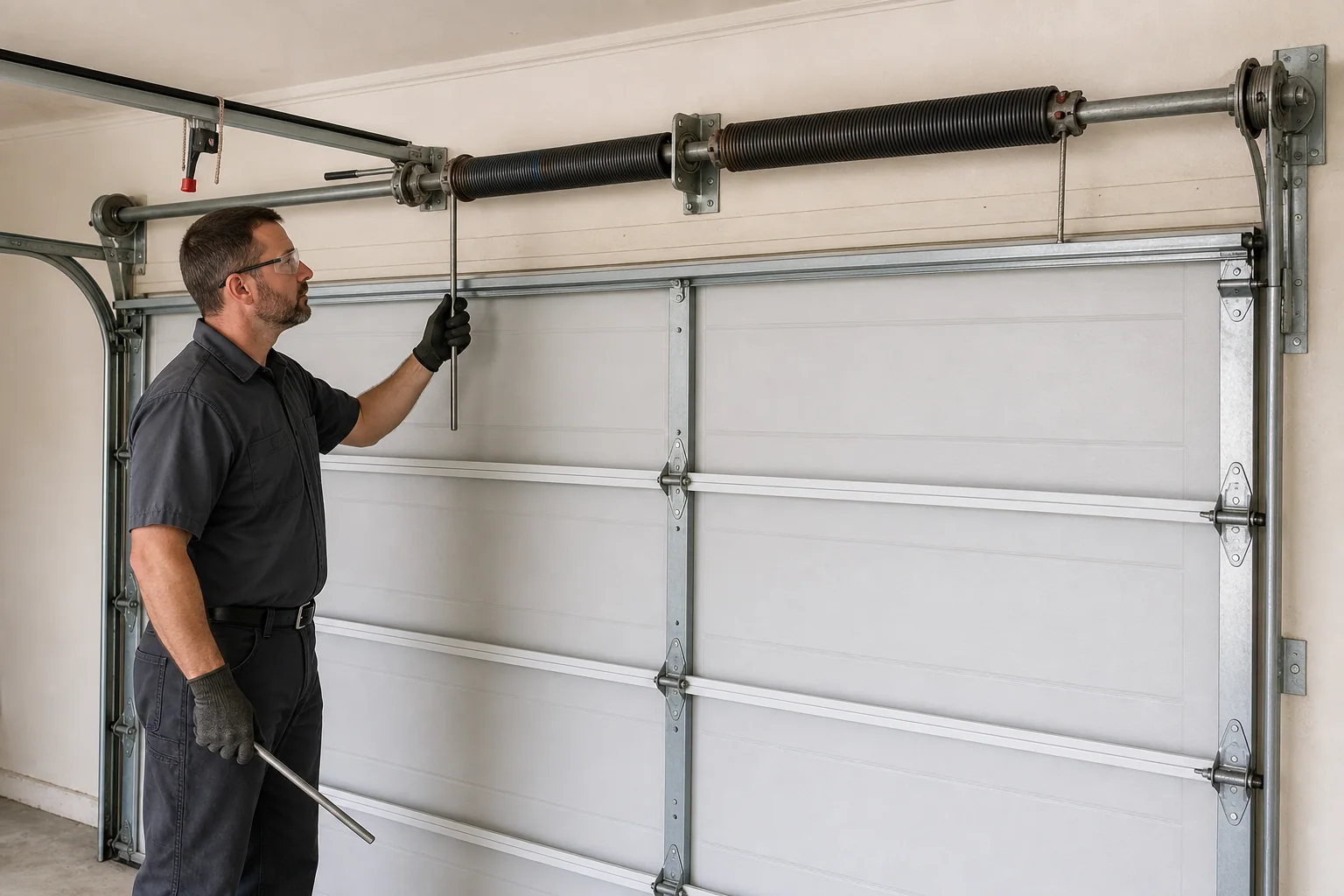
Springs and balance
If your door suddenly weighs a couple hundred pounds, a spring has almost certainly let go. Leave it down, keep everyone clear, and let someone with the right winding bars deal with it.
See what's included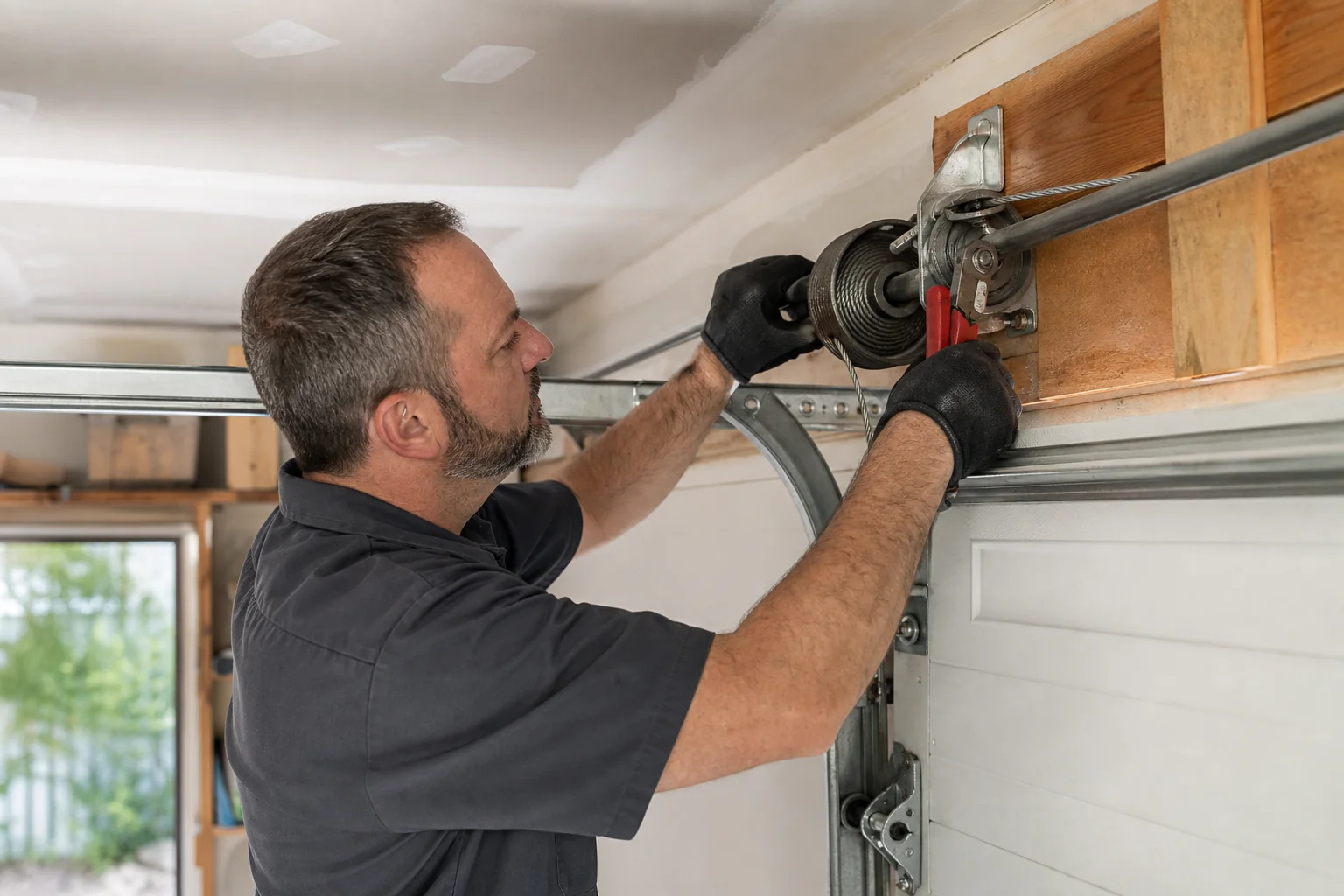
Cables and drums
One corner sitting lower, or a cable hanging off its drum, means the lift system is out of balance. It wants looking at before the next cycle, not after.
See what's included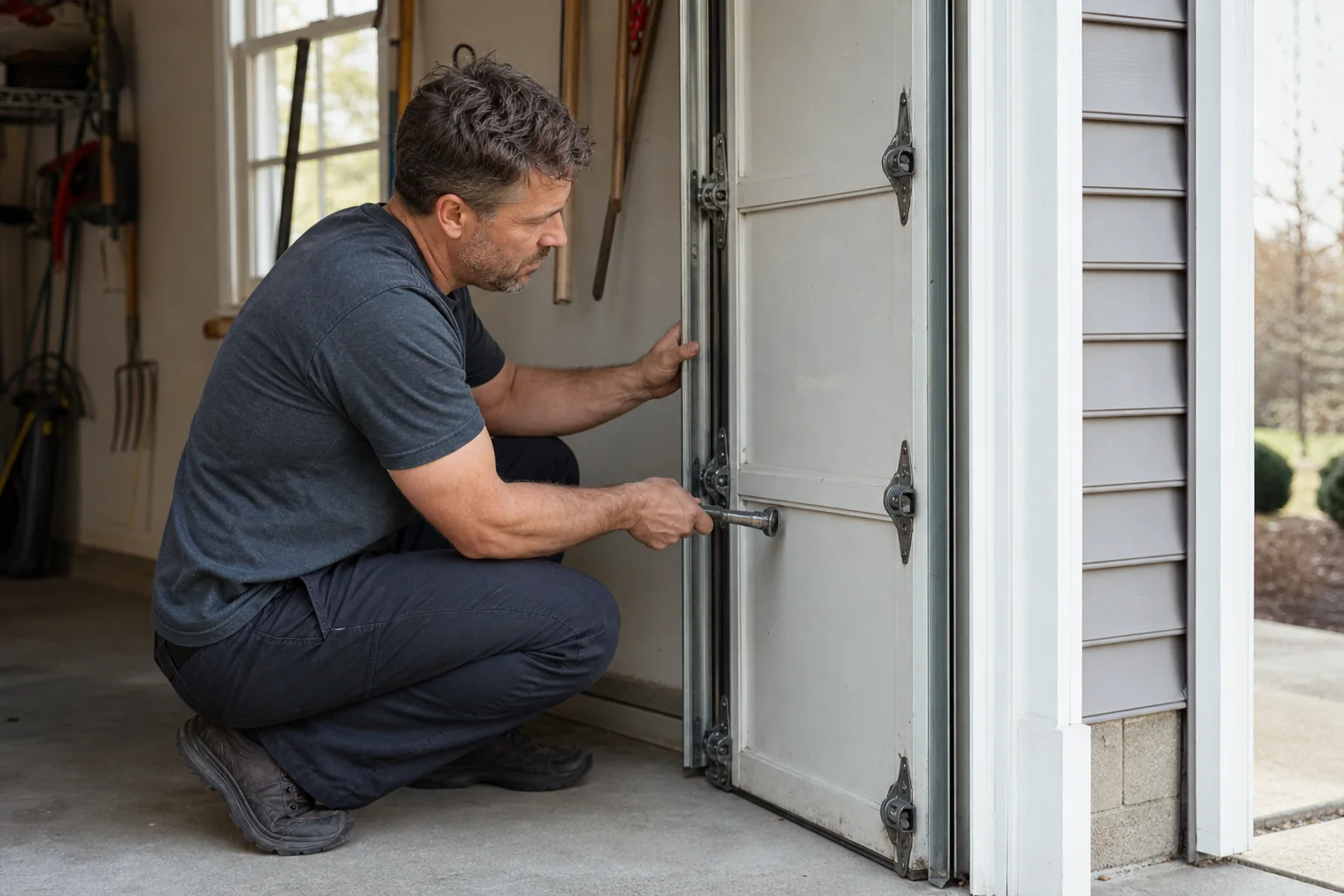
Tracks, rollers, hardware
Grinding in the same spot, a door that shakes the whole wall, a roller creeping out of its track — all cheap to sort now, all expensive once the door comes off.
See what's included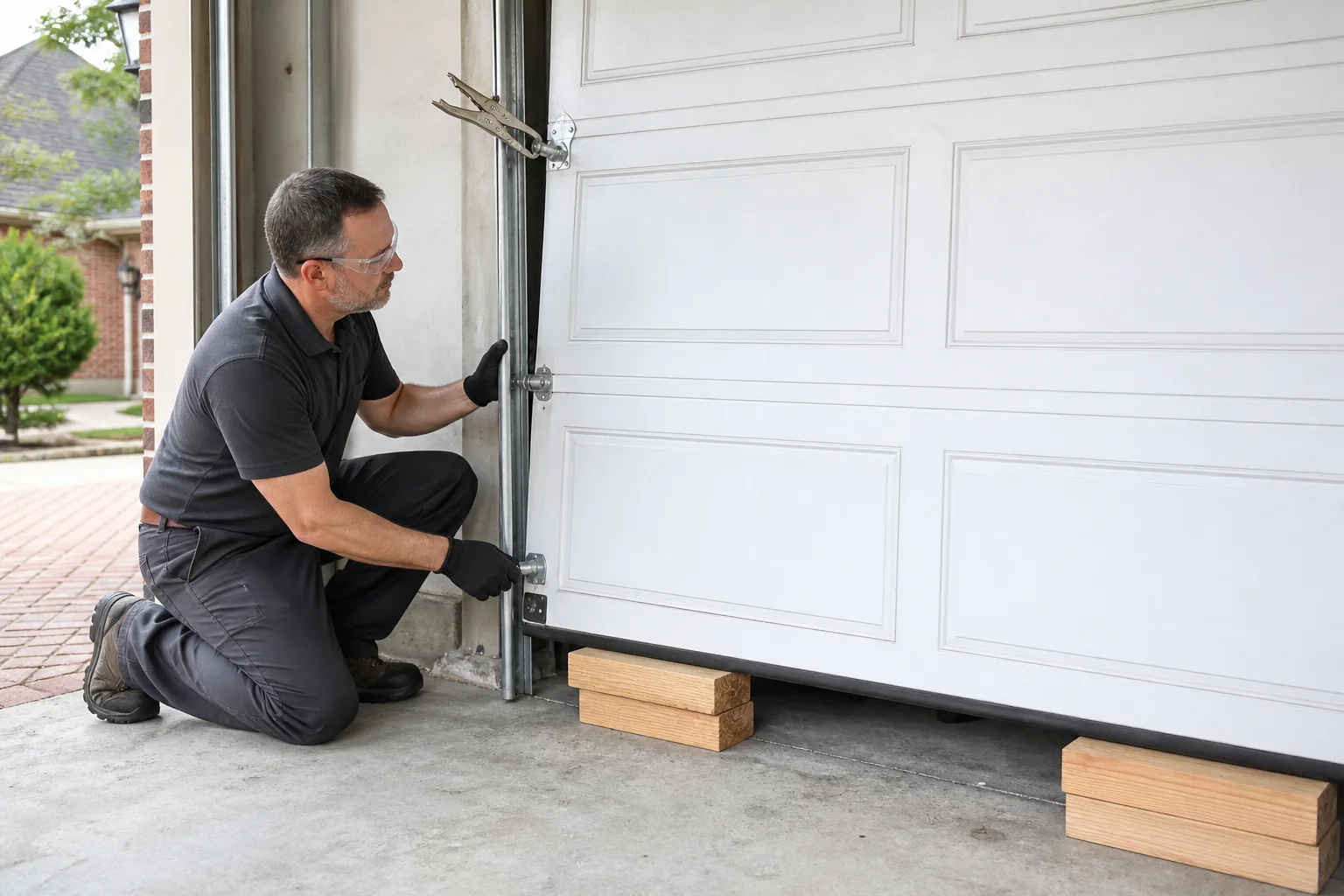
Off-track and stuck
Every extra cycle bends another panel and drags more cable out of line. Leave it where it is, keep the opening clear, and get it stabilized properly.
See what's included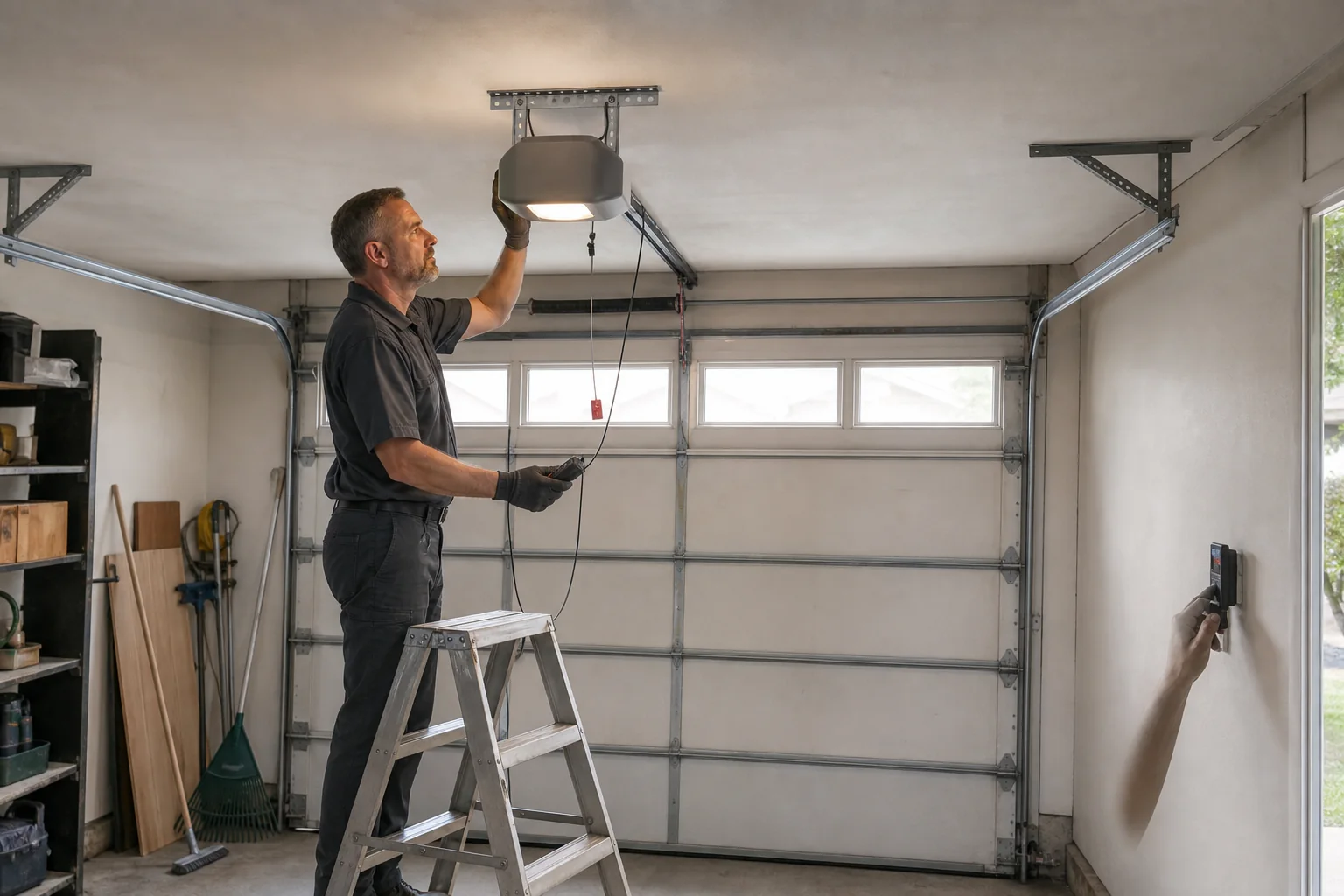
Openers
Motors take the blame for dead springs constantly. Worth knowing which one you've got before you buy an opener you didn't need.
See what's includedNew Haven guide
Salt in the air does quiet, patient damage, and it isn't the panels that pay for it. Down in Morris Cove and City Point, close to the harbor, the parts that go first are the ones nobody inspects: the lift cables where they wind onto the drum, the bottom brackets, the hinge pins, and the spring itself.
A door can look perfectly sound and still be running on a cable with broken strands inside it. If you're near the water and the door has started making a new noise, treat that as worth a look rather than something to live with. Never pull on a cable to test it.
Plenty of the older houses in Westville and around Wooster Square still have wood doors, and a wood door doesn't weigh the same all year. By August it can be noticeably heavier than it was in March, which puts the springs out of balance and makes the opener work above what it was set for.
The tell is a door that drifts down when you stop it halfway, or an opener that labors only in summer. Try lifting it by hand with the opener disconnected, if you can do that safely, and tell us whether it stays put where you leave it.
On the slopes in East Rock and up in Fair Haven Heights the garage is often tucked beneath the living space, with the drive dropping down to meet it. Headroom above the opening is short, the ceiling is somebody's floor, and standard track and a standard opener may simply not fit.
That's a low-headroom conversion rather than a straight swap, and the parts are different. Measure from the top of the opening to the ceiling before anyone quotes you, and say whether there's a room directly above. It changes the hardware and the noise you'll be living with.
Cross streets, whether the garage sits under the house or behind it, single or double, and what happened: where the door stopped, the sound it made, whether a car is shut in. Guessing at the component is the one thing that isn't useful, since that's what leads to the wrong part being ordered.
Photos from ground level are welcome and a ladder is not required. Anything in before 5 p.m. on a weekday gets a human reply the same business day, and the technician confirms the scope and the price with you before starting. Asking is free.
Most common around New Haven
The door stays open, stops, or will not begin closing.
What to do about itA gap appears in the spring above the door or a loud bang precedes a heavy door.
What to do about itSensor lights blink or the door will not close from a remote.
What to do about itThe opener is silent, hums, or runs without moving the door.
What to do about itThe customer wants scope, parts, labor, fees, and alternatives in writing.
What to do about itNew Haven questions
The door is heavier than the opener can handle, which normally means a spring or a cable has failed. Don't keep trying, because each attempt loads parts that are already carrying too much. Look up at the spring above the door for a visible gap, and tell us what you find and whether a car is inside.
That's the safety sensors doing their job. Usually it's a lens fogged with damp, a bracket knocked out of line, or a wire pulled loose at the terminal. Wipe both eyes, look at the indicator lights near the floor, and tell us whether they're steady, flashing or dark. Don't bypass them.
It contributes. Corrosion pits the wire, and a pitted spring fatigues faster than a clean one, which is why living near the shoreline matters. The spring was going to reach the end of its cycles anyway, and rust just brings that day forward. Leave the door where it is and tell us what happened.
Then it probably isn't the sensors. An opener also reverses when it senses resistance, so a binding roller, a swollen door, or a down-force setting that no longer matches the door will do it. Note the height it reverses at and whether it's the same every time, because that tells a technician a lot.
Outdoor keypads take the weather badly here, and damp getting into the housing or the battery contacts is the usual reason. A lost code after a power cut does it too. Tell us whether the keypad lights up at all when you press a key, and whether the handheld remotes still work.
No. Using the site is free and no payment goes through it. When a technician comes out, they look at the door, tell you what failed, and put the scope and the price to you before they start work. You can say no at that point.
New Haven, CT
Tell us the material, whether it has got heavier, and your cross streets. Scope and price are agreed with you before any work.