

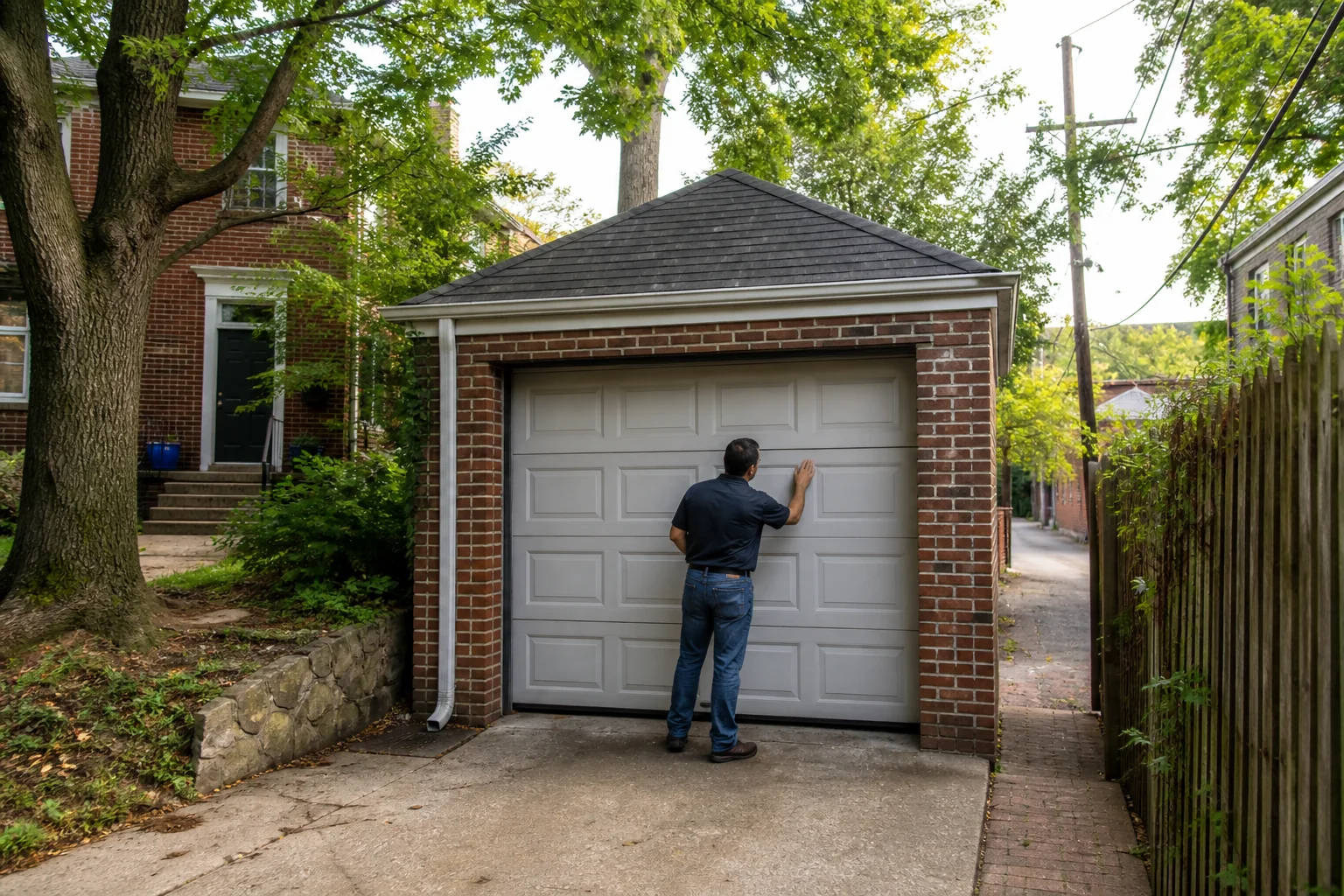
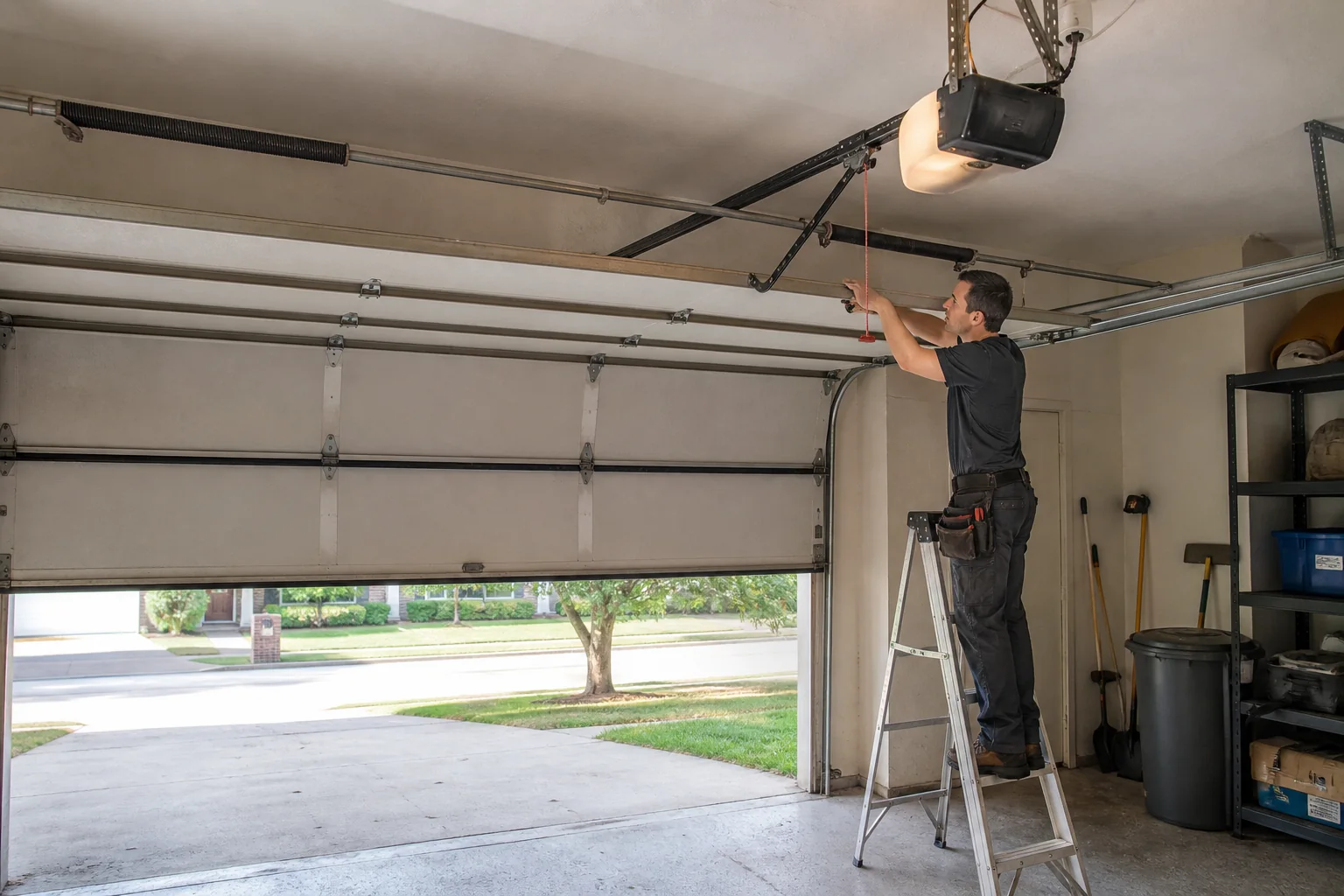
General repair
Garage Door Repair
Tell us what the door is doing and we'll get it in front of someone who can fix it — with the price agreed before the work starts.
See what's includedGarage door repair · Washington, DC
In Washington the hard part is often reaching the door. Say what yours is doing and where a truck can stop, and see the price before work starts.
Capitol Hill, Brookland, Petworth, and the streets either side of them.
Springs, cables, openers, sensors, tracks, panels, seals, and full replacements.
You hear what failed and what it costs first. Saying no at that point costs you nothing.
Ask before 5 p.m. on a weekday and you hear back that business day.
Why us for this door
A Capitol Hill or Petworth garage sits behind the house off an alley that may be one car wide, permit-only, or blocked by whatever is parked in it that morning. That doesn't change the repair, but it changes the visit, and a number worked out without knowing it is one that moves once someone is standing on your block.
So the parking question is asked here before the parts question. Tell us where a vehicle can legally stop, what the door did, and how old the opening is. What the work involves and what it costs are settled with you before it starts.
Get my door fixedWhere we work
Capitol Hill and Petworth run to alley garages and permit blocks. Takoma and American University Park have driveways. Tell us which you have.
Plenty of the work we take isn't in Washington proper. These are the towns around it and what tends to be different about a door there.
Don't see your street or your town? These are the places where the housing changes enough to change the job — not the edge of where we go, and not a promise about your exact address either. We take work across Washington and the wider District of Columbia area, and the address you send is what actually gets checked.Check my address
Repairs in Washington
General repair
Tell us what the door is doing and we'll get it in front of someone who can fix it — with the price agreed before the work starts.
See what's included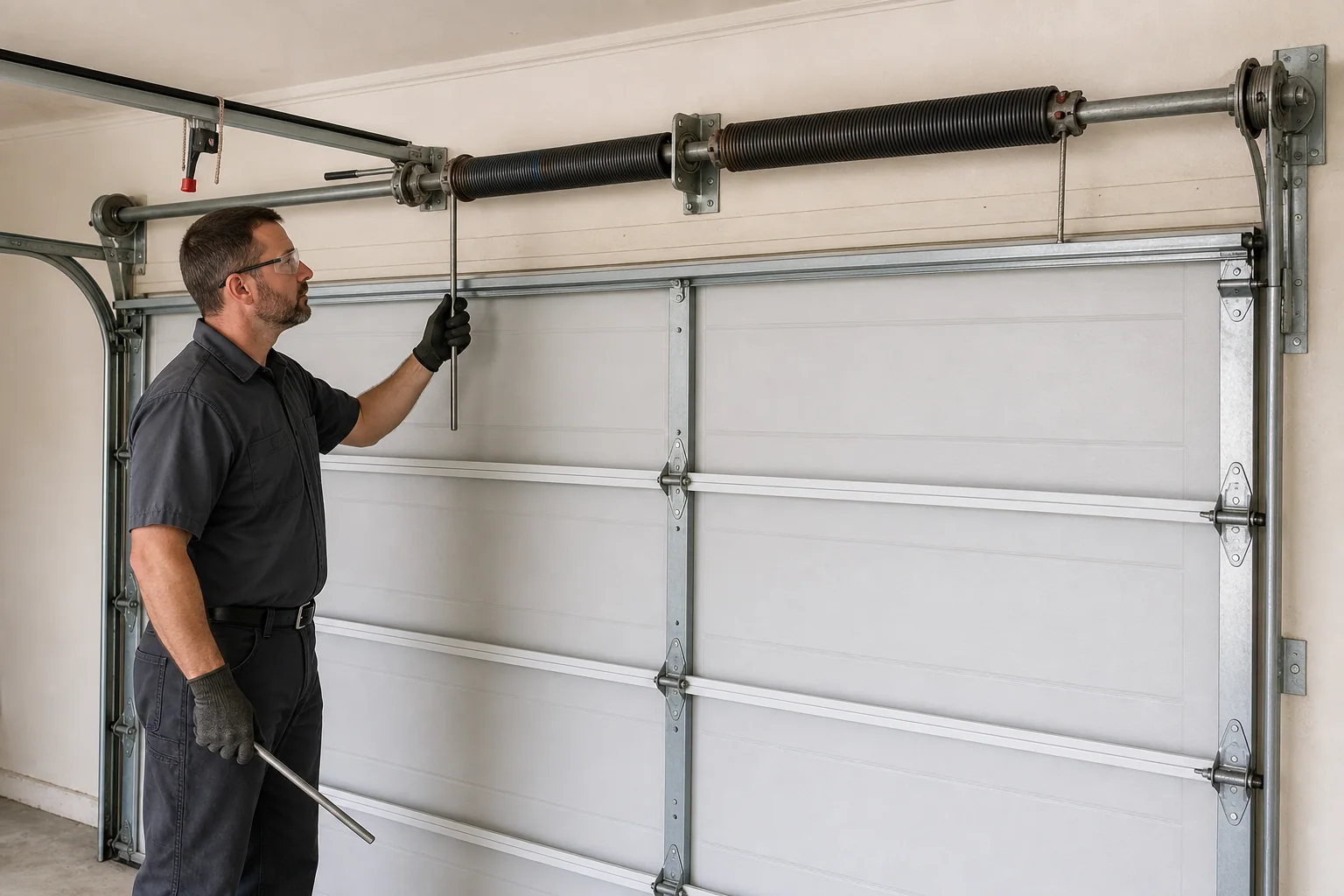
Springs and balance
If your door suddenly weighs a couple hundred pounds, a spring has almost certainly let go. Leave it down, keep everyone clear, and let someone with the right winding bars deal with it.
See what's included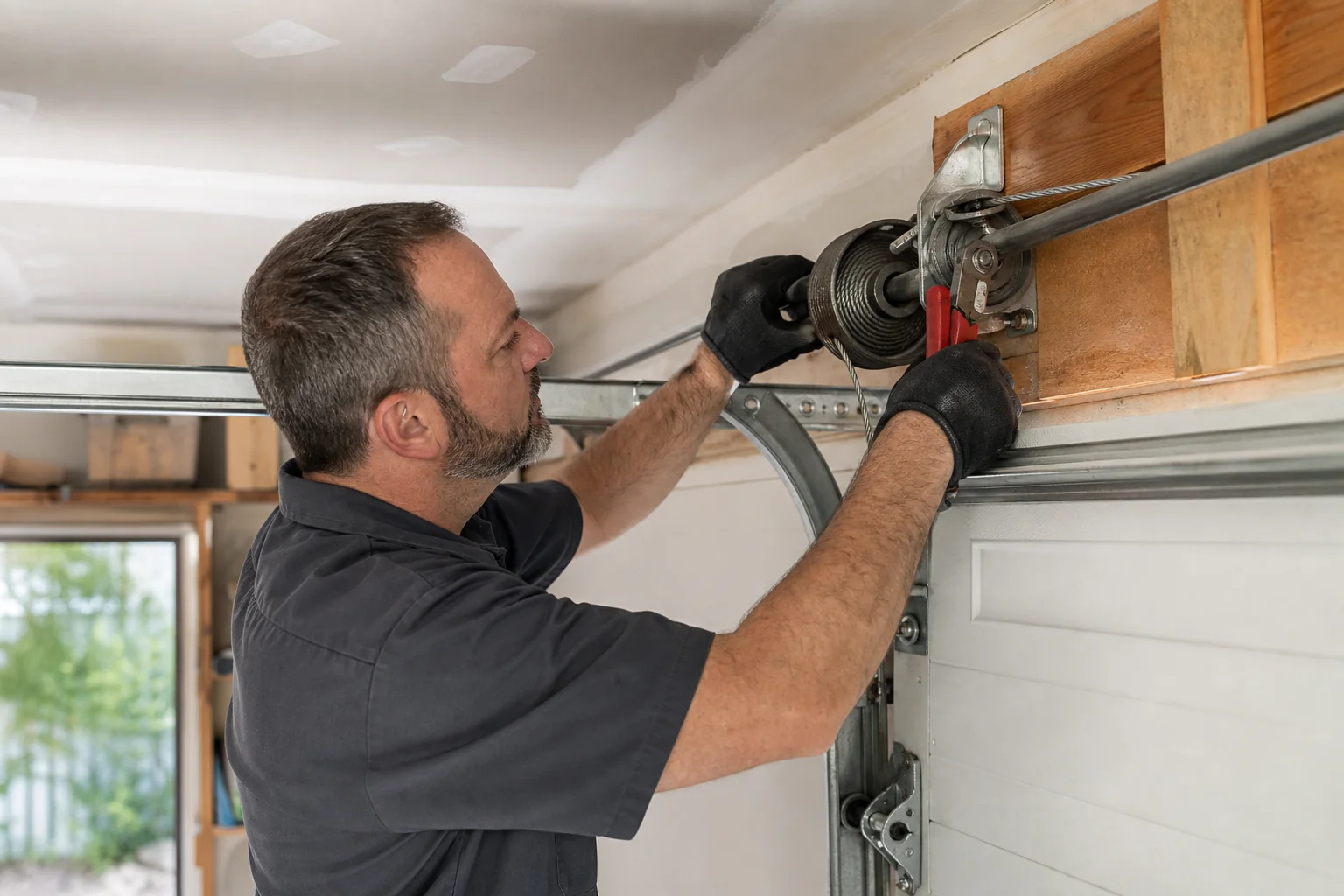
Cables and drums
One corner sitting lower, or a cable hanging off its drum, means the lift system is out of balance. It wants looking at before the next cycle, not after.
See what's included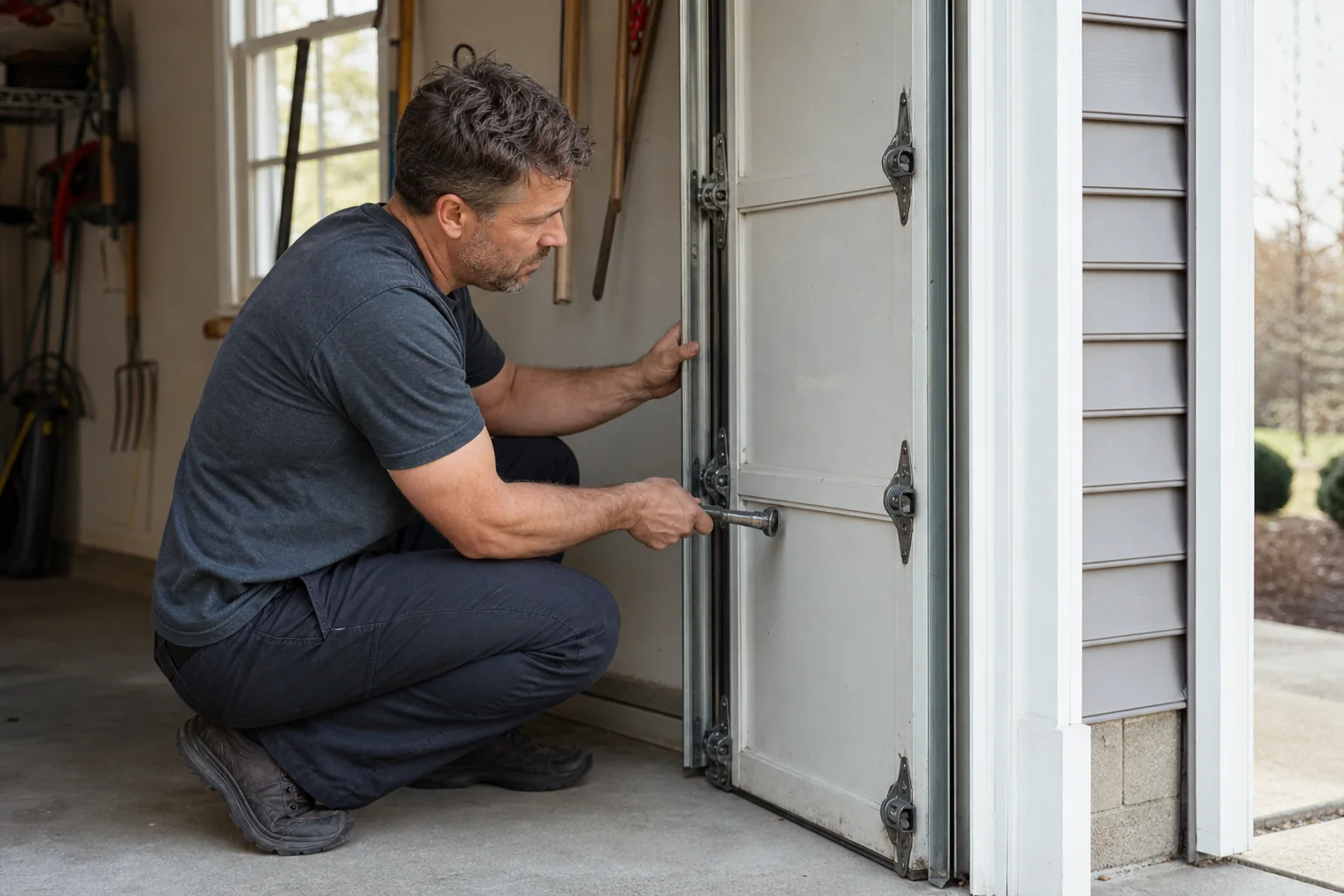
Tracks, rollers, hardware
Grinding in the same spot, a door that shakes the whole wall, a roller creeping out of its track — all cheap to sort now, all expensive once the door comes off.
See what's included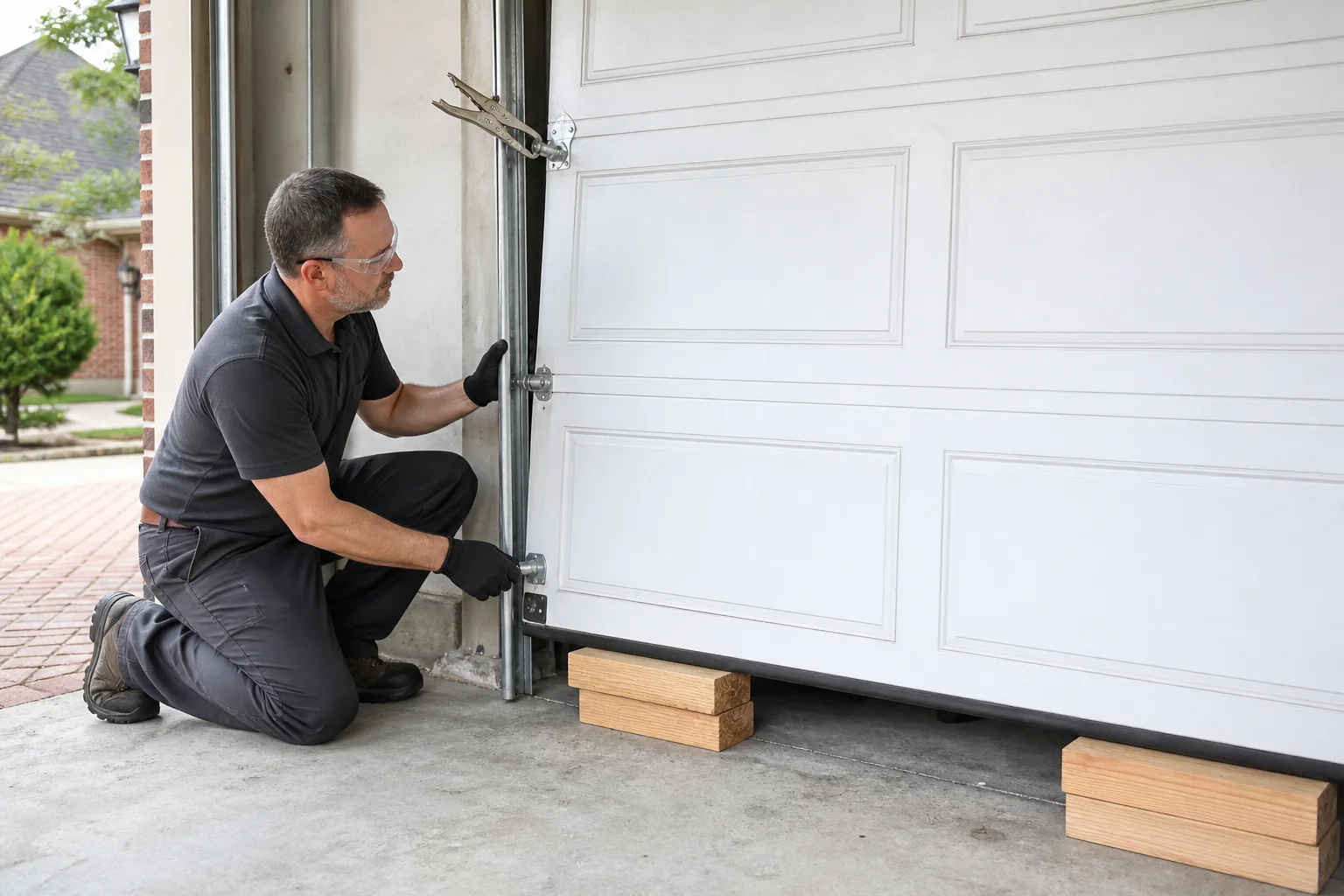
Off-track and stuck
Every extra cycle bends another panel and drags more cable out of line. Leave it where it is, keep the opening clear, and get it stabilized properly.
See what's included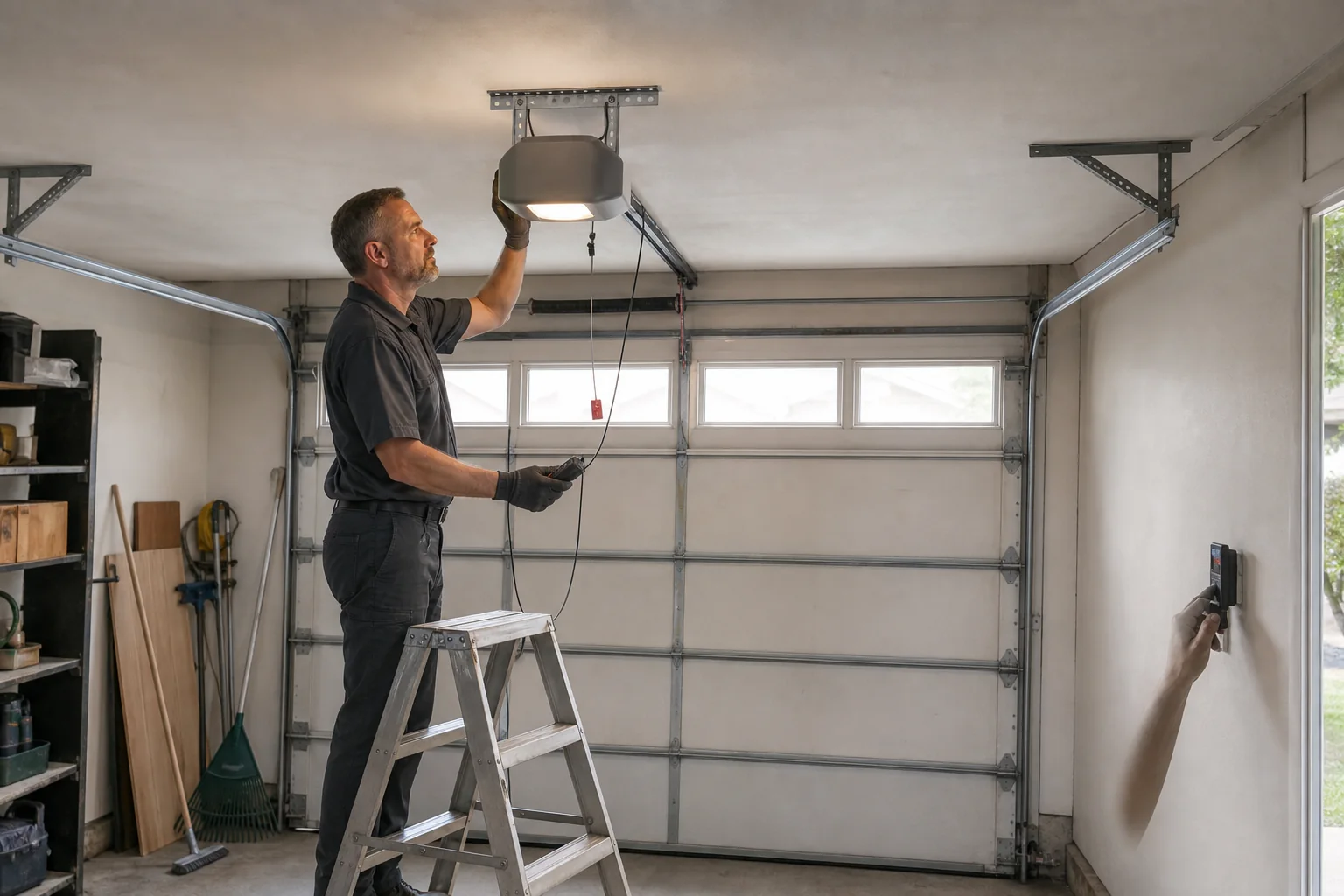
Openers
Motors take the blame for dead springs constantly. Worth knowing which one you've got before you buy an opener you didn't need.
See what's includedWashington guide
This is a real constraint in the District, and it rarely gets mentioned until someone is circling. Much of Capitol Hill and Petworth is permit-only during the day, the streets are narrow and often one-way, and the garage itself is usually reached from the alley behind rather than the street in front.
Say which side your alley entrance is on, whether the alley is clear enough to drive down, and whether there's anywhere a service vehicle can sit without collecting a ticket. None of that changes the repair. All of it changes how long the visit takes and whether it happens at all.
The small garages behind houses in Brookland, Michigan Park and American University Park were built for the cars of their day. Many openings are narrower and lower than anything sold as a standard size now, so a replacement has to be made to fit rather than picked off a rack.
That's worth knowing before you're quoted, because a made-to-size door and a stock door are different money and different lead times. Measure the width and height of the opening if you can reach, and tell us whether the frame is wood and whether it's still sound at the bottom.
Washington gives a door a hard swing to work through. Wooden doors and wooden frames on the older Takoma streets take up moisture through a humid summer and give it back over a dry cold spell, so the same door can bind in August and run freely in January.
An opener set to the door's summer weight will be wrong in winter, and the other way round. If your problem comes and goes with the weather, you aren't imagining it, and it's exactly the detail that stops a technician replacing an opener that was never at fault.
Your block, whether the garage is off the alley or attached, single or double, and what the door did: where it stopped, what you heard, whether a car is shut in behind it. You don't have to work out which part failed. Describing the behavior clearly does more good than a guess.
Photos from the ground are useful, and don't climb for them. Anything in before 5 p.m. on a weekday gets a human reply the same business day, and the technician confirms the scope and the cost with you before starting. There's no charge for the request.
Most common around Washington
The door stays open, stops, or will not begin closing.
What to do about itA gap appears in the spring above the door or a loud bang precedes a heavy door.
What to do about itSensor lights blink or the door will not close from a remote.
What to do about itThe opener is silent, hums, or runs without moving the door.
What to do about itThe customer wants scope, parts, labor, fees, and alternatives in writing.
What to do about itWashington questions
Look for the release cord hanging from the opener rail, which disconnects the door from the motor so you can lift by hand. Only use it if the door is closed and the springs look intact, because with a broken spring the door is far too heavy and can come down. If you're unsure, leave it and tell us.
The sensors near the floor may still think otherwise. A knocked bracket, a spider web across a lens, or an alley light shining into the eye all produce the same result. Check the indicator lights, wipe both lenses, and tell us whether they're steady, blinking or off. Don't tape or bypass them.
No, and this is the one we'd ask you not to attempt. A torsion spring holds enough energy to injure someone badly during winding, and the whole weight of the door is on it. Keep clear of the springs, cables and bottom brackets, leave the door where it is, and tell us what happened.
Usually because something keeps knocking them. Brackets in a garage where bikes, bins or a car door pass close to the wall get bumped constantly, and a fraction of movement is enough. A technician can move or shield the brackets rather than realigning them again. Tell us what's stored along that wall.
It depends on what failed and whether the part is still made. A worn gear or a dead logic board on a discontinued unit often costs more to chase than to replace, while a sound motor with a failed remote receiver is worth keeping. Ask for both options with prices before you decide.
Yes. The technician inspects the door, explains what's wrong, and puts the scope and the price to you before any work begins. You can decline. This site doesn't take payment and there's no fee for asking.
Washington, DC
The symptom, the block, and where a vehicle can stand. You'll hear back from a person, with the scope and the price agreed first.