

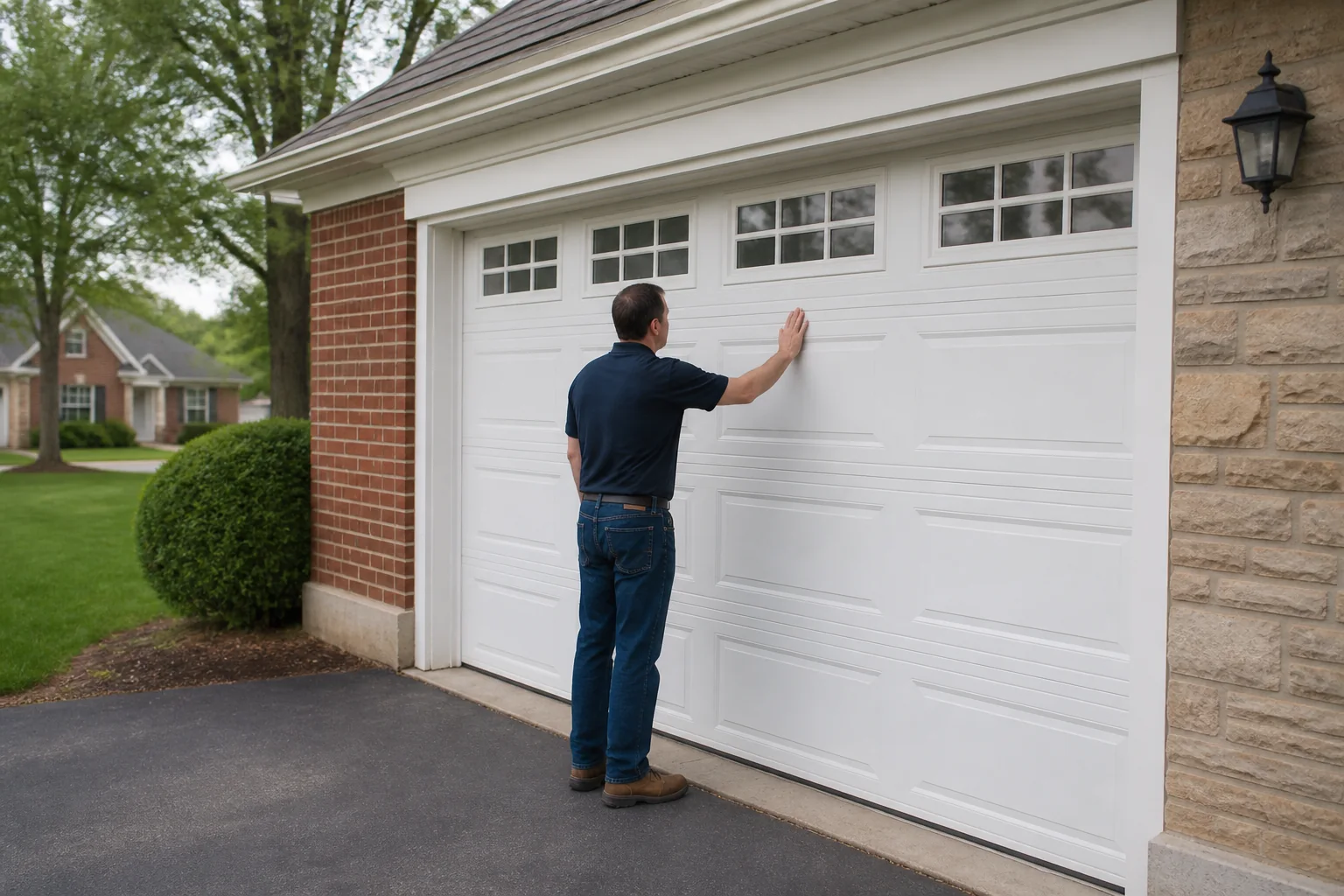
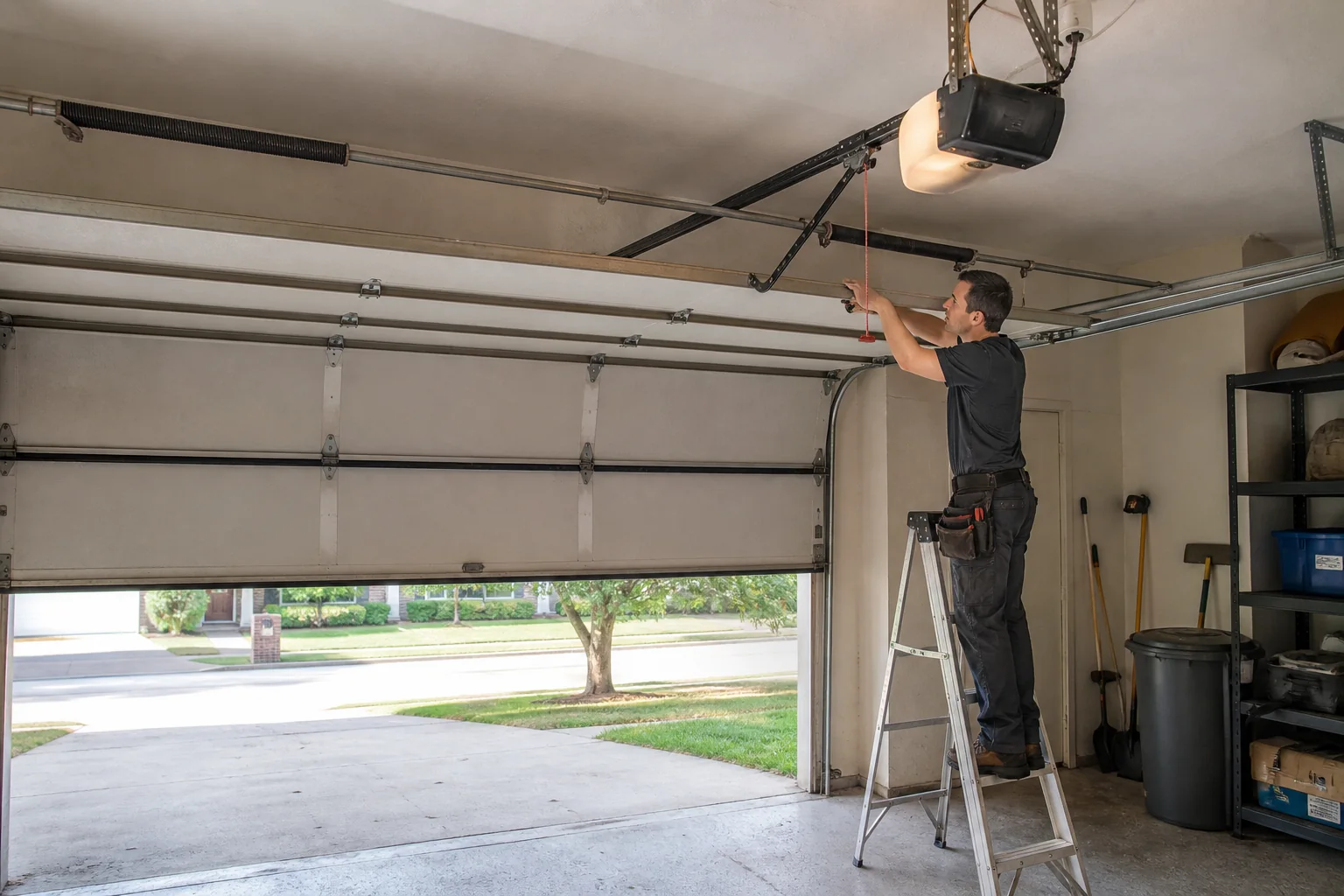
General repair
Garage Door Repair
Tell us what the door is doing and we'll get it in front of someone who can fix it — with the price agreed before the work starts.
See what's includedGarage door repair · Lexington, KY
A Lexington door that drags in March and runs clean in August is telling you something. Say what yours does and see the price first.
Chevy Chase, Ashland Park, Kenwick, and the streets either side of them.
Springs, cables, openers, sensors, tracks, panels, seals, and full replacements.
You hear what failed and what it costs first. Saying no at that point costs you nothing.
Ask before 5 p.m. on a weekday and you hear back that business day.
Why us for this door
A fault that comes and goes with the season is almost never a worn-out part. It's balance, humidity in a wooden door, or a track that moves a fraction as the building expands. A fault that's there every single day, in any weather, is wear. Those two lead to completely different repairs and completely different bills.
So say when it happens, not just what happens. Around Kenwick and Bell Court there's little room around the door to work either, so mention that. What has actually gone wrong and what it costs is agreed with you before any work.
Get my door fixedWhere we work
Kenwick and Bell Court leave almost nothing at the sides; Hamburg and Masterson Station run wide doubles. Say which is yours.
Plenty of the work we take isn't in Lexington proper. These are the towns around it and what tends to be different about a door there.
Don't see your street or your town? These are the places where the housing changes enough to change the job — not the edge of where we go, and not a promise about your exact address either. We take work across Lexington and the wider Kentucky area, and the address you send is what actually gets checked.Check my address
Repairs in Lexington
General repair
Tell us what the door is doing and we'll get it in front of someone who can fix it — with the price agreed before the work starts.
See what's included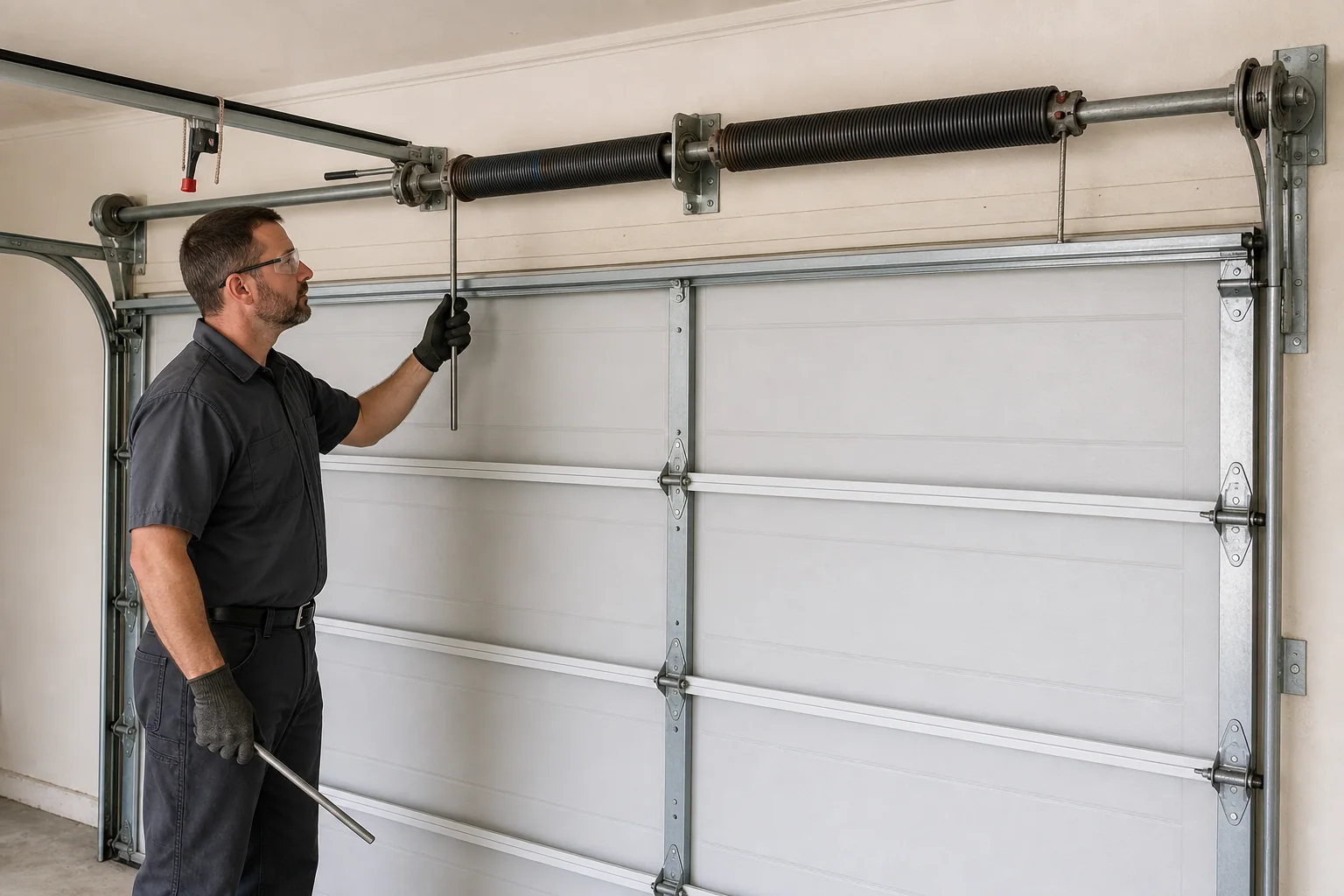
Springs and balance
If your door suddenly weighs a couple hundred pounds, a spring has almost certainly let go. Leave it down, keep everyone clear, and let someone with the right winding bars deal with it.
See what's included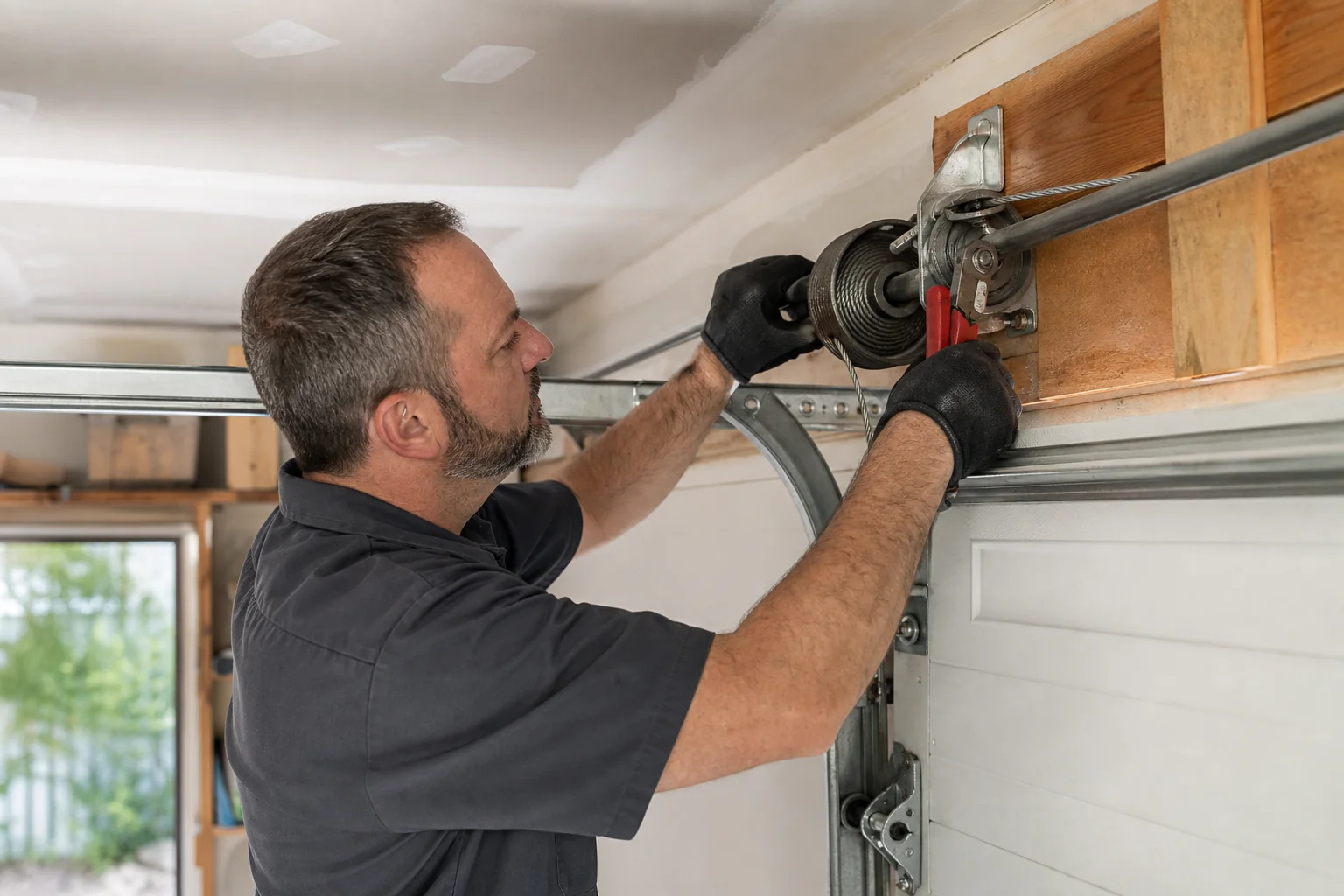
Cables and drums
One corner sitting lower, or a cable hanging off its drum, means the lift system is out of balance. It wants looking at before the next cycle, not after.
See what's included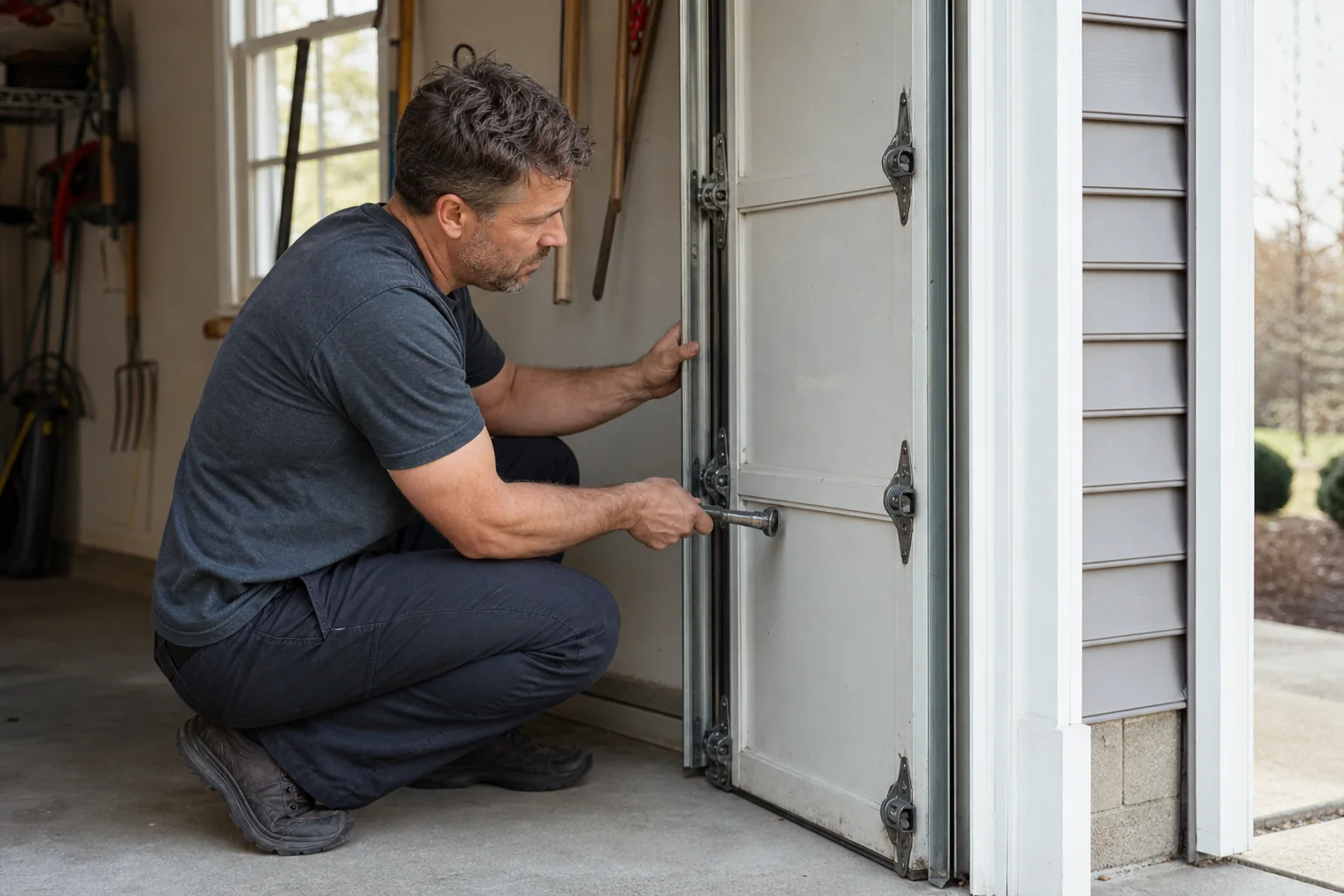
Tracks, rollers, hardware
Grinding in the same spot, a door that shakes the whole wall, a roller creeping out of its track — all cheap to sort now, all expensive once the door comes off.
See what's included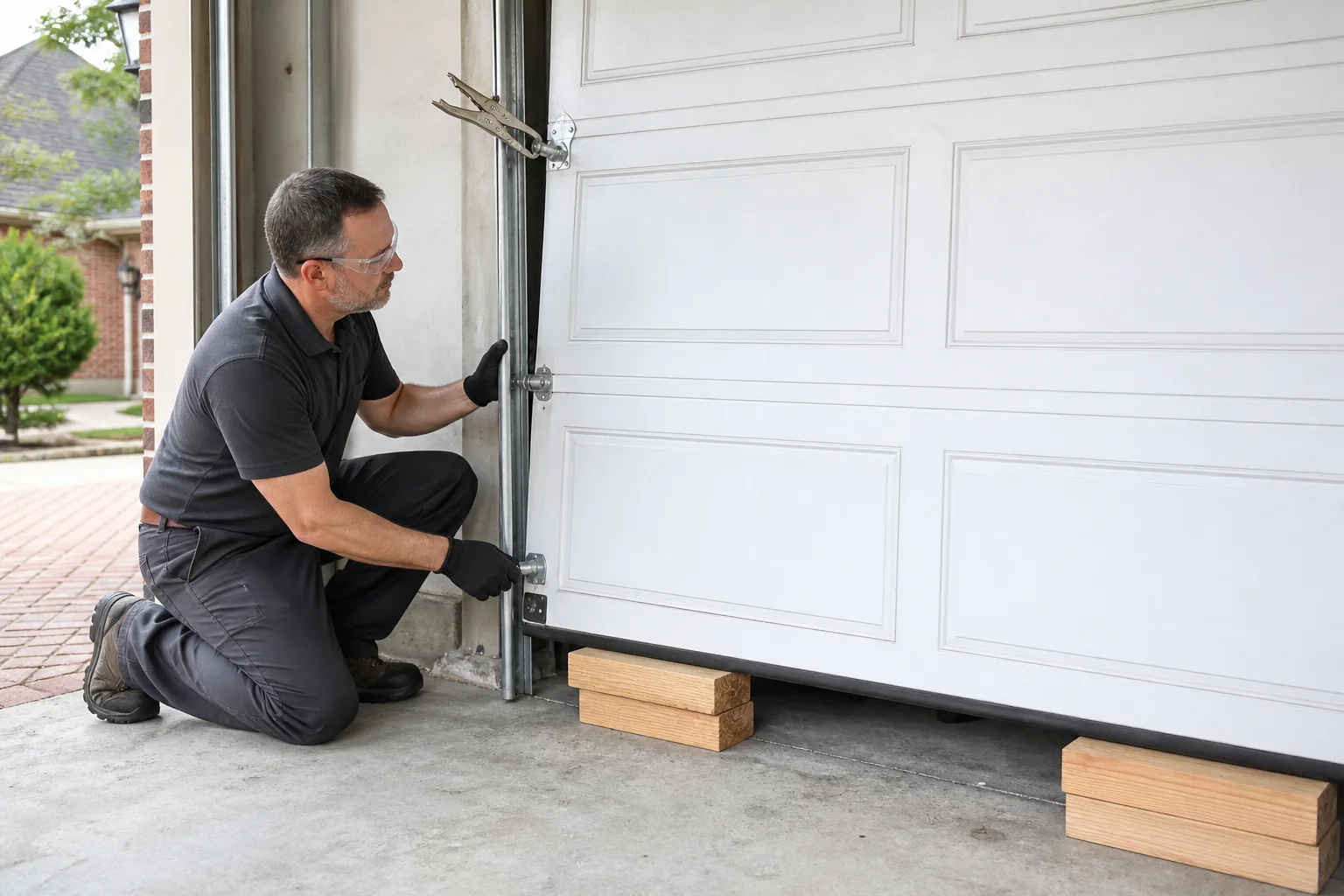
Off-track and stuck
Every extra cycle bends another panel and drags more cable out of line. Leave it where it is, keep the opening clear, and get it stabilized properly.
See what's included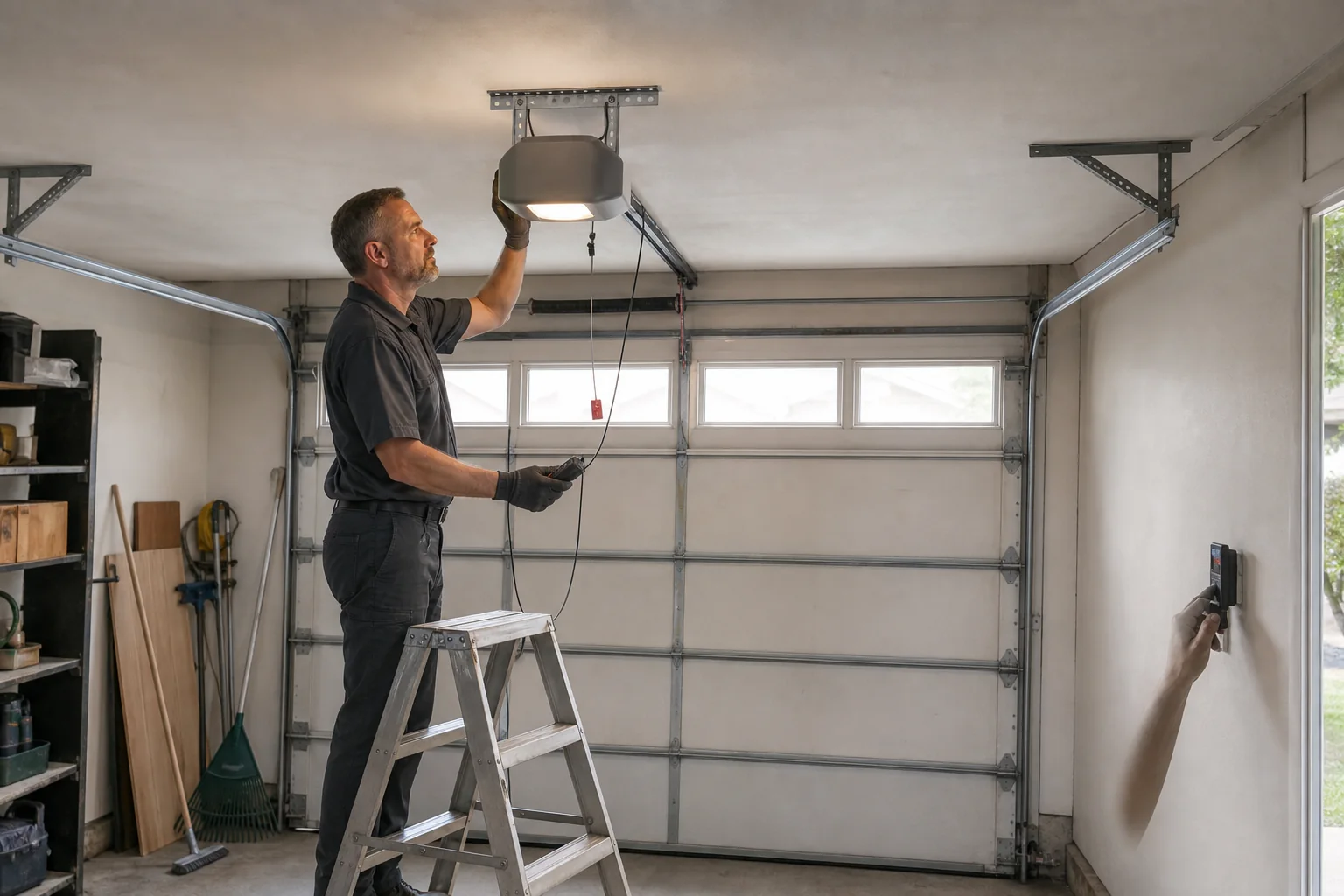
Openers
Motors take the blame for dead springs constantly. Worth knowing which one you've got before you buy an opener you didn't need.
See what's includedLexington guide
Lexington runs damp for long stretches, then swings cold and back again inside a week. Wooden doors and wooden jambs take that moisture on and give it back, so the same door can run cleanly in high summer and drag on a wet spring morning. People assume the opener is failing when the opening itself has moved around it.
The timing is the clue. A door stiff on damp mornings and fine by mid-afternoon points at the frame, the rollers and the weatherstrip. One that's got steadily worse in every kind of weather points at the springs. Telling us which stops you paying for a repair you didn't need.
Through Kenwick, Bell Court and the older parts of Ashland Park the garages sit back on narrow lots with a single-width drive running past the house. There isn't much clearance at the sides of the opening, and the headroom above is often less than a modern opener assumes.
It's worth saying before anyone quotes. Low headroom can mean a different track, a different way of mounting the opener, or a bracket that has to be moved. Tell us roughly how much space there is above the door and whether a van can get past the house, and the technician can arrive with the right hardware.
Newer Lexington building around Hamburg and Masterson Station runs wide attached double doors on a single opener. A double is heavier and much less forgiving than the doors on the older side of town, and Chevy Chase has its share of widened openings too.
When a spring on a door that size lets go, it goes from balanced to dead weight in a second. If you heard a bang and the door is now too heavy to lift, leave it alone. Keep people and cars out from under it, don't touch the springs, cables or bottom brackets, and tell us that's what happened so it's treated as urgent.
Tell us where you are, whether it's a single or a double, and what you heard. A bang, a grinding, a hum with nothing moving, or silence all point in different directions. Add where the door stopped and whether a car is trapped. You don't need to name a part; a guess from a photograph is worth less than a technician standing in front of the door.
Using this site is free and we handle no payment. Requests in before 5 p.m. on a weekday get a person answering the same business day, anything later the next business morning. The technician confirms the work and the cost before starting, and you can say no.
Most common around Lexington
The door stays open, stops, or will not begin closing.
What to do about itA gap appears in the spring above the door or a loud bang precedes a heavy door.
What to do about itSensor lights blink or the door will not close from a remote.
What to do about itThe opener is silent, hums, or runs without moving the door.
What to do about itThe customer wants scope, parts, labor, fees, and alternatives in writing.
What to do about itLexington questions
A slow decline usually means the springs have been losing tension rather than a single part failing. The opener has been making up the difference until it could not. Stop using it, since running an opener against an unbalanced door is what strips the gear. Tell us how long it has been getting worse and whether it feels heavy by hand.
Usually the close limit or the force setting has drifted, or something under the seal is stopping the door reaching where it expects to. Look along the bottom for a stone, a swollen weatherstrip or a raised patch of concrete. Tell us whether it reverses at exactly the same point each time, because a consistent point means a setting rather than an obstruction.
Please do not. Those springs hold a great deal of stored energy even after one has broken, and winding them takes proper bars and a method. This is the repair that hurts people. Leave the door where it is, keep the space under it clear, and let someone who does it daily handle the springs, cables and drums.
Damp gets into the connections and the small brackets rust and shift, so an alignment that held all summer stops holding. Look at whether either bracket has drooped, and check the lenses for condensation. Tell us whether the lights are steady, blinking or dark and whether it is worse in the morning. Do not tape over them to get through it.
Rattling with no movement is a classic worn drive gear. The motor spins, the chain or screw does not get turned, and you hear the pieces knocking about. Stop running it, because that grinds up what is left. Tell us the make on the opener head if you can read it from the ground and roughly how old it is.
That depends on what has actually failed and on the condition of the sections, and a technician should walk you through both options rather than only quoting a replacement. Ask what cannot be repaired and why. You get the scope and the price before work starts, and you are free to take neither option.
Lexington, KY
When it happens, what it sounds like, and your cross streets. That's usually enough to scope it and price it before work.