

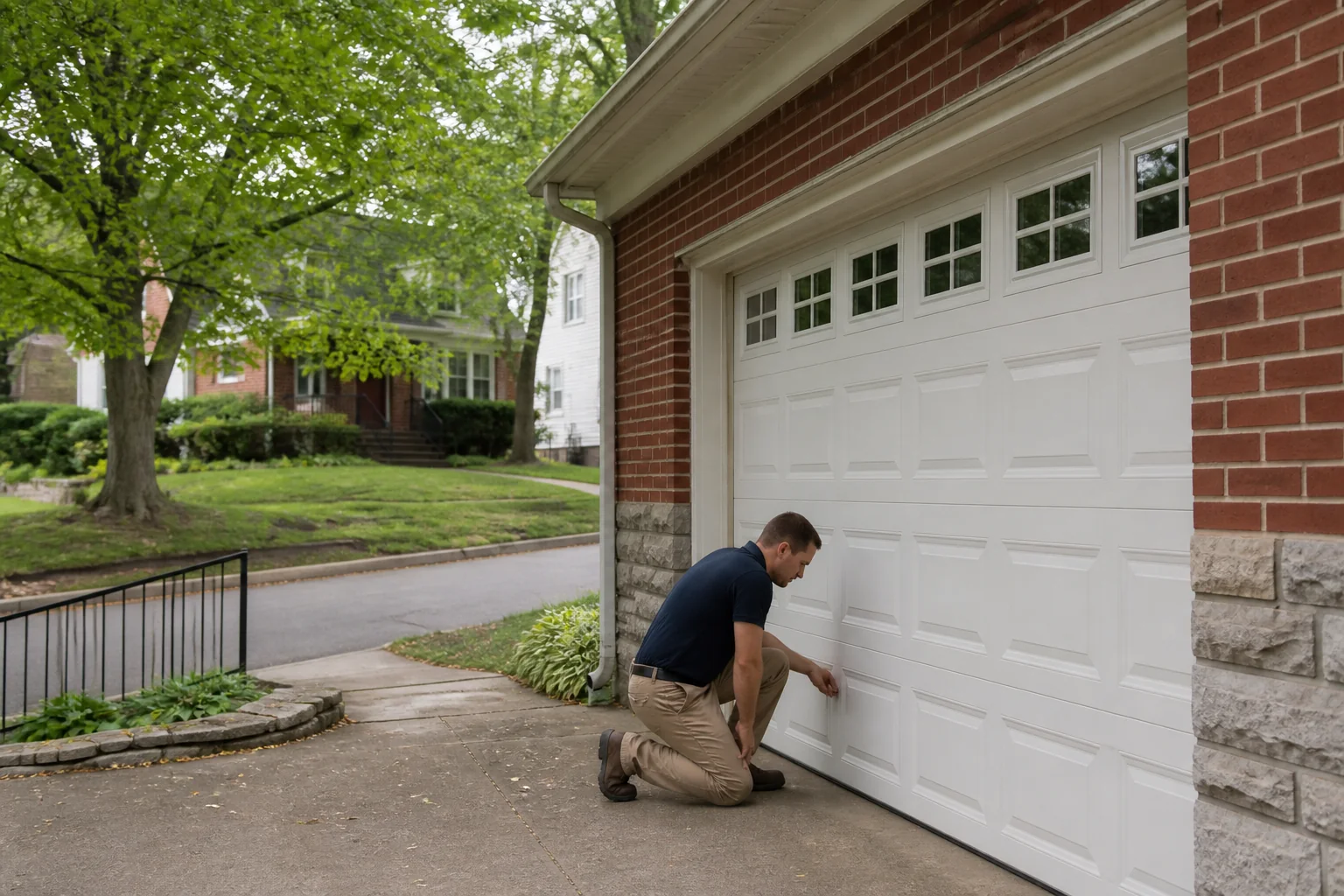
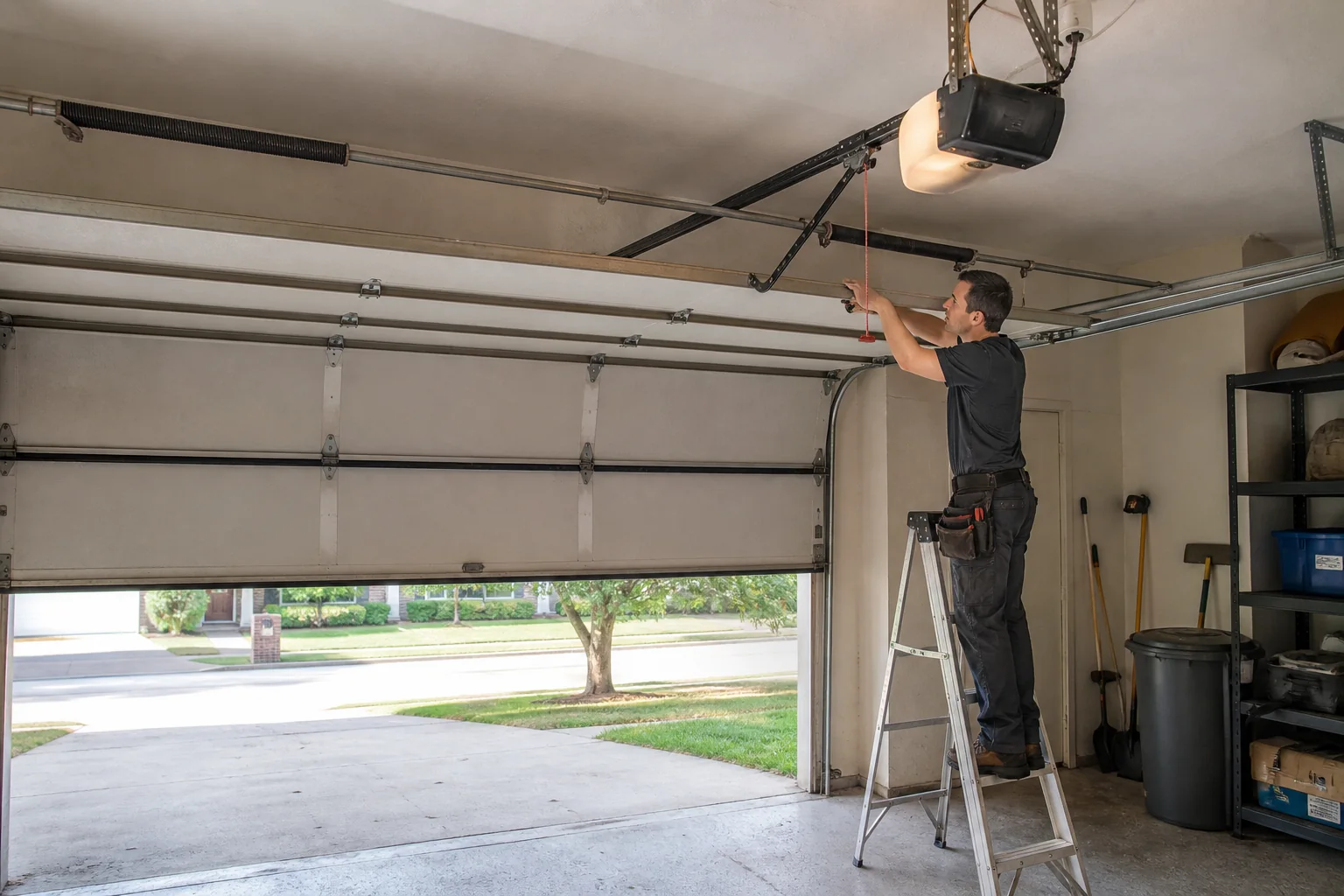
General repair
Garage Door Repair
Tell us what the door is doing and we'll get it in front of someone who can fix it — with the price agreed before the work starts.
See what's includedGarage door repair · Louisville, KY
Narrow lots, rear alleys, and a door that has to work in Ohio Valley damp. Tell us what yours is doing and see the price before work.
Germantown, Schnitzelburg, Butchertown, and the streets either side of them.
Springs, cables, openers, sensors, tracks, panels, seals, and full replacements.
You hear what failed and what it costs first. Saying no at that point costs you nothing.
Ask before 5 p.m. on a weekday and you hear back that business day.
Why us for this door
Humidity thickens old grease, swells timber and puts a film on every bearing surface, so a door that ran quietly in April develops a grind by midsummer. It isn't usually a failure yet. It's the point at which the cheap version of the repair still exists, and most people wait past it.
Behind a Germantown shotgun there isn't a vehicle width to spare, so how the door is reached matters as much as what it's doing. Say both, along with whether the opening is a carriage size. Cost and scope are agreed with you first.
Get my door fixedWhere we work
Germantown and Schnitzelburg run tight rear alleys; St Matthews and Crescent Hill have driveways. Say which, and how wide the opening is.
Plenty of the work we take isn't in Louisville proper. These are the towns around it and what tends to be different about a door there.
Don't see your street or your town? These are the places where the housing changes enough to change the job — not the edge of where we go, and not a promise about your exact address either. We take work across Louisville and the wider Kentucky area, and the address you send is what actually gets checked.Check my address
Repairs in Louisville
General repair
Tell us what the door is doing and we'll get it in front of someone who can fix it — with the price agreed before the work starts.
See what's included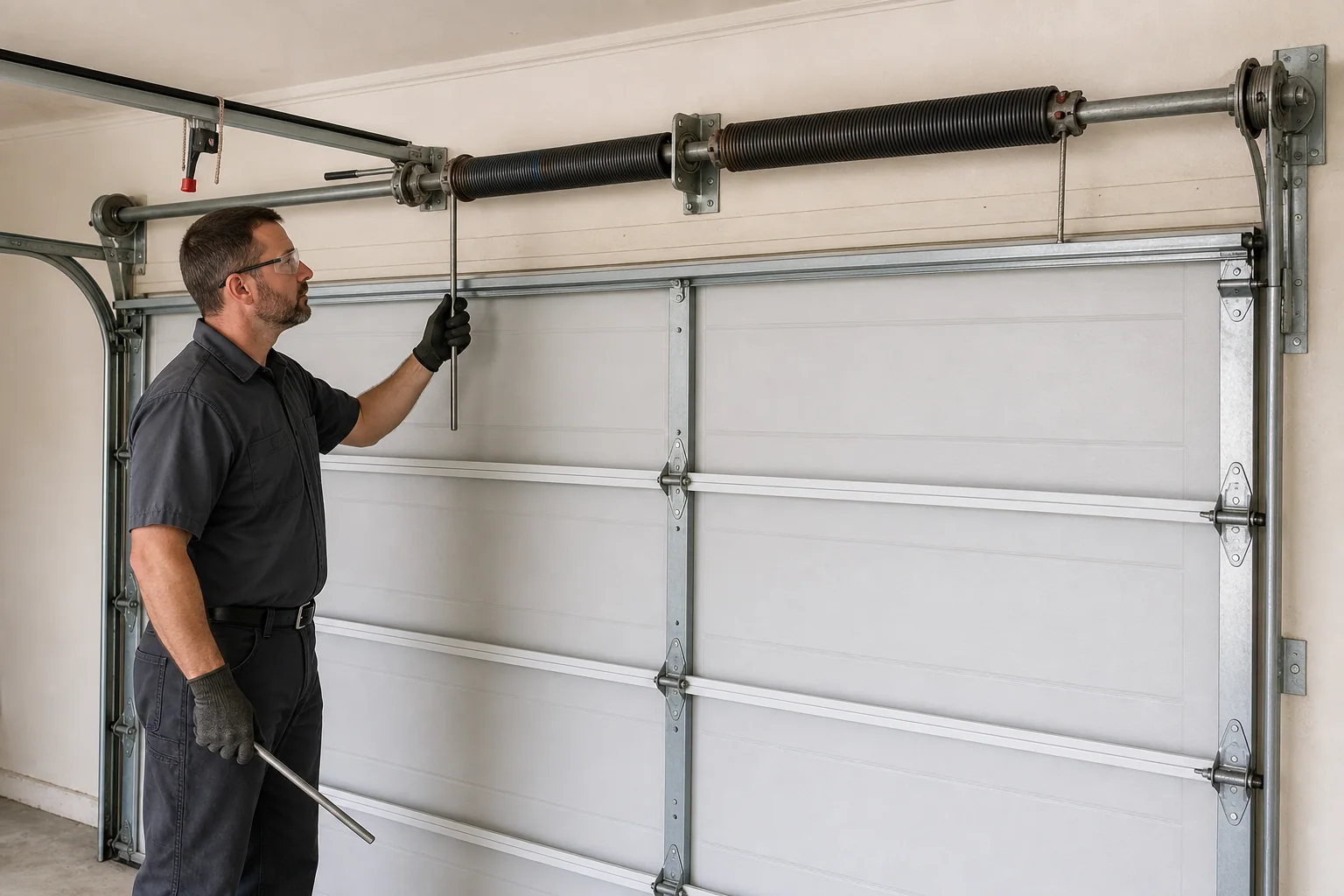
Springs and balance
If your door suddenly weighs a couple hundred pounds, a spring has almost certainly let go. Leave it down, keep everyone clear, and let someone with the right winding bars deal with it.
See what's included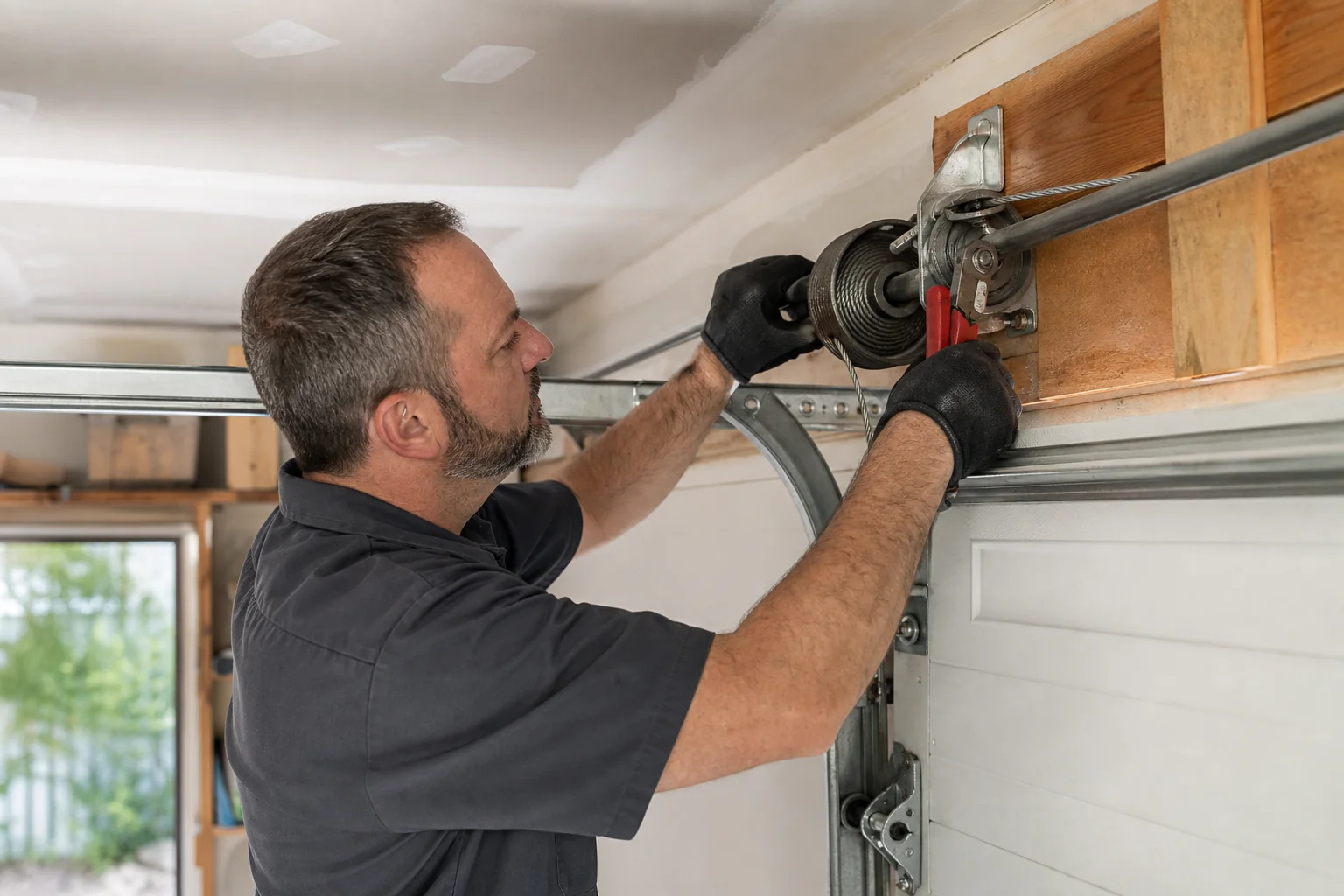
Cables and drums
One corner sitting lower, or a cable hanging off its drum, means the lift system is out of balance. It wants looking at before the next cycle, not after.
See what's included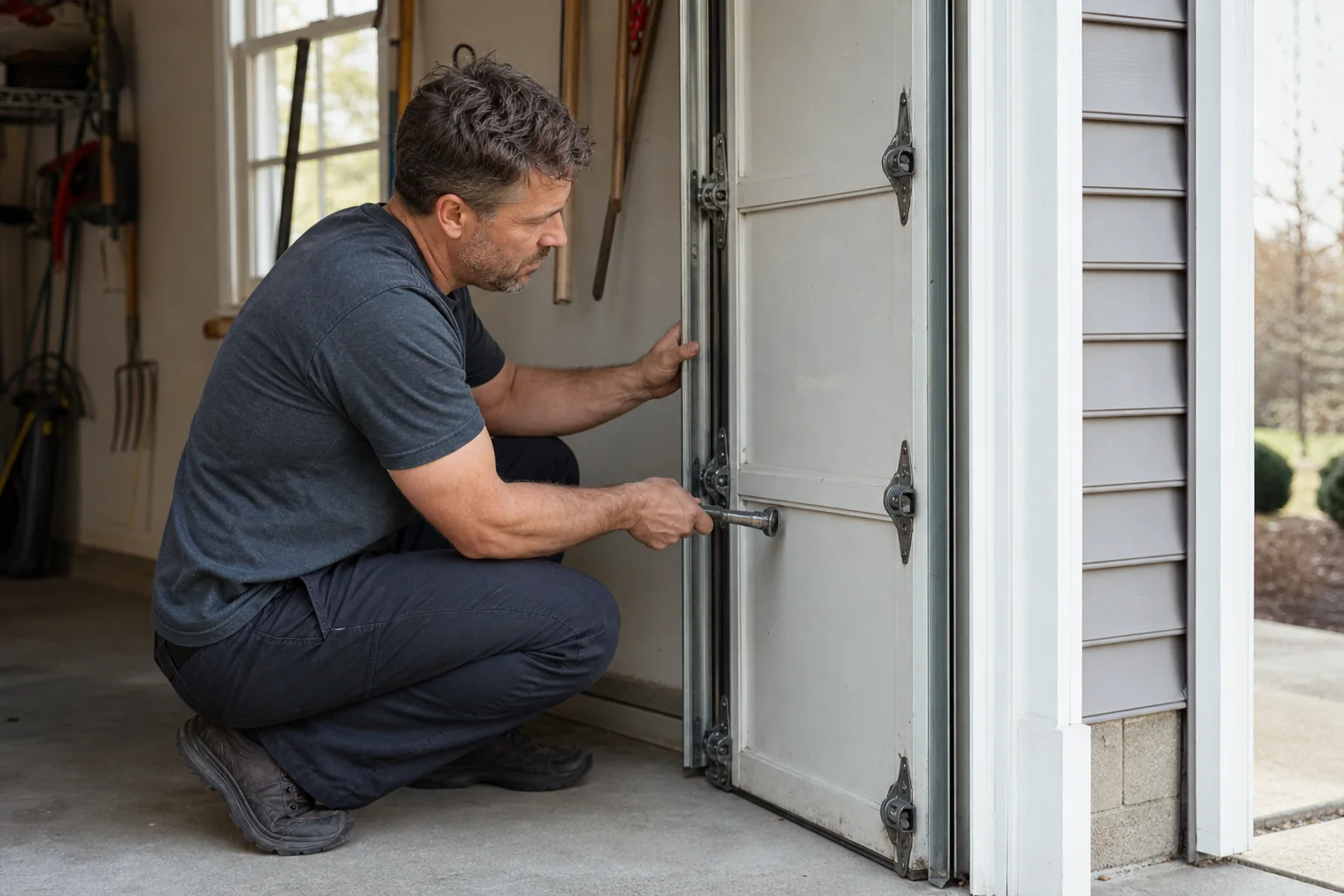
Tracks, rollers, hardware
Grinding in the same spot, a door that shakes the whole wall, a roller creeping out of its track — all cheap to sort now, all expensive once the door comes off.
See what's included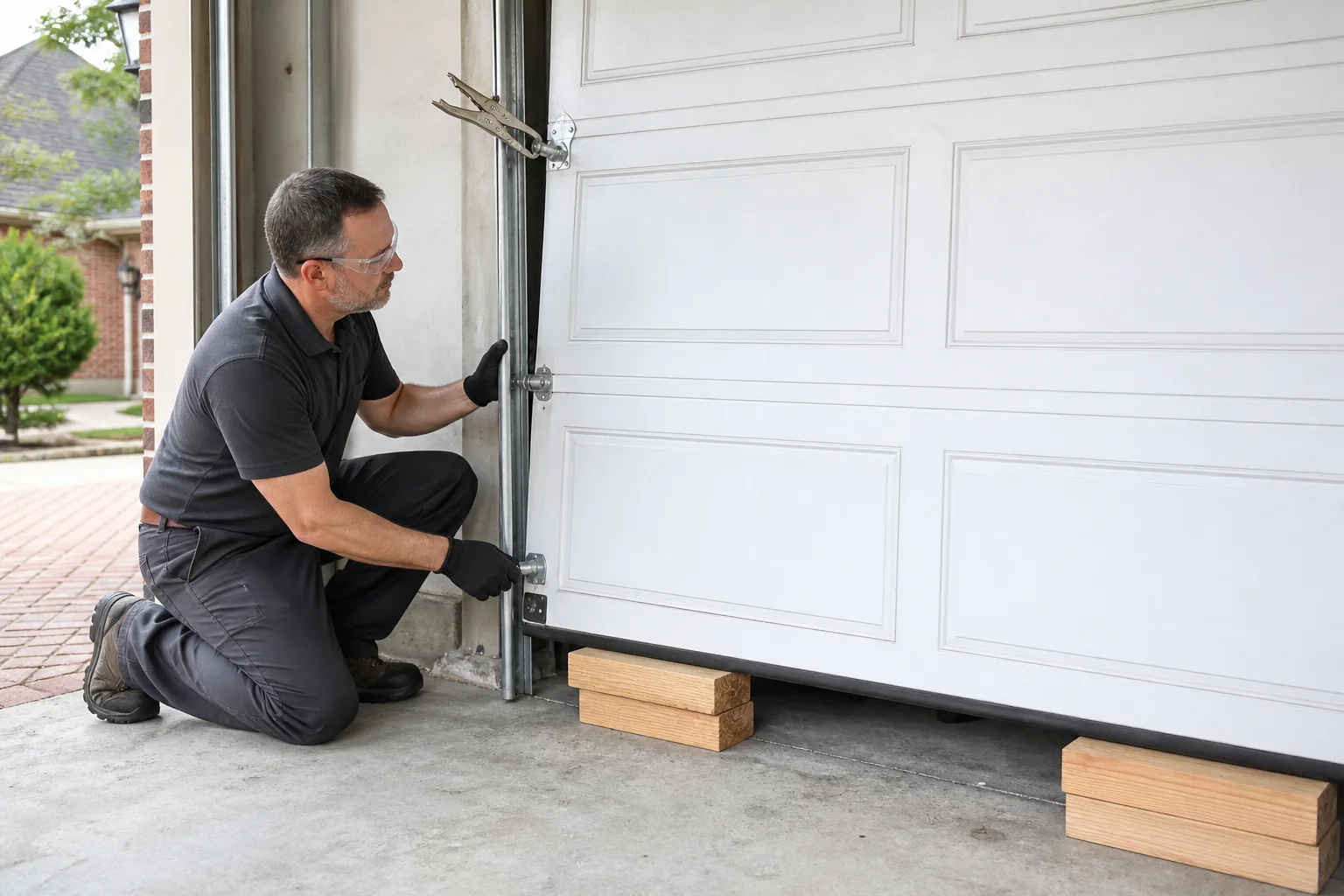
Off-track and stuck
Every extra cycle bends another panel and drags more cable out of line. Leave it where it is, keep the opening clear, and get it stabilized properly.
See what's included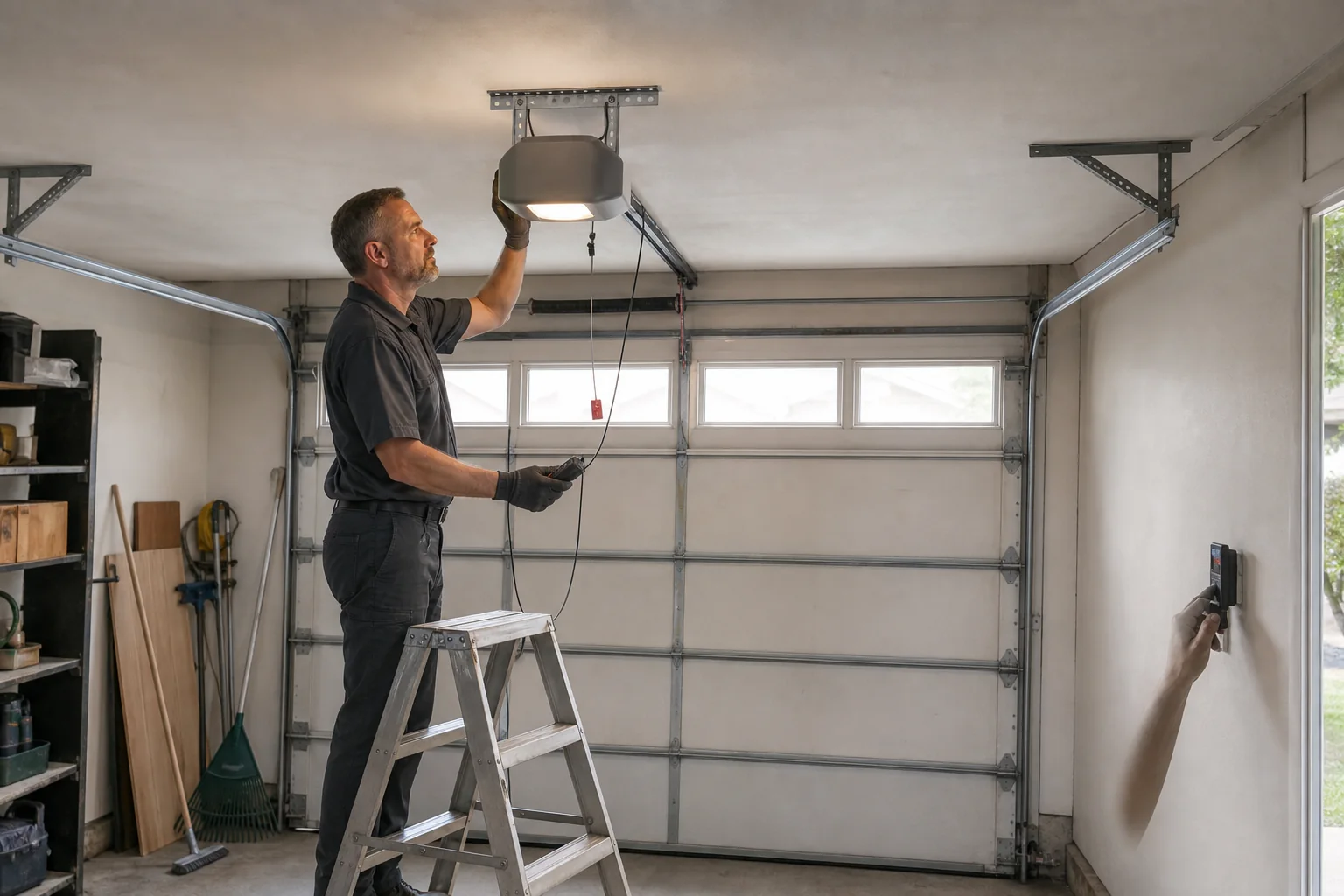
Openers
Motors take the blame for dead springs constantly. Worth knowing which one you've got before you buy an opener you didn't need.
See what's includedLouisville guide
Germantown and Schnitzelburg run long narrow lots with the house pushed close to the sidewalk and whatever garage exists squeezed at the back off a service alley. Butchertown is much the same. A technician generally parks on the street and walks everything in from there.
Say so when you get in touch. It doesn't change the diagnosis, but it changes the time on site and whether a full section can even be brought round the back. Tell us if the alley is blocked, if a neighbor keeps a car in it, or if the only route to the garage is through the yard gate.
Louisville summers sit heavy, and the track, hinges and rollers in an unconditioned garage collect condensation right through them. That is where surface rust starts, and a rusted roller skids along the track instead of turning. What you hear is a grind or a shudder partway up rather than a clean run.
Winter then finds whatever the summer loosened. Tell us whether the noise is constant or only near the top or the bottom of the travel, and whether it has been building for months or turned up suddenly. A worn roller and a failing spring both sound wrong, and they don't cost anything like the same to put right.
Around Cherokee Triangle and Crescent Hill you find garages that began life as something else, with openings that were never built to a catalog size. Some still hang doors that swing or slide rather than roll up overhead. Out in St Matthews the lots are more predictable, though plenty of houses keep a single narrow opening.
None of that stops a repair, but it does decide whether the answer is a part or a new door. Measure the opening roughly, width and height, and tell us whether the door is sectional, a single solid slab, or something else again. Then the technician arrives knowing what is likely rather than finding out.
Cross streets, how the garage is actually reached, single or double, what the door did and where it stopped, and whether a car is shut in behind it. That is enough for a technician to know what sort of visit this is. Don't try to name the broken part, because finding that out properly is the point of the visit.
Take photographs from where you're standing and leave the ladder where it is. Send it before 5 p.m. on a weekday and a person replies the same business day, otherwise the next business morning. Nothing gets done until you've agreed the scope and the price, and no payment goes through this site.
Most common around Louisville
The door stays open, stops, or will not begin closing.
What to do about itA gap appears in the spring above the door or a loud bang precedes a heavy door.
What to do about itSensor lights blink or the door will not close from a remote.
What to do about itThe opener is silent, hums, or runs without moving the door.
What to do about itThe customer wants scope, parts, labor, fees, and alternatives in writing.
What to do about itLouisville questions
Yes, but tell us about the alley up front so the visit is planned around it. Do not keep running the opener against a stuck door. Let us know whether the alley is passable, whether the garage has a side door, and how far the main door travelled before it stopped, and the technician can bring what they need in one trip.
Damp swells wooden jambs and stiffens rusted rollers, and either can give the opener enough resistance to trigger a reverse. Look for a shiny rub mark on the track or a roller that is not turning. Tell us whether it happens at the same height every time and whether dry weeks are better. Do not increase the force setting to push through it.
It is worth flagging so the right person comes. Working on springs needs room to stand and swing winding bars, and a cramped shotgun-lot garage packed with bikes and bins makes that harder. Clear what you safely can from the side walls, keep everyone out from under the door, and do not touch the springs, cables or bottom brackets.
It can be. Sensors mounted a few inches off a floor that takes standing water corrode at the bracket and the wire, and the alignment drifts as they rust. Look at whether either unit sits lower than it did and whether the wiring is green at the terminals. Tell us what the lights are doing, and never bypass them to force the door shut.
Not necessarily, but do not assume the opener is the fault either. A door that has gone out of balance makes a healthy opener sound strained, and replacing the opener then leaves you with the same noise. Tell us how the door feels by hand when it is disconnected, if you can check that safely, and how long it has been like this.
The scope and price are put to you before work begins, so the number you agree to is the number for that work. If a technician finds something else once the door is open, they should stop and explain it rather than adding it on quietly. You can decline at any point, and nothing is paid through this site.
Louisville, KY
The noise, the access, and your cross streets. Five details is plenty, and the price is agreed before anyone starts.