

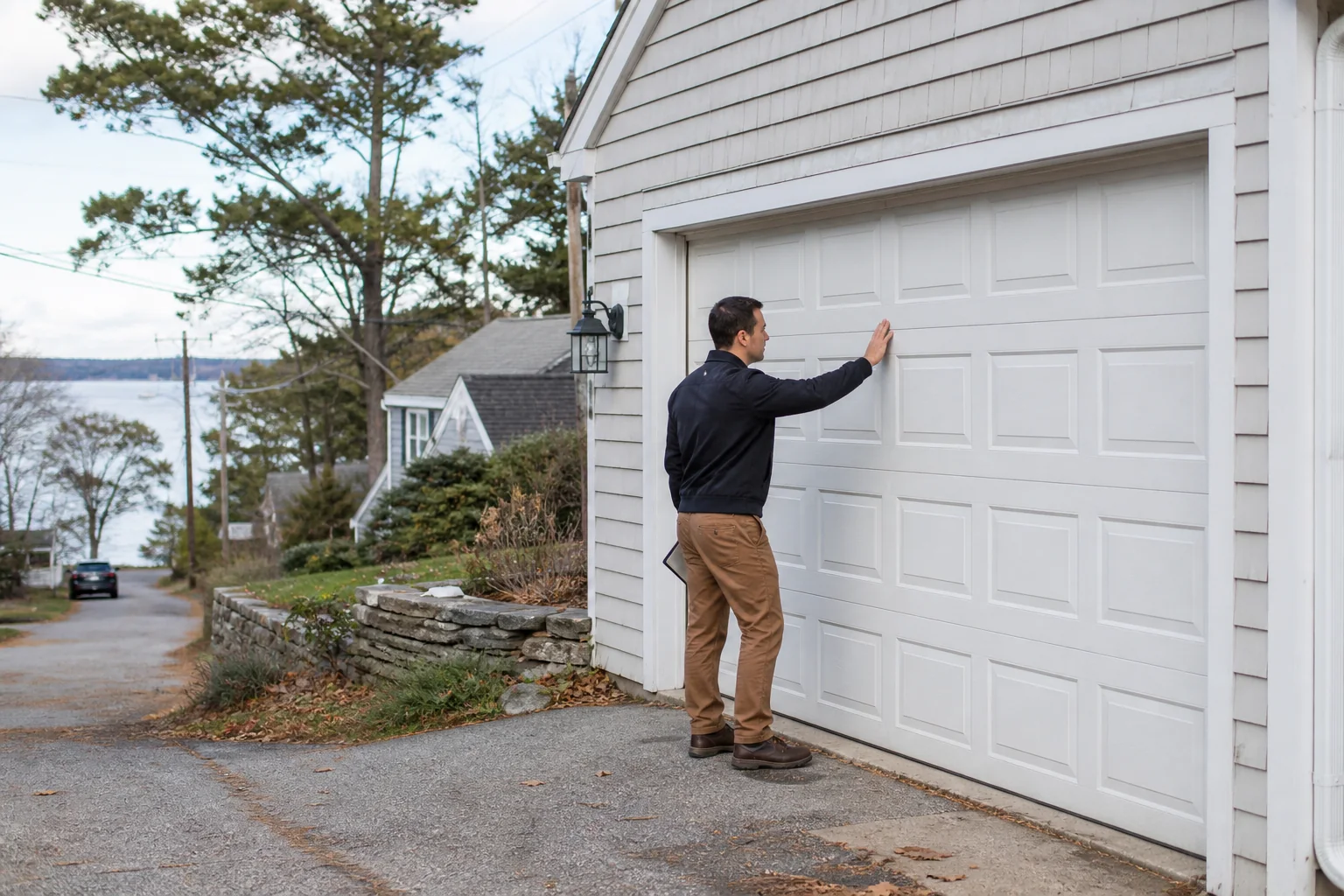
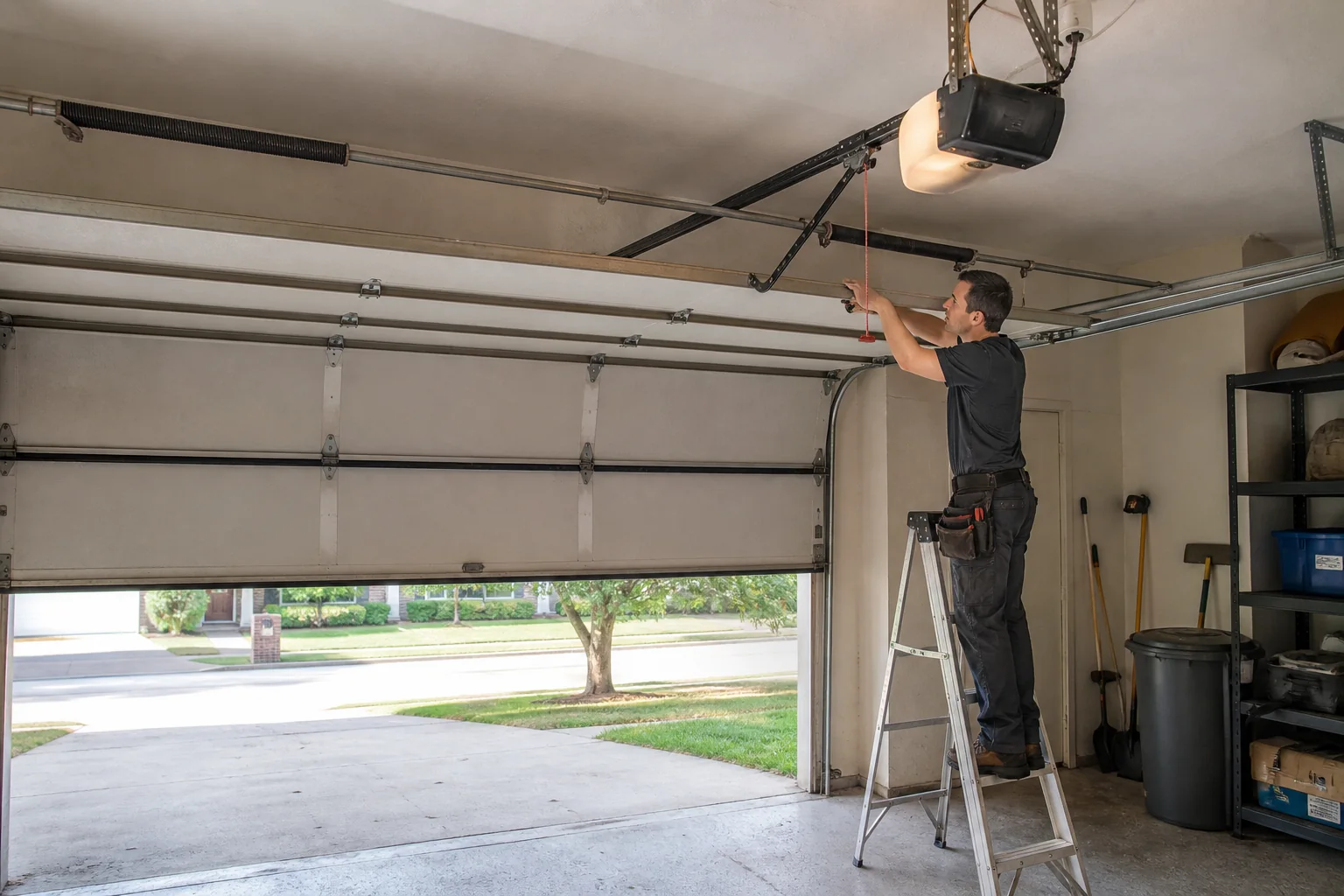
General repair
Garage Door Repair
Tell us what the door is doing and we'll get it in front of someone who can fix it — with the price agreed before the work starts.
See what's includedGarage door repair · Portland, ME
Salt off the road, salt off the bay, and ice along the bottom edge. Say what your Portland door is doing and see the price before work.
Munjoy Hill, West End, Deering Center, and the streets either side of them.
Springs, cables, openers, sensors, tracks, panels, seals, and full replacements.
You hear what failed and what it costs first. Saying no at that point costs you nothing.
Ask before 5 p.m. on a weekday and you hear back that business day.
Why us for this door
Road salt arrives on the car and lands on the bottom brackets and cable ends. Sea air does the same job more slowly from the other direction. Together they get through galvanizing faster than most people expect, and the parts they attack are the ones holding the weight of the door.
By February the slab has moved as well, so the door no longer meets the floor square. On Munjoy Hill there's nowhere to leave a vehicle either. Say which of those apply and what the door is doing, and the price is agreed before work.
Get my door fixedWhere we work
Munjoy Hill and the West End have no parking to spare; Stroudwater and North Deering have driveways. Say which, and how close the water is.
Plenty of the work we take isn't in Portland proper. These are the towns around it and what tends to be different about a door there.
Don't see your street or your town? These are the places where the housing changes enough to change the job — not the edge of where we go, and not a promise about your exact address either. We take work across Portland and the wider Maine area, and the address you send is what actually gets checked.Check my address
Repairs in Portland
General repair
Tell us what the door is doing and we'll get it in front of someone who can fix it — with the price agreed before the work starts.
See what's included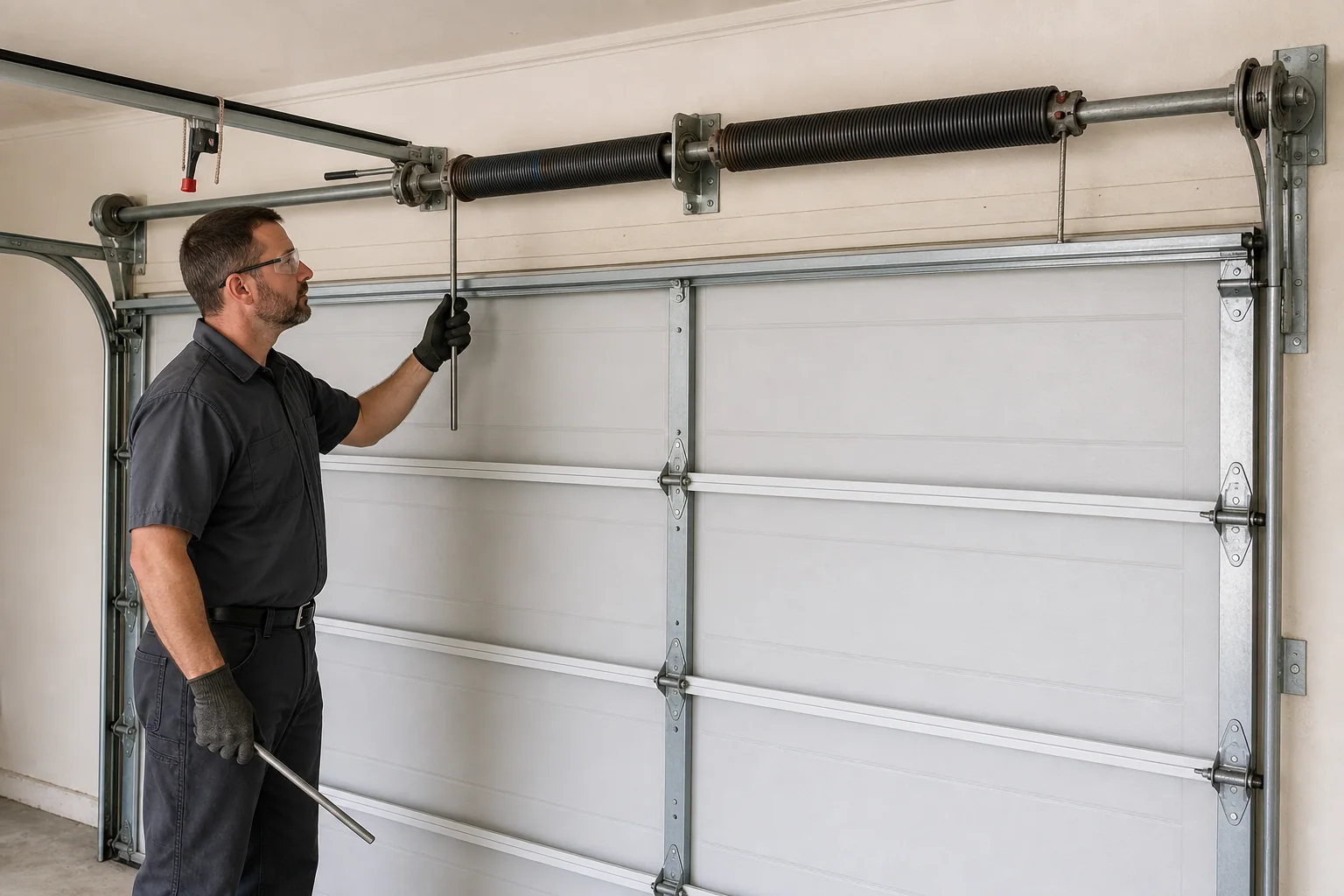
Springs and balance
If your door suddenly weighs a couple hundred pounds, a spring has almost certainly let go. Leave it down, keep everyone clear, and let someone with the right winding bars deal with it.
See what's included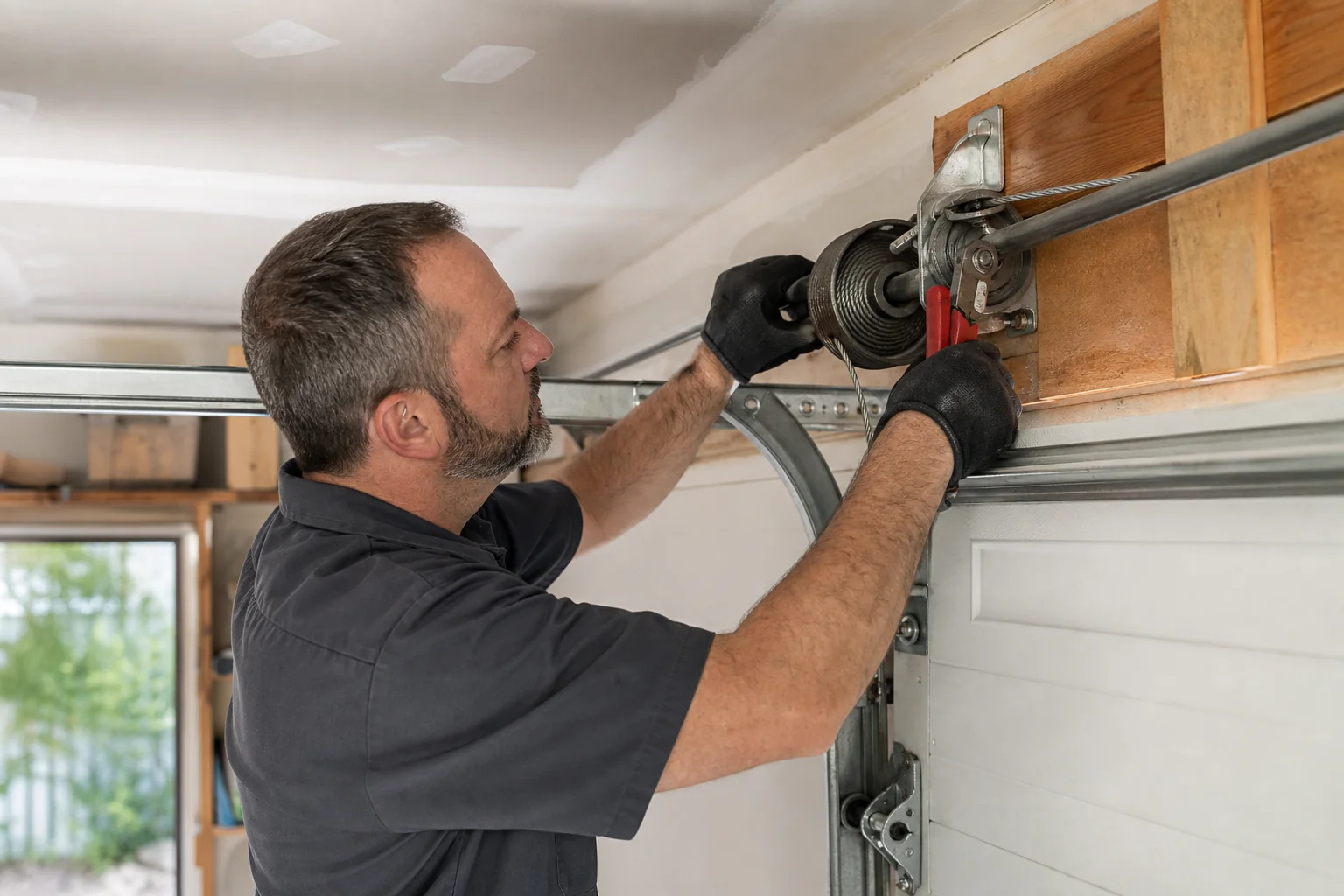
Cables and drums
One corner sitting lower, or a cable hanging off its drum, means the lift system is out of balance. It wants looking at before the next cycle, not after.
See what's included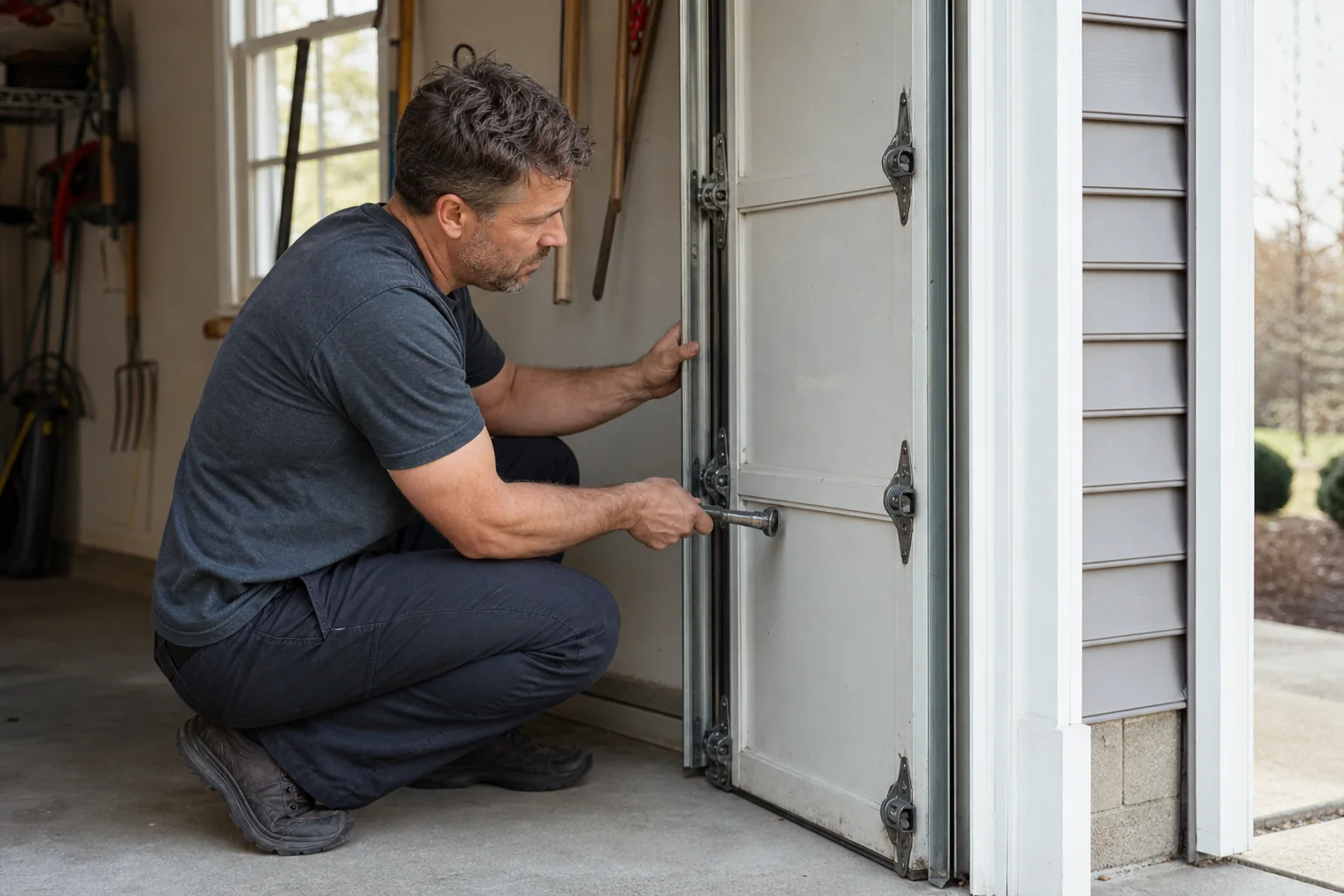
Tracks, rollers, hardware
Grinding in the same spot, a door that shakes the whole wall, a roller creeping out of its track — all cheap to sort now, all expensive once the door comes off.
See what's included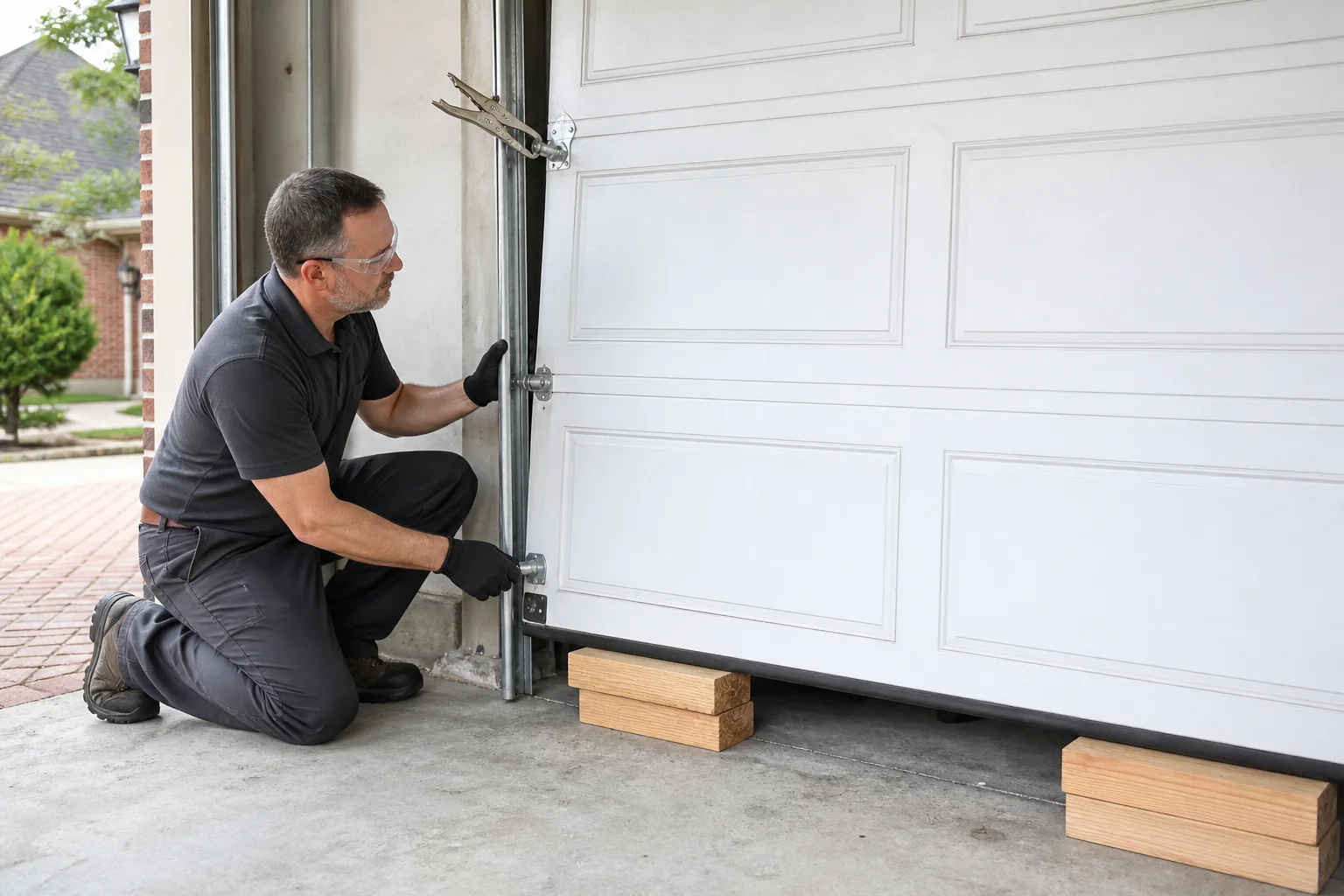
Off-track and stuck
Every extra cycle bends another panel and drags more cable out of line. Leave it where it is, keep the opening clear, and get it stabilized properly.
See what's included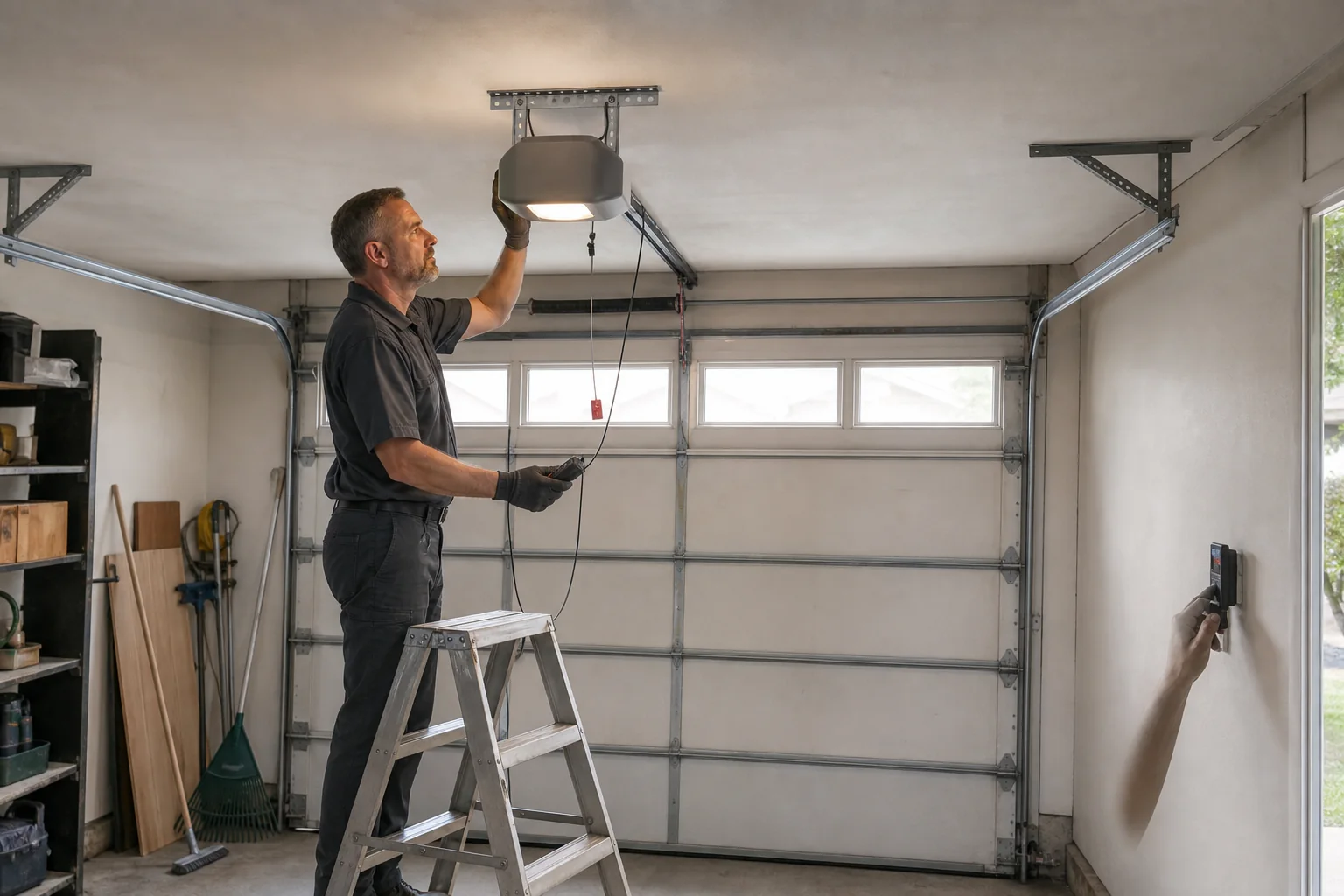
Openers
Motors take the blame for dead springs constantly. Worth knowing which one you've got before you buy an opener you didn't need.
See what's includedPortland guide
Sea air off Casco Bay and the salt that arrives on your tires from every treated street end up in the same place, which is the bottom few feet of the door. East Deering sits right above the water and Munjoy Hill catches it from both sides. What corrodes is the bottom brackets, the cable ends, and the roller stems.
Rinsing the lower section with fresh water when winter breaks does more good than most people expect. What you shouldn't do is oil a cable or force a stiff roller. If rust is bleeding through the paint along the bottom edge, tell us, because a corroded cable and a merely worn one are different repairs.
The peninsula neighborhoods weren't built with garages in mind. In the West End a garage tends to be a converted outbuilding on a shared lane behind the row, and on Munjoy Hill it's often a single bay under a multi-family with a short, steep approach. Deering Center puts it at the far end of a driveway that has to be shoveled before anyone reaches the door.
Off the peninsula, North Deering and Stroudwater are far kinder, with attached bays and real frontage. Tell us which situation you're in, and in winter tell us whether the drive is cleared, because a technician who can't get to the door hasn't fixed anything.
Frost under a driveway apron lifts it through the winter and sets it back down in spring. A door that sealed cleanly in November can finish the season sitting unevenly, showing daylight at one corner and dragging at the other. Meanwhile the bottom rubber keeps freezing to the concrete overnight.
If the door won't move on a cold morning, take your hand off the button. The opener has no way of knowing the door is stuck and will keep pulling until a gear, a cable, or the top section gives. Break the seal by hand only if you can reach it while standing safely clear, then tell us what happened on that first press.
Your street and cross street, whether the garage is attached or a separate building down a lane, single or double width, and the exact moment things went wrong: where the door stopped, what noise it made, whether a car is shut inside. Naming the broken part isn't your job.
In winter, add whether the driveway and the ground in front of the door are cleared. Photos from where you stand are useful and nothing taken off a ladder is worth the risk. Reach us before 5 p.m. on a weekday and you'll hear from a person the same business day, with scope and price confirmed before work begins.
Most common around Portland
The door stays open, stops, or will not begin closing.
What to do about itA gap appears in the spring above the door or a loud bang precedes a heavy door.
What to do about itSensor lights blink or the door will not close from a remote.
What to do about itThe opener is silent, hums, or runs without moving the door.
What to do about itThe customer wants scope, parts, labor, fees, and alternatives in writing.
What to do about itPortland questions
Very likely, and the fix is patience rather than force. Snow melts against the bottom rubber during the day and welds it to the slab overnight. Pressing the button harder just lets the opener pull against a door that isn't going anywhere until a gear or a cable gives. Let the sun get at the concrete, or free the seal by hand from a standing position well clear of the opening.
A door sitting unevenly is usually a levelling problem rather than a seal problem, and here it's often the apron under it that has shifted with the frost. It can also be a cable that has slipped a turn on one drum, which is not a do-it-yourself item. Measure the gap roughly, note which corner it's at, and send a photo taken from inside with the lights off.
Stay away from it. A spring has almost certainly failed, and everything holding that door is now doing a job it wasn't built for. Don't try to lift it, don't park under it, and don't pull the release cord to see what happens. Tell us whether the door is currently up or down, because that changes what a technician needs to bring.
Look at the sensors first. A plowed bank against the wall, a shovel leaning near a bracket, or a lens fogged by the temperature swing will all break the beam. Bright low winter sun through the opening does it as well. Wipe both lenses, clear anything within a foot of the track, and tell us whether the lights are steady, blinking, or out.
Keypads suffer here. Batteries lose most of their punch at low temperature and moisture gets behind the buttons and freezes. Try a fresh battery first, and check whether the remote in the car works from the same spot. If everything except the keypad works, say so, because that's a much smaller job than a failing opener.
A technician, not a crew of ours, because we don't run one. What we do is get your problem to someone who covers your address and handles that repair. They confirm the scope and the cost with you before starting, and you're free to decline. Nothing is charged through this site.
Portland, ME
The symptom, the parking, and your cross streets. Scope and price reach you before anyone begins work.