

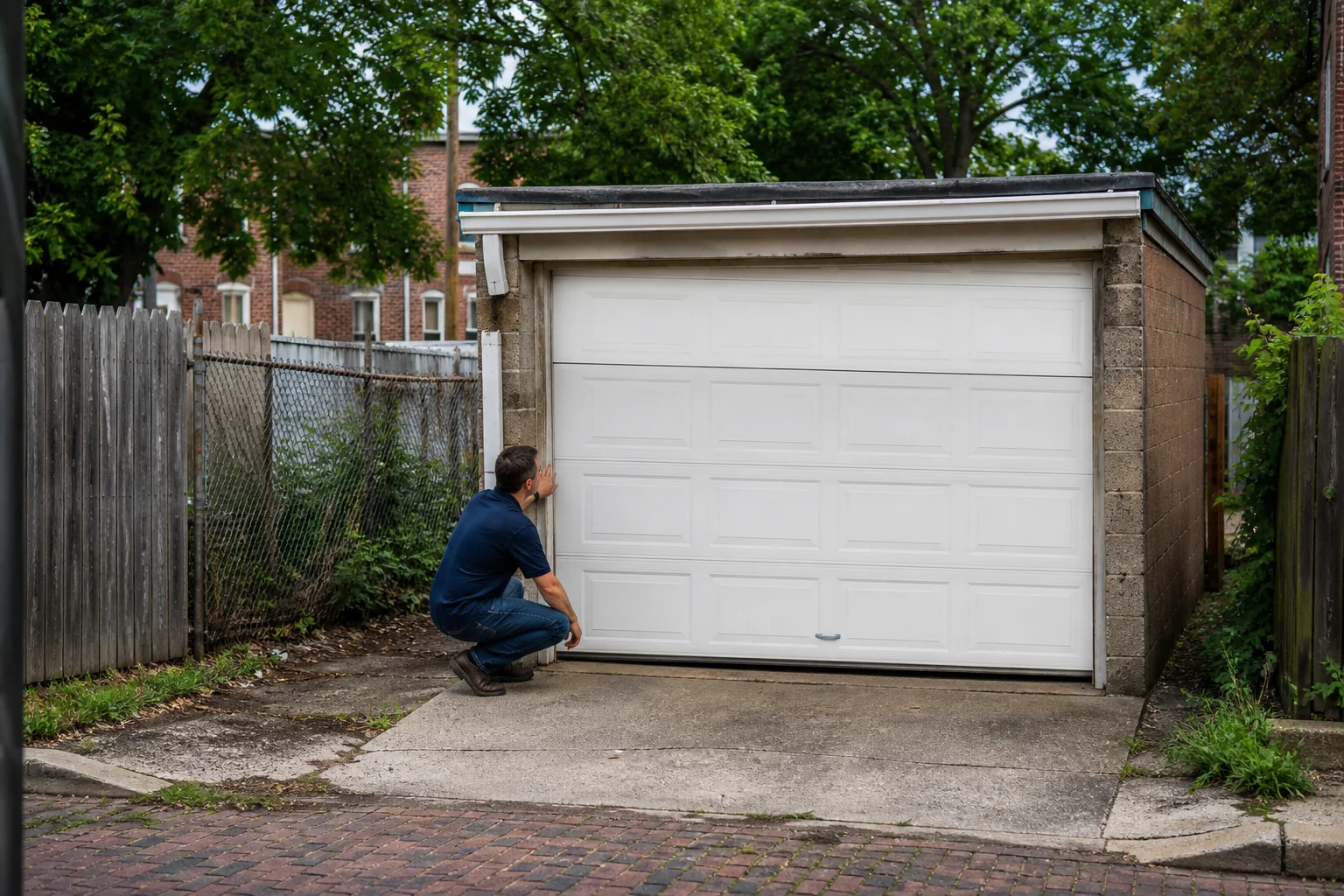
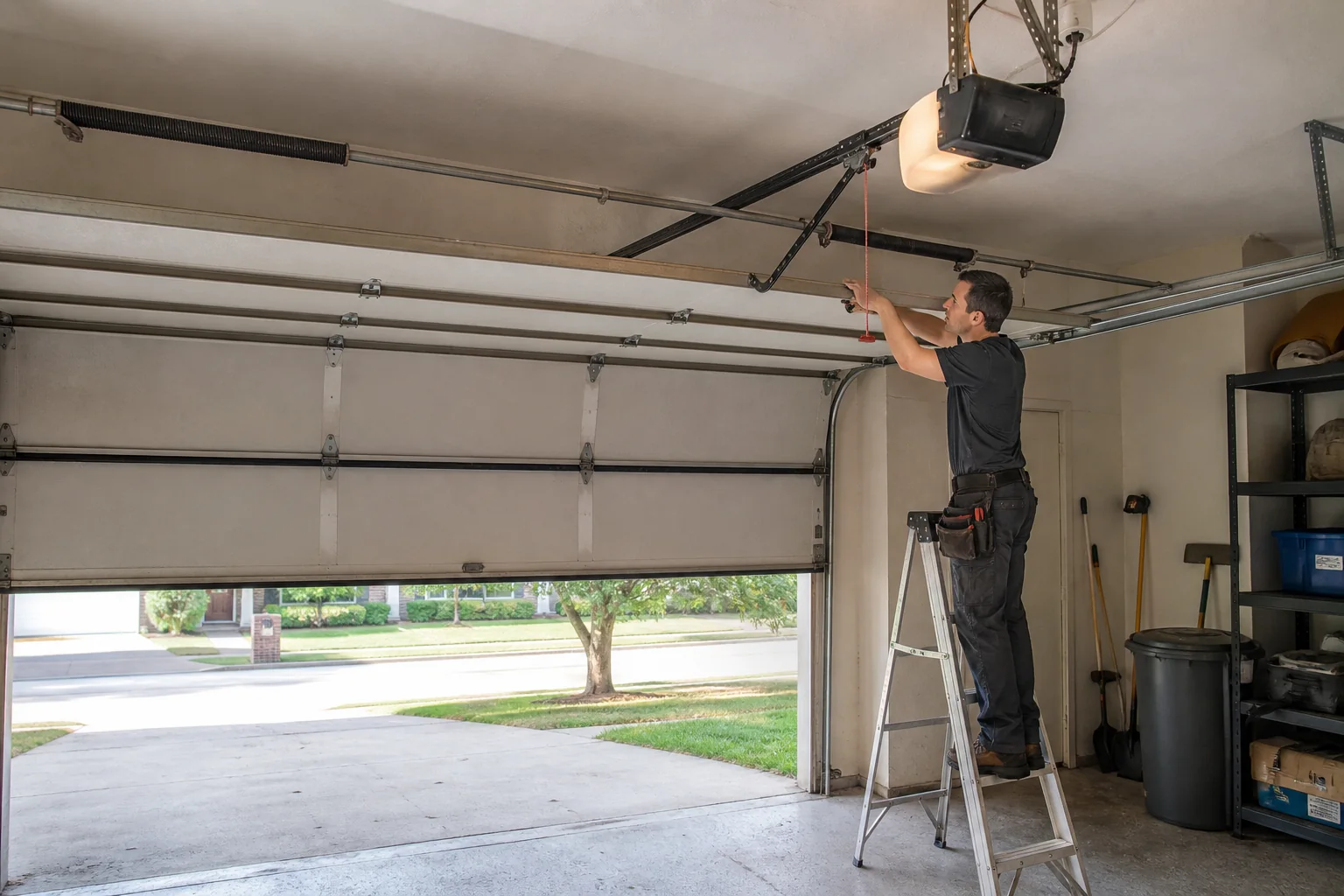
General repair
Garage Door Repair
Tell us what the door is doing and we'll get it in front of someone who can fix it — with the price agreed before the work starts.
See what's includedGarage door repair · Baltimore, MD
Most Baltimore garages open onto an alley, and the alley decides a lot. Say what yours is doing and see the price before work starts.
Canton, Locust Point, Patterson Park, and the streets either side of them.
Springs, cables, openers, sensors, tracks, panels, seals, and full replacements.
You hear what failed and what it costs first. Saying no at that point costs you nothing.
Ask before 5 p.m. on a weekday and you hear back that business day.
Why us for this door
A door reached down a ten-foot alley is the same repair and a completely different visit: everything is carried in, there's no room to stage parts, and a large section may not physically turn the corner. That isn't a reason to charge more by surprise. It's a reason to know before a number is given.
Carriage-house openings around Bolton Hill and Hampden aren't a catalog size either, so they get measured rather than assumed. Say which you have and what the door did. Scope and price are agreed with you before any work starts.
Get my door fixedWhere we work
Canton and Locust Point run tight formstone alleys; Roland Park has driveways and carriage openings. Say which, and how wide the door is.
Plenty of the work we take isn't in Baltimore proper. These are the towns around it and what tends to be different about a door there.
Don't see your street or your town? These are the places where the housing changes enough to change the job — not the edge of where we go, and not a promise about your exact address either. We take work across Baltimore and the wider Maryland area, and the address you send is what actually gets checked.Check my address
Repairs in Baltimore
General repair
Tell us what the door is doing and we'll get it in front of someone who can fix it — with the price agreed before the work starts.
See what's included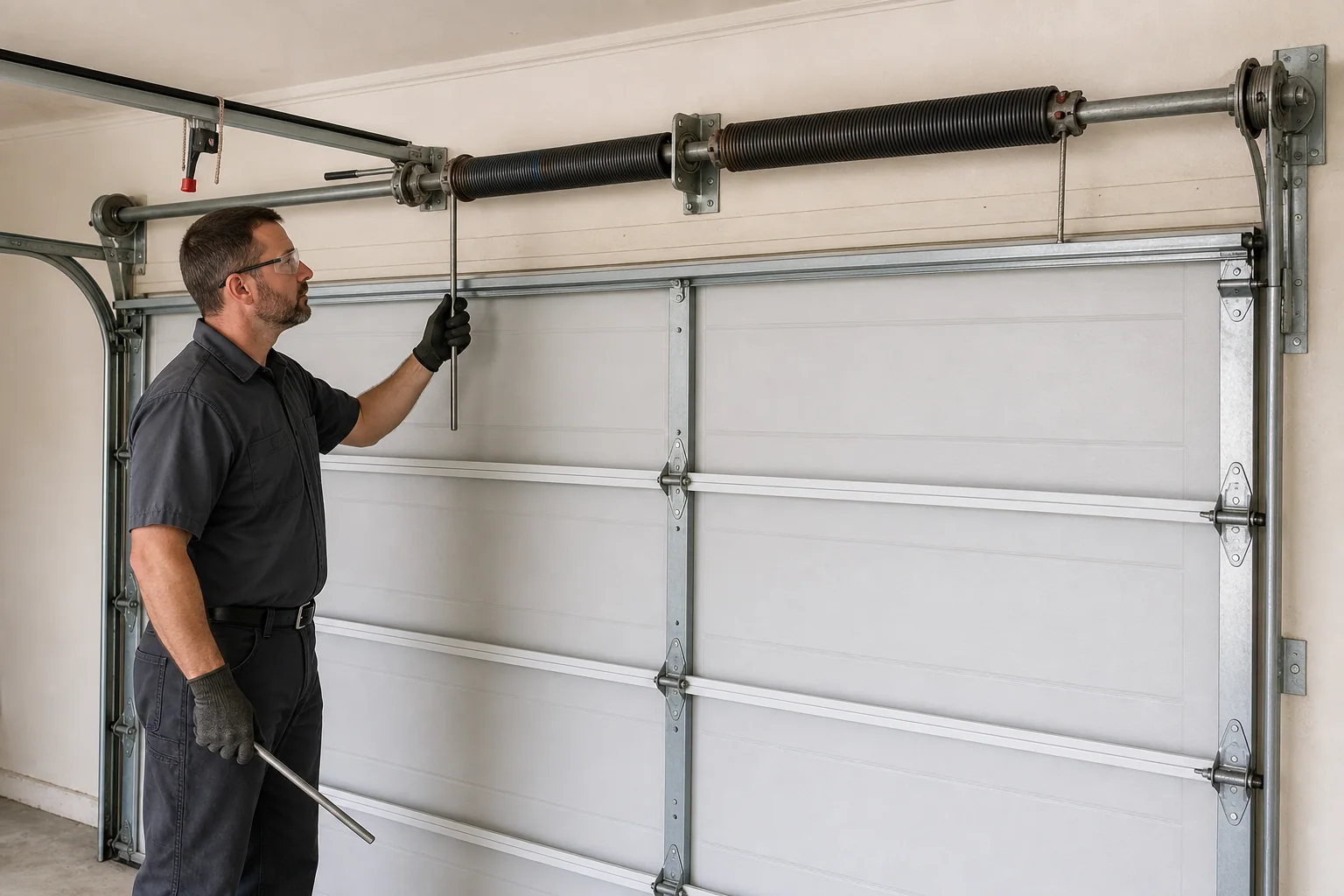
Springs and balance
If your door suddenly weighs a couple hundred pounds, a spring has almost certainly let go. Leave it down, keep everyone clear, and let someone with the right winding bars deal with it.
See what's included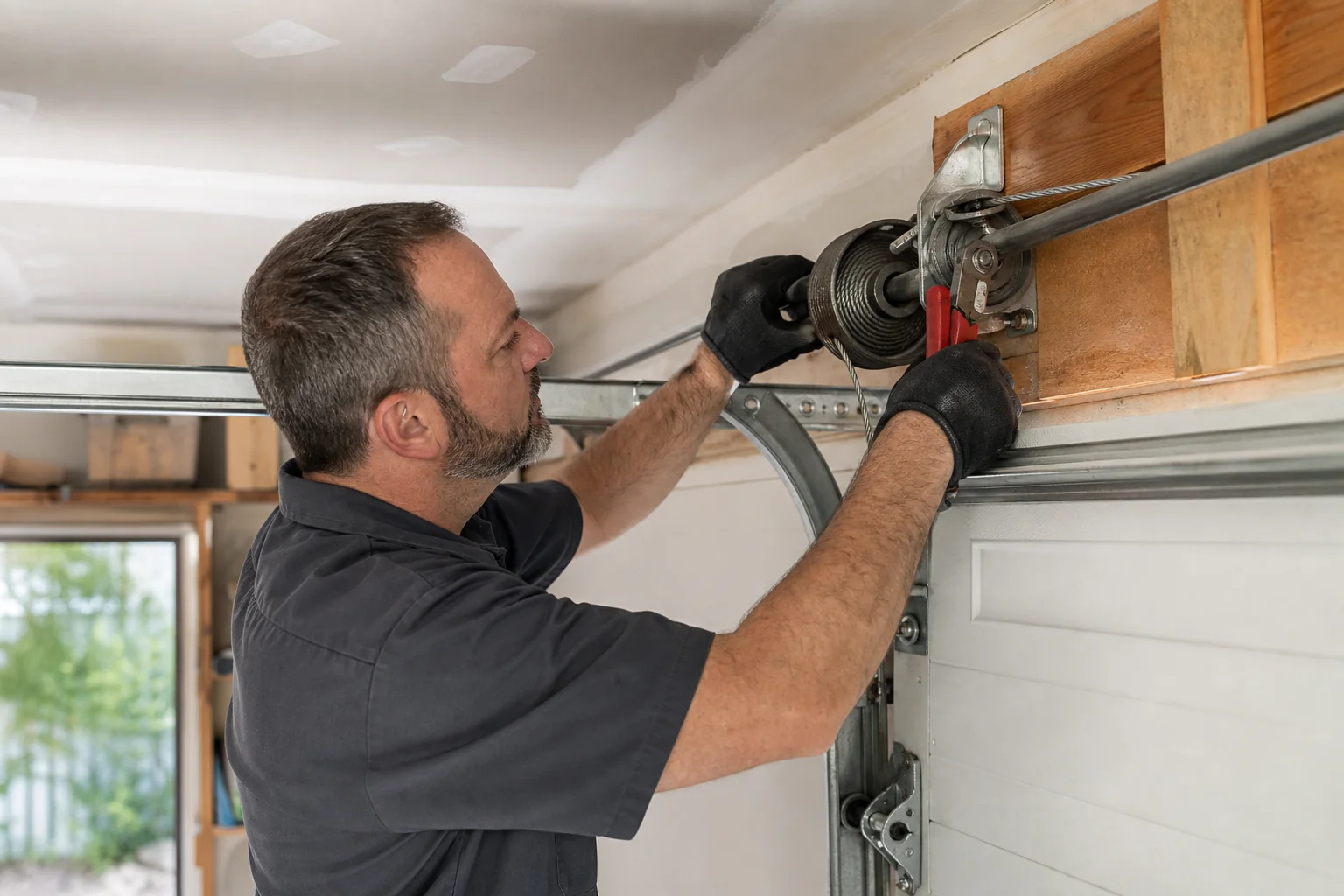
Cables and drums
One corner sitting lower, or a cable hanging off its drum, means the lift system is out of balance. It wants looking at before the next cycle, not after.
See what's included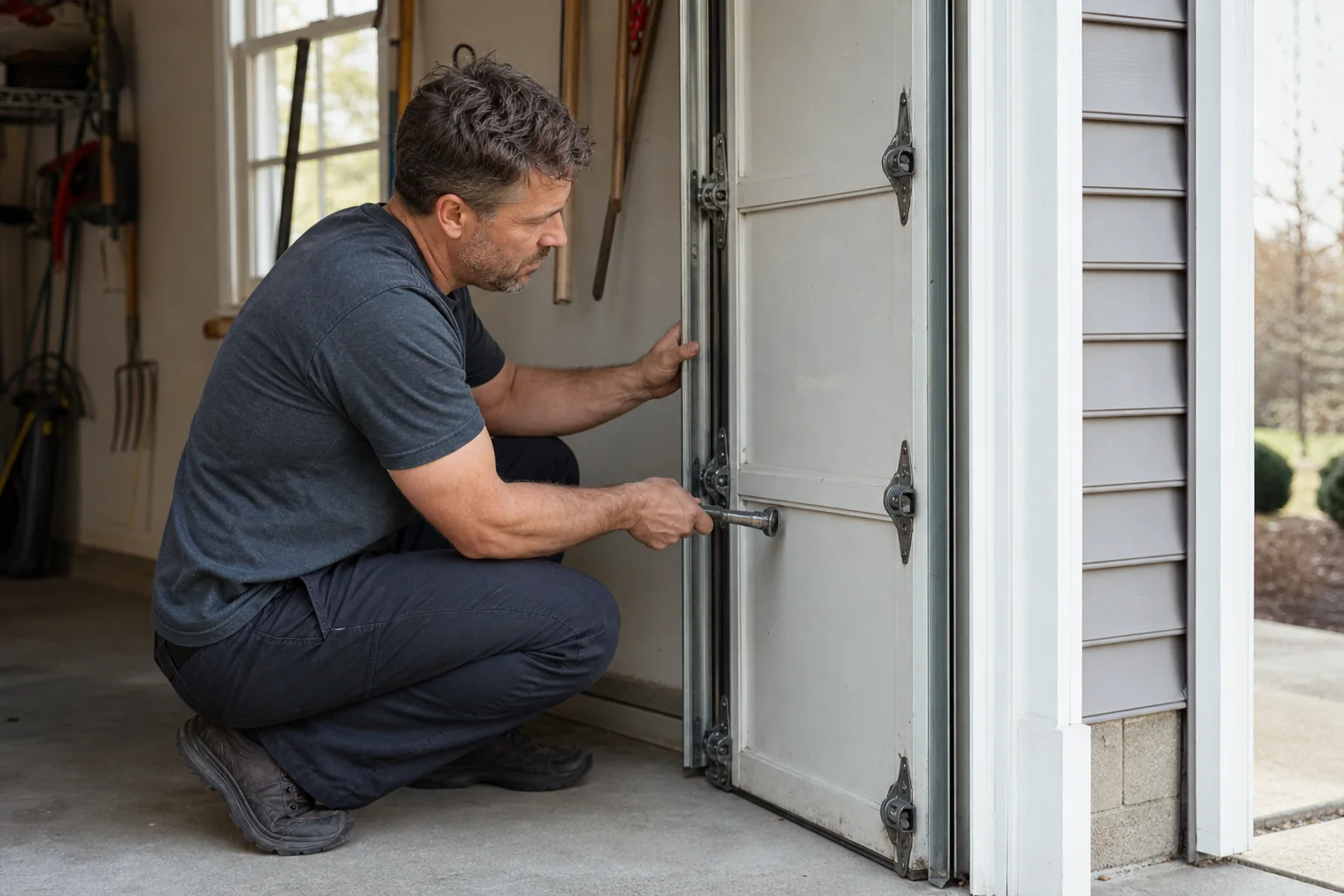
Tracks, rollers, hardware
Grinding in the same spot, a door that shakes the whole wall, a roller creeping out of its track — all cheap to sort now, all expensive once the door comes off.
See what's included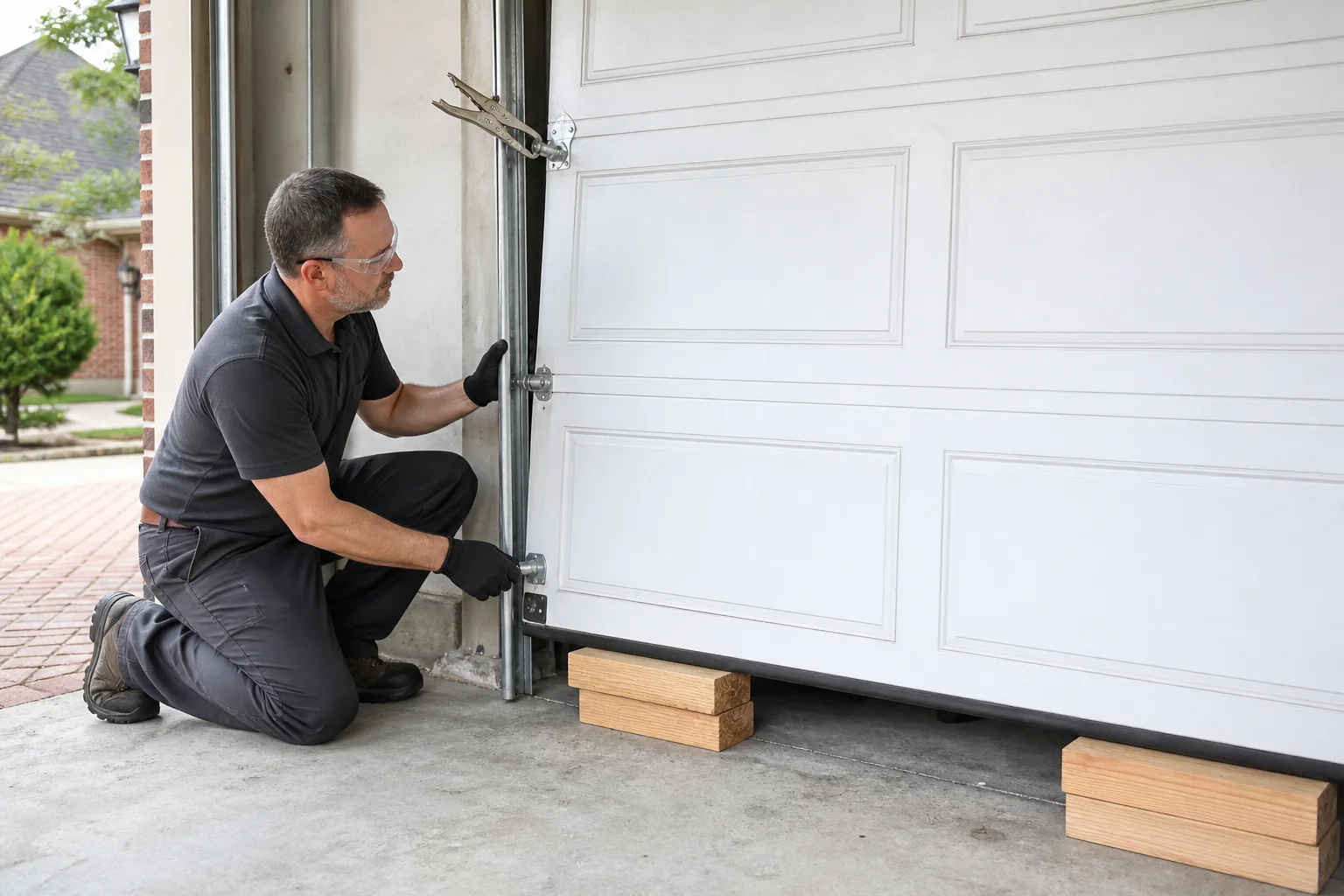
Off-track and stuck
Every extra cycle bends another panel and drags more cable out of line. Leave it where it is, keep the opening clear, and get it stabilized properly.
See what's included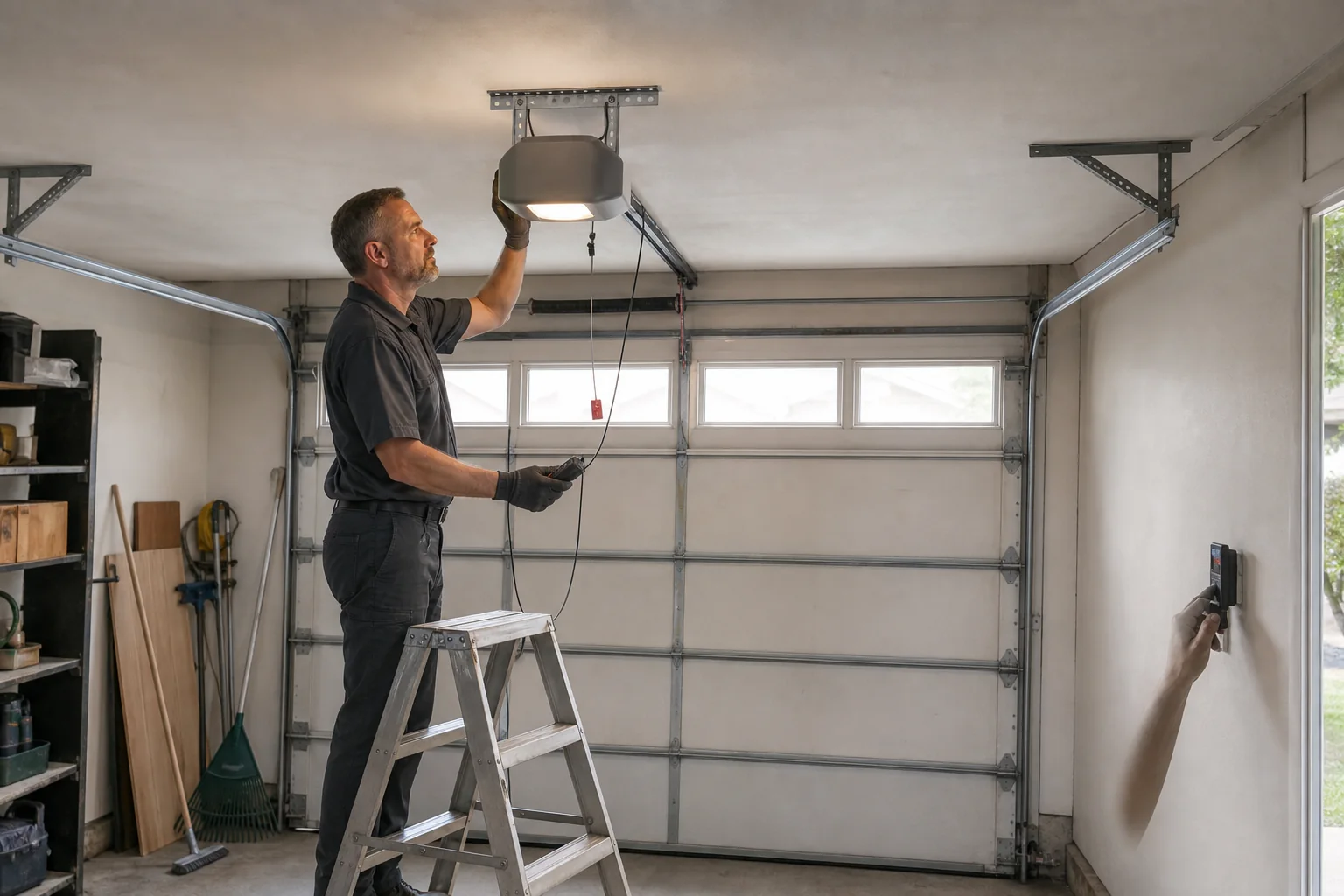
Openers
Motors take the blame for dead springs constantly. Worth knowing which one you've got before you buy an opener you didn't need.
See what's includedBaltimore guide
The city sets ten feet as the minimum alley width for a rear parking pad, and plenty of the alleys behind Canton, Patterson Park, and Locust Point sit close to that line. A service vehicle either fits or it doesn't, and where it doesn't, every part and every ladder gets walked in from the nearest cross street.
So tell us which alley you back onto and whether it's currently passable, including whether neighbors tend to block it. That doesn't change what's wrong with your door. It changes how long a technician is on site, and you'd rather see that in the estimate than meet it on the day.
In Roland Park and Bolton Hill the garage is often a converted outbuilding from before cars settled on a standard width. The openings come out tall and narrow or wide and short, and the framing overhead was never meant to carry a spring assembly. Hampden has its own version, where a shed or a yard got built into a bay at some point.
That's worth knowing before anyone talks about a replacement, because a stock door won't simply drop into an opening like that and the difference isn't small. Measure the opening across and up with a tape and send both numbers. If a beam or joist crosses above the opening, say so.
Locust Point sits out in the water and Canton faces it, and the air there holds moisture in a way inland blocks don't. Add an alley garage that gets no sun and very little airflow, and the lower hardware stays wet far longer than it should. Bottom brackets, cable ends, and hinge pins are what go first.
The tell is orange staining down the inside of the lowest section, or a cable that looks furred rather than smooth. Don't oil a rusted cable and don't keep running a door that's grinding. Photograph both bottom corners from inside with the door closed and we'll pass that along.
Give us the street and block number, whether the door is on a rear alley or the street front, single or double width, and a plain description of the failure: where it stopped, what you heard, whether a car is shut in. You don't need to work out which component gave up.
If you already know the alley is tight or blocked today, put that in the first message. Requests in before 5 p.m. on a weekday get a human answer the same business day, and the technician covering your address confirms scope and price before starting work.
Most common around Baltimore
The door stays open, stops, or will not begin closing.
What to do about itA gap appears in the spring above the door or a loud bang precedes a heavy door.
What to do about itSensor lights blink or the door will not close from a remote.
What to do about itThe opener is silent, hums, or runs without moving the door.
What to do about itThe customer wants scope, parts, labor, fees, and alternatives in writing.
What to do about itBaltimore questions
Say that in your first message, because being locked out of your own parking changes how a technician schedules you. In the meantime, don't keep hitting the button. If the opener strains against a door that won't move you turn a small failure into a bigger one. Tell us whether the motor ran, whether the door shifted at all, and how you're getting into the house.
Something is stopping it there on purpose. Often it's the down-travel limit, sometimes it's a roller catching in a track that's rusted rough at the bottom, and sometimes it's debris in the alley track you can't see from inside. Don't force it down by hand with the opener still engaged. Look along the bottom track with a flashlight and tell us what's in there.
That's a spring, and it's the one job to hand over completely. The stored energy in a torsion spring is enough to cause serious injury, and with one broken the cables and bottom brackets are carrying weight they weren't sized for. Leave the door alone, keep the alley clear behind it, and don't let anyone loosen a fitting to inspect it.
That's a common pairing here. Sensors sit close to the floor, alley garages take water in under the door, and corroded terminals or a swollen lens give exactly the same symptom as a misalignment. Check both brackets are still square and the lenses are clear, then tell us whether the fault comes and goes with the weather. Never bypass the sensors to get the door shut.
Start with power. Alley garages often run off a single circuit shared with an outside light, so check the outlet and the breaker before assuming the opener has died. If there's power and still nothing, locate the manual release cord and open the door by hand only if it feels balanced. If it feels heavy, stop and tell us that.
It can affect how long the visit takes, which is why we ask you about it before anyone is dispatched rather than after. Whatever the access is like, the technician explains the fault and gives you the scope and the cost before starting, so there's nothing to discover once the work is under way. You can decline, and nothing is charged through this site.
Baltimore, MD
The block, the alley width, and what the door actually did. That's enough to price it properly before anyone starts.