

General repair
Garage Door Repair
Tell us what the door is doing and we'll get it in front of someone who can fix it — with the price agreed before the work starts.
See what's includedGarage door repair · Worcester, MA
Worcester driveways run downhill and they run straight at the door. Tell us what yours is doing and see the price before work starts.
Vernon Hill, Grafton Hill, Tatnuck, and the streets either side of them.
Springs, cables, openers, sensors, tracks, panels, seals, and full replacements.
You hear what failed and what it costs first. Saying no at that point costs you nothing.
Ask before 5 p.m. on a weekday and you hear back that business day.
Why us for this door
Water coming down a steep drive stops at the garage door and freezes there. The seal bonds to the apron overnight, and the first press of the morning puts the whole load through the opener. It's the single most common way a working Worcester door gets broken, and it happens several times a winter.
Tuck-under bays leave almost nothing above the opening, which limits what hardware can be fitted, so say if that's yours. Along with the grade and what the door did, that's enough for the work and the cost to be agreed before it starts.
Get my door fixedWhere we work
Vernon Hill and Grafton Hill run steep with tuck-under bays; Tatnuck has long side drives. Say which, and where water collects.
Plenty of the work we take isn't in Worcester proper. These are the towns around it and what tends to be different about a door there.
Don't see your street or your town? These are the places where the housing changes enough to change the job — not the edge of where we go, and not a promise about your exact address either. We take work across Worcester and the wider Massachusetts area, and the address you send is what actually gets checked.Check my address
Repairs in Worcester
General repair
Tell us what the door is doing and we'll get it in front of someone who can fix it — with the price agreed before the work starts.
See what's included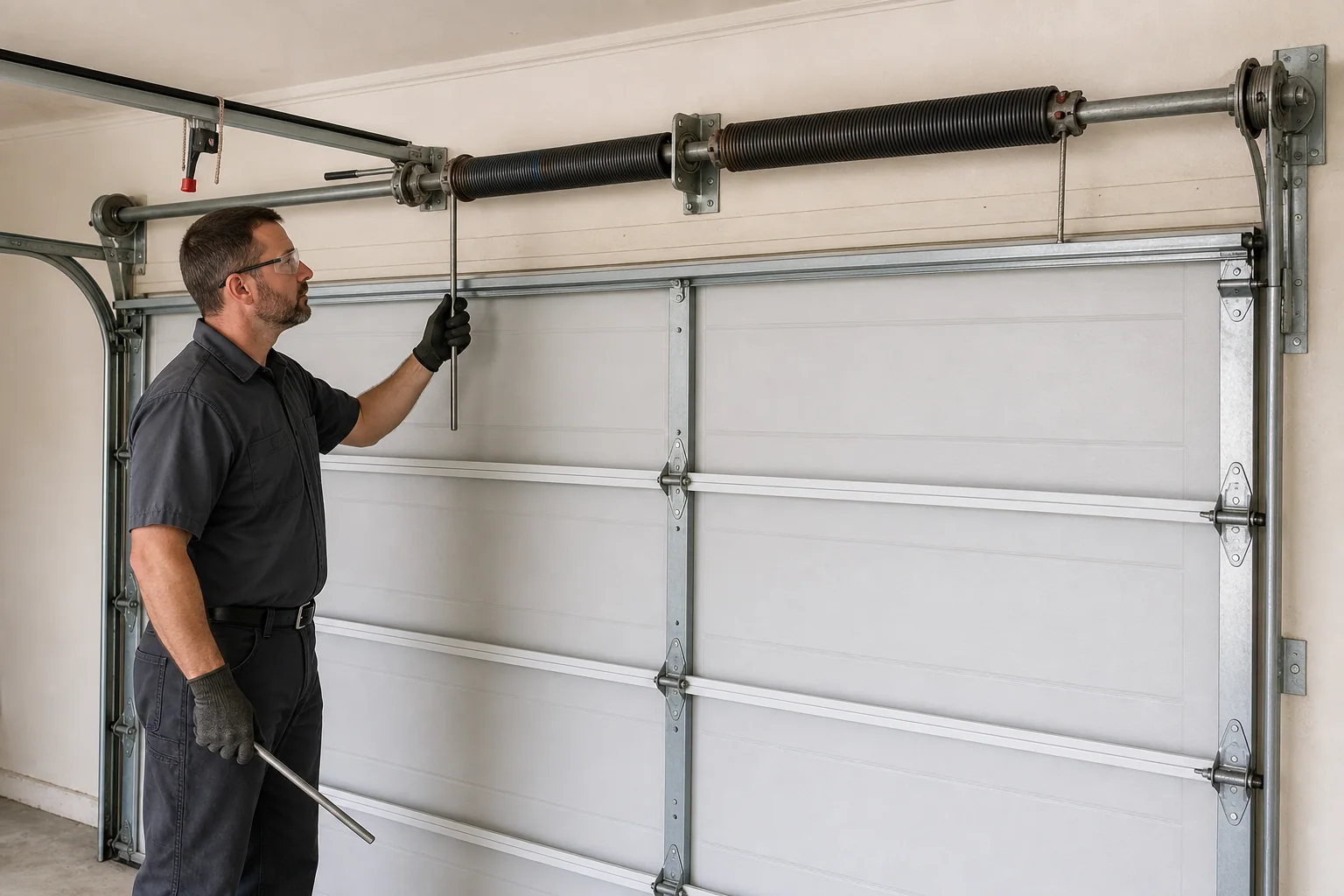
Springs and balance
If your door suddenly weighs a couple hundred pounds, a spring has almost certainly let go. Leave it down, keep everyone clear, and let someone with the right winding bars deal with it.
See what's included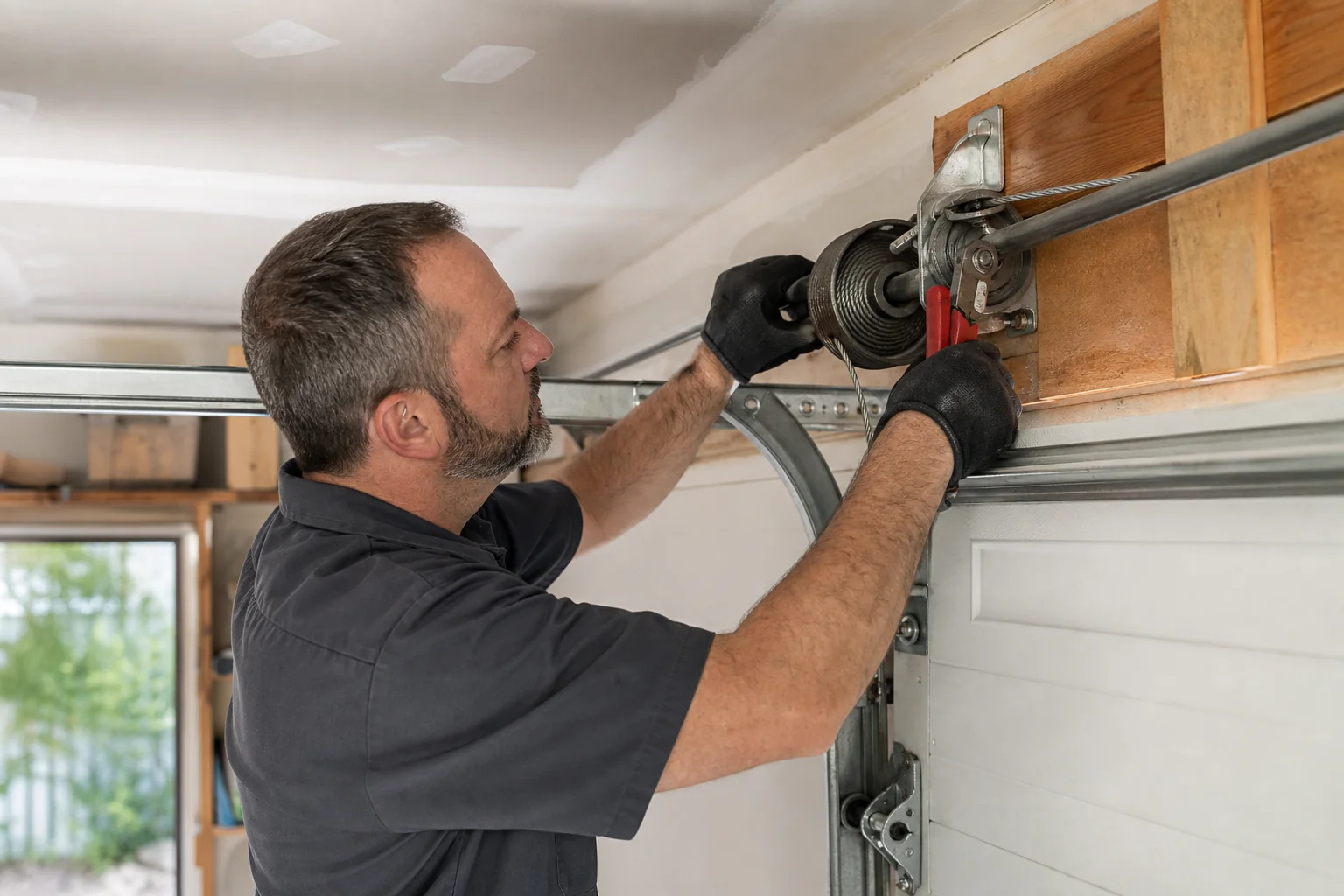
Cables and drums
One corner sitting lower, or a cable hanging off its drum, means the lift system is out of balance. It wants looking at before the next cycle, not after.
See what's included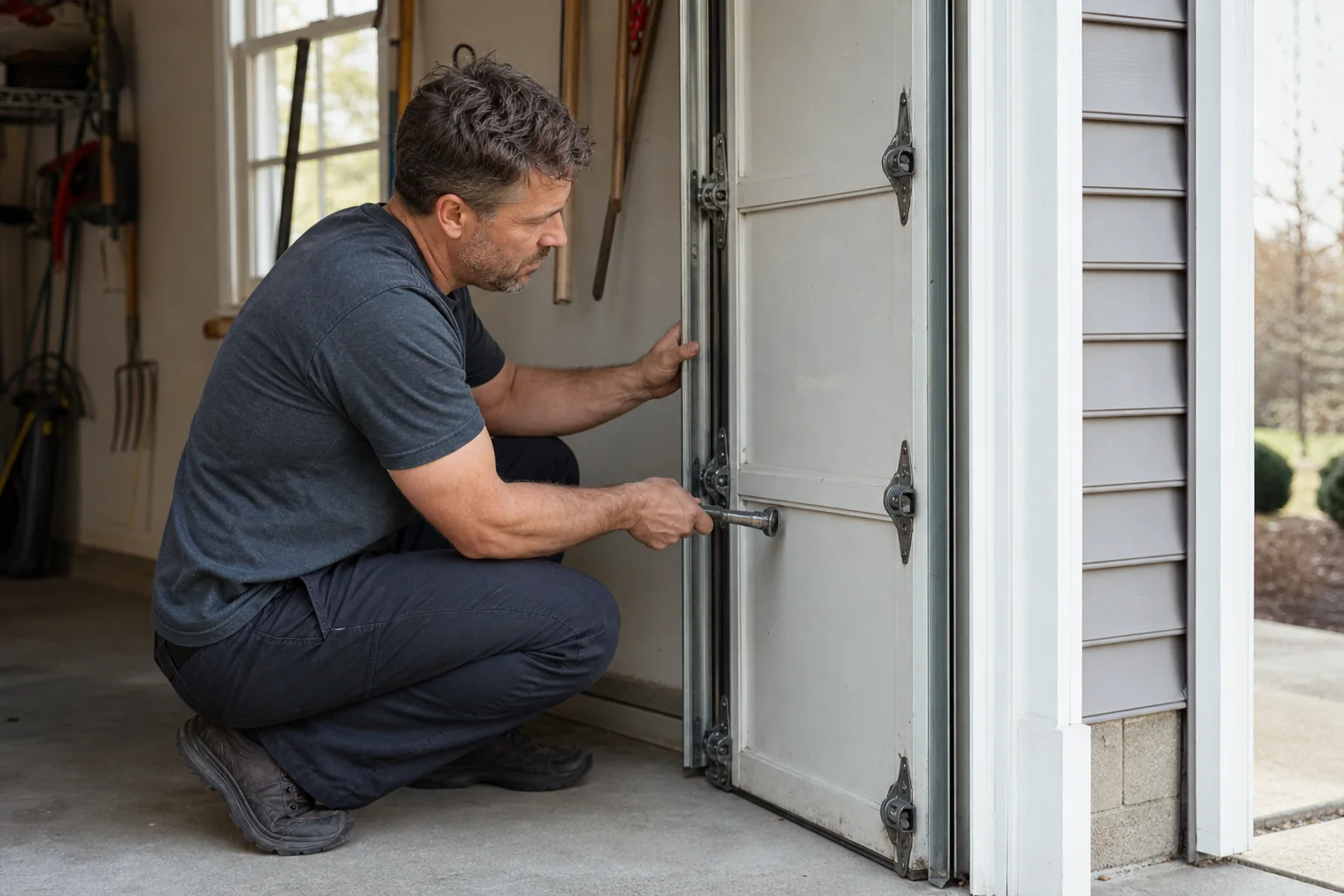
Tracks, rollers, hardware
Grinding in the same spot, a door that shakes the whole wall, a roller creeping out of its track — all cheap to sort now, all expensive once the door comes off.
See what's included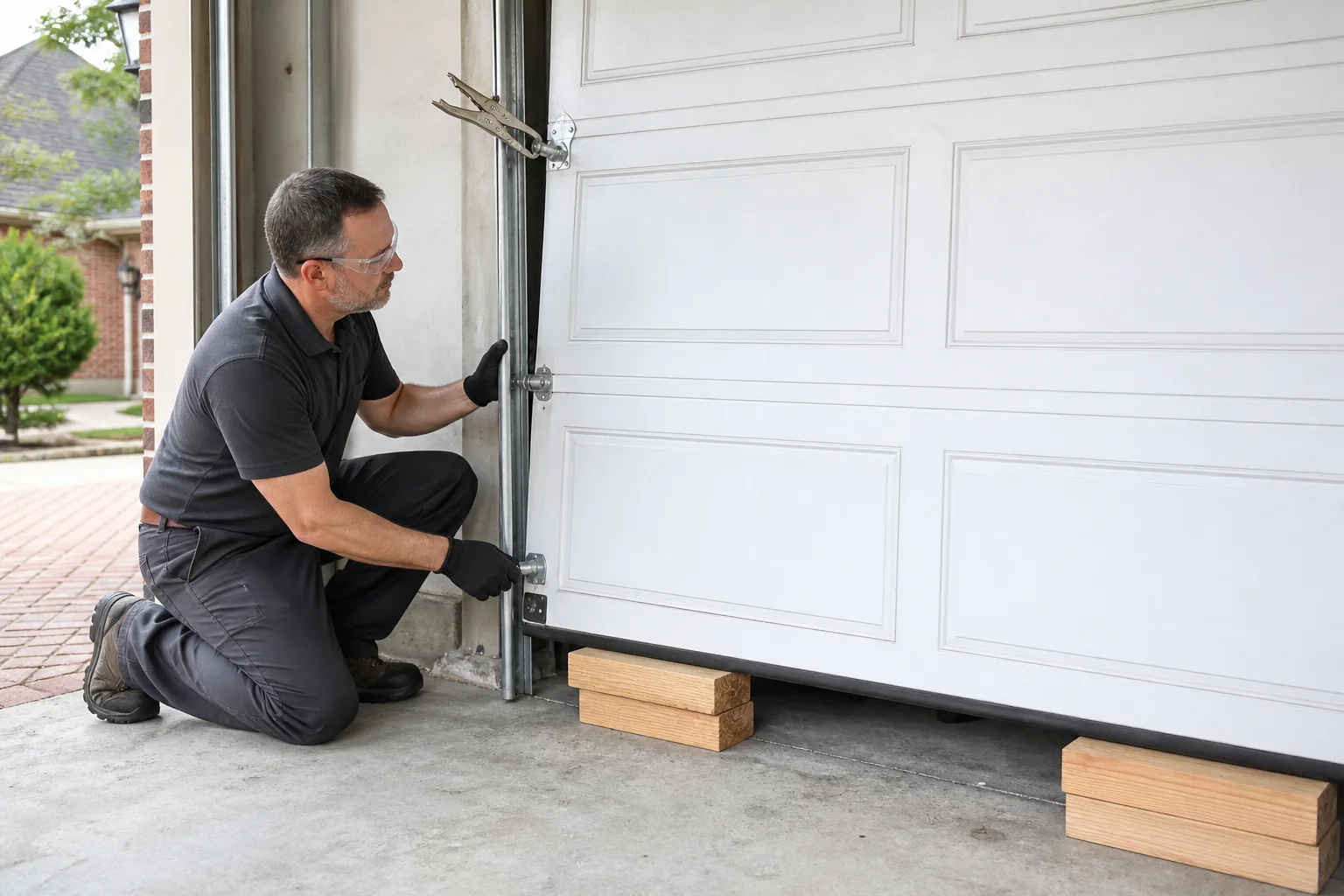
Off-track and stuck
Every extra cycle bends another panel and drags more cable out of line. Leave it where it is, keep the opening clear, and get it stabilized properly.
See what's included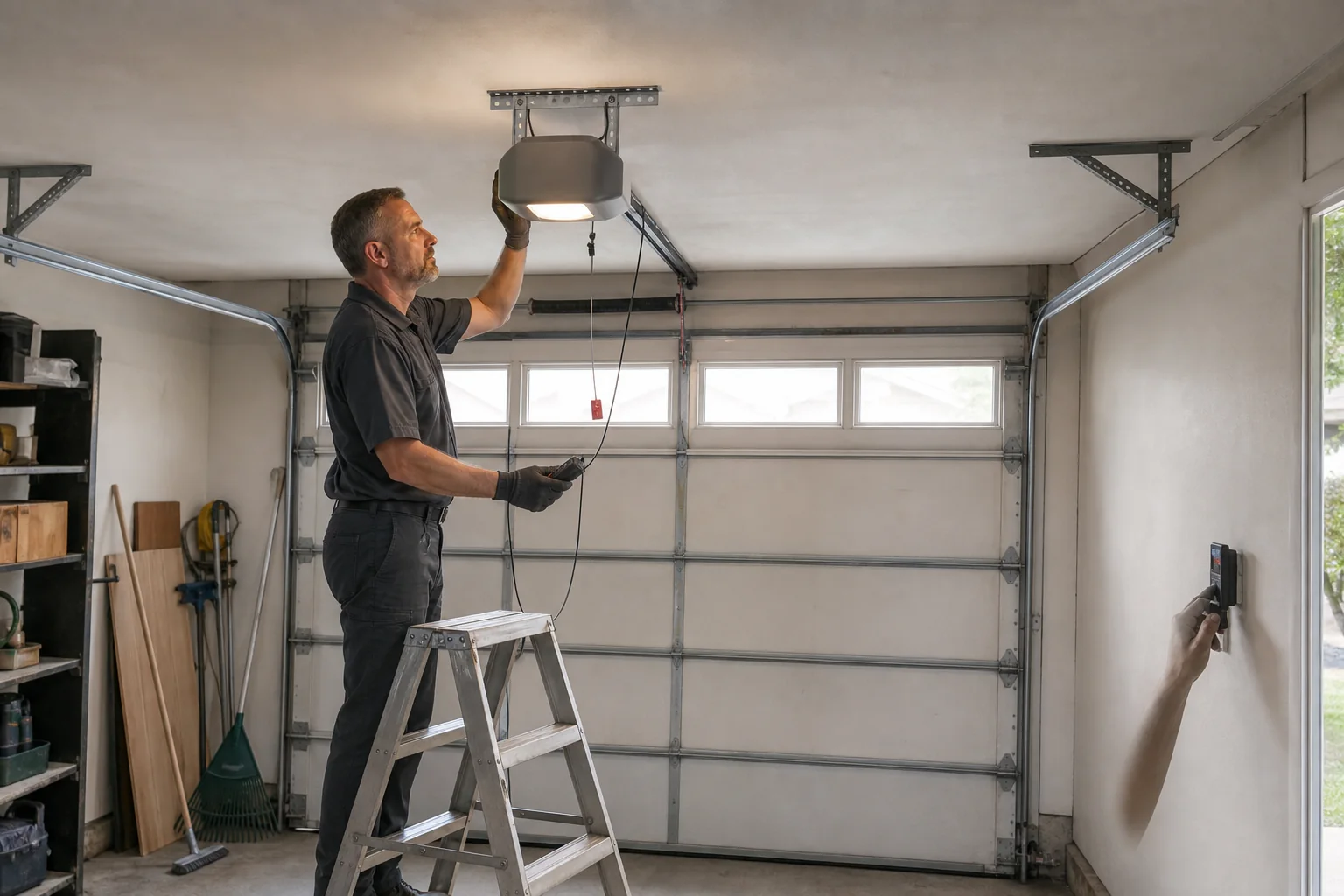
Openers
Motors take the blame for dead springs constantly. Worth knowing which one you've got before you buy an opener you didn't need.
See what's includedWorcester guide
Burncoat and Greendale sit on enough of a grade that water off the whole driveway arrives at the bottom of the door instead of draining away from it. It pools against the seal, refreezes after dark, and by morning the rubber is bonded to the concrete.
If the door won't move on a cold morning, take your hand off the button. The opener can't tell a stuck door from a heavy one and will keep pulling until a gear strips or a cable jumps its drum. Let the sun get at the slab, or break the seal by hand from somewhere you can stand safely.
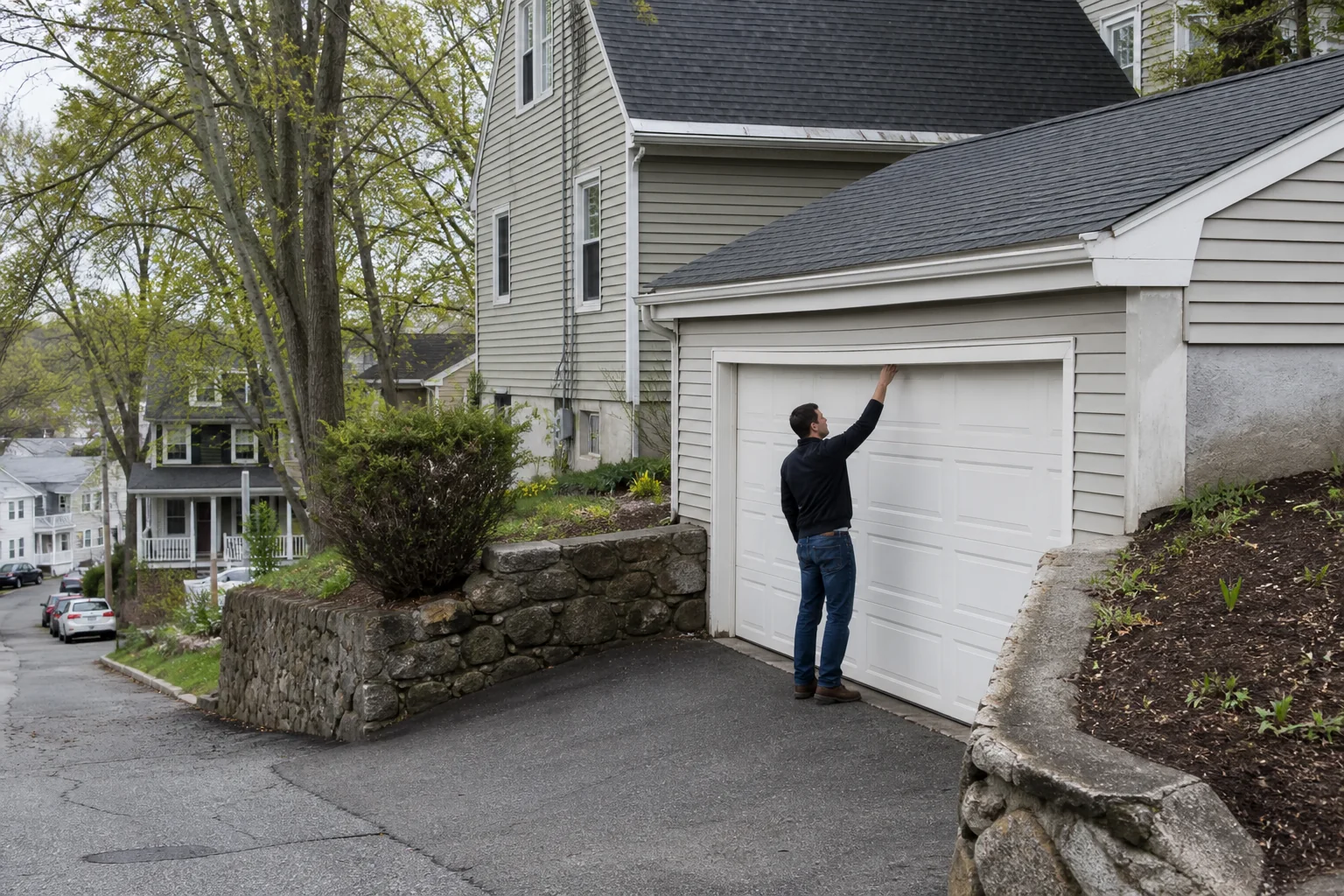
On Vernon Hill and Grafton Hill the garage is frequently built into the base of a three-decker or a two-family, cut into the slope with the house sitting on top of it. Headroom above the opening is minimal, the opener went wherever it would fit, and the approach drops away sharply toward the street.
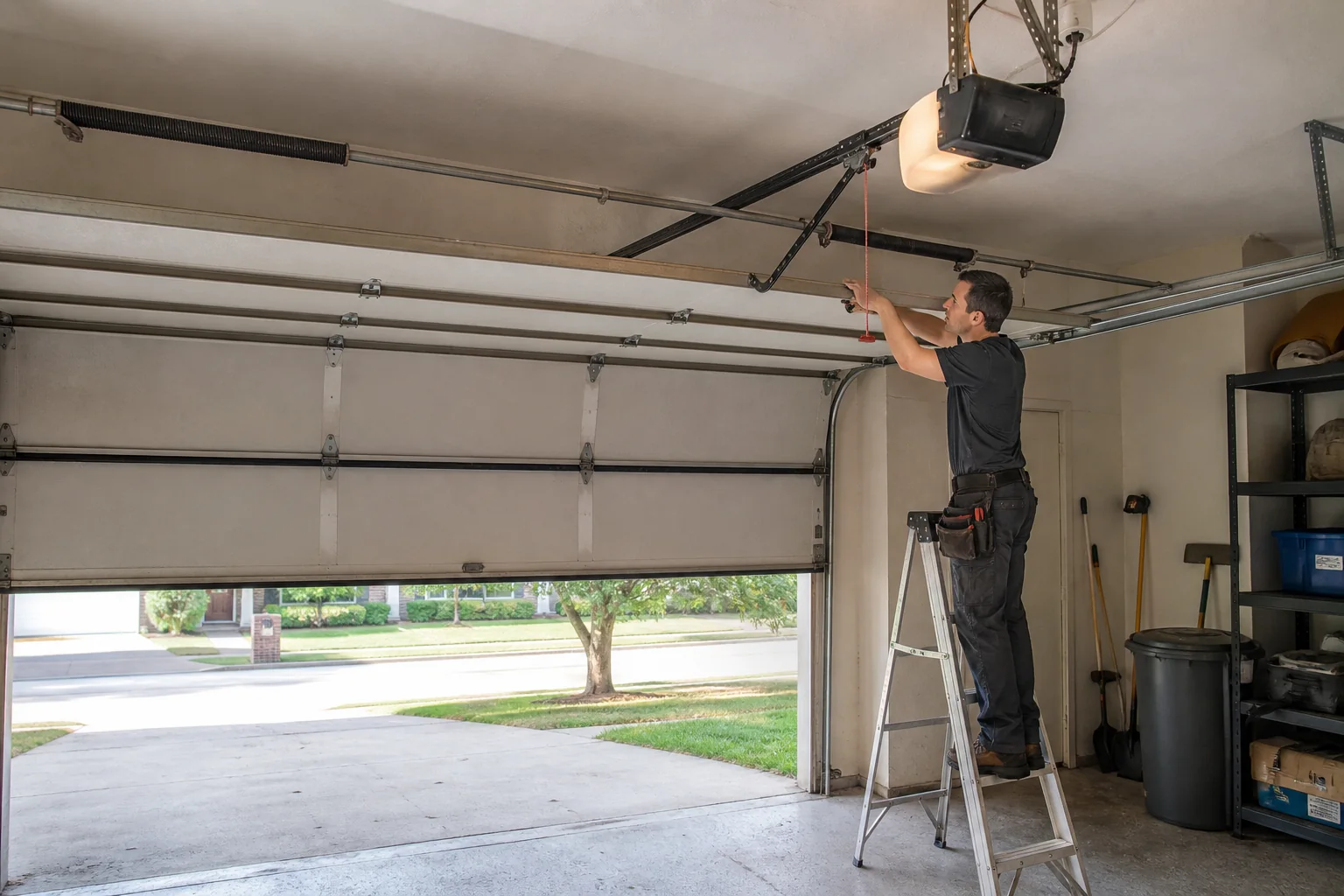
That setup rules some hardware in and some out, so a technician needs to know before loading up. Measure from the top of the opening to the ceiling and send that number. Mention whether the opener is a chain drive bolted close overhead or a jackshaft unit on the wall beside the door.
Out on the west side, Tatnuck and the streets around it have detached garages set well back down a narrow side driveway, and Quinsigamond Village fits small garages behind the houses with almost no turning room off the street. In both cases the truck stops short and everything comes in by hand.
That's no reason to charge more for the repair itself, but it is real time on the clock, and you should see it in the estimate rather than discover it halfway through. Tell us how far back the garage sits and whether the drive is clear right now.
Along with the cross streets, whether the bay is tuck-under or detached, single or double width, and what the door did when it failed, say something about the grade and the headroom. Those two facts change what a technician brings more than almost anything else here.
You don't need to identify the broken part. Photos from ground level help, and you shouldn't climb for them. Contact us before 5 p.m. on a weekday and a person gets back to you the same business day, with the scope and the price confirmed before work begins.
Most common around Worcester
The door stays open, stops, or will not begin closing.
What to do about itA gap appears in the spring above the door or a loud bang precedes a heavy door.
What to do about itSensor lights blink or the door will not close from a remote.
What to do about itThe opener is silent, hums, or runs without moving the door.
What to do about itThe customer wants scope, parts, labor, fees, and alternatives in writing.
What to do about itWorcester questions
On a sloped drive the water runs to the door and freezes there, which glues the bottom rubber to the concrete overnight. The opener can't tell the difference between stuck and heavy, so it pulls until something breaks. Stop pressing, let the ice go or chip the seal free from a standing position, and tell us what the opener did on that very first attempt.
Low-headroom bays make this more likely, because the track curve is tighter and there's less room for a roller to run out of line before it binds. Check nothing is stacked against the vertical track and look for a shiny worn patch where a roller has been rubbing. Tell us how much space there is between the top of the opening and the ceiling.
No. A door that came down on its own has lost whatever was holding it, and a spring is the usual culprit. Until a technician has looked at it, treat the opening as unsafe: nothing parked under it, nobody walking through it, and no attempt to prop it up. Tell us whether it is sitting open or closed right now.
A drive that falls away from the door means the sensors sit at an angle relative to anything on the pavement, and slush, a stray shovel, or a car nosed in too far can clip the beam without looking like an obstruction. Clear the area, make sure both brackets are still square to each other, and tell us whether the lights are steady, blinking, or dark. Don't bypass them.
Tuck-under bays leave so little headroom that openers end up mounted very close overhead, and the rail can work loose against the joists. A rattle that changes as the door moves is usually mounting hardware rather than the motor. Stop running it, look at where the rail meets the ceiling and the header, and tell us what type of unit it is if the label is readable.
Ask the technician to walk you through the parts, the labor, and anything the access adds, and to say what happens if they find something else once the cover is off. All of that is agreed with you before the work begins, not after. You can turn it down at that point. Using this site is free and no money changes hands here.
Worcester, MA
The grade, the type of bay, and what happened on that first press. The price is settled with you before work begins.